2027 From Public Service to Private Sector Operations: When Does a BS in Business Administration Make Sense?
Audited and Verified:
Our Editorial and Data Verification Process
Research.com uses government datasets, official education statistics and primary institutional information to support its career and degree guides. Our review process checks factual accuracy, occupational definitions, source dates and the requirements associated with the credentials discussed.
How This Article Was Fact-Checked
Our editorial team verifies salary estimates, employment projections, education requirements and program information against original data providers and official organizations. Salary figures are checked against the relevant occupational definitions and reporting periods. Information about licensure, accreditation and required in-person training is reviewed separately.
Fact-checked and verified on:

Co-Founder and Chief Data Scientist
Public service work can build valuable operations experience, but private employers may not recognize it from a government job title alone. A BS in Business Administration could help you translate that experience into business roles or add time and expense without closing the skill gap that matters most.
This guide is for government and public-institution professionals considering a move into private-sector operations. It explains which roles are realistic, what the degree adds, what alternatives to compare, and what to verify before enrolling.
Key Things You Should Know
- A BS in Business Administration makes the most sense when you need both a bachelor's credential and broader finance, analytics, or operations skills for a defined target role.
- Public-sector procurement, budgeting, scheduling, and service delivery can support a transition, but employers will want evidence of relevant results, not just a new degree.
- The Bureau of Labor Statistics projects 18% employment growth for logisticians from 2025 to 2035. That occupation may be worth exploring if your experience includes purchasing or supply chains, but growth does not establish individual hiring odds.
What Is a BS in Business Administration and Who Is It For?
A Bachelor of Science in Business Administration is an undergraduate degree that combines general business subjects with general education and, depending on the school, electives or a formal concentration.
It may suit a public-sector employee who has managed processes, vendors, budgets, or teams but lacks the degree required by target employers or wants business concepts to complement that experience.
The title alone does not establish a program's depth. Compare its actual courses with those in a BBA, a BS in Management, or a specialized operations or supply chain degree.
If your goal is primarily to lead teams rather than work across business functions, accelerated organizational leadership college programs offer a comparison point; check their curriculum and transfer policies rather than assuming a faster advertised timeline applies to you.
When Does a BS in Business Administration Make Sense for Career Changers?
Start with a target job posting, not a degree description. A public procurement specialist seeking private-sector purchasing work may already have relevant vendor-management and compliance experience.
A permit-office supervisor seeking operations coordination may bring scheduling and process skills but need stronger spreadsheet, cost-analysis, or commercial customer-service evidence. The larger the functional gap, the less likely a general degree alone is to bridge it.
The degree is a stronger investment when several suitable employers require a bachelor's, your previous credits can satisfy substantial degree requirements, and the program offers projects or recruiting access tied to your intended function. Ask employers and advisers whether your experience already meets the education requirement and whether a specific course sequence, employer training, or supervised project would address the remaining gap.
If your goal is narrowly focused on distribution or purchasing, compare the business degree with fast-track supply chain bachelor's programs. A specialized curriculum may be more useful if you need deeper inventory or logistics preparation; a general business degree may offer more room to change functions later.
What Careers Can You Pursue With a BS in Business Administration?
Operations coordinator, procurement specialist, project coordinator, and HR specialist are possible directions, but their duties and hiring standards differ.
The table connects common public-service experience to plausible entry points and shows what evidence you may still need.
| Private-sector direction | Relevant public-service experience | Likely gap to address |
| Operations or administrative coordinator | Scheduling, service delivery, workflow oversight | Commercial performance measures and process documentation |
| Purchasing or supply chain support | Solicitations, vendor records, contract administration | Inventory, forecasting, or private purchasing systems |
| Project coordinator | Milestones, stakeholder updates, cross-department work | Documented schedules, budgets, and project tools |
| HR specialist | Hiring support, personnel records, employee services | Employer-specific HR systems and applicable employment practices |
A bachelor's can help satisfy a posting's education criterion, but a manager role generally calls for demonstrated responsibility and results. If personnel work is your intended function, compare the business curriculum with human resources qualifications and degree routes before choosing broad business electives over focused HR preparation.
For an operations transition, the most useful courses often cover accounting and financial statements, managerial finance, statistics, spreadsheets, operations, organizational behavior, and business communication.
They can help you explain costs, measure process performance, and present recommendations in terms a private employer uses. Check course descriptions and prerequisites: one introductory operations class is not the same as sustained supply chain or analytics study.
Look for an assignment that lets you demonstrate a transferable skill, such as a process map or a budget variance analysis using permitted data. A workplace-based capstone may require faculty approval and employer permission; do not assume you can submit confidential agency records.
If project coordination is the goal, compare the courses and total expense of a general business path with budgeting for online project management college study. A targeted course or approved work sample may be enough if you already hold a bachelor's.
Online study may let a public employee keep working through a career transition, while campus study may offer easier access to in-person recruiting and group work. Neither format guarantees flexibility or stronger employer connections.
Ask about live meetings, team assignments, exam proctoring, required visits, internship access, course availability, and career services for students changing sectors.
Use US business college rankings for online learners to identify possibilities, then confirm scheduling and support directly with each school. An asynchronous course with fixed weekly deadlines may fit a stable workweek but not an unpredictable on-call schedule.
Requirements vary by institution and by whether you apply as a first-year student, transfer student, or applicant seeking a second bachelor's. Schools may request prior transcripts and require particular mathematics or business courses before entry to the major. Public-sector training and professional experience can strengthen an application, but they do not automatically become degree credit.
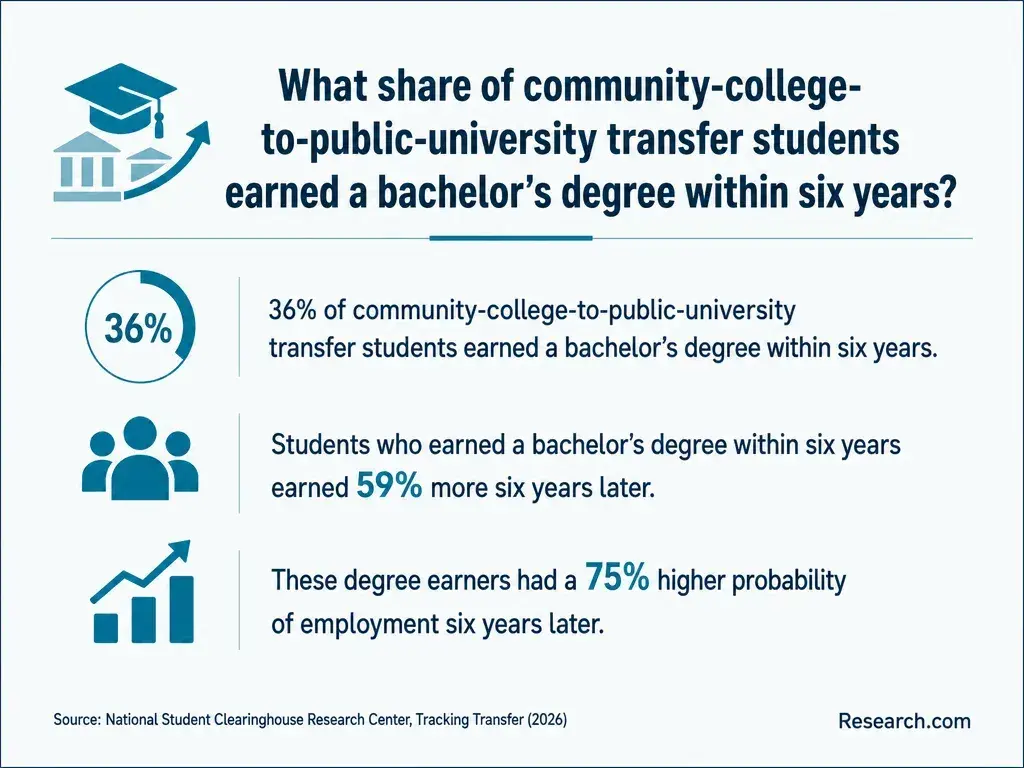
Before applying, send transcripts to the school for an official evaluation and ask which accepted credits satisfy general education, business-core, and remaining graduation requirements.
If application charges affect how many schools you can compare, accredited colleges offering free online applications may broaden your shortlist; confirm the current fee and the specific business program's admission rules.
Completion time depends on credits that apply to the degree, prerequisite sequencing, enrollment pace, and how often required courses run. Ask each school for a degree audit and a term-by-term plan before relying on an advertised completion time. An accepted course that counts only as a free elective may do little to shorten the path.
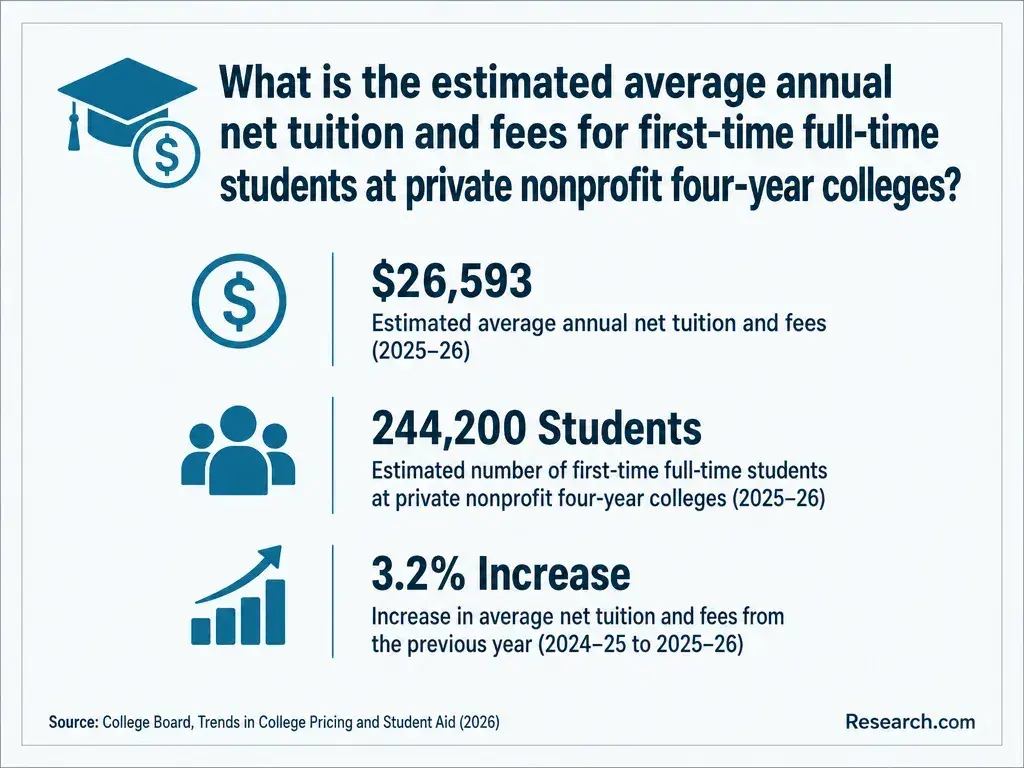
Compare total remaining tuition and fees, books and software, possible travel, and earnings you would give up to study. Also ask whether your public employer offers education assistance and whether it requires reimbursement if you leave soon after receiving it.
Affordable online business program comparisons can help build a shortlist, but your cost depends on the school's written credit evaluation and aid offer not its advertised tuition alone.
Verify the institution's accreditation through its accreditor and check whether any claimed AACSB, ACBSP, or IACBE recognition covers the relevant business unit or program. Institutional accreditation and business-specific accreditation have different scopes; neither proves that graduates enter private-sector operations jobs.
For this career change, also request evidence of required-course availability, transfer policies, career support for working adults, and access to operations-related projects or employers.
When reviewing the fastest online business bachelor's programs in the US, test the published pace against your remaining requirements and work schedule. A short advertised timeline is not an individual graduation estimate.
There is no general license required to hold a BS in Business Administration or apply for most operations-coordination jobs. A particular employer or specialized role may prefer a project management, HR, procurement, or other credential with separate eligibility rules. The degree itself does not award those credentials or qualify you automatically for regulated work.
Check target postings before paying for additional training. If they consistently request demonstrated project experience rather than another degree, document your approved work and investigate the relevant certification requirements.
If they require a project-focused bachelor's, compare that commitment with funding an online project management bachelor's degree before choosing the broader business route.
What Salary and Job Outlook Can Business Administration Graduates Expect?
There is no single salary or outlook for business administration graduates. Pay depends on the occupation, location, employer, and experience you bring from public service. For one relevant occupation, the Bureau of Labor Statistics reports a May 2025 median annual wage of $82,320 for logisticians.
That occupation-wide median includes experienced workers; it is not an expected starting salary for someone moving from government procurement into logistics.
Compare actual openings and compensation in your market with your current pay, benefits, and pension position before estimating a return on the degree. Include borrowing and lost work time, and distinguish aid eligibility from an aid award.
A search for online business administration degrees accepting federal aid applications can identify schools to investigate, but only the institution can confirm your program's eligibility and your individual aid package.
Other Things You Should Know About Business Administration Programs
Lead with the work and its scope: processes managed, stakeholders served, vendors coordinated, and outcomes you can document. Translate agency-specific titles and acronyms into recognizable functions without disclosing restricted information.
Not necessarily. Staying employed can preserve income and benefits while you test target roles through job postings, conversations with employers, and part-time study. Check whether leaving would affect tuition assistance or pension benefits.
Only if agency policy and any required supervisor approval permit it. Otherwise, create a clearly labeled example from public information or a fictional scenario, without presenting it as completed agency work.
It may matter for contractors or roles that specifically require one, but it is not a general substitute for operations skills. Confirm the position's requirements and avoid assuming a clearance transfers automatically to a new job.
- Chapter 25: Procurement and contract management | projectdelivery.gov.uk https://projectdelivery.gov.uk/teal-book/home/part-e-planning-and-control/chapter-25-procurement-and-contract-management/
- The Business School Job Market in 2025 | AACSB https://www.aacsb.edu/insights/articles/2025/10/the-business-school-job-market-in-2025
- What is Public Service? - Cornell Career Network https://career.cornell.edu/resources/what-is-public-service/
- What Can You Do With a Business Degree? | American Military University https://www.amu.apus.edu/area-of-study/business-administration-and-management/resources/what-can-you-do-with-a-business-degree/
- What Can You Do With a Business Administration Degree? | snhu.edu https://www.snhu.edu/about-us/newsroom/business/what-can-you-do-with-a-business-administration-degree
- Understanding Transfer Credit Guidelines and Limitations | American Public University https://www.apu.apus.edu/transfer-credit/graduate/transfer-credit-guidelines/
- How Colleges Can Simplify Transfer Credit Policies | American College of Education https://ace.edu/blog/how-the-college-credit-transfer-process-works-and-how-it-can-be-improved/
- Finish the degree you started (without starting over) | Newman Today https://news.newmanu.edu/finish-the-degree-you-started-without-starting-over/
- How to Transition from a Government Job to the Private Sector | University of Wyoming https://haubcareers.uwyo.edu/resources/how-to-transition-from-a-government-job-to-the-private-sector/
- How to Transition from the Federal to Private Sector | USC Online https://online.usc.edu/news/how-displaced-federal-employees-can-transition-to-the-private-sector/