2027 BS in Business Administration for Media Companies: Which Business Courses Should You Prioritize?
Audited and Verified:
Our Editorial and Data Verification Process
Research.com uses government datasets, official education statistics and primary institutional information to support its career and degree guides. Our review process checks factual accuracy, occupational definitions, source dates and the requirements associated with the credentials discussed.
How This Article Was Fact-Checked
Our editorial team verifies salary estimates, employment projections, education requirements and program information against original data providers and official organizations. Salary figures are checked against the relevant occupational definitions and reporting periods. Information about licensure, accreditation and required in-person training is reviewed separately.
Fact-checked and verified on:

Co-Founder and Chief Data Scientist
A media company needs more than compelling content: it must understand audiences, sell or distribute its work, manage costs, and make sound decisions about data and rights. If you are planning a BS in Business Administration for a media career, the most useful courses depend on whether you want to work in advertising, audience development, operations, or another function. This guide ranks the coursework by practical value, shows how to turn classes into credible work samples, and identifies the program details worth checking before you enroll.
Key Things You Should Know
- Prioritize marketing and audience research, accounting and finance, and business analytics; add operations or sales coursework to match the media role you want.
- Look for assignments that distinguish audience reach from revenue and revenue from profit. A campaign report or budget model is more persuasive than a course title alone.
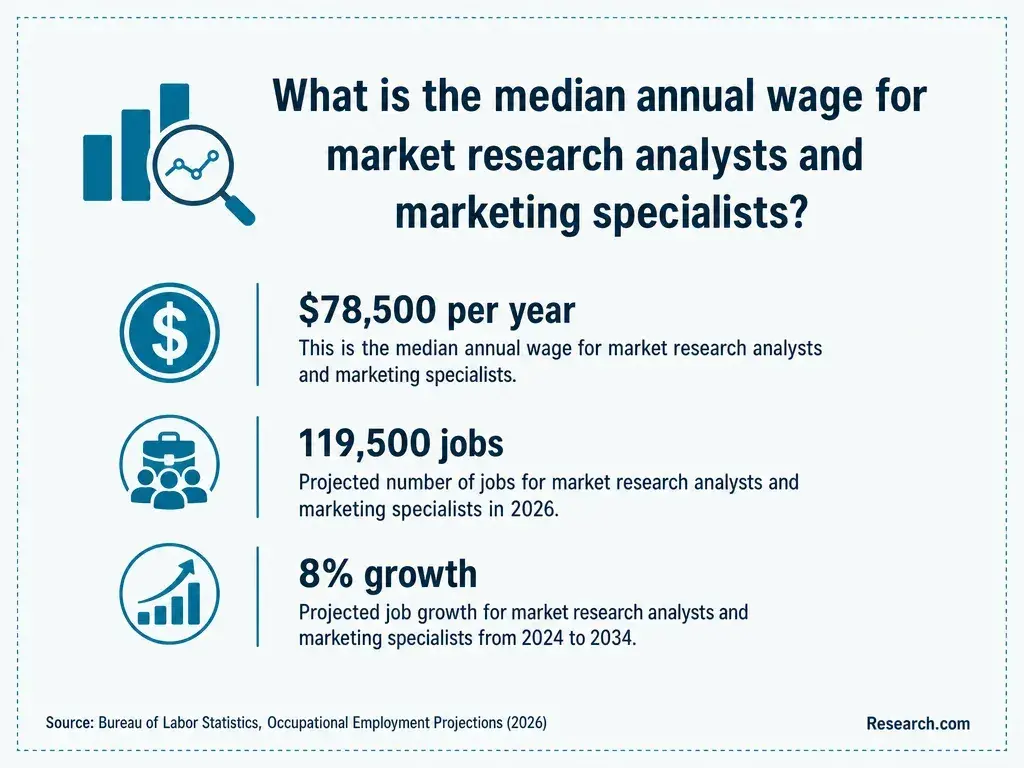
- The Bureau of Labor Statistics reports a $78,760 median annual wage for market research analysts in May 2025, but that occupation-wide figure is not an expected starting salary for a business graduate.
What is a BS in Business Administration for media companies?
It is an undergraduate business degree applied to the commercial and organizational work behind publishing, streaming, broadcasting, advertising, gaming, and other media. Students generally study core business functions, then use electives, an official concentration, or applied projects to explore media-related decisions. A BS does not necessarily include a media concentration; check the catalog for the degree's exact requirements and credential name.
Media businesses differ in what they sell. An ad-supported publisher may focus on audience segments and advertiser results, while a subscription service may focus on retention, pricing, and customer acquisition. Those differences should shape your electives. If your goal is primarily supervising people rather than understanding media revenue and audiences, compare the actual curriculum and completion requirements of leadership bachelor's degrees with accelerated pacing before choosing a general business degree.
Which business courses are most valuable for media careers?
Start with marketing and audience research, accounting and managerial finance, and statistics or business analytics. Together, they help you assess demand, interpret results, and judge whether an initiative is financially sustainable. Then choose courses that support the function you intend to enter. The table separates broadly useful foundations from role-dependent additions.
| Course area | Media decision it helps you make | Best fit |
| Marketing and market research | Identify audiences, assess positioning, and evaluate campaign objectives | Audience development, advertising, brand partnerships |
| Accounting and managerial finance | Read budgets, distinguish revenue from profit, and assess production or acquisition costs | Operations, production business teams, commercial planning |
| Statistics and business analytics | Interpret audience measures, test assumptions, and explain uncertainty | Research, subscriptions, campaign measurement |
| Sales and negotiation | Understand proposals, pricing discussions, and client relationships | Ad sales, sponsorships, partnerships |
| Operations and project management | Coordinate deadlines, vendors, handoffs, and resource constraints | Production operations, campaign delivery |
| Business law and information systems | Recognize when contracts, data permissions, or systems controls require specialist review | Distribution, platform operations, data-dependent teams |
Prioritize depth over a media-themed course name. For example, an analytics elective is especially useful if it requires you to clean data, define a measure, and explain its limitations - not merely view a dashboard. A finance assignment is stronger if it makes you separate projected revenue, expenses, and cash needs. Ask for syllabi and sample assignments before committing electives. If you need to study while employed, compare the course requirements behind career advancement study options in business administration, not just the program's concentration label.
What careers can a business administration graduate pursue in media?
Business graduates can pursue entry-level positions that support revenue, audiences, clients, and delivery. An advertising or sales coordinator may prepare proposals and track campaign commitments; an audience research assistant may organize survey or engagement data; a subscription operations associate may help monitor customer journeys; and a production or project coordinator may track schedules and vendor tasks. Job titles vary considerably across employers, so compare posted responsibilities rather than assuming identical titles mean identical work.
Match your coursework and evidence to the work: a documented campaign analysis suits an audience role, while a carefully scoped schedule and budget suit operations. Internships, relevant employment, and supervised projects can help you demonstrate readiness. Management, major account ownership, and specialist analytical roles commonly require experience beyond graduation.
If your main interest is physical distribution, inventory, or procurement rather than media audiences and advertising, compare a specialized pathway and its expense against your target jobs. A review of supply chain college costs versus potential career outcomes can help frame that alternative, but media-industry employment is not assured by either degree.
Compare the experience of taking your priority courses, not just the delivery label. An online analytics class may provide useful access to recorded demonstrations but still require scheduled group presentations. A campus program may make it easier to attend employer events or collaborate on projects, yet its required courses may conflict with work hours.
Ask each program whether upper-level marketing, analytics, and finance electives are offered in your format and how often they run. Check live attendance, group-work expectations, exam proctoring, software access, internship rules, and any campus visits. If speed matters, examine bachelor's degrees with compressed schedules alongside the time you can realistically give to quantitative assignments. A shorter term does not necessarily mean less work or a lower total cost.
Confirm that the institution holds recognized institutional accreditation. Then check whether it claims business-school or programmatic accreditation from AACSB, ACBSP, or IACBE, and verify the accreditor's scope for the particular school and program. These are distinct checks: institutional accreditation does not establish business-program accreditation, and a business-school accreditation claim does not establish that a media concentration exists.
Accreditation is a baseline quality check, not evidence that graduates obtain media jobs. Compare the actual course list, access to relevant projects, and published outcome definitions. When you compare fast-track business bachelor's schools, verify accreditation and course availability directly rather than treating a short advertised completion time as proof of either.
Requirements vary by institution and by whether you are entering as a first-year or transfer student. Schools may request secondary-school records or previous college transcripts; admission to an upper-division business major may have additional coursework or academic-standing requirements. Ask specifically when accounting, economics, mathematics, and statistics must be completed. Prior media work may strengthen an application without automatically awarding degree credit.
If you have previous college study, request an official evaluation showing which credits apply to general education, the business core, electives, and any concentration. Accepted credits do not necessarily replace required courses. If your goal is coordinating productions or campaigns and you already have substantial business coursework, you might also compare transfer-friendly project management bachelor's degrees; the receiving institution determines credit applicability in either pathway.
A full-time bachelor's pathway commonly takes about four academic years from the start of undergraduate study. Transfer credits, part-time enrollment, prerequisite sequences, and the availability of upper-level electives can substantially change an individual completion plan. Request a degree audit and a term-by-term course map before relying on an advertised timeline.
For cost, compare the tuition and mandatory fees for your remaining required courses, then account for books, software, travel or proctoring, and the earnings you may forgo. An attractive per-credit rate may not be the least expensive route if key media-relevant courses add credits or delay graduation. Use inexpensive business administration degree options as a starting point, then obtain a school-specific estimate after your credits have been evaluated.
The most transferable combination is commercial judgment, clear communication, and responsible use of data. You should be able to explain what a measure captures, recognize when a successful campaign has not necessarily produced a profit, and communicate a recommendation to colleagues with different priorities. Spreadsheet modeling, concise presentations, project coordination, and client-facing communication make those abilities visible.
Build one work sample around your target function. For example, use public or expressly permitted data to define an audience question, calculate relevant measures, state limitations, and recommend a next step. Label assumptions; do not present a forecast as an observed result or include confidential customer records in a portfolio. When comparing online business degrees with compressed terms, check that the pace still gives you time to revise and explain such work - not simply submit it.
There is no single salary for a "media business graduate." Pay depends on the occupation, employer, location, responsibilities, and experience. For one relevant benchmark, the U.S. Bureau of Labor Statistics reports a $78,760 median annual wage for market research analysts in May 2025 and projects 7% employment growth from 2025 to 2035. Those figures describe the occupation across industries and experience levels - not starting pay, media-only jobs, or an outcome guaranteed by this degree.
Use occupation data after identifying the tasks you want to perform, then examine local postings for the required skills and likely entry route. Compare potential earnings with your own remaining education cost and borrowing, rather than assuming an occupation-wide median will repay your degree. If you plan to use federal student aid, check FAFSA eligibility at online business administration schools and confirm your individual aid offer before calculating what you would need to finance.
Which certifications can strengthen a media business career?
Choose a credential only after choosing a function. Platform-specific advertising or analytics training may help an aspiring campaign coordinator demonstrate familiarity with tools. A project-management credential may be useful for someone coordinating complex schedules, but eligibility rules differ by credential, and a course alone does not confer certification. For sales or audience roles, a relevant project and employer-recognized tool proficiency may matter more than collecting unrelated badges.
Check the certifying organization's current prerequisites, assessment, renewal rules, and fees. If you are considering another degree instead of targeted training, compare its full cost and aid terms; even financial aid at low-cost project management schools does not establish that an additional bachelor's degree is necessary for your media goal.
Other Things You Should Know About Business Administration
Usually not for roles centered on audiences, sales, finance, or operations. Understanding the production workflow can help you collaborate, but check the actual job posting before investing in editing training.
Possibly, if a school offers an applicable prior-learning assessment or approves a future internship. Keep records of your responsibilities, but obtain the school's decision before counting on credit.
Only if you have permission to use its materials and data. Otherwise, create an anonymized version or a clearly labeled exercise that does not expose confidential information.
It can provide useful commercial context, but contracts involving licensing and intellectual property need appropriate legal review. The degree does not qualify you to practice law.
- Marketing Programs | Santa Monica College https://www.smc.edu/academics/academic-departments/business/marketing.php
- Accounting and economics courses in Business Education | Siba https://siba.edu/accounting-and-economics-financial-acuity/
- How Marketing Skills Open Doors to Multiple Career Paths | Edison State Community College https://www.edisonohio.edu/blog/how-marketing-skills-open-doors-to-multiple-career-paths
- Internships & Job Search | College of Communication & Information | Kent State University https://www.kent.edu/cci/internships-job-search
- The Future of Data Analytics: 7 Trends Reshaping the Field | Syracuse University https://ischool.syracuse.edu/future-of-data-analytics/
- Marketing (MKTG-GB) - NYU Bulletins - New York University https://bulletins.nyu.edu/courses/mktg_gb/
- Data Literacy: Getting Started with Data: Data Storytelling | jmu.edu https://guides.lib.jmu.edu/c.php
- What Will You Learn in a Corporate Finance Course? | Edgewood College https://online.edgewood.edu/blog/what-will-you-learn-in-corporate-finance-course/
- Trends in Data Analytics and Learning Measurement: What's New & What's Here to Stay | Kent State Online https://onlinedegrees.kent.edu/blog/trends-in-data-analytics-and-learning-measurement-whats-new-whats-here-to-stay
- Accounting vs. Finance: The Definitive Comparison - IE University https://www.ie.edu/lifelong-learning/blog/finance/accounting-vs-finance-definitive-comparison/