2027 Supply Chain Management and Logistics vs. Management Information Systems for a Business Administration BS: Which Fits?
Audited and Verified:
Our Editorial and Data Verification Process
Research.com uses government datasets, official education statistics and primary institutional information to support its career and degree guides. Our review process checks factual accuracy, occupational definitions, source dates and the requirements associated with the credentials discussed.
How This Article Was Fact-Checked
Our editorial team verifies salary estimates, employment projections, education requirements and program information against original data providers and official organizations. Salary figures are checked against the relevant occupational definitions and reporting periods. Information about licensure, accreditation and required in-person training is reviewed separately.
Fact-checked and verified on:

Co-Founder and Chief Data Scientist
Choosing between supply chain management and management information systems (MIS) changes which problems you learn to solve in a Business Administration BS. One path emphasizes moving goods and managing suppliers; the other emphasizes the data and systems businesses use to operate. For students planning a first career - or changing direction while finishing a degree - the distinction matters more than the concentration's name. This comparison explains the coursework, entry routes, costs, and evidence to check so you can choose a program that supports the work you actually want to do.
Key Things You Should Know
- Choose supply chain management if purchasing, inventory, transportation, or supplier performance interests you; choose MIS if you prefer databases, business software, systems analysis, or data workflows.
- Logistics is usually one part of supply chain management, while MIS can support supply chain work. Compare required courses and projects, not concentration labels alone.
- The U.S. Bureau of Labor Statistics projects 18% employment growth for logisticians from 2025 to 2035, but that occupation-wide forecast is not a hiring promise for graduates.
What are the differences between supply chain management, logistics, and management information systems degrees?
In a Business Administration BS, these are typically concentrations within a broader business degree, not three interchangeable degree titles. Supply chain management covers the flow of materials, information, and finished products across suppliers, organizations, and customers. Logistics focuses more narrowly on activities such as transportation, warehousing, and distribution. MIS examines how organizations select, organize, and use information systems to support decisions and operations.
The comparison below shows where each focus is strongest. Actual requirements depend on the school; a specialized supply chain or information systems bachelor's may offer more depth than a business administration concentration.
| Focus | Typical business question | Common applied work |
| Supply chain management | How should we source, plan, and deliver products reliably? | Supplier analysis, demand planning, inventory decisions |
| Logistics | How should goods be stored and moved? | Route, warehouse, and distribution analysis |
| Management information systems | How should data and software support a business process? | Database queries, process mapping, systems requirements |
If your target is specifically logistics, check whether the program offers enough transportation and distribution coursework rather than assuming a broad supply chain label covers it. Students comparing completion timelines can also explore fast-track supply chain bachelor's programs, then verify which courses would count toward their own degree audit.
Which major fits your career goals: supply chain management or management information systems?
Choose supply chain management if you want to improve purchasing, inventory, fulfillment, or supplier coordination. Choose MIS if you want to translate business needs into data definitions, software requirements, reports, or better system workflows. Both involve analysis, but the object of your work differs: supply chain decisions concern physical and commercial flows; MIS decisions concern information and the systems that handle it.
Your existing experience can narrow the choice. Retail, warehouse, manufacturing, military logistics, or purchasing experience may provide examples to build on in supply chain courses. Experience with spreadsheets, customer databases, software support, or process documentation may transfer well to MIS. Neither background guarantees an advanced role; employers will still look for function-specific skills and evidence of work.
If your actual goal is supervising people across functions, neither concentration is automatically the best fit. Compare their required courses with general management options, including faster bachelor's routes in organizational leadership, while remembering that a leadership-focused degree does not replace supervisory experience.
What careers can you pursue with each business administration concentration?
Supply chain graduates might seek purchasing assistant, inventory analyst, logistics coordinator, or supply chain analyst openings. Their work can involve tracking orders, comparing supplier performance, reconciling inventory data, or investigating delivery problems. MIS graduates might pursue business systems coordinator, application support analyst, data reporting assistant, or junior business analyst roles involving documentation, testing, reporting, and communication between users and technical staff.
These are possible entry routes, not jobs awarded by a concentration. Read local postings for required software, industry knowledge, and experience. A student interested mainly in staffing or employee relations may find that human resources bachelor's credit transfer options align more closely with the intended work than either concentration here.
Both concentrations commonly sit alongside a business core covering accounting, economics, statistics, management, and business communication. Supply chain electives may include procurement, operations planning, inventory management, transportation, and forecasting. MIS electives may include databases, systems analysis, business analytics, enterprise applications, and information security fundamentals. A course title alone does not establish how much technical practice it provides.
Compare assignments and prerequisite chains as well as catalogs. A supplier-scorecard project tests a different skill from writing database queries or documenting system requirements. Ask whether you will use spreadsheets, SQL, enterprise software, simulations, or employer-approved data - and whether the required courses run often enough to fit your graduation plan. If mathematics or introductory business coursework is uncertain, review business administration degree prerequisite planning before assuming you can start upper-level concentration courses immediately.
Either format can teach the concepts, but access to projects, software, and employers may differ. Online MIS students should confirm how they access required applications and technical support. Online supply chain students should ask whether simulations, local internships, or workplace projects substitute for campus-connected industry experiences. Campus programs may make in-person recruiting easier, but that benefit depends on the school and location.
For either format, check live-session times, group work, exam rules, internship approvals, and when upper-level electives are offered. An online program is not necessarily self-paced. If you intend to balance employment and business administration college study, request a sample term schedule rather than relying on a flexibility claim.
Requirements vary by institution and by whether you enter as a first-year or transfer student. Schools may admit students directly to the business major or require later admission after foundational courses. A bachelor's degree commonly has a four-year full-time plan, but your actual timeline depends on accepted credits, prerequisites, course availability, and enrollment pace. An accepted transfer course may count only as a general elective - not toward the concentration.
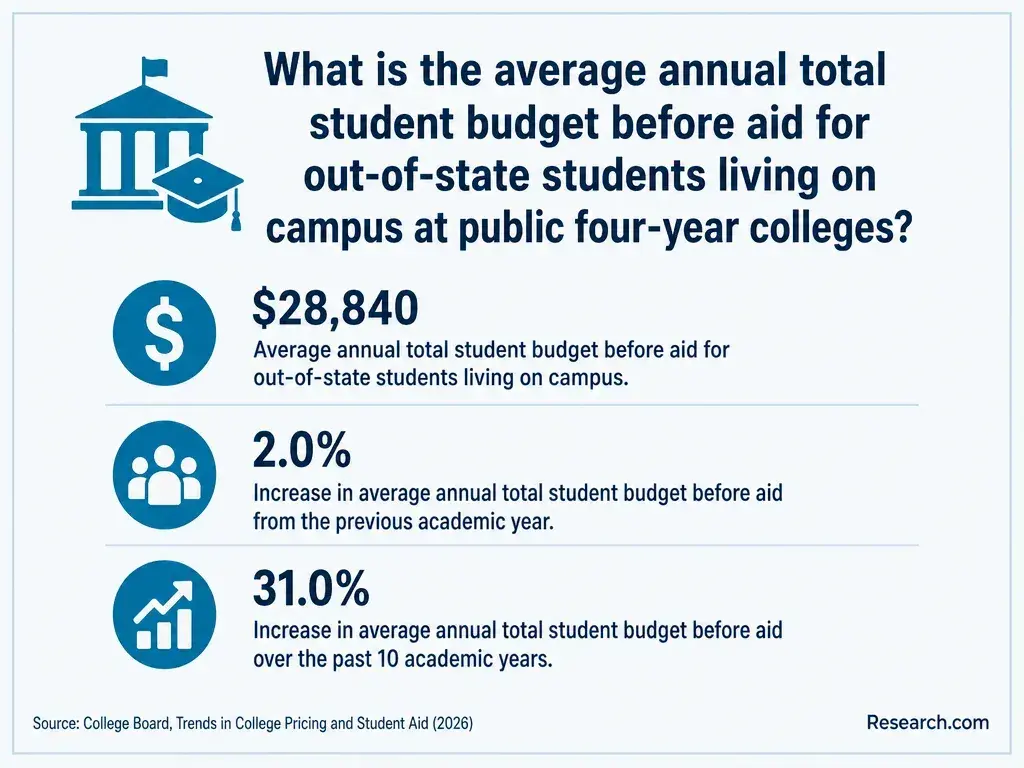
Compare the cost to finish, not just advertised tuition. Include remaining required credits, mandatory fees, software or materials, travel or internship expenses, and possible extra terms caused by course sequencing. Ask for an official degree audit and an institution-specific cost estimate. If you are also considering a project-management degree, an online project management undergraduate funding guide can help frame aid questions, but aid eligibility and awards must be confirmed for the specific program you choose.
First, confirm the institution's current accreditation through the accreditor and the school. Then check whether any advertised AACSB, ACBSP, or IACBE business accreditation actually covers the business program under consideration. Institutional accreditation and business-school accreditation have different scopes; neither proves that a particular concentration has strong teaching or placement outcomes.
For quality, inspect required courses, instructor access, software resources, internship support, and documented outcomes. Ask how the school defines and collects any placement figures, and whether they apply to your concentration rather than all business students. Application cost is a separate consideration: accredited colleges offering free online applications may reduce the cost of applying, but a waived fee is not a measure of program quality.
The U.S. Bureau of Labor Statistics reports a May 2025 median annual wage of $82,320 for logisticians and projects 18% employment growth for that occupation from 2025 to 2035. Those figures describe workers across experience levels and employers; they are not starting salaries or outcomes specific to supply chain graduates.
MIS has no single occupation-wide wage that represents every graduate. A reporting assistant, systems analyst, and project coordinator have different duties and hiring requirements, so compare occupations that match the tasks in your target job postings rather than borrowing one attractive figure. Likewise, project management specialists had a May 2025 median annual wage of $102,320, but that is not an expected MIS graduate salary. If project delivery is your real goal, compare the curriculum and total cost of MIS with lower-tuition online programs for project management before treating either occupation's median as a return on tuition.
A certification is a separate credential, not a benefit automatically conferred by the BS. Supply chain students may investigate ASCM credentials such as CPIM or CSCP; MIS students may consider role-specific credentials in business analysis, cloud platforms, data tools, or IT service management. The useful choice depends on the job's actual tools and responsibilities. Check each issuer's current exam, experience, renewal, and fee requirements before paying.
For an entry-level candidate, a well-explained inventory model, requirements document, or database project may provide more immediate evidence than an unrelated credential. If postings consistently emphasize schedules and project delivery instead, compare targeted project-management training or lower-tuition online programs for project management with the MIS curriculum. Do not assume an undergraduate course alone qualifies you for an experience-based certification.
How do you choose the right business administration program?
Start with three target job postings and identify the recurring tasks - not just the job titles. Then compare each school's official degree requirements against those tasks. This sequence keeps an appealing concentration name from hiding missing courses or limited applied practice.
Before enrolling, use this short decision check:
- Request a degree audit showing which prior credits satisfy the business core, concentration, electives, and residency rules.
- Compare required projects and tools with the tasks in your target jobs; ask what work you can show to employers without disclosing confidential data.
- Confirm elective availability, format obligations, internship rules, total remaining cost, and likely completion schedule in writing.
If timing is decisive, online degrees with accelerated terms are worth comparing - but shorter terms do not necessarily reduce total coursework or cost. If both concentrations leave the same substantial skill gap, consider a more specialized degree or targeted training instead. Choose the path whose verified courses, projects, and remaining cost best support your next realistic role.
Other Things You Should Know About Business Administration
Possibly. Some schools allow a minor, second concentration, or relevant electives. Ask whether the combination adds credits or delays graduation; overlapping courses may not satisfy both sets of requirements.
Often, but the change may alter required courses and your graduation date. Have an adviser update your official degree audit before dropping or replacing classes.
Not necessarily. Requirements vary, and some programs teach technical fundamentals. Check whether introductory programming, database work, or quantitative courses are prerequisites for the MIS classes you want.
That depends on the institution. It may appear on the transcript instead. Confirm the school's credential and transcript policies if formal recognition matters to you.
- Employment Projections - Labor Market Information - CA.gov https://labormarketinfo.edd.ca.gov/data/employment-projections.html
- What Is a Bachelor's Degree in Supply Chain, Transportation and Logistics Management? | Bellevue University https://www.bellevue.edu/articles/what-is-a-bachelors-degree-in-supply-chain-transportation-and-logistics-management/
- All 8 Types of Information Systems: A Full Breakdown | Syracuse University https://ischool.syracuse.edu/types-of-information-systems/
- Management Information Systems - Department of Business | Mississippi University for Women https://www.muw.edu/business/bba/mis/
- BS in Business Administration (Supply Chain Management) | Sacramento State Catalog https://catalog.csus.edu/colleges/business-administration/marketing-and-supply-chain-management/bs-in-business-administration-supply-chain-management/
- Business Analytics, Information Systems & Supply Chain | Herbert Wertheim College of Business https://wertheim.fsu.edu/departments/baissc