2027 Paying for an Online BS in Business Administration: A Nonrefundable Enrollment Deposit
Audited and Verified:
Our Editorial and Data Verification Process
Research.com uses government datasets, official education statistics and primary institutional information to support its career and degree guides. Our review process checks factual accuracy, occupational definitions, source dates and the requirements associated with the credentials discussed.
How This Article Was Fact-Checked
Our editorial team verifies salary estimates, employment projections, education requirements and program information against original data providers and official organizations. Salary figures are checked against the relevant occupational definitions and reporting periods. Information about licensure, accreditation and required in-person training is reviewed separately.
Fact-checked and verified on:

Co-Founder and Chief Data Scientist
An online BS in Business Administration may ask you to pay an enrollment deposit before you know your final aid package, transfer-credit evaluation, or course schedule. If the deposit is nonrefundable, that timing matters: withdrawing or choosing another school could leave you out of pocket.
This guide explains what the charge covers, when an exception might apply, and which written answers to obtain before paying. It is for prospective and returning students who want to secure a place without committing money before they can judge the program's full cost and fit.
Key Things You Should Know
- "Nonrefundable" generally means a change of plans will not recover the deposit; ask for the exact amount, payment deadline, and written exception policy before paying.
- Confirm whether the deposit is credited toward tuition or fees. A credit changes when you pay, while a separate charge increases your total cost.
- Do not treat a deposit deadline as a reason to skip the final aid offer, official transfer evaluation, accreditation check, or required-course schedule.
What is a nonrefundable enrollment deposit for an online business degree?
An enrollment deposit is a payment a college requests to confirm that you intend to attend. A school may apply it to your first tuition bill, apply it to another charge, or retain it as a separate fee. Nonrefundable describes the school's stated treatment of the payment if you do not enroll; it does not, by itself, explain when you become responsible for tuition or whether an exception applies.
Ask the admissions or student accounts office what action the payment triggers. Accepting an offer, paying a deposit, registering for classes, and reaching a tuition-refund deadline can create different obligations. Keep the deposit terms and your payment receipt with the admissions offer. An application fee is a different charge, usually paid to have an application reviewed; if that upfront cost also matters, you can compare accredited schools with no application charge.
How much does an online bachelor's degree in business administration cost?
There is no reliable single price for an online BS in Business Administration. Schools may bill by credit, course, or term, and the amount you owe depends on required credits, applicable transfer work, enrollment pace, fees, and aid. A deposit is only one part of that calculation.
The table separates charges that students can easily mistake for one another. Request a school-specific estimate showing each applicable item rather than relying on an advertised tuition rate.
| Cost item | What to confirm | Why it affects the decision |
| Enrollment deposit | Amount, due date, refund terms, and whether it becomes a bill credit | Determines the cash at risk before classes start |
| Tuition | Billing method and remaining required courses after the official credit evaluation | Determines the main academic charge |
| Additional expenses | Technology, books, software, proctoring, and any required travel | Can make the total exceed the quoted tuition |
| Funding | Confirmed grants, scholarships, loans, and employer-payment terms | Changes net cost but may not cover an upfront deposit |
Compare schools on the amount you expect to pay to finish, not tuition alone. Filing the FAFSA does not guarantee aid or mean funds will arrive before a deposit deadline. To investigate both published prices and aid participation, compare business administration tuition and FAFSA eligibility, then obtain a personalized estimate from each school.
Can you get a refund on a nonrefundable enrollment deposit?
Usually, you should plan on losing a clearly disclosed nonrefundable deposit if you simply decide not to attend. An exception may exist under the school's written policy, your enrollment agreement, or applicable law, but it should not be assumed. For example, ask what happens if the school cancels your program or cannot offer a required start date; those circumstances differ from choosing a competing offer.
If a problem arises, contact student accounts promptly and request the applicable policy and a written decision. Explain the circumstances and retain the offer, payment receipt, and correspondence. If you believe the charge was billed incorrectly or the stated terms were not followed, use the school's complaint process and seek appropriate consumer guidance. A credit-card dispute is not a general refund policy for a payment you knowingly agreed was nonrefundable.
A lost deposit should not automatically keep you in a substantially more expensive program. Compare the deposit you would forfeit with the verified difference in remaining completion costs, including extra credits and fees. If changing schools remains sensible, review lower-priced college options for business majors without assuming their published prices will be your final cost.
Paying is most defensible when the major uncertainties have been resolved in writing. The following sequence focuses on facts that can change whether the deposit is a reasonable commitment.
- Get the deposit amount, due date, bill-credit treatment, refund exceptions, and any later enrollment or withdrawal deadlines from admissions or student accounts.
- Ask financial aid for your school-specific offer and clarify what must be paid before aid is disbursed; confirm any employer reimbursement separately.
- Request an official transfer evaluation and degree audit showing which accepted credits satisfy general education, the business core, electives, and residency requirements.
- Ask an adviser for the required-course rotation, live-session and exam obligations, group-work expectations, and any campus or internship requirements.
- Confirm the exact degree awarded, applicable accreditation, and the catalog and policies governing your intended start term.
A preliminary statement that credits "should transfer" is not the same as an approved degree plan. For an example of why accepted credits and required credits need separate scrutiny, see project management bachelor's residency and transfer requirements; obtain the business program's own rules before paying.
Verify the institution's accreditation with its recognized accreditor and confirm that the online BS is offered by that institution under the name in your admissions materials. Institutional accreditation matters for decisions such as federal aid eligibility and credit recognition, although another school or employer makes its own acceptance decisions.
Business-school or programmatic accreditation is a separate question. If a school cites AACSB, ACBSP, or IACBE, check the accreditor's listing for the institution and the scope of its accreditation; do not assume every degree or location is covered. Nor does business accreditation establish that graduates will obtain a particular job. Ranked school options for studying business online can help you identify programs to investigate, but verify accreditation and the online program's current status with the responsible institutions and accreditors before committing a deposit.
A BS in Business Administration generally combines general education with business subjects such as accounting, finance, economics, marketing, management, operations, and quantitative analysis. The actual course list, prerequisites, electives, and applied requirements belong to the school's catalog. An online course may still require scheduled presentations, team projects, proctored assessments, or a capstone.
Before paying, compare the degree audit with the course schedule: a required accounting or statistics course that is offered infrequently could delay completion even if your total remaining credit count looks manageable. If your goal is specifically HR, compare the general business curriculum with choosing a degree in human resources. An HR elective in a general business degree is not necessarily an official concentration or an HR credential.
Requirements vary by institution and by entry route. First-year applicants may need a secondary-school credential and transcripts; transfer applicants typically need records from previous colleges. Some schools set separate conditions for admission to the business major or for progression into upper-level courses. Being admitted to the university does not establish that prior accounting, economics, mathematics, or other work will satisfy a particular degree requirement.
Ask admissions which documents are required to make an offer and ask the registrar or transfer office what is required for a final credit evaluation. If you have previous college work, request the result before risking a deposit where possible. Human resources bachelor's residency and transfer rules illustrate a related issue to check in any business program: receiving transfer credit and meeting the school's remaining-credit requirement are different decisions.
The answer depends on credits that apply to the degree, course availability, prerequisites, and how many courses you can complete each term. Online delivery does not make a program self-paced. A transfer student with many accepted electives may still need a sequence of business-core courses, while a student working full time may prefer a lighter schedule that extends the calendar timeline.
Ask an adviser for a term-by-term plan using your official audit, including when each required course is offered. Check whether stepping away would affect reentry, aid, or the catalog governing your degree. If finishing sooner is the overriding goal, shorter online bachelor's pathways in organizational leadership offer a different degree to compare; confirm that its curriculum meets your goal before choosing it for speed alone.
The degree can support applications for business-facing work, but job eligibility depends on the role and your evidence of skills. Early-career applicants might pursue operations or project coordinator positions, administrative roles, sales support, or marketing support. Relevant employment, internships, spreadsheet work, clear writing, and examples of solving organizational problems can strengthen an application. A bachelor's degree alone does not confer managerial authority or qualify someone for a regulated credential.
Use the job you want to test whether this deposit buys access to the right education. If you want broad business preparation, a general BS may fit; if your target is procurement or logistics, compare its operations courses and applied opportunities with supply chain bachelor's degrees in three years or less. Do not assume a shorter specialized degree transfers the same credits or costs less without an evaluation.
How much can you earn with a business administration degree?
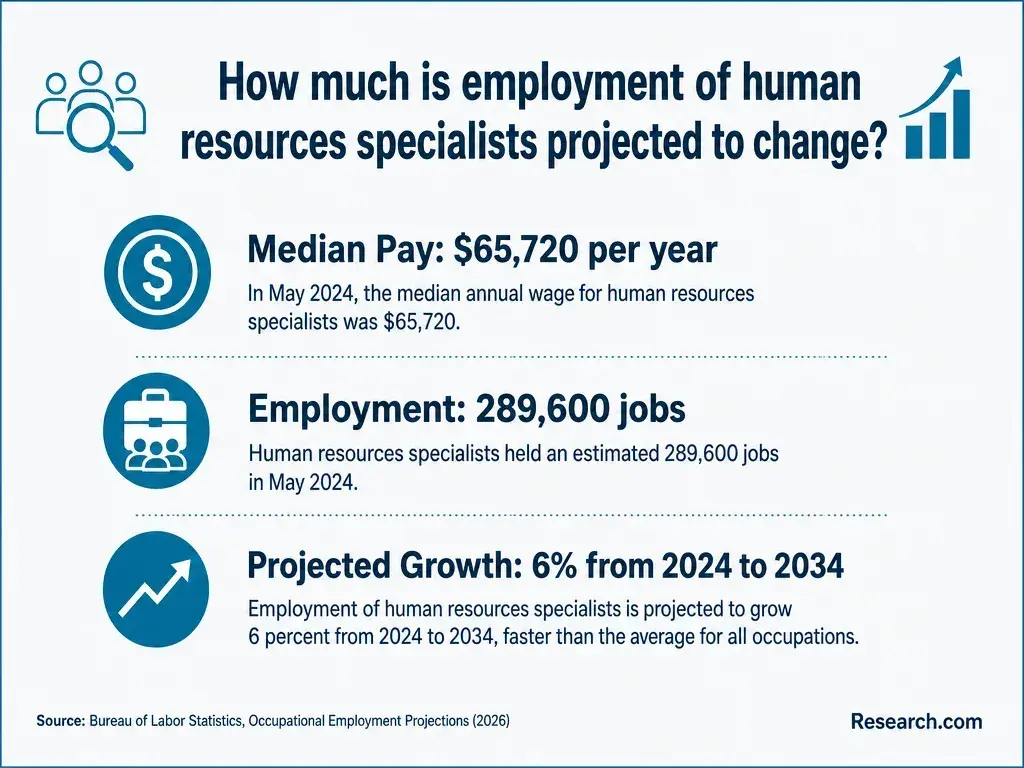
Earnings cannot be inferred from the degree title. As one occupation-specific reference, the U.S. Bureau of Labor Statistics reports a $75,940 median annual wage for human resources specialists in May 2025. That figure covers workers across experience levels; it is not a starting salary, a business-degree graduate outcome, or a return on your deposit.
For a financial decision, compare verified net completion costs and likely borrowing with the qualifications listed in jobs you would realistically pursue. Include your existing experience: an employee using the degree to meet a stated advancement requirement faces a different calculation from someone entering a new function. If a specialized supply chain role is the goal, budget-friendly supply chain degrees with shorter schedules may be worth comparing on remaining cost and required skills - not on a promised salary. Pay the nonrefundable deposit only when the program's value still makes sense without assuming an earnings increase.
Other Things You Should Know About Business Administration
Yes. Ask admissions for a written deposit-deadline extension, especially if you are waiting for an aid offer or final credit evaluation. The school may decline, so do not assume an extension until it confirms one.
Not necessarily. Ask which separate steps confirm enrollment and course registration, and whether missing either step changes your deposit or admission status.
Ask student accounts which payment methods and third-party payments it accepts. Clarify who receives any permitted refund or bill credit and keep the receipt in your records.
Only if you understand and can afford the potential loss under each school's terms. Check offer and decision deadlines first; holding multiple places may also conflict with a school's stated enrollment conditions.
- Receiving Financial Aid | studentaid.gov https://studentaid.gov/complete-aid-process/receive-aid
- § 1026.10 Payments. | Consumer Financial Protection Bureau https://www.consumerfinance.gov/rules-policy/regulations/1026/10
- Student Deposits Prior to Enrollment | NYS Education Department https://www.acces.nysed.gov/bpss/schools/student-deposits-prior-enrollment
- Enrollment Deposit - ASU Admission - Arizona State University https://admission.asu.edu/deposit
- Refunds | Tuition, Fees and Billing https://www.newschool.edu/tuition-fees-billing/refunds/
- Submit Your Enrollment Deposit - Admitted Students | University of Miami https://admitted.miami.edu/submit-your-enrollment-deposit/index.html
- Help: Enrollment Deposit | umich.edu https://csprod.dsc.umich.edu/htmldoc/eng/dftie/lsaa/htm/ra_was_accept_edr.html
- Financial Aid Frequently Asked Questions - Affording UA https://afford.ua.edu/financial-aid/faq/
- Deferral Policy | The New School Catalog https://catalog.newschool.edu/registration-and-records/registration-policies/deferral
- Deferrals and Term Changes - DU Bulletin - University of Denver https://bulletin.du.edu/graduate/admission-and-enrollment-policies/admission-process-and-standards-for-all-applicants/admission-term-changes/