2027 Choosing an Online BS in Business Administration Around A Seasonal Second Job
Audited and Verified:
Our Editorial and Data Verification Process
Research.com uses government datasets, official education statistics and primary institutional information to support its career and degree guides. Our review process checks factual accuracy, occupational definitions, source dates and the requirements associated with the credentials discussed.
How This Article Was Fact-Checked
Our editorial team verifies salary estimates, employment projections, education requirements and program information against original data providers and official organizations. Salary figures are checked against the relevant occupational definitions and reporting periods. Information about licensure, accreditation and required in-person training is reviewed separately.
Fact-checked and verified on:

Co-Founder and Chief Data Scientist
A seasonal second job can make a predictable college schedule impossible: the weeks when you most need the income may also bring extra shifts and changing hours. An online BS in Business Administration can fit that pattern, but "online" does not necessarily mean self-paced.
This guide is for people weighing a business bachelor's degree alongside recurring peak-season work. It explains which scheduling policies to check, how to plan a manageable course load, and how to compare the cost and career value of programs without relying on flexibility claims alone.
Key Things You Should Know
- Choose by the demands of your busiest work season: check live attendance, weekly deadlines, exams, group work, and required courses before committing.
- A typical bachelor's degree requires about 120 semester credits, but accepted transfer credits may not satisfy specific business requirements; request an official degree audit.
- Taking fewer courses during peak season can protect your income and academic progress, though it may extend completion time and affect financial-aid eligibility.
What Is an Online BS in Business Administration for Seasonal Workers?
An online BS in Business Administration is an undergraduate degree covering business functions such as accounting, marketing, operations, finance, and management. It is not a separate credential designed for seasonal workers. What makes a program suitable is its delivery and enrollment policies: whether you can adjust your course load when a second job becomes demanding and still complete required classes in a workable sequence.
Asynchronous classes usually let you access lessons outside scheduled meetings, but they can still have fixed weekly deadlines. Self-paced courses offer more control over timing, subject to school rules. If you have prior college study, establish your academic eligibility for business administration degree study separately from how your credits will apply toward graduation. Neither work experience nor admission alone establishes a shorter degree path.
How Can You Balance Online Business Classes With a Seasonal Second Job?
Build your plan around the least predictable weeks, not your average week. A retail holiday shift, summer hospitality schedule, or tax-season support role may leave little time for live meetings or group coordination even if you can watch recorded lectures later.
The table shows how common online formats differ when work hours change. Use it to identify policies to verify, not as a substitute for checking individual course syllabi.
| Course format | Potential fit during peak season | Main constraint to check |
| Asynchronous, fixed-term | Study outside shift hours | Weekly deadlines, timed exams, and group meetings |
| Scheduled live sessions | Workable if shifts are reliably predictable | Attendance rules and available meeting times |
| Self-paced or competency-based | More control over study timing | Assessment rules, term charges, and minimum progress requirements |
Before enrolling, test the schedule against an actual peak-season calendar:
- Mark fixed shifts, commute time, sleep, and other obligations; reserve study blocks you can keep even if extra shifts arise.
- Ask for sample syllabi for the courses you would take during peak season, including exam windows, proctoring, presentations, and group-project deadlines.
- Ask an adviser whether you can take a lighter peak-season load, move a difficult course to another term, or take an approved break without disrupting prerequisites or aid.
Shorter courses compress the same work into fewer weeks; they do not automatically make it easier. Use an accelerated business college program guide as a starting point, then confirm the actual workload and term calendar with each school.
How Much Does an Online Business Administration Degree Cost?
Compare the cost to finish, not just advertised tuition. Ask each school for a written estimate based on the credits it expects to apply to your degree. Include required fees, books, software, exam proctoring, and any travel for an internship or campus visit. An extra term can add charges even when you take fewer courses at a time.
For a seasonal worker, cash flow matters as much as the final total. Ask whether tuition is charged per credit or per term, when payment is due, and how a lighter load affects grants, loans, or scholarships. If an employer offers education assistance, confirm eligibility, grade rules, reimbursement timing, and any obligation to repay the employer. For an initial price comparison, review online business education on a smaller budget, then obtain program-specific figures from the schools.
Online delivery does not determine accreditation. Check the institution's current accreditation status and whether its accreditor is recognized by the U.S. Department of Education. Then check separately whether the business school or the specific program falls within any claimed AACSB, ACBSP, or IACBE accreditation. Institutional and business accreditation have different scopes; neither proves that the schedule will fit your job.
If federal financial aid is part of your plan, confirm the school's participation and the eligibility of your program and enrollment pattern rather than inferring eligibility from accreditation alone. A list of FAFSA-eligible online business administration colleges can help you identify schools to investigate, but the financial-aid office must explain what applies to your circumstances.
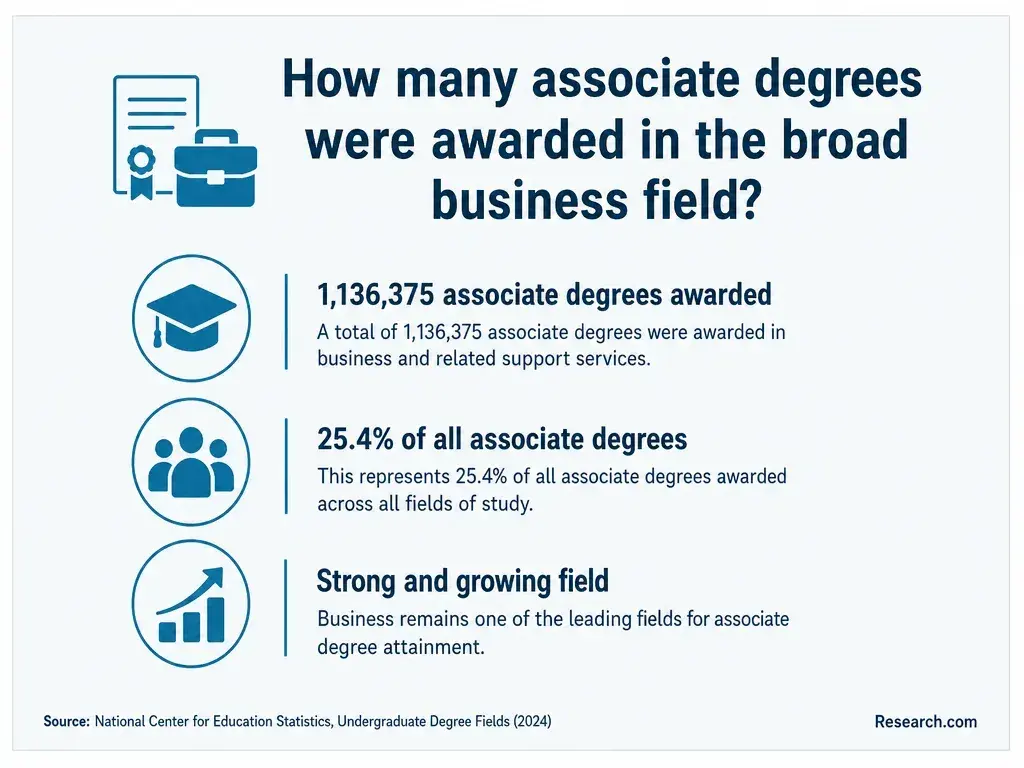
Requirements vary, but a BS commonly combines general education with accounting, economics, business law, finance, marketing, management, quantitative work, and a strategy or capstone course. Concentrations and electives add depth; a few HR or project-management electives do not necessarily create an officially designated concentration.
For scheduling, look beyond course titles. Accounting and statistics may need steady weekly practice, while capstones may involve team meetings, presentations, or an approved workplace project. Ask which requirements have prerequisites and whether they are offered during your lighter-work months. If HR is your intended field, a human resources program selection guide can help you compare a broad business curriculum with a more focused degree; the best choice depends on the work you want to do.
Schools may request a high school credential, prior college transcripts, and evidence that you meet any business-major prerequisites. Requirements for GPA, mathematics preparation, and transfer admission differ. A changing work schedule generally does not prevent admission, but it is worth checking whether the program permits part-time enrollment and entry in a term that avoids your busiest season.
Request an official evaluation if you have previous coursework. Ask which credits satisfy general education, the business core, and electives, and which requirements remain; accepted credits are not always credits that advance your major. Application fees are a smaller expense than tuition but still worth comparing if you plan to apply widely. You can compare no-fee college applications while verifying each program's current admission rules directly.
Completion time depends on applicable transfer credit, course load, prerequisites, and when required classes are offered. A typical bachelor's degree requires about 120 semester credits; that is the degree total, not necessarily the number you must take after enrolling. A student who reduces enrollment each peak season should expect a different timeline from one who can maintain the same load year-round.
Ask an adviser for a term-by-term plan showing the courses you would take during busy and quiet seasons. Check whether skipping a term would postpone a required course offered only at certain times. When you compare American fast-paced business bachelor's degrees, weigh the advertised calendar against your available study hours, transfer evaluation, and total charges. Finishing faster is not a saving if it requires giving up essential work income.
A business administration degree can support applications for operations coordination, administrative work, sales support, marketing coordination, procurement support, and some HR roles. Your seasonal job may supply useful evidence: scheduling staff, tracking inventory, resolving customer issues, or preparing reports is more informative to an employer than the job's seasonal label. Describe the responsibilities you actually held and the tools you used.
The degree does not automatically qualify you to manage a department. For a stronger transition, seek coursework or approved projects that address the gap between your current duties and a target role. If you already hold an associate degree and specifically want HR work, online human resources programs for associate degree holders may offer a more focused comparison; verify how your credits apply in either pathway.
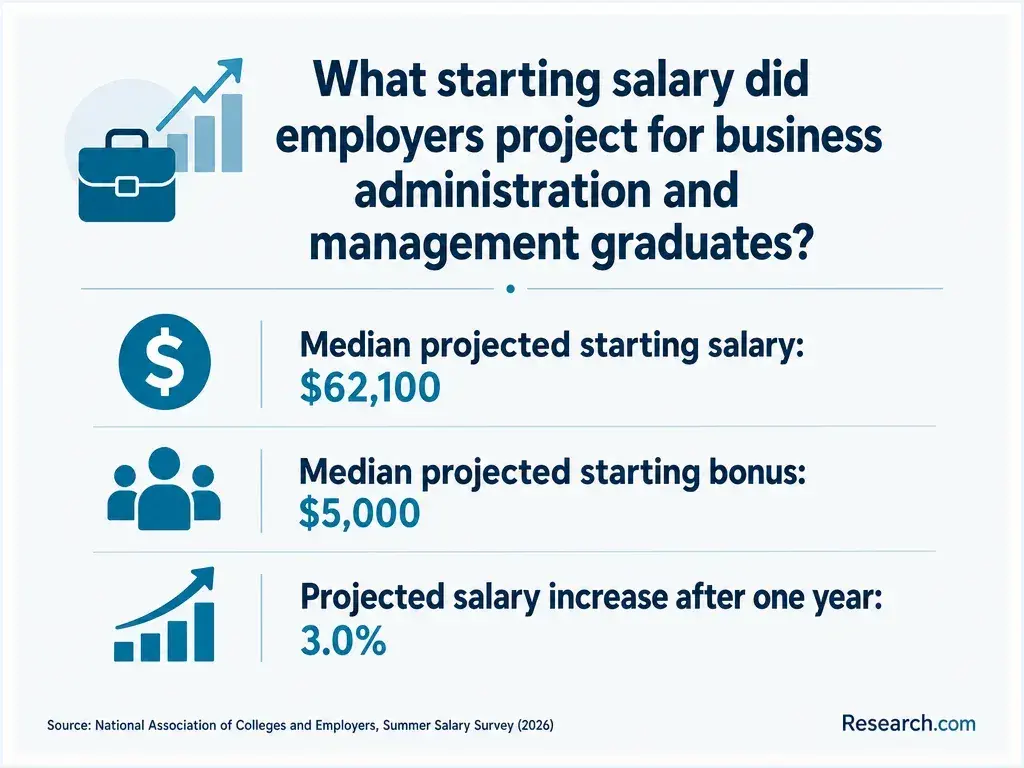
There is no single salary for an online BS in Business Administration. Pay depends on occupation, experience, location, and industry - not simply on whether the degree was earned online. The U.S. Bureau of Labor Statistics reports a $75,940 median annual wage for human resources specialists in May 2025. That occupation-wide median includes experienced workers and is not an expected starting salary for a new graduate or a prediction of what a career change will pay.
Compare openings for the specific roles and locations you would pursue, including their experience requirements, before estimating whether a degree is worth its cost. Affordable business administration study and earnings considerations can inform that comparison, but no program title establishes a personal return on investment.
Do Business Administration Graduates Need Licenses or Certifications?
Most general business coordination roles do not require a license solely because they involve business administration. Specialized work may have separate rules: accounting licensure and some financial-services activities, for example, require qualifications beyond a general business bachelor's degree. Voluntary HR or project-management certifications also have their own eligibility criteria; a related course does not award the credential.
Check requirements for the job you actually want before paying for additional education. If your goal is project coordination rather than a broad business degree, online project management programs for smaller budgets provide another educational option to compare. Match any program's curriculum and cost to employer requirements and the experience you still need.
Other Things You Should Know About Business Administration
Ask the school whether it can enroll and serve students in the state where you will be located. Also check whether any required placement has separate location rules.
Only if your employer permits it. Plan for reliable personal access, especially for timed exams, required software, and assignments involving your own school account.
Possibly, but employment alone does not award credit. Ask the program about prior-learning assessment or internship approval, including supervision and learning objectives, before assuming the job qualifies.
Contact your instructor and adviser promptly. Ask about the specific attendance and deadline policies before a missed assessment; a schedule change does not automatically excuse required work.
- How Financial Aid Is Calculated | studentaid.gov https://studentaid.gov/complete-aid-process/how-calculated
- DAPIP | Homepage - Office of Postsecondary Education (OPE) https://ope.ed.gov/dapip/
- Academic Years, Academic Calendars, Payment Periods, and Disbursements | 2025-2026 Federal Student Aid Handbook https://fsapartners.ed.gov/knowledge-center/fsa-handbook/2025-2026/vol3/ch1-academic-years-academic-calendars-payment-periods-and-disbursements
- Credit for Prior Learning | Transfer Credit Ohio https://transfercredit.ohio.gov/students/student-programs/Prior-Learning-Assessments
- Semester Course Load and Student Performance - PMC - NIH https://pmc.ncbi.nlm.nih.gov/articles/PMC7568764/
- Reduced Course Load - Study in the States - Homeland Security https://studyinthestates.dhs.gov/sevis-help-hub/student-records/manage-program-dates-registration-and-course-load/reduced-course
- Fast Facts: Undergraduate graduation rates (40) | ed.gov https://nces.ed.gov/fastfacts/display.asp
- What's the Difference Between Asynchronous and Synchronous Learning? | Ohio State Online https://online.osu.edu/content-hub/blogs/whats-the-difference-between-asynchronous-and-synchronous-learning/
- Online Bachelor's Degree in Business Administration | Purdue Global https://www.purdueglobal.edu/degree-programs/business/bachelor-business-administration/
- Asynchronous and Synchronous Online Courses | nmsu.edu https://dacc.nmsu.edu/faculty-and-staff/online-quality-assurance/asynchronous-and-synchronous-online-courses.html