
2027 Fastest Way To Become a Counselor in Maine

Co-Founder and Chief Data Scientist
If you want to become a licensed counselor in Maine, the fastest route is not simply “find a short program.” Maine counseling licensure depends on the right graduate degree, supervised clinical experience, exam preparation, complete documentation, and careful planning around internships and post-graduate hours. Skipping one requirement can cost more time than an accelerated program saves.
This guide explains the most efficient path to counseling licensure in Maine for 2026, including bachelor’s-level options, accelerated and online degree routes, supervised experience requirements, salary expectations, demand, affordability, and common mistakes to avoid. It is designed for students, career changers, and early-career mental health workers who want a practical roadmap rather than a vague overview.
According to the U.S. Bureau of Labor Statistics (BLS), Maine currently has more than 3,650 people employed as counselors. That existing workforce is important, but demand for mental health, substance use, school-based, and community counseling services continues to shape hiring needs across the state.
Quick Answer: Is Maine a Good State for Aspiring Counselors?
- Maine has meaningful counseling career opportunities. The state’s need for mental health, school, substance abuse, and behavioral health professionals creates room for new counselors, especially in underserved and rural communities.
- Licensure takes planning. The fastest path usually means choosing a licensure-aligned master’s program early, completing internships on schedule, and starting supervised post-graduate hours as soon as you are eligible.
- Pay varies by role and license level. Reported counselor earnings in Maine include an average around $49,003 annually, while some licensed professional and clinical roles report much higher averages depending on specialization, employer, and experience.
- Accelerated and online programs can reduce time and indirect costs. They are useful when they meet Maine’s licensure requirements, provide strong clinical placement support, and fit your work and family responsibilities.
- What is the fastest way to become a licensed counselor in Maine?
- What counseling careers can you pursue in Maine with only a bachelor’s degree?
- Are there accelerated counseling degree programs in Maine?
- Are online counseling programs in Maine faster than traditional ones?
- What challenges do fast-track counseling students face?
- How do employers in Maine view fast-track counselors?
- How does specialized training in substance abuse counseling enhance career opportunities in Maine?
- What factors indicate a high-quality counseling program in Maine?
- What are the state-specific licensure requirements for counselors in Maine?
- How do counseling and social work career paths differ in Maine?
- Are fast-track and online counseling programs in Maine more affordable?
- Is there a demand for counselors in Maine?
- How much do counselors get paid in Maine?
- Is taking the fast route to become a counselor in Maine worth it?
What is the fastest way to become a licensed counselor in Maine?
The fastest practical route to becoming a licensed counselor in Maine is to complete a licensure-eligible master’s degree, finish the required internship, pass the required exam, secure an approved supervisor, and accumulate post-graduate clinical hours without administrative delays. The “fast” route is less about cutting corners and more about preventing avoidable gaps between each step.
For most aspiring licensed counselors, the best strategy is to map the full pathway before enrolling in a graduate program. A program that looks short on paper may still slow you down if it does not meet state coursework expectations, lacks clinical placement support, or leaves you scrambling for supervised hours after graduation.
| Fast-track step | Why it matters | How to avoid delays |
| Choose a licensure-aligned graduate program | Maine licensure depends on completing the right graduate preparation, not just earning any counseling-related degree. | Confirm program accreditation, credit requirements, practicum, internship, and Maine licensure alignment before applying. |
| Complete internship requirements on time | Clinical training is a major milestone before post-graduate supervised practice. | Ask early how placements are arranged, whether evening or rural placements are available, and what happens if a site falls through. |
| Plan for supervised experience | Maine requires at least 2,000 hours of post-graduate supervised experience over at least two years, including at least 1,000 direct client counseling hours and supervision at a 1:30 ratio. | Look for employers with enough client volume and verify that your supervisor is acceptable to the Maine Board of Counseling Professionals Licensure. |
| Prepare for the licensing exam | Licensing exams such as the National Counselor Examination (NCE) or National Clinical Mental Health Counseling Examination (NCMHCE) can delay licensure if you wait too long to study. | Use official exam resources, practice tests, structured review plans, and peer study groups. |
| Submit a complete application | Missing paperwork is one of the easiest ways to lose time. | Gather transcripts, internship verification, three professional references, and a professional disclosure statement before you need them. |
| Track the application | Board processing can require follow-up if documents are incomplete or questions arise. | Monitor the Board’s online licensing portal and respond quickly to requests. |
| Complete continuing education requirements | During conditional licensure and renewal planning, continuing education keeps you on track. | Plan for 55 continuing education hours, including required topics such as family violence. |
If you are still comparing career timelines, Research.com’s guide to how to start a career as a licensed counselor can help you understand how education, exams, and supervised practice fit together.
What counseling careers can you pursue in Maine with only a bachelor’s degree?
A bachelor’s degree alone generally does not qualify you for independent professional counseling licensure in Maine, but it can open the door to important entry-level behavioral health roles. These jobs are useful if you want to gain client-facing experience, confirm that counseling is the right field, and strengthen your future graduate school application.
Common bachelor’s-level paths are often available to graduates in psychology, social work, counseling, rehabilitation services, human services, or related fields.
| Bachelor’s-level role | Typical focus | Why it can help your long-term counseling career |
| Behavioral Health Technician or Mental Health Support Specialist | Provides direct support to people with behavioral, emotional, or mental health needs in residential, community, or treatment settings. | Builds experience with care plans, crisis response, documentation, and client communication. Employers may prefer or require Mental Health Rehabilitation Technician/Community credentials such as MHRT/C or MHRT 1. |
| Case Manager or Care Coordinator | Helps clients connect with housing, healthcare, social services, education, employment, and treatment resources. | Develops systems knowledge, advocacy skills, and experience working across agencies. |
| Substance Abuse Counselor Assistant | Supports addiction treatment services under appropriate supervision in rehabilitation centers, nonprofits, or community programs. | Provides exposure to recovery support, relapse prevention, group services, and substance use treatment teams. |
| Educational Technician | Works in school settings, often supporting students with special needs or behavioral support plans. | Offers practical school-based experience for those considering school counseling, youth services, or family-focused counseling. |
These positions can be a strong first step, but they are not a substitute for a licensure-focused graduate degree if your goal is to practice as a professional counselor. If you are comparing programs that can move you toward advanced credentials, review Research.com’s list of best online counseling degree programs.
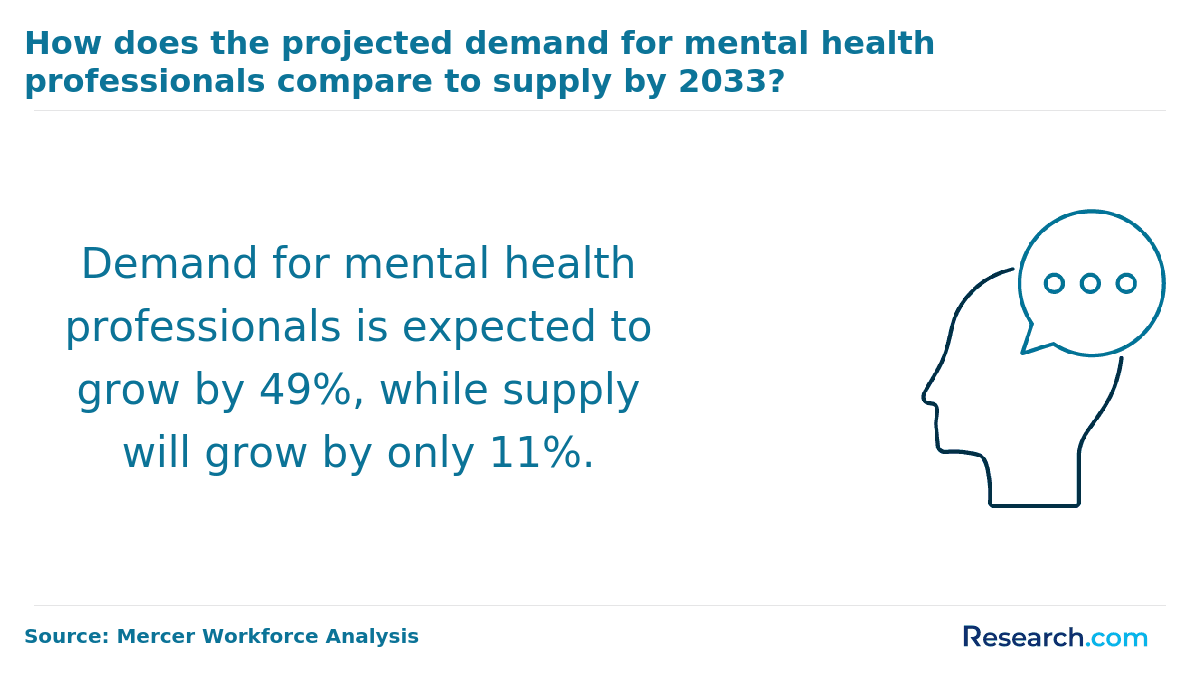
The image below compares projected demand and supply for mental health professionals by 2033, which can help explain why early career experience in behavioral health may be valuable.
Are there accelerated counseling degree programs in Maine?
Yes. Maine has accelerated counseling pathways designed for students who know early that they want to pursue counseling or rehabilitation-related graduate study. These options can reduce the time between undergraduate enrollment and master’s-level preparation, but they still require clinical training and post-graduate supervised experience before full independent practice.
- University of Southern Maine (USM): USM offers an Accelerated Graduate Pathway to a Master of Science in Counseling. Motivated students may complete both bachelor’s and master’s study in as few as five years instead of the traditional six. This route is most useful for undergraduates who are already committed to counseling and can meet academic expectations without changing majors late in the process.
- University of Maine at Farmington (UMF) and USM 3+2 Program: This pathway allows students to finish a Bachelor of Science in Rehabilitation Services at UMF in three years and then move into USM’s two-year master’s counseling program. The five-year structure can prepare graduates for counseling-related work in mental health centers, rehabilitation facilities, and community agencies.
USM graduate tuition is approximately $448 per credit for in-state students. Completing degrees faster may reduce total time in school, but students should compare the full cost of tuition, fees, books, internship travel, exam preparation, and lost work hours before deciding. To check how a program fits licensing rules beyond Maine, use Research.com’s guide to counseling licensure requirements by state.
The chart below shows the types of institutions that offer CACREP-accredited master’s programs.
Are online counseling programs in Maine faster than traditional ones?
Online counseling programs can be faster for some Maine students, but online delivery alone does not guarantee a shorter path to licensure. The speed depends on course availability, clinical placement timing, credit load, term structure, transfer policies, and whether the curriculum meets Maine requirements.
An online program may help you finish sooner when it allows year-round enrollment, offers asynchronous coursework, and supports students who continue working. However, counseling is not fully online in practice: licensure-focused programs still require supervised practicum and internship experiences with real clients.
| Online program advantage | How it can save time | What to verify before enrolling |
| Flexible weekly schedule | Evening, weekend, or asynchronous courses can help working adults take classes without commuting. | Confirm whether courses are truly asynchronous or require live attendance at fixed times. |
| No campus commute | Students can redirect travel time toward coursework, practicum preparation, or exam study. | Ask whether any campus residencies, intensives, or in-person seminars are required. |
| Year-round course options | Summer and winter terms may make it possible to complete credits faster. | Check whether required courses are offered every term or only once per academic year. |
| Ability to remain employed | Keeping income during school can reduce the need to pause work or relocate. | Clarify whether internship hours can be completed around your job schedule. |
| Broader program access | Students in rural areas may access programs without moving closer to campus. | Make sure the school can support Maine-based clinical placements. |
For Maine students, the most important question is not “Is the program online?” but “Will this program help me complete the correct coursework, clinical training, and licensure documentation on schedule?”
What challenges do fast-track counseling students face?
Accelerated counseling pathways can save time, but they also compress demanding academic and clinical preparation. Students who succeed in fast-track programs usually plan carefully, protect time for supervised practice, and seek help before academic or personal stress becomes unmanageable.
- Heavy course loads: Condensed programs may cover human development, assessment, ethics, diagnosis, group counseling, research, multicultural counseling, and clinical methods in a shorter calendar period.
- Clinical scheduling pressure: Students must coordinate practicum, internship, supervision, documentation, and site expectations while keeping up with coursework.
- Post-graduate hour requirements: Maine’s requirement of at least 2,000 supervised post-graduate hours over at least two years means that a faster degree does not eliminate the supervised practice phase.
- Limited room for disruption: A failed course, delayed placement, supervisor change, family emergency, or work conflict can interrupt a tightly sequenced plan.
- Less time for reflection: Counselor development requires more than completing assignments. Students need time to process clinical feedback, strengthen self-awareness, and build professional judgment.
- Well-being risks: Counseling students often manage emotionally demanding material. Accelerated schedules can increase stress if students do not set boundaries and use support systems.
| Common mistake | Why it causes problems | Better approach |
| Choosing the shortest program without checking licensure alignment | A program that is fast but not accepted for your intended license can create major delays. | Ask the program to explain how its curriculum maps to Maine counseling licensure requirements. |
| Assuming online means easier | Clinical counseling programs require rigorous coursework, supervision, and ethical practice preparation. | Treat online study as flexible, not less demanding. |
| Waiting to arrange internship details | Clinical sites can be competitive, especially in high-need areas. | Ask about placement support before enrolling and begin planning early. |
| Ignoring exam preparation until graduation | Exam delays can slow licensure applications. | Create a study plan during the final part of your program. |
| Focusing only on tuition | Fees, travel, technology, books, unpaid internship hours, and lost wages can affect affordability. | Compare total cost of attendance and the financial impact of each schedule. |
How do employers in Maine view fast-track counselors?
Maine employers generally care most about whether a candidate is properly trained, eligible for the role, clinically prepared, supervised appropriately, and ready to work ethically with clients. A fast-track degree can be acceptable when it includes strong clinical preparation and meets licensing expectations. It can be a concern when it appears to have sacrificed depth, supervision, or placement quality for speed.
For early-career counselors, the best way to make an accelerated background credible is to show evidence of readiness: relevant internship experience, strong supervisor references, careful documentation, exam preparation, familiarity with Maine’s community needs, and a clear plan for continuing education.
| What Maine employers may evaluate | Why it matters | How candidates can strengthen their profile |
| Licensure status or eligibility | Employers must know what services you can legally provide and under what supervision. | Be ready to explain your license stage, required supervision, and timeline. |
| Clinical placement quality | Internship settings reveal whether you have worked with real client needs similar to the employer’s population. | Describe client populations, treatment settings, documentation experience, and supervision received. |
| Supervision history | Good supervision helps develop ethical judgment and clinical skill. | Provide strong references and examples of how you used feedback. |
| Specialized training | Substance use, youth services, crisis work, school counseling, and rural mental health needs may influence hiring. | Match electives, certificates, and field experience to the roles you want. |
| Professional maturity | Counseling work requires boundaries, self-awareness, cultural humility, and reliability. | Prepare interview examples that show ethical decision-making and resilience. |
How does specialized training in substance abuse counseling enhance career opportunities in Maine?
Specialized substance abuse counseling training can improve career options in Maine because addiction treatment intersects with mental health, family systems, criminal justice, healthcare, schools, and community support services. Candidates with focused preparation may be more competitive for roles in rehabilitation centers, nonprofit agencies, outpatient clinics, and integrated behavioral health settings.
This training is especially useful if it covers screening, assessment, motivational interviewing, relapse prevention, co-occurring disorders, crisis response, ethics, and referral coordination. It can also help counselors work more effectively with clients whose substance use is connected to trauma, depression, anxiety, housing instability, or family stress.
If this specialty interests you, review Research.com’s detailed guide on how to become a substance abuse counselor in Maine.
What factors indicate a high-quality counseling program in Maine?
A strong counseling program should do more than award a degree. It should prepare you for Maine licensure, supervised practice, ethical client care, and employment in the settings where you want to work. Before choosing a school, compare programs using evidence rather than advertising language.
| Program quality factor | Questions to ask | Why it affects your licensure timeline |
| Accreditation and licensure alignment | Does the program meet Maine’s academic expectations for your intended counseling license? | If coursework does not match state requirements, you may need extra classes later. |
| Clinical placement support | Does the school help students find practicum and internship sites in Maine? | Placement delays can extend graduation and delay supervised post-graduate hours. |
| Faculty experience | Do faculty members have counseling, supervision, school, substance use, or clinical mental health experience? | Experienced faculty can provide stronger mentoring and professional context. |
| Exam preparation | Does the program provide structured support for exams such as the NCE or NCMHCE? | Earlier exam readiness can reduce post-graduation delays. |
| Student support | Are advising, academic help, mental health support, and career services available to online and campus students? | Fast-track students need quick access to help when problems arise. |
| Format and schedule | Can working adults complete required courses and clinical hours without impossible conflicts? | A flexible format is only useful if required experiences can actually fit your life. |
| Outcomes transparency | Can the program explain completion expectations, placement processes, and licensing preparation? | Clear information helps you compare realistic timelines and costs. |
Students considering school-based careers should also review the pathway for how to become a school counselor in Maine, since school counseling preparation may differ from clinical mental health counseling preparation.
What are the state-specific licensure requirements for counselors in Maine?
Maine counseling licensure requires the correct graduate education, supervised clinical experience, examination, and application documentation. Requirements can differ by license type, so applicants should confirm current rules with the Maine Board of Counseling Professionals Licensure before enrolling in a program or submitting an application.
Based on the requirements described in this guide, aspiring counselors should plan for an accredited master’s program, a substantial internship requirement, at least 2,000 hours of post-graduate supervised experience over at least two years, at least 1,000 hours of direct client counseling, supervision at a 1:30 ratio, and a licensing exam such as the NCE or NCMHCE.
| Requirement area | What to prepare | Decision tip |
| Graduate education | Master’s-level counseling preparation that supports your intended Maine license. | Do not assume any psychology, human services, or counseling-related degree automatically qualifies. |
| Internship and practicum | Documented clinical training completed through the graduate program. | Ask how the program verifies hours and handles site issues. |
| Post-graduate supervision | At least 2,000 supervised hours over at least two years, including at least 1,000 direct client counseling hours. | Choose employment settings where you can realistically build hours at the required pace. |
| Approved supervision | Supervision that meets Maine Board expectations, including the 1:30 supervision ratio described in this article. | Confirm supervisor approval before counting hours. |
| Exam | NCE or NCMHCE preparation, depending on the license pathway. | Study before your schedule becomes crowded with full-time clinical work. |
| Application materials | Official transcripts, internship verification, three professional references, and a professional disclosure statement. | Create a document checklist early so paperwork does not slow processing. |
| Continuing education | 55 continuing education hours during the conditional licensure phase and renewal planning, including required content such as family violence. | Track credits as you earn them instead of reconstructing records later. |
For a focused breakdown of the state pathway, see Research.com’s guide to LPC license requirements in Maine.
How do counseling and social work career paths differ in Maine?
Counseling and social work both serve people facing mental health, family, social, educational, and community challenges, but the training emphasis and career pathways are not identical. Counseling programs typically focus more directly on therapeutic relationships, assessment, diagnosis, treatment planning, and individual or group counseling methods. Social work programs often combine direct practice with policy, advocacy, case management, community systems, and social services.
| Comparison point | Counseling path | Social work path |
| Primary training focus | Therapeutic techniques, mental health counseling, assessment, diagnosis, ethics, and client change processes. | Direct service, systems navigation, advocacy, policy, community support, and social determinants of well-being. |
| Common work settings | Community mental health centers, private practices, schools, substance use programs, rehabilitation settings, and behavioral health organizations. | Hospitals, schools, social service agencies, child and family organizations, community programs, government agencies, and clinical settings. |
| Best fit for students who want | A career centered on counseling relationships and mental health treatment. | A career that may combine counseling, casework, advocacy, program coordination, and systems-level support. |
| Licensure planning | Requires close attention to counseling board rules, supervised counseling hours, and relevant exams. | Requires attention to social work education and licensure requirements for the intended role. |
If you are unsure which path fits your goals, compare the daily work you want to do. Students interested in therapy as the central function may lean toward counseling, while students who want broader client advocacy and systems work may prefer social work. For details on the social work education route, see Research.com’s guide to Maine social worker educational requirements.
Are fast-track and online counseling programs in Maine more affordable?
Fast-track and online counseling programs can be more affordable, but only if the format reduces total costs without creating licensure problems. Students should compare the full financial picture rather than focusing only on tuition per credit.
Some public universities in Maine charge online counseling master’s tuition between $500 and $800 per credit hour, which can bring the full program to approximately $30,000 to $48,000. In-state students may receive lower tuition, and USM graduate courses are approximately $448 per credit for in-state students. These numbers are useful starting points, but they do not include every expense.
| Cost factor | How online or accelerated study may help | What to watch |
| Tuition | Shorter pathways may reduce the number of semesters in school, and in-state public options may lower per-credit costs. | Compare required credits, fees, and whether extra prerequisite courses are needed. |
| Employment income | Online formats may allow students to keep working while enrolled. | Internship hours can still limit work availability, especially near graduation. |
| Commuting and relocation | Remote coursework can reduce travel and housing costs near campus. | Clinical placements may still require travel to approved sites. |
| Time to graduation | Accelerated plans may help students enter supervised paid roles sooner. | A compressed schedule can be difficult if you need part-time pacing. |
| Financial aid | Students in accredited online programs may remain eligible for federal and state scholarships, grants, and aid. | Confirm aid eligibility, enrollment status requirements, and satisfactory academic progress rules. |
| Opportunity cost | Finishing faster may reduce the time before earning counselor-level income. | Do not assume faster always means cheaper if it forces you to reduce work hours significantly. |
Before enrolling, ask each program for a total cost estimate, not just tuition. Include fees, books, technology, exam costs, background checks, internship transportation, supervision-related expenses, and any required campus visits.
Is there a demand for counselors in Maine?
Yes. Maine continues to need counselors across mental health, substance use, school, behavioral disorder, and community support settings. The demand is especially visible in rural and underserved areas where access to timely care can be limited.
The number of licensed counselors in Maine nearly doubled from 1,229 in 2019 to 2,438 by late 2024. Even with that growth, the state still faces challenges meeting mental health needs. Agencies may struggle to fill positions, and residents can face long wait times for care. In some cases, people seek support through emergency rooms when outpatient mental health services are not available quickly enough.
For students, this demand can make counseling a stable and socially important career direction, but it should not be interpreted as a guarantee of any specific job or salary. Hiring still depends on license status, specialty, location, supervision needs, employer budgets, and clinical fit.
If you are deciding whether graduate school is manageable, Research.com’s discussion of whether is getting a masters in counseling hard can help you evaluate the academic and personal commitment before applying.
How much do counselors get paid in Maine?
Counselor pay in Maine depends heavily on license level, specialty, setting, geography, and experience. The figures below should be used as planning estimates, not guaranteed outcomes.
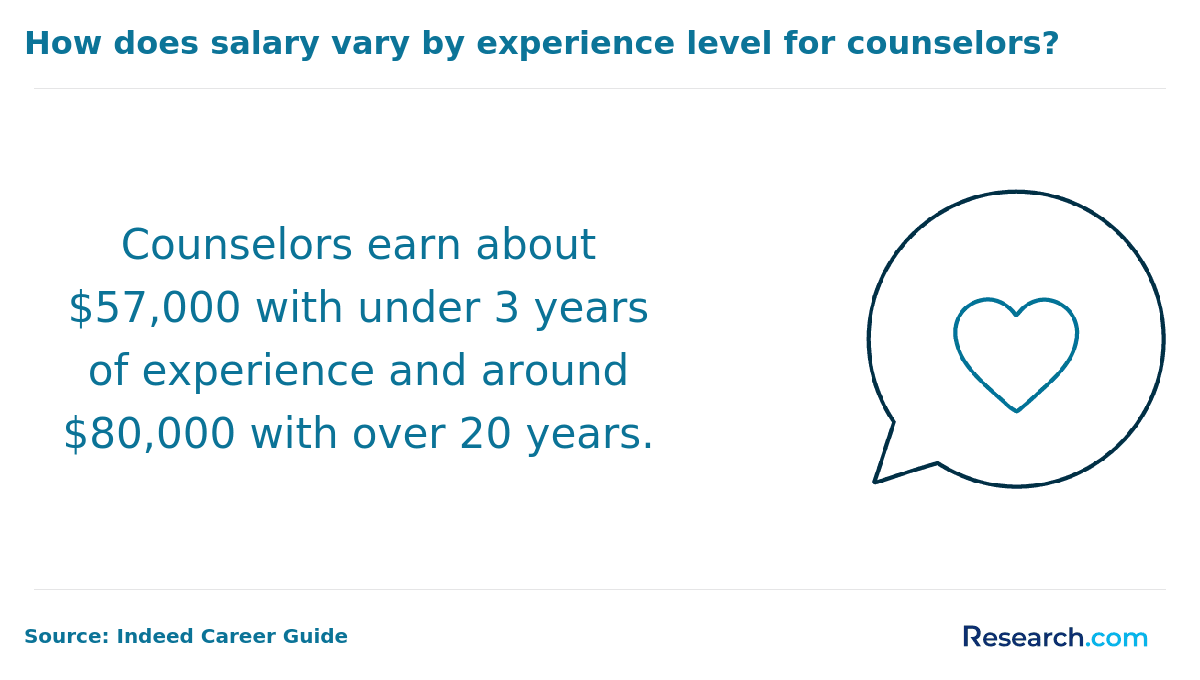
Reported counselor pay in Maine includes an average annual salary around $49,003, with entry-level roles near $37,557 and experienced professionals earning up to $70,930. Counselors in Maine are described as earning about 7% more than comparable in-state professions such as clergy members, though some counseling salaries remain below national averages depending on role and source.
| Counseling role or category | Reported Maine pay information | What can influence earnings |
| General counselors | Average annual pay around $49,003; entry-level roles near $37,557; experienced professionals up to $70,930. | License status, employer type, location, caseload, and years of experience. |
| Licensed Professional Counselors and Licensed Clinical Professional Counselors | Average earnings close to $94,205; full-time LCPCs earning between $95,000 and $131,000 annually. | Clinical scope, independent practice opportunities, specialization, and demand in the setting. |
| School counselors | Median salary near $50,000. | School district, contract structure, education level, and years of service. |
| Mental health therapists | Average about $70,903 per year. | Clinical experience, workplace setting, client population, and licensure level. |
| Substance abuse counselors | Often lower at entry level, though demand in the field is pushing wages upward. | Certification, clinical supervision, treatment setting, and co-occurring disorder expertise. |
Students who want to enter school counseling while controlling education costs may want to compare Research.com’s list of most affordable online school counseling degrees.
Is taking the fast route to become a counselor in Maine worth it?
A fast route can be worth it if it is legitimate, licensure-aligned, financially realistic, and clinically strong. It is not worth it if the program saves a few months but creates problems with accreditation, coursework, internships, supervision, or exam preparation.
The strongest candidates for accelerated counseling pathways are students who already know the counseling specialty they want, can handle intensive coursework, have stable time for fieldwork, and are comfortable planning several years ahead. Career changers can also benefit if online or fast-track formats allow them to keep working while completing required education.
| The fast route may be a good choice if... | A slower or more traditional route may be better if... |
| You have already confirmed that the program supports Maine licensure. | You are still deciding between counseling, social work, psychology, education, or another helping profession. |
| You can manage a heavy academic schedule without sacrificing clinical learning quality. | You need more flexibility because of work, caregiving, health, or financial constraints. |
| You have access to strong advising and clinical placement support. | You may need extra time to find placements near your location. |
| You want to begin supervised post-graduate experience as soon as possible. | You prefer a paced program that allows more time for reflection, skill development, and specialization. |
| You understand that the master’s degree is only part of the licensure timeline. | You expected an accelerated degree to eliminate supervised experience requirements. |
Maine’s workforce needs make counseling an appealing career path, but the best route is the one that gets you licensed without weakening your preparation. Prioritize programs that are transparent, clinically rigorous, and realistic about the time required after graduation.
What Counselors in Maine Say About Their Careers
Building a counseling career in Maine has given me a strong sense of professional purpose. The work is demanding, but the stability of mental health roles and the chance to serve local communities made the accelerated route worthwhile for me. Jasmine
Working with clients in rural Maine changed the way I think about access, trust, and community-based care. Moving quickly through training helped me get into the field sooner, but the real growth came from supervision and direct experience. Mark
The professional network in Maine has been one of the most valuable parts of my career. Workshops, local organizations, and continuing education helped me keep developing after graduation, which mattered just as much as finishing school quickly. Pruitt
Related Articles for Nearby States
- 2027 Fastest Way To Become a Counselor in New Hampshire
- 2027 Fastest Way To Become a Counselor in Massachusetts
- 2027 Fastest Way To Become a Counselor in Vermont
- 2027 Fastest Way To Become a Counselor in Connecticut
- 2027 Fastest Way To Become a Counselor in Rhode Island
- 2027 Fastest Way To Become a Counselor in New York
- 2027 Fastest Way To Become a Counselor in New Jersey
- 2027 Fastest Way To Become a Counselor in Pennsylvania
- 2027 Fastest Way To Become a Counselor in Delaware
- 2027 Fastest Way To Become a Counselor in Maryland
Key Insights
- The fastest route is a compliant route. In Maine, speed only helps if your degree, internship, supervision, exam, and application documents meet state expectations.
- A bachelor’s degree can start your career, but it usually will not qualify you for independent counseling practice. Roles such as behavioral health technician, case manager, substance abuse counselor assistant, and educational technician can build relevant experience before graduate school.
- Accelerated programs can shorten school time, not the entire licensure process. Maine’s supervised post-graduate experience requirement still requires at least 2,000 hours over at least two years, including at least 1,000 direct client counseling hours.
- Online programs are useful when they support clinical placement and licensure. Flexibility matters, but students must verify accreditation, course sequencing, internship support, and Maine eligibility.
- Cost comparisons should include more than tuition. Fees, travel, exam costs, internship scheduling, technology, and lost work hours can change the true affordability of a program.
- Maine needs counselors, especially in high-need specialties and underserved areas. Demand can improve opportunity, but salary and hiring outcomes still depend on license level, specialization, location, and employer needs.
- The best program is not always the shortest one. Choose the option that prepares you for ethical practice, successful supervision, licensure, and the type of counseling work you actually want to do.
References:
- American Counseling Association. (2024). Counseling Workforce Survey. counseling.org.
- Anderson, G. (2021, January 26). Mental health professionals are themselves facing mental health challenges. Inside Higher Ed | Higher Education News, Events and Jobs. insidehighered.com.
- Bisma, A. (2023, July 26). 11 Common Challenges That Counselors & Therapists Face. Talkspace. talkspace.com.
- BLS. (2025). Occupational Employment and Wage Statistics: Maine. bls.gov.
- CACREP. (2024). 2023 Vital Statistics Report. cacrep.org.
- Cappellari, C. (2023, May 26). Schedule a i-140: Fast-Track green card for nurses and physical therapists | Inside Business Immigration. Inside Business Immigration. gtlaw-insidebusinessimmigration.com.
- CEBC. (n.d.). Fast Track Project. cebc4cw.org.
- Coach Training EDU. (2024, July 26). Life Coach Certification in Maine | ICF Accredited. Coach Training EDU. coachtrainingedu.com.
- Life Coach Training Online. (2023, January 27). Life coach Certification Maine - Learn how to become a certified life coach in Maine. Life Coach Certification Online. lifecoachtraining.co.
- Marquette. (2024, September 2). Advancements and challenges in counseling practices. online.marquette.edu.
- norden.org. (n.d.). Employers’ Perspectives on Hiring Immigrants and Refugees. pub.norden.org.
- Rollins, J. (2021). The forces that could shape counseling’s future. counseling.org.
- Turner, A. (2022, January 6). ‘Disconnect’ between fast-track social work training and real-world practice, review finds. Community Care. communitycare.co.uk.
Other Things You Should Know About the Fastest Way to Become a Counselor in Maine
Maine requires a criminal background check for counseling licensure through the Board of Counseling Professionals Licensure. Applicants must submit fingerprints and may need a national and state check before initial licensure or renewal. Any reportable history can delay approval, so applicants should complete this early in 2027.
To enroll in a fast-track counseling program in Maine, you typically need a bachelor’s degree in psychology or a related field. Some programs may also require relevant work experience or prerequisite courses in counseling, psychology, or human services.


