2027 From Recreation Management to Facility Operations: When Does a BS in Business Administration Make Sense?
Audited and Verified:
Our Editorial and Data Verification Process
Research.com uses government datasets, official education statistics and primary institutional information to support its career and degree guides. Our review process checks factual accuracy, occupational definitions, source dates and the requirements associated with the credentials discussed.
How This Article Was Fact-Checked
Our editorial team verifies salary estimates, employment projections, education requirements and program information against original data providers and official organizations. Salary figures are checked against the relevant occupational definitions and reporting periods. Information about licensure, accreditation and required in-person training is reviewed separately.
Fact-checked and verified on:

Co-Founder and Chief Data Scientist
Running recreation programs can give you experience with schedules, staff, participants, and limited budgets. Moving into facility operations may add responsibility for purchasing, maintenance contracts, building systems, and long-term planning. If you are considering a BS in Business Administration, the key is whether it fills gaps that your experience and shorter training cannot.
This guide compares the degree with more targeted routes, shows how to evaluate programs, and explains which facility roles may require substantial on-site experience alongside business skills.
Key Things You Should Know
- A BS in Business Administration makes the most sense when your target facility role requires a bachelor's degree or broader budgeting, procurement, and operations skills, not simply because it has "manager" in the title.
- For building-specific work, compare the degree with supervised facility experience and targeted safety or technical training; business coursework does not replace either.
- The BLS reports a $114,130 median annual wage for administrative services managers in May 2025, but that occupation-wide figure is not an expected starting salary for a recreation worker who completes a degree.
What Is a Business Administration Degree for Recreation and Facility Operations?
A BS in Business Administration is an undergraduate business degree, not a facility-operations license. It typically develops skills in accounting, finance, management, operations, and data-informed decisions. Those subjects can help a recreation professional evaluate a maintenance budget, compare vendor proposals, plan staffing, or explain operating costs to a department director.
Its value depends on what you already do and what you want to do next. A program supervisor who manages seasonal staff but has little purchasing or financial responsibility may benefit from the broader business core. Someone who already manages contracts and budgets may need building-systems training or a specific credential more urgently.
A BBA or specialized operations degree could also fit, but degree titles alone do not establish what courses or practical work are included. If time is the constraint, accelerated online business degree programs are worth comparing against standard schedules; verify required courses and workload rather than assuming a faster calendar means less work.
When Does a Business Administration Degree Make Sense for Recreation Management?
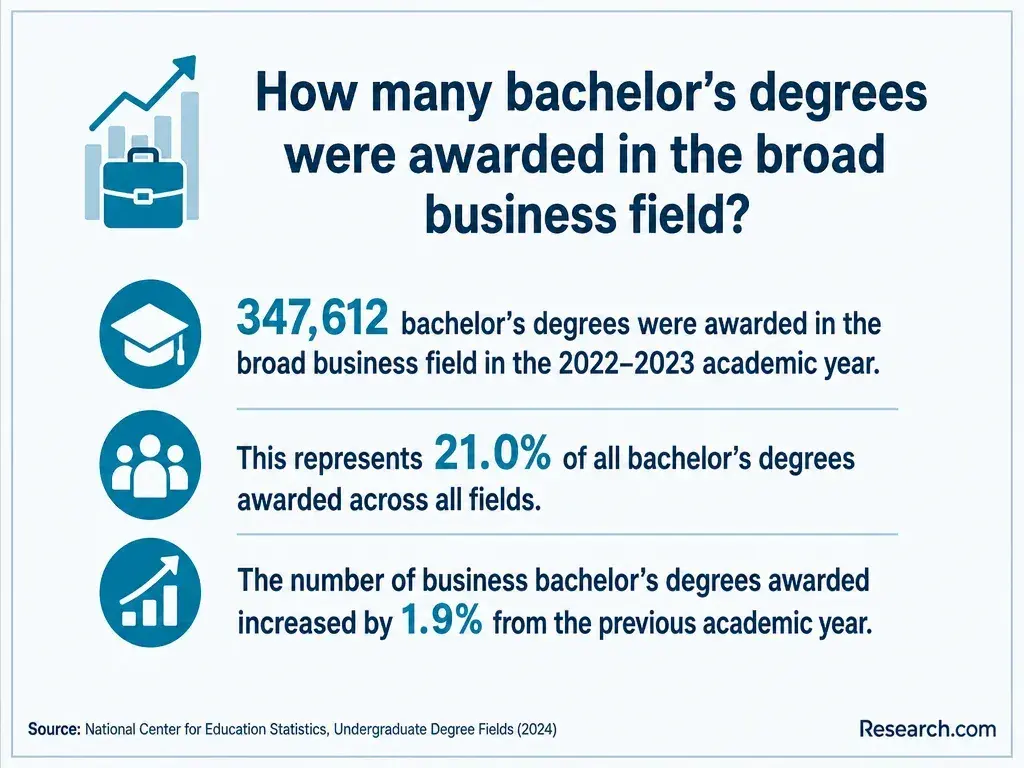
The strongest case is a defined move from program delivery into broader organizational responsibility: managing multiple sites, defending operating budgets, overseeing contracts, or qualifying for postings that require a bachelor's degree.
Before enrolling, compare actual job descriptions from the employers you would consider. A municipal facilities post, a private fitness center role, and a university recreation position may value different combinations of education, technical knowledge, and experience.
The comparison below separates three common goals. It helps identify when a general business degree adds value and when a narrower route may be more direct.
| Target goal | Potentially stronger route | Important limitation |
| Oversee budgets, staffing, contracts, and several recreation sites | Business administration study paired with progressively responsible site experience | A degree does not substitute for a record of operational decisions. |
| Maintain building systems and coordinate technical contractors | Supervised facility work and relevant technical or safety training | General business courses may not teach building systems in sufficient depth. |
| Specialize in purchasing, inventory, or distribution | Supply chain or operations-focused study | A narrower degree may offer less breadth for recreation-program leadership. |
If purchasing or distribution, not facility oversight, is your destination, online colleges with accelerated supply chain bachelor's study provide a more focused comparison. Otherwise, prioritize a program that lets you apply business work to recreation settings without assuming an unapproved workplace project will count for credit.
What Careers Can a Business Administration Degree Lead to in Facility Operations?
For someone moving out of recreation programming, an operations coordinator or facility coordinator role may be a realistic bridge. Work can include scheduling space and vendors, tracking work orders, preparing purchasing records, and reporting budget variances.
An assistant facility manager may take on more responsibility for contractors, staff coverage, and service standards. Managing a building or multiple sites usually calls for demonstrated responsibility for safety, personnel, budgets, and disruptions, not just completion of a degree.
Other adjacent roles include administrative services positions overseeing support operations, event operations positions coordinating venue use, and procurement roles handling purchases and contracts. The best entry point depends on what you can already document.
A staffing plan you maintained, a purchasing process you supported, or an approved, nonconfidential analysis of facility use. If your intended move is primarily into hiring or employee relations rather than buildings, compare HR curricula and career directions before choosing a general business program.
Course names vary, but accounting and managerial finance can help you read operating reports and distinguish a purchase price from ongoing cost. Operations and project management can support maintenance scheduling, vendor coordination, and process improvement.
Management and HR courses address supervision; statistics and spreadsheets can help you interpret attendance, utilization, and spending without treating a simple comparison as proof of cause and effect.
Look beyond the course list for opportunities to practice those skills. A useful assignment might compare hypothetical staffing schedules or build a facility operating budget from permitted data. Ask whether operations electives are available when you need them and whether a capstone can address a recreation setting with faculty approval.
If your goal is specifically to run capital-improvement projects, affordable pathways to study project management offer a narrower curriculum comparison. Neither an undergraduate course nor a classroom project by itself establishes professional project-management eligibility.
Online study can teach budgeting, purchasing, analytics, and management concepts. It cannot, on its own, provide supervised experience with building systems, emergency procedures, or contractor work at an operating site. A strong combination is online coursework plus relevant employment, an approved internship, or another supervised opportunity to observe facility decisions.
Recreation schedules often include evenings and weekends, so check more than the word "online." Ask each program about live sessions, group meetings, exam proctoring, assignment deadlines, campus visits, and the sequence in which required courses are offered.
Business administration programs for studying around work commitments can be a starting point, but confirm the obligations for your enrollment term. If you hope to use your job for an internship or capstone, obtain academic approval and employer permission before relying on that plan.
First, verify that the institution holds recognized institutional accreditation. Then check whether the business school or the specific program has separate accreditation from AACSB, ACBSP, or IACBE, and confirm the accreditor's stated scope. Institutional accreditation and business accreditation answer different questions; neither guarantees that a facility employer will prefer the degree or that your credits will satisfy another school's requirements.
When you explore online business degree school rankings in America, use them to identify programs to investigate, not as a substitute for checking accreditation, curriculum, transfer policies, and course availability. For this career goal, also ask whether operations electives and career support extend to public agencies, recreation organizations, and facility employers.
Requirements depend on the institution and whether you apply as a first-time or transfer student. Schools may request secondary-school records or prior college transcripts, and admission to the university may be separate from admission to its business major. Previous recreation, hospitality, or other coursework can be accepted for credit without satisfying an accounting, statistics, or business-core requirement.
Request an official evaluation showing where prior courses apply: general education, business prerequisites, major requirements, or electives. Ask an adviser about quantitative prerequisites, minimum grades, course recency, and credits that must be completed at the institution.
If you are weighing a project-focused degree instead, review transfer credit evaluations for project management majors as a separate question; one school's treatment of a course does not bind another.
A full undergraduate path commonly spans several academic years, while completion time for a returning student depends on the official degree audit, course sequence, and study pace. An accepted block of transfer credit is not a reliable shortcut if required business courses remain. Part-time study may protect your work schedule but extend the time until completion.
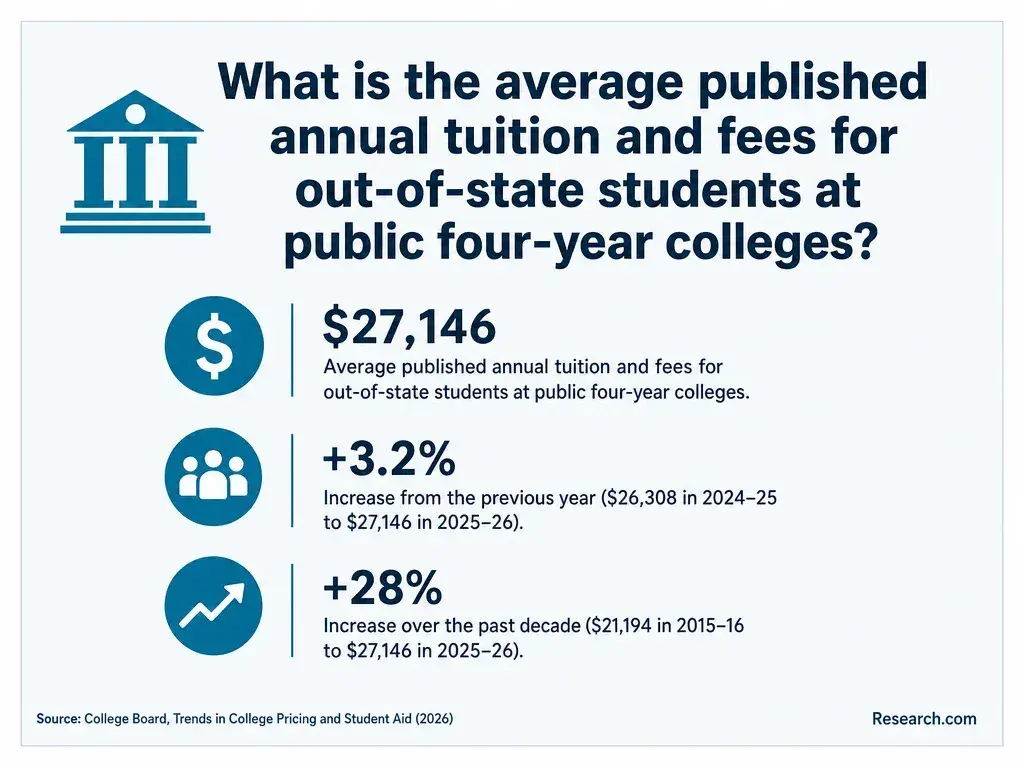
Calculate cost from the courses you still need, not an advertised starting tuition figure. Include mandatory fees, books and software, possible travel or proctoring, borrowing costs, and any income you would give up to study.
Ask when employer tuition reimbursement is paid and what grades, employment period, or repayment conditions apply. To compare published tuition options and aid questions, see compare business administration tuition and FAFSA eligibility; confirm your own aid eligibility and net price with each school.
"Facility manager" and "recreation manager" do not map neatly to a single national occupation. The closest Bureau of Labor Statistics category depends on the job's duties. These U.S. occupation-wide figures provide context for different paths, not a forecast of what a new business graduate will earn.
| Relevant BLS occupation | Median annual wage, May 2025 | Projected U.S. employment change, 2025-2035 |
| Administrative services manager | $114,130 | +5% |
| General and operations manager | $105,770 | +5% |
| Meeting and event planner | $61,160 | +6% |
Administrative services management is a useful comparison for some facility-oversight jobs, while event planning is more relevant to venue programming than building management. These medians include workers with varied experience and employers.
For a degree decision, compare your likely next role and local postings with your total cost to finish, rather than using a manager's national median as an assumed pay increase. Comparing cost-to-finish for shorter business administration programs can help frame that calculation, but a shorter advertised program is only faster for you if its requirements and your approved credits support it.
Which Certifications Are Useful for Recreation and Facility Operations Careers?
Choose a credential for the work you intend to perform, not as a general substitute for a degree. The National Recreation and Park Association's Certified Park and Recreation Professional credential may be relevant to recreation leadership.
The International Facility Management Association's Facility Management Professional credential addresses facility-management knowledge. For a pool or aquatic facility, an employer or jurisdiction may require operator training or other site-specific qualifications. Check each credential provider's current eligibility rules, exams, renewal terms, and whether a target employer recognizes it.
A credential may be the more direct next step if you already meet the education requirement for promotion but lack facility-specific knowledge. A bachelor's may be more useful if postings consistently require one and your business fundamentals need strengthening.
When comparing those routes with cost-effective paths to a business degree, include the value of supervised experience: neither a certificate nor a BS automatically authorizes you to manage building systems or safety obligations.
Other Things You Should Know About Business Administration Programs
Not necessarily. Read the posting's exact education and experience language, including any permitted degree fields or substitutions, and ask the hiring agency how it evaluates your credentials.
Usually only if you have permission to share it. Remove confidential budgets, employee information, vendor terms, and other restricted details; a clearly labeled public-data or hypothetical sample is another option.
Not automatically. First check whether your target role calls for graduate study or instead rewards a record of budget, personnel, and facility responsibility.
Ask to shadow an authorized facilities colleague or assist with an approved scheduling, inventory, or vendor-coordination task. Compare what you observe with job postings before committing to a degree.
- Business Management vs. Business Administration: Which Degree Is Right for You? | Cal Lutheran https://www.callutheran.edu/programs/articles/business-management-vs-business-administration/
- What Can You Do With a Business Administration Degree? | snhu.edu https://www.snhu.edu/about-us/newsroom/business/what-can-you-do-with-a-business-administration-degree
- Sport Facility Management - Employment Guide for the Sports Industry - University of New Haven https://newhaven.edu/business/sports-industry-employment-guide/facility-management.php
- Sports Facility Management: Key Skills You'll Learn in a Sports and Recreation Management Program " Salem University https://www.salemu.edu/blog/what-can-you-do-with-sports-management/
- Facility Management - Career Training https://www.deanza.edu/career-training/facility-management.html
- Bachelor's in Business Administration Concentrations | Purdue Global https://www.purdueglobal.edu/degree-programs/business/business-administration-concentrations/
- Concentration Project Management | Centenary University https://www.centenaryuniversity.edu/degrees-and-programs/bsba-project-management/
- What Can You Do with a Business Administration Degree? | University of Wisconsin Flexible Option https://flex.wisconsin.edu/stories-news/what-can-you-do-with-a-business-administration-degree/
- Learn About a Career as a Facility Manager | nfpa.org https://www.nfpa.org/for-professionals/career-growth/facility-manager
- Facilities manager | U.S. Green Building Council https://www.usgbc.org/professionals/green-careers/facilities-manager