2027 Can a BS in Business Administration Prepare You for a Merchandising Analyst Role? Skills and Entry Requirements
Audited and Verified:
Our Editorial and Data Verification Process
Research.com uses government datasets, official education statistics and primary institutional information to support its career and degree guides. Our review process checks factual accuracy, occupational definitions, source dates and the requirements associated with the credentials discussed.
How This Article Was Fact-Checked
Our editorial team verifies salary estimates, employment projections, education requirements and program information against original data providers and official organizations. Salary figures are checked against the relevant occupational definitions and reporting periods. Information about licensure, accreditation and required in-person training is reviewed separately.
Fact-checked and verified on:

Co-Founder and Chief Data Scientist
A merchandising analyst helps retailers decide what to stock, where to place it, and how to respond when sales differ from expectations. A BS in Business Administration can provide useful preparation, but the degree alone may not demonstrate the spreadsheet, data, and retail judgment employers need. This guide is for students and early-career employees weighing a business degree against more specialized preparation. It explains the work, identifies the courses and experience worth prioritizing, and helps you assess whether a program offers a credible route into the role.
Key Things You Should Know
- Yes - a BS in Business Administration can prepare you for merchandising analytics if you pair its business core with statistics, spreadsheet analysis, retail or supply chain coursework, and relevant work samples.
- There is no single standard degree requirement for every merchandising analyst opening; employers may also value retail experience, SQL or reporting tools, and evidence that you can explain inventory and sales decisions.
- The closest BLS occupation for some merchandising analysis work is market research analyst, with a May 2025 median annual wage of $78,760; that occupation-wide figure is not a starting salary for merchandising analysts.
Can a BS in Business Administration Prepare You for a Merchandising Analyst Role?
Yes, provided you shape the degree around the job. Merchandising analysts examine sales, prices, promotions, product assortments, and inventory to help merchants or planners make decisions. A business administration major can connect marketing, accounting, operations, and quantitative reasoning - the functions behind those decisions. Whether it goes far enough depends on the courses available and the analytical work you complete.
For example, a useful student project might compare weekly product sales with inventory on hand, flag slow-moving items, and recommend questions a buyer should investigate. It should distinguish observed patterns from proven causes: a sales decline alone does not show whether price, availability, seasonality, or a promotion drove the change.
If you want broad business options alongside retail analytics, the BS may be a sound choice. If your goal is specifically inventory planning or distribution, a specialized supply chain program may offer greater depth; you can compare economical supply chain study timelines before deciding. A business degree is less compelling if you already hold a bachelor's degree and chiefly need a few missing technical skills or relevant retail experience.
What Education and Skills Does a Merchandising Analyst Need?
Requirements vary by employer and by whether a position supports a merchant, owns recurring reports, or builds forecasts. Many postings seek a bachelor's degree in business, marketing, finance, analytics, or a related field, but an employer may prioritize demonstrated analytical experience. No general US license is required for the role.
Start with spreadsheet proficiency: clean product-level data, use lookups and pivot tables, calculate sales and inventory measures, and check for errors. SQL or a business intelligence tool may matter for positions that pull data from large systems. Just as important is explaining a recommendation to buyers and planners without confusing revenue with profit or assuming that a correlation proves why sales changed.
Retail knowledge gives those calculations meaning. An analyst should understand stockouts, returns, markdowns, product seasonality, and why a high-selling item may still be a poor choice if its margin or availability is weak. If your interest lies more in coordinating launches and schedules than analyzing merchandise, online degree options in project management at lower cost offer a different route to compare - not an interchangeable qualification for merchandising analysis.
What Business Administration Courses Support Merchandising Analytics Careers?
Course titles alone are not enough; review syllabi and assignments for the chance to work with data and defend a decision. The following course-to-task comparison shows which parts of a business curriculum are most useful for merchandising analytics.
| Course or subject | Merchandising task it supports | Evidence to seek in a program |
| Business statistics and analytics | Interpret sales variation and evaluate forecasts | Data cleaning, uncertainty, and applied analysis |
| Managerial accounting and finance | Assess margins, markdowns, and costs | Product-level calculations and decision cases |
| Marketing and consumer behavior | Interpret demand and promotion performance | Customer or product research assignments |
| Operations and supply chain | Understand replenishment and inventory constraints | Inventory measures and planning exercises |
| Information systems | Prepare reports from business data | Spreadsheet, database, or dashboard practice |
Prioritize a sequence that lets you take introductory statistics before advanced analytics, then use electives or an approved capstone for a retail-focused project. A concentration is valuable only if its actual required courses add relevant depth; a handful of electives does not automatically constitute a formal concentration. Transfer students with prior operations or project coursework should also confirm how credits apply to the new major. Credit mapping for online project management programs illustrates why credits accepted by a school are not necessarily credits that fulfill a specific business or analytics requirement.
Either format can develop the relevant skills if it offers substantive analytics assignments, accessible faculty, and opportunities to gain experience. Online study may make employment alongside coursework easier, while campus study may provide more convenient access to local recruiting, labs, or student organizations. Neither format guarantees an internship or a merchandising-specific course.
Check actual course schedules before choosing. Online classes may still require live meetings, team projects, timed exams, or fixed deadlines. Campus classes may be hard to combine with store shifts, but some offer evening schedules. Compare software access, career services, and whether retail-focused electives run regularly - not just the delivery label. An accelerated format is another scheduling choice, not proof of better career preparation; accelerated organizational leadership college programs, for example, should be judged against a merchandising goal by their analytics content as well as their pace.
First-year applicants generally need to meet the institution's undergraduate admission requirements, while transfer applicants submit records of previous college work. Some schools separately admit students to the business major or require particular math or introductory business courses before upper-level study. Requirements, application fees, and test policies vary, so the current catalog and admissions office - not a general checklist - control.
If you have prior coursework, request an evaluation showing where each accepted credit applies: general education, business core, elective, or another requirement. Ask an adviser whether statistics, accounting, or analytics courses have prerequisites that could delay the sequence you want. Application fees are a smaller consideration than curriculum fit, but eligible applicants can compare no-fee college applications while assembling a shortlist.
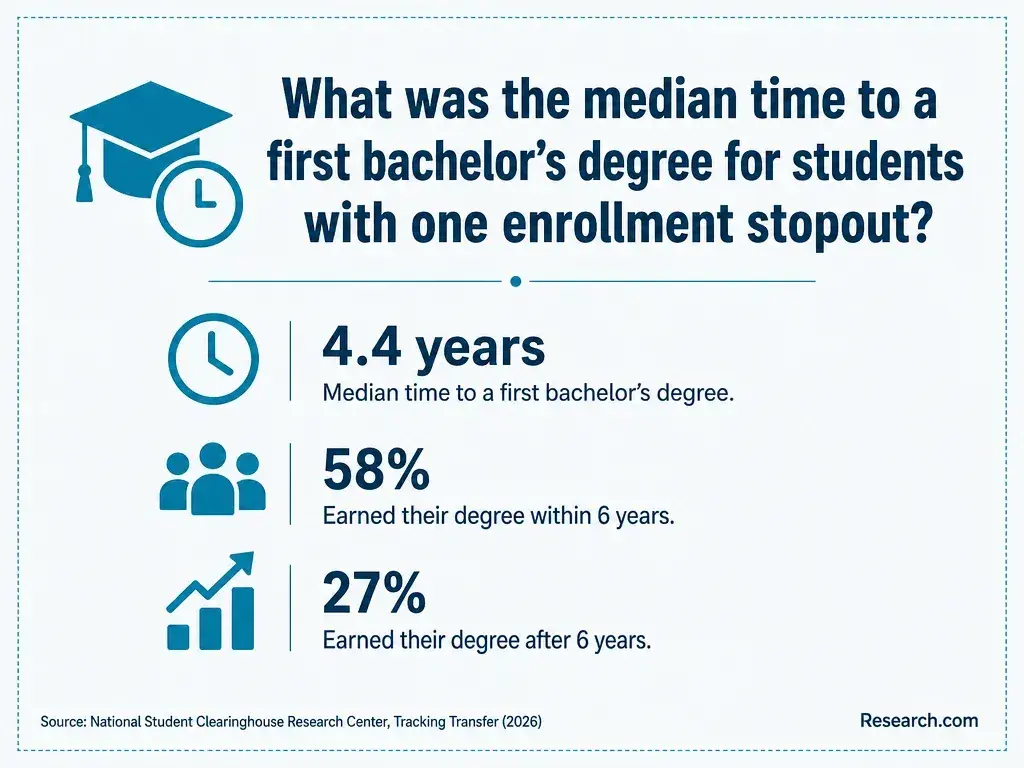
A traditional full-time bachelor's path commonly takes about four academic years; transfer credits, part-time enrollment, course availability, and prerequisites can change the remaining time substantially. Ask each school for a degree audit and a term-by-term plan before treating an advertised completion timeline as your own.
Compare total remaining cost, not tuition alone. Include required credits, fees, books or software, possible campus travel, and the earnings you might forgo to complete an internship. Then separate grants and scholarships from loans and check when any employer reimbursement would arrive. For a starting point on aid questions, see financial aid planning for low-cost business administration degrees; confirm each school's current aid eligibility and your individual award before making a budget.
Retail experience is useful when it exposes you to product performance, inventory, or planning decisions rather than only sales transactions. Merchandising assistant, allocation assistant, inventory coordinator, retail operations assistant, and junior reporting roles can provide relevant experience. Job titles are inconsistent, so examine the tasks: Will you reconcile data, investigate stockouts, maintain reports, or communicate findings to a buyer?
Use coursework or supervised work to build a small portfolio: a clearly sourced dataset, documented calculations, a concise recommendation, and an explanation of limitations. Do not publish an employer's product, customer, or pricing data without permission. If you are considering other business entry routes, online HR bachelor's programs accepting transfer credits represent a different functional path; choose it for HR work, not because an HR credential substitutes for merchandising skills.
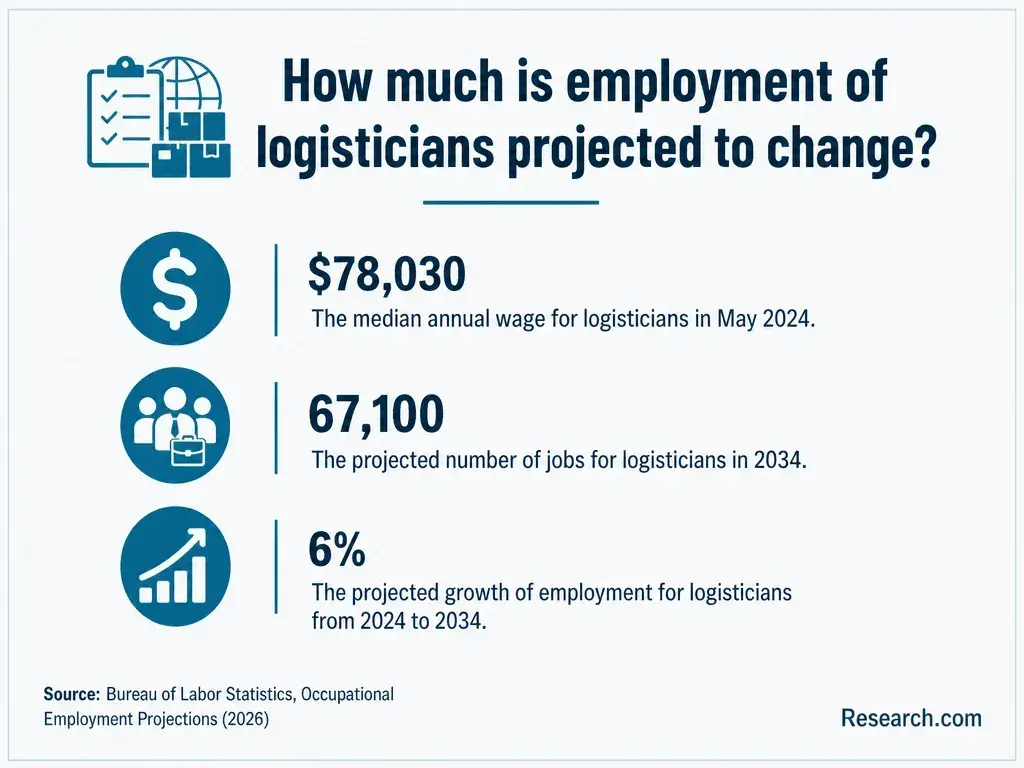
The US Bureau of Labor Statistics does not publish a distinct national wage series for the job title merchandising analyst. For context, its market research analyst occupation - which overlaps with some demand and consumer analysis - had a median annual wage of $78,760 in May 2025. That figure covers an entire occupation across experience levels and industries. It should not be read as a merchandising analyst's entry-level offer or as the expected pay from a business degree.
For a realistic comparison, collect current postings for the specific tasks and locations you want, noting any disclosed pay ranges and experience requirements. Evaluate potential pay against the cost of the education needed to qualify. If you are also considering an adjacent project-management career, an accredited online project management tuition guide can help frame that separate education-cost comparison; project-management wages are not a merchandising salary benchmark.
There is no BLS employment projection specifically for merchandising analysts. The broader market research analyst occupation is projected to grow 7% from 2025 to 2035. That suggests opportunity in related analytical work, but it does not forecast vacancies at a particular retailer or the likelihood that a new graduate will be hired.
Look beyond a growth figure when choosing your preparation. Compare local postings for merchandising, allocation, and retail planning roles; note which request retail experience and which require technical reporting skills. If those postings instead point you toward project coordination, treat it as a separate career decision and compare training costs and financial aid packages for online project management bachelor's students before changing direction.
How Can You Choose an Accredited Business Administration Program?
Verify the institution's accreditation with a recognized accreditor, then check the exact scope of any claimed AACSB, ACBSP, or IACBE business accreditation. Institutional accreditation and business-school or programmatic accreditation are different; neither alone establishes that graduates obtain merchandising analyst jobs.
Request the current degree map and confirm that the program actually offers statistics, analytics, operations, and marketing courses in a sequence you can complete. Ask career services about access to retail employers, relevant internships, and help presenting analytical projects. Finally, compare your approved transfer evaluation, remaining cost, and realistic schedule across schools. Quick-completion business degree pathways are worth considering when time matters, but only if their course availability and applied work still support your target role.
Other Things You Should Know About Business Administration
No. A merchandising analyst primarily evaluates product and sales data to support commercial decisions. A visual merchandiser focuses on how products are displayed, although the roles may collaborate.
Not universally. It can strengthen your understanding of products and customers, but an internship or reporting role that develops relevant analytical skills may also help you qualify.
There is no general certification requirement for merchandising analysts. Prioritize the qualifications in your target job postings; a certificate is most useful when it fills a specific skill gap.
Some reporting tasks can be done remotely, but arrangements depend on the employer and role. Positions involving stores, samples, buyer meetings, or on-site planning may require in-person work.
- 5 Tools Every Aspiring Data Analyst Should Learn | SCU https://www.scu.edu/business/blog/business-concepts/data-analyst-tools-to-learn/
- What Is a Business Analyst? Roles, Skills, and Career Outlook | Florida National University (FNU) https://www.fnu.edu/what-does-a-business-analyst-do/
- 10 Key Subjects Taught in a Bachelor of Business Administration Program | Carson-Newman University https://www.cn.edu/cps-blog/10-key-subjects-taught-in-a-bachelor-of-business-administration-program/
- Retail merchandiser | Prospects.ac.uk https://www.prospects.ac.uk/job-profiles/retail-merchandiser/
- Merchandising Analyst Job Description | VelvetJobs https://www.velvetjobs.com/job-descriptions/merchandising-analyst
- Business Analyst Job Description | alabamanonprofits.org https://careers.alabamanonprofits.org/career/business-analyst/job-descriptions
- Sr. Merchandising Analyst at WALGREENS https://jobs.walgreens.com/en/job/deerfield/sr-merchandising-analyst/1242/99730436432