2027 BS in Business Administration for Social Enterprises: Which Business Courses Should You Prioritize?
Audited and Verified:
Our Editorial and Data Verification Process
Research.com uses government datasets, official education statistics and primary institutional information to support its career and degree guides. Our review process checks factual accuracy, occupational definitions, source dates and the requirements associated with the credentials discussed.
How This Article Was Fact-Checked
Our editorial team verifies salary estimates, employment projections, education requirements and program information against original data providers and official organizations. Salary figures are checked against the relevant occupational definitions and reporting periods. Information about licensure, accreditation and required in-person training is reviewed separately.
Fact-checked and verified on:

Co-Founder and Chief Data Scientist
A social enterprise needs more than a compelling mission: it must fund its work, serve customers or beneficiaries, and show whether its approach helps. If you are planning a BS in Business Administration, the most useful courses depend on whether you want to build a venture, run an existing organization, or evaluate its results.
This guide ranks the business skills worth prioritizing, explains how to turn coursework into credible experience, and shows what to check before choosing a program or paying for extra specialization.
Key Things You Should Know
- Prioritize managerial accounting, finance, marketing research, operations, and measurement before adding broad entrepreneurship electives; social enterprises must sustain operations and assess their mission.
- Choose electives by target role: venture builders need customer discovery and cash-flow planning, while established organizations often need operations and stakeholder reporting.
- The U.S. median wage for market research analysts was $78,760 in May 2025, but that occupation-wide figure is not an expected starting salary for social enterprise graduates.
What Is a BS in Business Administration for Social Enterprises?
A social enterprise uses business activity to pursue a social or environmental purpose. It may be a nonprofit with earned revenue, a mission-driven for-profit company, or another organization; its legal form alone does not establish its impact. Its managers must make ordinary business decisions while accounting for beneficiaries, funders, customers, employees, and other stakeholders.
A BS in Business Administration generally provides a business core, not a standardized "social enterprise" credential. A school might offer a formal social entrepreneurship concentration, a minor, or simply relevant electives. Compare the actual course requirements: an elective cluster does not become an official concentration because its subjects fit together. If your goal is broad operational responsibility, a general degree with carefully chosen projects may be more useful than a narrowly named program. Economical online college programs in business can also be worth examining if the social-enterprise coursework you need is available without a premium-priced specialty.
Which Business Courses Best Prepare You for Social Enterprise Careers?
Start with the courses that connect mission decisions to financial and operational reality. A persuasive impact story cannot replace a workable budget, and revenue growth does not by itself prove improved outcomes. The table distinguishes broadly useful foundations from electives whose value depends on your intended work.
| Course area | What it helps you decide | Priority |
| Financial and managerial accounting; finance | How costs, cash flow, restricted funds, and pricing affect viability | Highest for nearly every path |
| Marketing research and statistics | Whose needs are being met, what evidence is reliable, and where findings remain uncertain | High, especially for outreach and impact measurement |
| Operations and project management | How to deliver a service consistently with limited staff and resources | High for program and venture operations |
| Entrepreneurship and business law | How to test a model and evaluate organizational or contractual risks | Most useful for venture builders |
| Organizational behavior and human resources | How to coordinate staff and volunteers responsibly | Most useful for established teams |
For an aspiring founder, take accounting and introductory statistics before an advanced venture-planning elective so projections and customer claims have a defensible basis. For a program coordinator, combine operations with a project that maps a real service process. For an impact-focused analyst, add research methods and data ethics; a dashboard is useful only when its measures reflect the intended outcome and its data can be used appropriately.
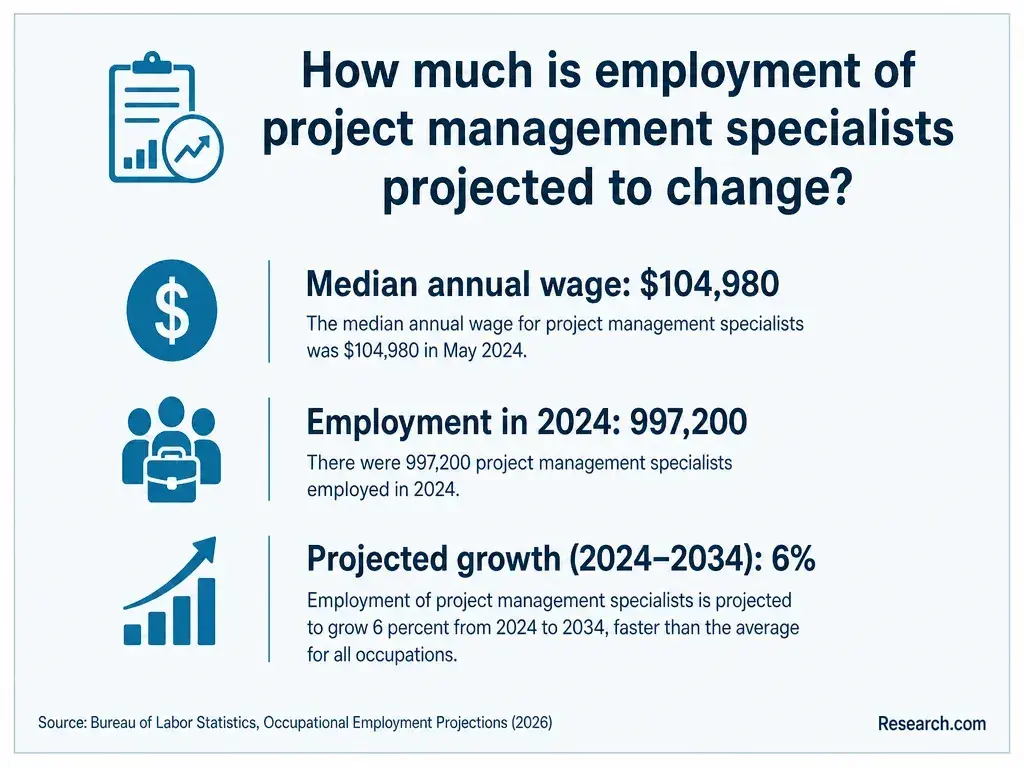
Check prerequisites and when electives are offered before committing to a concentration. If your target is primarily project delivery rather than venture leadership, compare its added courses and cost with cost-conscious project management college options. A specialized path makes sense only if its deeper training addresses a gap your business core will not.
What Career Paths Can a Social Enterprise Business Degree Support?
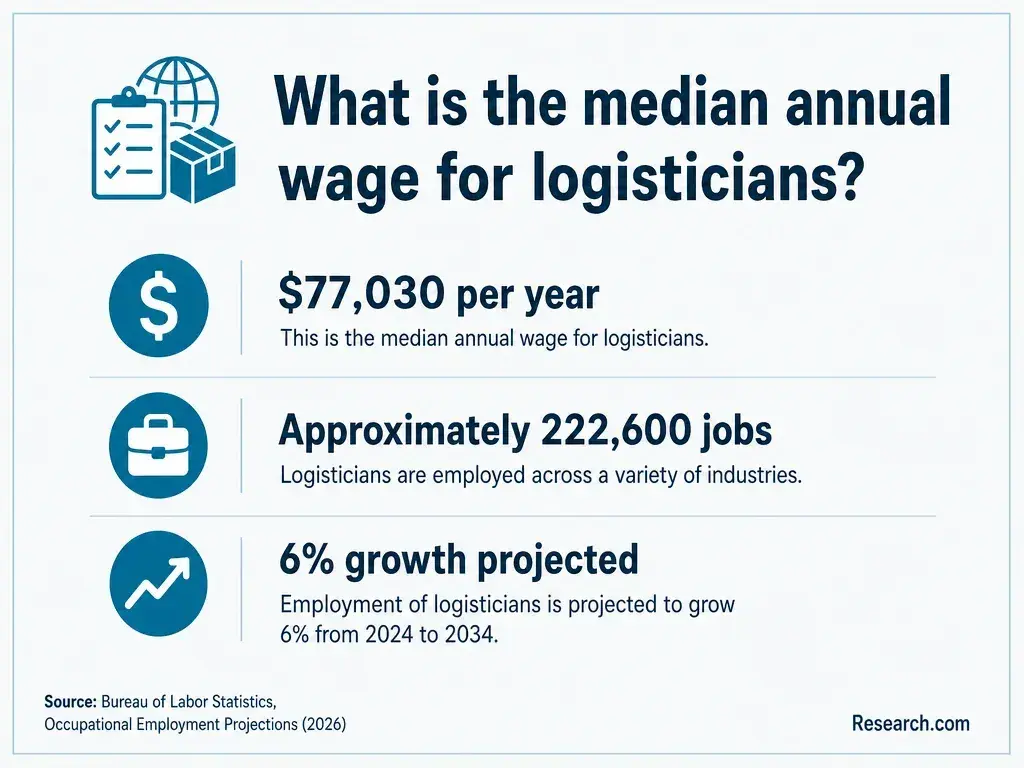
The most realistic first step is usually a defined function, not immediate responsibility for an entire mission-driven organization. Operations coordinators track schedules, suppliers, and service delivery; marketing coordinators test outreach and explain offerings; development or revenue-operations staff help manage customer or funder relationships. Research assistants and analysts may clean data, interpret surveys, and document the limits of outcome claims.
Match an intended role to evidence you can produce. A supervised service-process map supports an operations application; a documented customer-research plan supports a marketing application. Relevant employment, volunteering, or an approved internship can strengthen either case, but classroom work should not be represented as implemented organizational change. Supervisory and budget authority generally require a record of sound decisions as well as academic preparation.
If your main interest is recruiting, staff support, or employee relations, compare business electives with using existing credits in a human resources degree. A more focused route may fit better than a social-enterprise emphasis, particularly if you already have relevant organizational experience.
Online study may suit someone already working at a nonprofit or small venture because workplace problems can inform assignments. It does not necessarily mean self-paced study: live presentations, team projects, proctored exams, and fixed deadlines can still conflict with work. On-campus study may make it easier to meet local organizations and arrange supervised projects, but commuting and scheduled classes add constraints.
Choose the format that lets you complete both the business core and meaningful applied work. Ask for sample course schedules, attendance rules, group-work expectations, and any internship or campus-visit requirements. If you need to study business administration without leaving your job, confirm whether your current workplace can host an approved project; employment alone does not earn academic credit.
Admission rules vary by institution and sometimes by stage: entry to the university may differ from entry to its business major. Applicants commonly need evidence of prior schooling, while transfer applicants need transcripts for a credit evaluation. A program may require particular mathematics, accounting, economics, or statistics courses before advanced business work rather than before initial enrollment.
If you have studied or worked outside business, identify what your existing courses satisfy before retaking anything. Ask admissions about eligibility, then ask an adviser or transfer office how accepted credits apply to the core, electives, and any concentration. The institution's official audit - not a preliminary estimate - controls what remains. Use the program's catalog alongside guidance on business administration degree entry requirements to prepare specific questions.
A full-time bachelor's path commonly takes about four years, but transfer credit, part-time enrollment, prerequisite sequences, and infrequently offered electives can change the timeline. The important figure is the time until your remaining required courses are available and completed - not the shortest advertised completion time.
Calculate cost from the approved degree audit: remaining tuition-bearing credits or terms, mandatory fees, materials, travel or technology needs, and income you might forgo. Then subtract only aid or employer assistance for which you are actually eligible. Compare schools on the same remaining-course assumptions; a lower per-credit price can lose its advantage if fewer previous courses apply. Compare low-tuition business administration schools accepting FAFSA as a starting point, then obtain current school-specific charges and financial-aid estimates.
Do Social Enterprise Professionals Need Licenses or Certifications?
General social enterprise operations work does not have one universal professional license. Requirements arise from particular activities: regulated accounting or financial advice, for example, has rules separate from a BS in Business Administration. Voluntary credentials may help in a defined function, but an entrepreneurship course or concentration does not confer them.
Before paying for a credential, inspect postings for your intended role and ask whether employers value it, require relevant experience, or instead want evidence of completed work. If a bachelor's degree is required, business bachelor's rankings focused on completion speed may help identify programs to investigate - but verify that their schedules leave room for the courses and project experience your role actually needs.
Other Things You Should Know About Business Administration
No. Earned revenue comes from selling a product or service; a donation is a contribution without an equivalent purchase. Both can support a mission, but they create different planning and reporting questions.
No. B Corp certification is a private certification, while a benefit corporation is a legal form available under applicable state law. An organization may have either, both, or neither.
Yes. Customer interviews conducted with appropriate consent, a clearly labeled hypothetical budget, and a testable business model can make a useful academic project. A plan is not evidence that the venture operates or has achieved impact.
Separate activities, such as services delivered, from outcomes, such as changes experienced by participants. State how information was collected, what is missing, and whether any observed change can reasonably be attributed to the organization.
- Curriculum requirements | Fisher College of Business https://fisher.osu.edu/undergraduate/academics/curriculum-requirements
- Courses | Social Enterprise - Harvard Business School https://www.hbs.edu/socialenterprise/mba-experience/academics/courses
- Undergraduate Experiential Learning | Lehigh Business https://business.lehigh.edu/undergraduate/experiential-learning
- SROI: How organizations measure social impact | Ohio University https://www.ohio.edu/news/2024/06/sroi-how-organizations-measure-social-impact
- BS in Business - NYU Stern https://www.stern.nyu.edu/current-students/undergraduate/academics/degree-programs/bs-business
- Two Approaches to Experiential Learning | AACSB https://www.aacsb.edu/insights/articles/2023/04/two-approaches-to-experiential-learning
- Accounting for Nonprofits: Key Considerations and Best Practices | The University of Scranton https://gradadmissions.scranton.edu/blog/articles/accounting/accounting-for-nonprofits.shtml
- Business Administration, BS | Marquette University https://bulletin.marquette.edu/business-administration/business-administration-bs/
- What is social entrepreneurship? Models and real examples | ienyc.edu https://www.ienyc.edu/the-blueprint/social-entrepreneurship/
- Market Research and Understanding Customers | Take Charge Today https://takechargetoday.arizona.edu/lesson/market-research-and-understanding-customers/