2027 From Fundraising Support to Nonprofit Management: When Does a BS in Business Administration Make Sense?
Audited and Verified:
Our Editorial and Data Verification Process
Research.com uses government datasets, official education statistics and primary institutional information to support its career and degree guides. Our review process checks factual accuracy, occupational definitions, source dates and the requirements associated with the credentials discussed.
How This Article Was Fact-Checked
Our editorial team verifies salary estimates, employment projections, education requirements and program information against original data providers and official organizations. Salary figures are checked against the relevant occupational definitions and reporting periods. Information about licensure, accreditation and required in-person training is reviewed separately.
Fact-checked and verified on:

Co-Founder and Chief Data Scientist
Fundraising support can teach you how a nonprofit communicates with donors, but managing programs, people, and budgets calls for broader responsibility. If you work or volunteer in development and want to advance, a BS in Business Administration may help fill those gaps - or it may add more time and cost than your goal requires. This guide compares the degree with narrower alternatives, connects coursework to nonprofit work, and shows what to verify before enrolling. The aim is to help you choose a path based on the job you want and the experience you already have.
Key Things You Should Know
- A BS in Business Administration makes the strongest case when you need a bachelor's degree and broader budgeting, operations, and management preparation - not just better fundraising technique.
- Development support and event coordination can be entry routes, but a degree alone does not qualify someone to direct fundraising or manage a nonprofit. The U.S. Bureau of Labor Statistics (BLS) reports a May 2025 median wage of $61,160 for meeting and event planners; that occupation-wide figure is not a starting salary or a nonprofit-specific wage.
- Before enrolling, compare the approved degree audit, total remaining cost, nonprofit-specific coursework, and access to supervised projects against a certificate, employer training, or advancement through experience.
What Is a BS in Business Administration With Nonprofit Management?
It is an undergraduate business degree that combines a general business core with nonprofit-focused study, if the school formally offers that concentration or emphasis. The core typically addresses accounting, finance, marketing, operations, and management. Nonprofit courses may examine fundraising, governance, program evaluation, or the financial restrictions that come with particular funding sources. The exact mix depends on the catalog.
Check the credential's official name. A nonprofit management concentration, a cluster of electives, and an independently awarded nonprofit certificate are not the same thing. A BS in Business Administration and a BBA can also have different requirements despite covering similar subjects.
The distinction matters for career planning: managing a donor database, supervising development staff, and directing an entire organization require different preparation. If your goal is primarily employee relations or recruiting rather than broad nonprofit operations, compare human resources degree costs and options before choosing a general business route.
When Does a BS in Business Administration Make Sense for Nonprofit Careers?
The degree is most useful when it closes a specific gap between your current work and your target role. A development assistant who already handles donor records and event logistics, for example, may need stronger financial and supervisory skills to compete for operations or development management positions. A bachelor's requirement in target job postings can make degree completion especially consequential.
Compare pathways against the responsibility you actually want, not the appeal of a management title. The table separates common goals from the preparation each one calls for.
| Goal | When a business BS may help | When a narrower route may be better |
| Advance within fundraising | You need a bachelor's credential plus budgeting, planning, and team coordination skills. | You already meet degree expectations and chiefly need grant-writing practice, donor stewardship experience, or mentorship. |
| Move into organization-wide operations | You need broad preparation across finance, staffing, processes, and organizational decisions. | Your employer has a defined internal training path and does not require another degree. |
| Lead a specialized program | Business skills would complement substantial program or community-service experience. | Employers prioritize field-specific expertise, a different degree, or direct service experience. |
A business degree teaches management concepts; it does not replace a record of supervising staff, meeting funding obligations, or delivering programs. If leadership is your primary goal, compare the actual curriculum and remaining requirements with organizational leadership bachelor's routes of three years or less. A shorter advertised timeline matters only if your credits apply and the schedule is workable.
What Jobs Can You Get With a Business Administration Degree in Fundraising?
A business graduate with relevant nonprofit experience might pursue development assistant, donor relations coordinator, fundraising events coordinator, or development operations roles. These positions can involve maintaining records, preparing campaign reports, coordinating vendors, acknowledging gifts, and supporting grant calendars. Employers may value spreadsheet skills and accurate communication as much as the degree title.
Development officer and grant manager roles usually call for stronger evidence of donor relationships, proposals, reporting, or campaign results. Development director positions add staff supervision, revenue planning, and accountability to organizational leadership. A new graduate should not assume that a bachelor's degree alone establishes that experience.
To make a transition credible, document work you can discuss without disclosing donor information: an approved event budget, a de-identified reporting process, or a supervisor-verified improvement to gift processing. If the work you enjoy is coordinating initiatives across teams rather than cultivating donors, explore economical project management degree programs as a more focused comparison.
The most transferable coursework connects business decisions to a nonprofit's mission and funding constraints. Accounting can help you read financial reports; budgeting can help you plan spending against available resources; marketing can inform donor communications; and operations courses can help you examine how work moves through a small team. Nonprofit-specific classes should add context about boards, funding restrictions, beneficiary needs, and ethical stewardship.
Look beyond course titles for assignments that demonstrate the skills you need. A useful project might be a proposed event budget with documented assumptions or a privacy-conscious map of a donation process. A classroom proposal is not evidence that an organization approved or implemented it. Ask whether a workplace project needs faculty approval, a supervisor, or permission to use organizational data.
Sector fit also matters. Someone aiming to improve procurement and distribution at a food bank may need more logistics depth than a nonprofit concentration offers. In that case, compare supply chain degrees by cost and length alongside the business curriculum rather than assuming a general operations elective is sufficient.
A bachelor's degree commonly spans four academic years for a full-time student starting without college credit. Completion time can differ substantially for someone returning with prior coursework. The deciding document is the school's degree audit: accepted credits may count only as electives rather than satisfy business-core, concentration, or residency requirements.
Compare the cost to finish, not just advertised tuition. Request an estimate covering remaining required courses, mandatory fees, books or software, any travel or proctoring costs, and the likely number of terms at your intended pace. Ask the financial-aid office how enrollment intensity affects aid, and check when any employer reimbursement would arrive. A lower per-credit price may not save money if more courses must be repeated.
When building a shortlist, explore affordable colleges for business study, then obtain an individualized credit evaluation and written cost estimate from each school. Neither a published price nor a preliminary transfer estimate establishes your final cost.
Requirements vary by institution and by whether you apply as a first-year or transfer student. Schools commonly review prior academic records; some business majors also require particular grades or introductory mathematics, accounting, or economics coursework before admission to the major. Admission to the university does not necessarily mean admission to the business program.
If you already work in fundraising, assemble transcripts and descriptions of prior courses before applying. Ask admissions which requirements apply to you, then ask the registrar or transfer office how coursework would apply to the degree. Professional experience may strengthen an application, but it does not automatically award academic credit.
Application charges are one small part of the decision. You can identify online schools with free applications, but compare their admission rules, degree audits, and completion costs before applying.
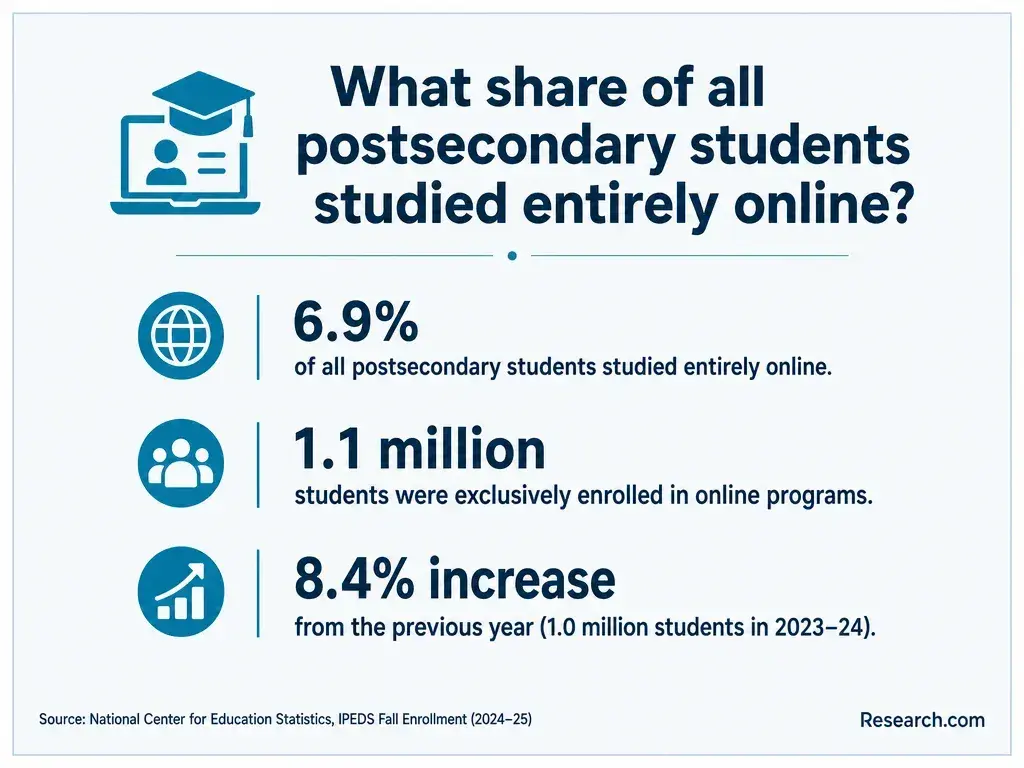
Delivery mode alone does not establish a degree's quality or career value. For a working nonprofit professional, the better test is whether the program offers the required courses on a workable schedule, meaningful faculty feedback, and opportunities to practice skills relevant to your role.
Ask whether classes include live sessions, timed exams, group meetings, or required campus visits. Also confirm whether a current job or volunteer role can support an approved project; online enrollment does not waive academic supervision or employer permission. If you are considering flexible fast-track routes in business education, check the weekly workload and course sequence rather than equating a shorter calendar with less work.
First, confirm the institution's accreditation status through the accreditor and the U.S. Department of Education's recognized-accreditor information. Then check whether any claimed business accreditation - such as AACSB, ACBSP, or IACBE - actually covers the school or program offering your degree. Institutional and business accreditation have different scopes; neither guarantees a job or that another school will accept every credit.
For an online program, also verify the awarding institution, the catalog applicable to your enrollment, and eligibility for federal student aid directly with the school. Listings of cheaper business administration study with FAFSA-based aid can help you find candidates, but the school's financial-aid office must determine your eligibility and available assistance.
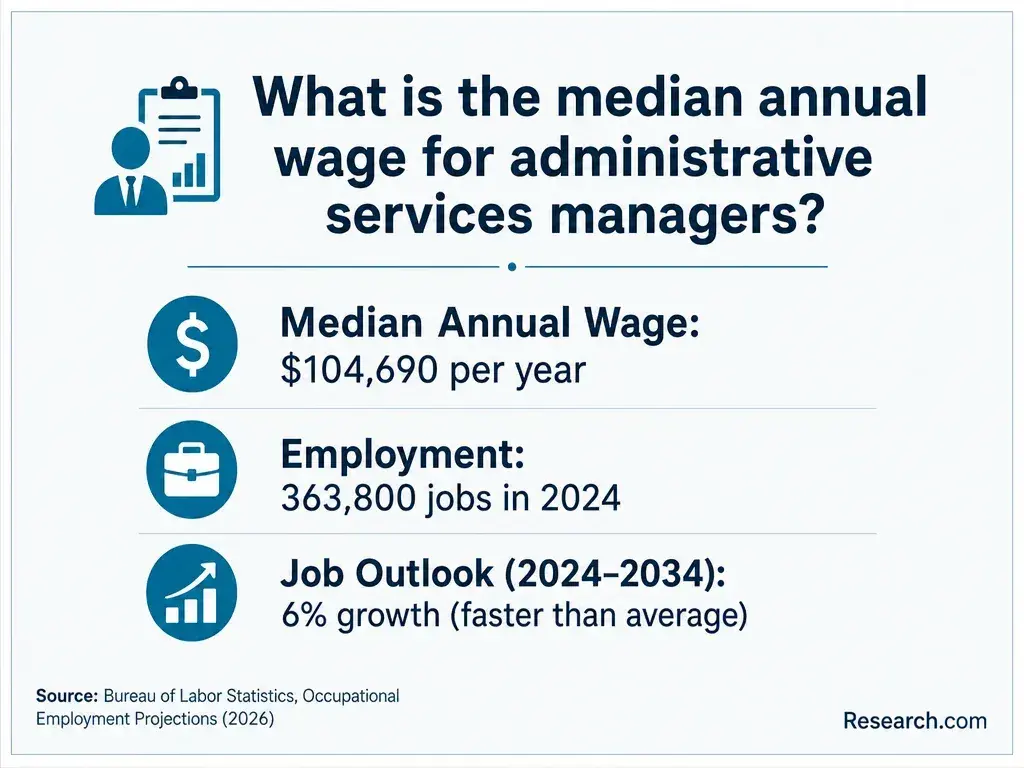
There is no single salary or growth rate for business administration graduates in nonprofits. Pay depends on the job, location, employer resources, and experience. The BLS occupations below provide context for two kinds of work a nonprofit professional might consider; neither figure measures the earnings of new degree holders or nonprofit employees specifically.
| Related occupation | U.S. median annual wage, May 2025 | Projected U.S. employment growth, 2025-2035 | Relevance and limit |
| Meeting and event planners | $61,160 | 6% | Relevant to fundraising events, but includes planners across industries. |
| Market research analysts | $78,760 | 7% | Relevant to analytical marketing work, not a proxy for donor-relations pay. |
Use occupation data to understand the broader labor market, then examine local postings for your intended nonprofit role. Compare their education and experience requirements with your current qualifications before estimating any return on a degree. Even if American colleges offering fast-track business bachelor's reduce your time in school, faster completion does not establish a higher salary or a promotion.
Do Nonprofit Management Careers Require Licenses or Certifications?
Most general fundraising and nonprofit operations roles do not have a universal professional license. Employers can still ask for particular experience, and specialized duties may carry separate rules. For example, accounting, legal advice, and regulated financial activities should not be treated as authorized by a business degree or nonprofit concentration.
Voluntary credentials can help demonstrate focused development, but eligibility and value depend on the credential and the target employer. Check the issuing organization's requirements before paying for preparation. If your next role centers on project coordination rather than fundraising leadership, compare certification requirements with project management undergraduate transfer pathways - especially if you already have college credit. Neither route substitutes automatically for documented project responsibility.
Other Things You Should Know About Business Administration
It can demonstrate relationship management, campaigns, or reporting skills. Be ready to explain how you would adapt those skills to donor stewardship, mission accountability, and nonprofit funding practices.
Not necessarily. Support and operations roles often emphasize accurate records, communication, and follow-through. Roles responsible for major gifts may place greater weight on relationship-building experience.
Grant writing is one fundraising activity focused on proposals and funder requirements. Development teams may also handle individual giving, events, corporate support, and donor stewardship.
Do not use identifiable donor information without organizational authorization. Ask whether a de-identified example or a project built with fictional data will meet the assignment requirements.
- Nonprofit Careers: When Mission Matters | University of New Hampshire https://www.unh.edu/news/nonprofit-careers-when-mission-matters
- Nonprofit Manager | Professional and Continuing Education | Western Washington University https://pce.wwu.edu/nonprofit-manager
- 18 Nonprofit Job Titles & 6 Career Paths to Follow | University of San Diego Online Degrees https://onlinedegrees.sandiego.edu/nonprofit-jobs/
- MPA vs MBA: Which Fits a Nonprofit or Public Career? | Notre Dame de Namur University https://www.ndnu.edu/articles/business-management/mpa-vs-mba.html
- What is a business administration degree? | Northwest Media Center https://www.nwmissouri.edu/media/news/2025/07/what-is-a-business-administration-degree.htm
- Bachelor of Science in Nonprofit Management, BS | UCF Online https://www.ucf.edu/degree/nonprofit-management-bs/
- Nonprofit Management BAS Track | Eastern Florida State College https://www.easternflorida.edu/academics/bachelor-degrees/organizational-management/nonprofit-management/index.php
- Top 18 essential nonprofit management skills and development tips | Central Michigan University https://www.cmich.edu/blog/all-things-higher-ed/top-18-essential-nonprofit-management-skills-and-development-tips
- 7 Popular Nonprofit Management Careers & Salaries | Northeastern University Graduate Programs https://graduate.northeastern.edu/knowledge-hub/nonprofit-management-careers/
- What Is a Business Administration Degree? Key Concepts | American Military University https://www.amu.apus.edu/area-of-study/business-administration-and-management/resources/what-is-a-business-administration-degree-key-concepts/