2027 Choosing a BS in Business Administration When You Need Both Remote Study and an Accessible Local Internship
Audited and Verified:
Our Editorial and Data Verification Process
Research.com uses government datasets, official education statistics and primary institutional information to support its career and degree guides. Our review process checks factual accuracy, occupational definitions, source dates and the requirements associated with the credentials discussed.
How This Article Was Fact-Checked
Our editorial team verifies salary estimates, employment projections, education requirements and program information against original data providers and official organizations. Salary figures are checked against the relevant occupational definitions and reporting periods. Information about licensure, accreditation and required in-person training is reviewed separately.
Fact-checked and verified on:

Co-Founder and Chief Data Scientist
A remote business degree can fit your schedule while still leaving you with an internship you cannot reach - or one your school will not approve. If you need both online study and practical experience close to home, compare programs by their internship rules as carefully as their class formats. This guide explains how to check accreditation, scheduling, local placement options, supervision, costs, and career fit before you enroll, so you can choose a workable path rather than rely on a promise of flexibility.
Key Things You Should Know
- Choose a program only after confirming that it permits an internship near your home, explains who approves the site, and offers a realistic alternative if a placement falls through.
- Online classes do not necessarily mean an open schedule: live meetings, group work, proctored exams, and internship hours can still require fixed availability.
- An internship is most valuable when its supervised tasks match your target role; even then, academic credit, pay, and access to a placement depend on separate school and employer decisions.
What Is a BS in Business Administration and What Careers Does It Support?
A BS in Business Administration is an undergraduate degree covering several business functions, typically including accounting, finance, marketing, management, and operations. It can prepare you to apply for roles in those areas, but the degree title alone does not establish specialist expertise or qualify you to manage a team. A BBA or another business bachelor's degree may cover similar ground; compare the actual curriculum and applied-learning requirements, not just the letters on the diploma.
For someone studying remotely, a local internship can connect that broad education to a specific function. Work with a nearby employer on purchasing, customer research, HR administration, or operations, for example, and you can test a career direction while building evidence of supervised work. If you already have a job, compare flexible business administration programs for career progression, but check whether your employer-based work could actually meet the school's internship criteria.
How Do You Choose an Accredited Online or Campus-Based Business Program?
Start with recognized institutional accreditation, which applies to the college or university. Then check whether AACSB, ACBSP, or IACBE accreditation applies to the relevant business school or program; the scope is not interchangeable with institutional accreditation. Neither type of accreditation guarantees a nearby internship or a job.
Ask each program for its current catalog, internship handbook, and sample course schedule for your intended enrollment term. The comparison below separates features schools may advertise from the evidence you need for this particular decision.
| Feature | What to verify | Why it matters |
| Internship geography | Whether students can propose employers near home and whether any geographic restrictions apply | A remote student may have no access to the school's campus-area partners. |
| Site approval and supervision | Who approves the role, what a workplace supervisor must provide, and when approval is due | Finding a willing employer is not the same as securing academic credit. |
| Course availability | When required online courses and the internship course are offered | A missed prerequisite or internship term can delay completion. |
| Career support | Whether services reach remote students in your region | A job board alone may offer little help developing local contacts. |
You can use resources that compare nationally ranked online business programs to build a shortlist. Make the final choice from each institution's written policies and its answers about your location, not its ranking.
How Can You Find a Local Internship While Studying Remotely?
First, define "accessible" for your situation: a reasonable commute, public-transit access, a suitable on-site environment, or an accommodation that lets you perform essential tasks. Then ask the internship coordinator whether the degree requires an internship, permits an elective one, or offers another approved applied-learning option. Do this before contacting employers; some schools require approval before work begins and will not award credit retroactively.
A practical search follows this sequence. It keeps employer outreach tied to the school's learning objectives rather than to the word "internship" in a posting.
- Request the internship syllabus and confirm required hours, eligible tasks, supervisor qualifications, pay rules, assessment, and enrollment deadlines.
- Identify nearby small businesses, nonprofits, public agencies, and larger employers whose work matches your target function; ask career services about employers reachable from your location.
- Approach each employer with a defined scope, such as supporting inventory records or preparing a nonconfidential marketing analysis, and ask who could supervise your work.
- Submit the proposed role for academic approval before committing; confirm the work schedule, site accessibility, travel needs, and any employer agreement.
- Agree on permitted deliverables and reporting with your supervisor and faculty contact, including how you will protect customer, employee, and proprietary information.
A current job or volunteer position might be eligible, but ordinary duties do not automatically become internship credit. If your goal is specifically project coordination, project management undergraduate transfer pathways are another degree-planning comparison; they do not replace checking whether a proposed local placement meets this BS program's rules.
Most programs combine general education with a business core that introduces financial and managerial accounting, economics, business law, marketing, finance, management, operations, and quantitative reasoning. Some add a formal concentration, electives, or a capstone. Confirm which courses are required at the specific school: an elective in supply chain management, for instance, does not by itself create a supply chain concentration.
Use course sequencing to shape your internship search. Accounting and spreadsheet work can support a budgeting placement; marketing research can support a customer-insights project; operations coursework can help you understand purchasing or scheduling. If supply chain is your intended focus, compare economical supply chain study timelines with the general business curriculum and the placements available near you. A specialized degree may be a better fit if the BS offers too little depth in your target function.
Requirements vary by institution and by whether you enter as a first-year or transfer student. Schools may request prior transcripts and require specified academic standing; entry to the university may also be separate from admission to its business major. Ask whether accounting, economics, mathematics, or statistics must be completed before particular upper-level courses - not merely before graduation.
If you have previous college work, request an official evaluation showing which credits satisfy general education, the business core, electives, and any residency requirement. Accepted credits do not necessarily shorten your path to the internship course. For a closer look at possible prerequisites, consult business administration admissions eligibility rules, then confirm your own requirements with the admitting school.
A full bachelor's degree commonly takes several years of study, but your completion date depends on applicable transfer credits, enrollment pace, required course availability, and when you can take an internship. Ask for a degree audit and a term-by-term plan before relying on an advertised completion time.
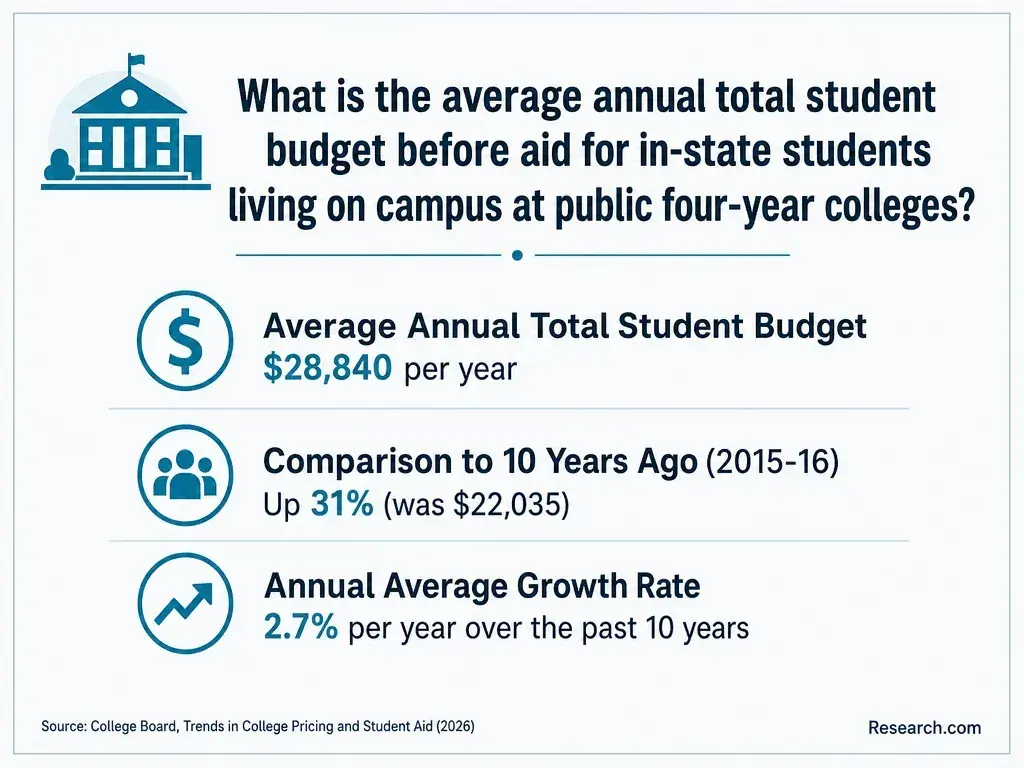
Compare total expected cost rather than tuition alone. Include mandatory fees, books and software, possible proctoring or campus visits, internship travel, and any wages you would give up to complete required hours. A paid placement may ease the burden, but pay is not assured. Use cheapest online business administration degrees as a starting point for comparing tuition, then obtain program-specific charges and an aid estimate. A lower per-credit price may not save money if required courses or placement scheduling add terms.
Delivery format describes where coursework happens, not whether an internship must be completed on campus. An online program may allow a nearby in-person placement; a campus-based program may offer easier access to local employers near the school but require travel for classes. Hybrid study combines online work with required in-person attendance.
Ask for actual class meeting times, assignment deadlines, group-project expectations, exam arrangements, and any residency requirements. If speed matters, compare fast-paced online business degrees against the internship course calendar. Compressing classes will not help if you cannot complete approved placement hours alongside them.
Depending on your skills and experience, a business administration graduate might pursue marketing coordinator, HR assistant, operations coordinator, purchasing assistant, sales-support, or project coordinator positions. These roles differ in daily work: one may involve campaign reporting, another employee records, and another schedules or supplier communication. Employers set their own requirements, and a bachelor's degree is not a promise of entry to any particular role.
Choose an internship that helps you show evidence for the job you want: a documented process map for operations, a permitted campaign report for marketing, or schedule tracking for project coordination. If project work is the clear goal, compare the BS with a focused degree and its full cost; tuition budgeting for an accredited project management degree can help frame that alternative. Neither program substitutes for relevant work experience.
There is no single salary or growth rate for BS in Business Administration graduates because they enter different occupations at different experience levels. For one possible direction, the U.S. Bureau of Labor Statistics reports a May 2025 median annual wage of $78,760 for market research analysts and projects 7% employment growth from 2025 to 2035. Those occupation-wide figures include experienced workers; they are not an offer or expected starting salary for a new graduate with a marketing internship.
Judge the financial case using roles you can realistically pursue in your location, the experience employers request, your expected education cost, and any earnings you forgo. Lists of affordable school choices for online business students can narrow the cost side, but your net cost depends on your credits, aid eligibility, fees, and time to finish.
Do Business Administration Careers Require Licenses or Professional Certifications?
Many general business support and coordination roles do not require an occupational license. Requirements change when work enters a regulated field or a specialized profession. A BS in Business Administration does not itself confer CPA eligibility, a financial-services license, or a professional certification; relevant boards, regulators, and certifying organizations set those rules. Employers may also prefer specific credentials without legally requiring them.
Before choosing a concentration or shortening your study plan, check the qualifications in postings for your target role and the applicable credential authority's rules. Resources on online undergraduate business rankings for shorter study paths may help compare degree formats, but faster graduation cannot substitute for required coursework, exams, or experience for a separate credential.
Other Things You Should Know About Business Administration
Possibly. Ask the school whether it permits internships in your state and whether it has any authorization, insurance, or placement restrictions there. Get confirmation before accepting the role.
No. An employer may consider a student-proposed role if it has suitable work and a willing supervisor. The school must still approve the arrangement if you want academic credit.
Contact the school's accessibility office early and discuss the role's essential tasks and site arrangements with the appropriate employer contact. Do not assume that accommodations for online classes automatically cover the workplace.
It can help you build relevant experience and contacts, but conversion is not guaranteed. Evaluate the placement for its supervision and skill development even if the employer has no open permanent position.
- Career-Connected Learning (Career Exploration & Work-Based Learning) | Department of Education https://educate.iowa.gov/higher-ed/cte/iowa-quality/career-connected-learning
- Cost of Attendance (Budget) | 2025-2026 Federal Student Aid Handbook https://fsapartners.ed.gov/knowledge-center/fsa-handbook/2025-2026/vol3/ch2-cost-attendance-budget
- Fact Sheet #71: Internship Programs Under The Fair Labor Standards Act | U.S. Department of Labor https://www.dol.gov/agencies/whd/fact-sheets/71-flsa-internships
- Accreditation in the U.S. | ed.gov http://www.ed.gov/laws-and-policy/higher-education-laws-and-policy/college-accreditation/accreditation-in-the-us
- Types of Financial Aid: Grants, Work-Study, and Loans | studentaid.gov https://studentaid.gov/understand-aid/types
- Internships | Career Services | University of Illinois Chicago https://careerservices.uic.edu/students/internships/
- Finding an Internship | Career Services | Loyola University Chicago https://www.luc.edu/career/resources/internshipresearchexperienceandjobsearch/findinganinternship/
- Internship Guide - Career Hub | Duke University https://careerhub.students.duke.edu/resources/internships/
- Online Bachelor of Science in Business Administration | AU https://online.aurora.edu/online-degrees/bs-business-administration-bachelors/
- Business Bachelor's Degree Programs Online | WGU https://www.wgu.edu/online-business-degrees/bachelors-programs.html