2027 From Insurance Claims Work to Business Analysis: When Does a BS in Business Administration Make Sense?
Audited and Verified:
Our Editorial and Data Verification Process
Research.com uses government datasets, official education statistics and primary institutional information to support its career and degree guides. Our review process checks factual accuracy, occupational definitions, source dates and the requirements associated with the credentials discussed.
How This Article Was Fact-Checked
Our editorial team verifies salary estimates, employment projections, education requirements and program information against original data providers and official organizations. Salary figures are checked against the relevant occupational definitions and reporting periods. Information about licensure, accreditation and required in-person training is reviewed separately.
Fact-checked and verified on:

Co-Founder and Chief Data Scientist
Insurance claims work can give you a close view of the processes business analysts are hired to improve: intake delays, inconsistent decisions, system handoffs, and reporting gaps. But knowing those problems does not automatically qualify you to redesign the workflow.
This article is for claims professionals weighing a BS in Business Administration against targeted training or an internal move. It explains which skills transfer, which gaps a degree can fill, and how to judge whether the time and cost are justified for your next role.
Key Things You Should Know
- A BS in Business Administration makes the most sense when you need a bachelor's credential and broader preparation in operations, finance, statistics, and organizational decision-making—not just a new job title.
- For an internal claims-to-analyst move, documented process work, spreadsheet or data skills, and experience gathering requirements may matter more immediately than starting a full degree.
- The U.S. Bureau of Labor Statistics reports a May 2025 median annual wage of $101,860 for management analysts, but that occupation-wide figure is not an expected starting salary for a claims professional changing roles.
What Is a Business Administration Degree, and Can It Lead to Business Analysis?
A BS in Business Administration is a bachelor's degree covering how organizations use money, people, information, and processes to make decisions. A BBA may cover similar ground, but the degree title does not tell you how much statistics, information systems, or applied analysis a particular curriculum includes.
In insurance, a business analyst might interview adjusters about a claims-handling problem, document current steps, define requirements for a system change, and help test whether the new workflow meets them. That differs from an adjuster's responsibility for investigating and resolving individual claims. It also differs from a data analyst role centered primarily on extracting and modeling data; employers may use these titles differently.
A business administration degree can support the transition, particularly when it pairs process and quantitative coursework with a relevant project. It does not, by itself, establish proficiency with requirements documentation, data tools, or insurer systems. When reviewing ranked US college pathways in online business, compare actual course descriptions rather than assuming every general business degree teaches those skills to the same depth.
When Does a Business Administration Degree Make Sense for Insurance Claims Professionals?
Claims experience is most transferable when you can explain an operational issue across cases, teams, or systems—not merely show that you handled a large caseload. Examples include identifying recurring rework, helping clarify a system requirement, or communicating how a proposed change would affect adjusters and customers. Use only information you are authorized to access and share.
The following comparison focuses on the decision claims professionals actually face: whether a degree addresses a barrier that experience and shorter training cannot.
| Situation | Likely better starting point | Reason |
| You lack a bachelor's degree, and target analyst postings require or strongly prefer one | Evaluate a BS in Business Administration or a more specialized bachelor's degree | The credential may remove a hiring barrier while building broader business skills. |
| You already have a bachelor's degree and can pursue an internal analyst opening | Targeted training and supervised processes or systems work | A second bachelor's may add less value than evidence of role-specific ability. |
| You want technical reporting or data-engineering work | Compare analytics or information systems study | A general business core may not provide sufficient technical depth. |
| You mainly want to supervise claims staff | Compare leadership development and actual supervisory opportunities | People management and business analysis are different career goals. |
If supervision is the primary goal, compare accelerated organizational leadership degrees as an alternative, then inspect the courses and employer requirements. For business analysis, ask your manager or an internal analyst which claims-system changes are underway and whether you can contribute to a bounded task, such as documenting a workflow or helping test approved requirements. That conversation can reveal whether a degree is necessary before you commit to one.

What Education Do You Need to Become a Business Analyst?
There is no single degree or universal license for business analyst jobs. Employers set their own requirements, which vary by the role's emphasis on operations, software delivery, data, or a particular industry. A bachelor's degree is common in many analyst postings, but relevant experience and demonstrated skills can be decisive—especially for someone moving within an insurer.
For a claims-process role, useful preparation includes interviewing stakeholders, mapping a current workflow, writing clear requirements, interpreting measures such as turnaround time or rework, and testing whether a change solves the stated problem. Spreadsheet skills are often useful; SQL or dashboard skills may be expected in more data-focused positions. A BS in Business Administration can build part of that foundation, while employer projects or focused courses can address specific gaps faster.
Read several real postings from your target employer before choosing a program. Separate required credentials from preferred tools and experience, then match your claims work to the listed tasks. If the role you actually want is HR rather than claims analysis, transfer-friendly human resources bachelor's degrees may warrant comparison with a general business degree.
Business administration programs commonly combine general education with accounting, finance, economics, management, marketing, operations, statistics, and business communication. Requirements vary by school. For a claims-to-analysis transition, the most valuable courses are those that teach you to define a business problem, assess evidence, and explain a feasible change.
Look closely at quantitative methods, operations or process improvement, information systems, and project-based courses. An assignment that asks you to map a workflow, state assumptions, calculate a measure, and present a recommendation is more relevant than a course title alone. An analytics concentration may add useful depth, but confirm that it is an officially offered concentration, which courses it requires, and whether those courses are available on your schedule.
Choose specialization by the job you want: analytics or information systems for reporting-heavy roles, operations for workflow improvement, or finance for cost-focused work. Supply chain can be useful for some operations careers but is not automatically relevant to claims analysis; if that is your intended pivot, planning an affordable supply chain education route is a separate comparison. No individual course proves professional analyst competence without an opportunity to apply it.
A bachelor's degree often takes about four years of full-time study from the beginning. A working claims professional's remaining time depends on accepted prior coursework, which credits satisfy specific degree requirements, course sequencing, and whether part-time attendance is necessary. A school's acceptance of a credit does not mean it satisfies its business core.
There is no reliable universal price for this decision. Compare each school's written estimate of remaining required credits with its tuition and mandatory fees, then account for books, software, possible travel, and any reduction in work hours. Ask whether your employer offers education assistance, when reimbursement occurs, and whether it carries grade, service, or repayment conditions. Financial aid and a lower advertised per-credit price do not necessarily make the final out-of-pocket cost lower.
If price is the main constraint, compare inexpensive business administration degree options using the same estimated remaining requirements. A shorter certificate or internal transition may offer better value if you already meet the degree expectations for your target job.
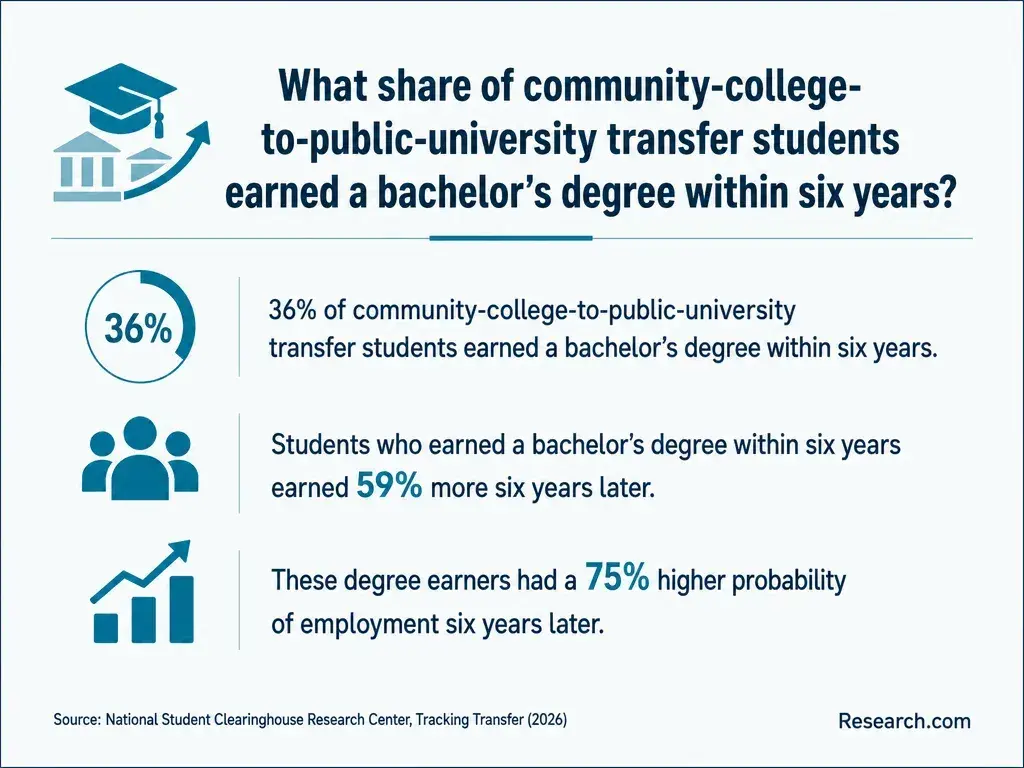
Requirements depend on the institution and your academic history. First-year applicants generally document secondary school completion; transfer applicants provide prior college transcripts. Some schools admit students directly to business administration, while others have separate requirements for entering the business major. Professional claims experience may strengthen an application without replacing required academic documentation.
If you have previous college credit, request an official evaluation showing what applies to general education, prerequisites, the business core, and electives. Ask specifically about math or statistics preparation, any accounting prerequisites, minimum grades, and courses that must be taken at the new institution. If you already hold a bachelor's degree, check second-degree rules before applying.
For a closer look at varying entry policies, identify and prepare for what to check before applying for a business administration degree. The admissions office can confirm eligibility; the registrar, transfer office, or academic department must confirm how prior credits apply to graduation.
Neither format is inherently better for a claims professional. An online program can reduce commuting and make it easier to remain employed, but "online" does not necessarily mean self-paced. Live sessions, group assignments, fixed exam windows, and internships can still conflict with claims shifts or peak workloads. Campus study may offer easier access to scheduled faculty meetings and local recruiting, but travel and class times may be harder to manage.
Before choosing, get a sample term schedule and ask when required business and analytics courses run, whether attendance is live, how team projects work, and whether a capstone can use an approved workplace problem. When reviewing accelerated business bachelor's school comparisons, check the workload and transfer assumptions behind any advertised completion time. Faster calendar pacing does not make the coursework lighter.
For someone coming from insurance claims, the most plausible next roles are often adjacent ones: claims operations coordinator, process-improvement associate, business analyst on a claims team, or project coordinator supporting a system change. Job titles vary. Hiring managers will want evidence that you can work beyond individual files—for example, explain a recurring process issue, document stakeholder needs, and assess whether a proposed fix works.
A broader business degree can also support applications outside insurance, but moving into another function may require new industry knowledge and entry-level experience. Supply chain roles, for instance, involve different systems and operating measures; online colleges with accelerated supply chain bachelor's study are worth examining only if that function—not claims analysis—is your target.
A practical first step is to keep a record of authorized work contributions: the problem, your role, the method you used, and what you can verify about the outcome. Do not present a team's results as solely your own or disclose customer or company information in applications.
How Do You Choose an Accredited Business Administration Program?
Start by verifying the institution's recognized accreditation and that the exact bachelor's program is offered in your intended format. Institutional accreditation and specialized business accreditation serve different purposes; if a school cites AACSB, ACBSP, or IACBE, verify whether the named program falls within that accreditor's scope. Accreditation alone does not establish analyst placement or the quality of a particular course.
Next, compare the courses you would actually take, an official evaluation of your previous credits, access to relevant projects, required attendance, and the total estimated cost to finish. Ask career services what support it offers working adults seeking analyst roles, rather than relying on broad employment claims. If financing affects the decision, compare business administration tuition and FAFSA eligibility, then verify aid and charges directly with each school.
The strongest choice is the program that fills a documented gap at a manageable cost. If your target employer accepts your existing education and offers a credible path into process or systems work, pursue that opportunity before assuming another degree is necessary.
Other Things You Should Know About Business Administration
Not generally for an analyst role that does not perform licensed adjusting activities. State rules and job duties matter, so check the specific position rather than assuming your current license is either required or sufficient.
There is no universal certification requirement. A credential may help demonstrate specific training, but first check which certifications - if any - appear in the jobs you want and whether you meet their eligibility rules.
Only if your employer permits it and you can protect confidential, personal, and proprietary information. A clearly labeled fictional workflow or sanitized example is safer than sharing actual claim files or internal screenshots.
Some roles require SQL or other technical skills; others emphasize process mapping, requirements, and communication. Use target job descriptions to decide which tools to learn rather than treating coding as a universal requirement.
- Analysis and Improvement of Information-Intensive Services | sagepub.com https://journals.sagepub.com/doi/10.1111/j.1937-5956.2010.01150.x
- Becoming a Business Analyst: What You Need to Know | Georgia Tech Professional Education https://pe.gatech.edu/blog/industry-trends/how-to-become-a-business-analyst
- How to Become a Business Analyst: Steps, Skills, and Salary | Touro University Worldwide https://www.tuw.edu/business/how-to-become-a-business-analyst/
- Becoming a business analyst in 2026 and beyond | Cornell SC Johnson College of Business https://business.cornell.edu/news/2026/03/20/how-to-become-a-business-analyst/
- Business analytics vs. business administration | Capella University https://www.capella.edu/blog/business/the-difference-between-business-analytics-and-business-analysis/
- What Is a Business Analyst? 2026 Career Guide | Coursera https://www.coursera.org/articles/what-does-a-business-analyst-do-and-how-to-become-one
- Associate in Claims (AIC™) | The Institutes https://web.theinstitutes.org/designations/associate-claims
- Insurance Claims Processing Workflow: A Step-by-Step Guide for Carriers & MGAs - Modotech https://www.modotech.com/blog/insurance-claims-processing-workflow
- Claims Module Senior Business Analyst - Conduent https://careers.conduent.com/us/en/job/22764/Claims-Module-Senior-Business-Analyst
- Reimagining claims: Soft skills are the differentiator | Deloitte Insights https://www.deloitte.com/us/en/insights/industry/financial-services/soft-skills-claims-management-shortage.html