2027 BS in Business Administration: Finishing Your Last Thirty Credits While Working
Audited and Verified:
Our Editorial and Data Verification Process
Research.com uses government datasets, official education statistics and primary institutional information to support its career and degree guides. Our review process checks factual accuracy, occupational definitions, source dates and the requirements associated with the credentials discussed.
How This Article Was Fact-Checked
Our editorial team verifies salary estimates, employment projections, education requirements and program information against original data providers and official organizations. Salary figures are checked against the relevant occupational definitions and reporting periods. Information about licensure, accreditation and required in-person training is reviewed separately.
Fact-checked and verified on:

Co-Founder and Chief Data Scientist
Being 30 credits from a BS in Business Administration can feel close to graduation - until a required course conflicts with your work schedule or transferred credits land in the elective column. For working adults and returning students, the best completion plan starts with an official degree audit, not an advertised finish date.
This guide explains how to confirm what remains, choose a workable pace, estimate the full cost, and decide whether the degree supports your next career move.
Key Things You Should Know
- Thirty credits is usually about one-fourth of a 120-credit bachelor's degree, but an official audit must confirm that those are the only credits you need.
- At 6 credits per fall and spring semester, 30 credits takes five semesters unless summer courses or a different calendar shorten the schedule.
- Before enrolling, confirm required-course availability, live attendance and project obligations, residency rules, and the total cost of your remaining courses.
What Is a BS in Business Administration Degree Completion Program?
A degree completion program is a bachelor's pathway designed for students who already have substantial college credit. It may offer online courses, evening classes, or advising tailored to transfers, but it still awards the institution's full bachelor's degree - not a separate "last 30 credits" credential.
The critical distinction is between credits accepted and requirements satisfied. A school might accept a previous course as an elective while still requiring its own business finance course, a general education requirement, or a minimum number of credits taken there. An associate degree, including an applied associate degree, does not automatically clear every lower-division requirement.
Ask for an evaluation that identifies general education, business core, concentration, elective, and residency requirements separately. If your intended role is more specialized, such as project coordination, compare the remaining requirements with a project management bachelor's transfer planning guide before changing majors; a seemingly better-fitting degree can require more coursework.
How Can You Finish Your Last Thirty Credits While Working?
Build the schedule around required courses and predictable work obligations, not just the program's advertised flexibility. An asynchronous lecture may still have fixed weekly deadlines, a live group presentation, a proctored exam, or a capstone meeting.
Use this sequence to test whether a proposed schedule is sustainable:
- Obtain an official degree audit and mark every remaining prerequisite, once-a-year course, and required final-term course.
- Ask the department when each course will run and whether attendance, exams, group work, internships, or campus visits have fixed times.
- Block study time alongside shifts, commuting, and household responsibilities; choose a lighter first term if your available hours are uncertain.
- Get the approved sequence in writing, including what happens if work forces you to pause or miss a required course.
Taking one course at a time can be more manageable than taking two simultaneously, even when both schedules total the same credits. Accelerated terms compress deadlines rather than eliminate work. Use US fast-track undergraduate business degree options to identify formats worth investigating, then check the actual timetable for your remaining courses.
How Much Does a Business Administration Degree Completion Program Cost?
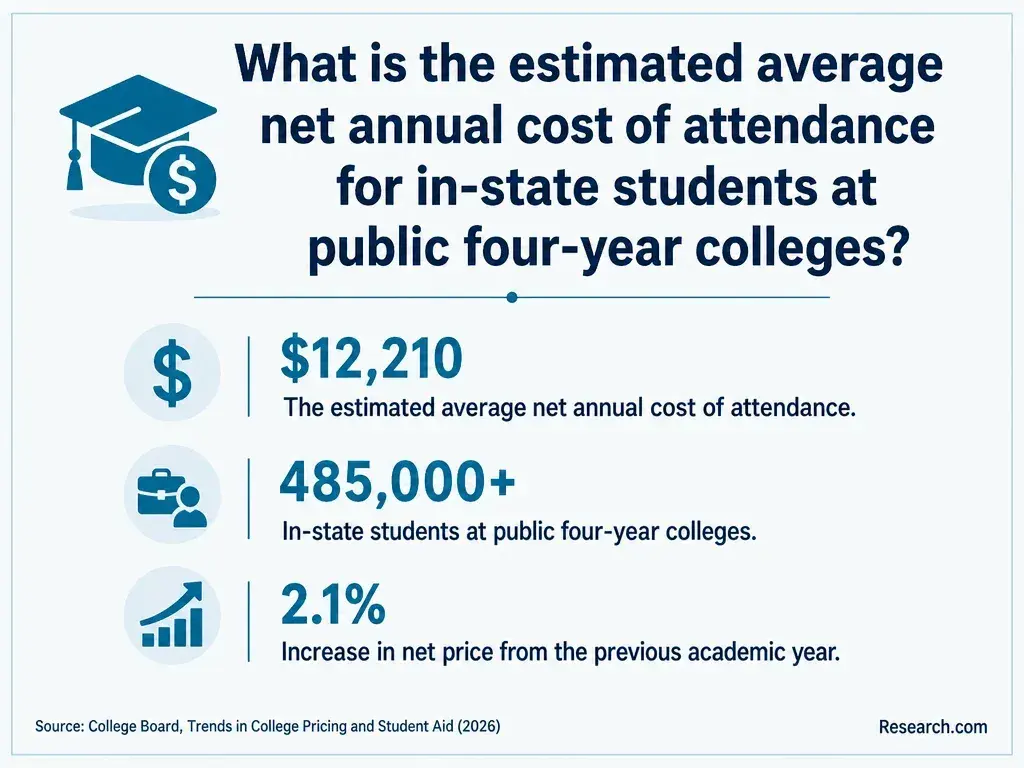
There is no reliable universal price for the last 30 credits. Schools may charge per credit, course, or term, and the final bill depends on how many required credits the school says you still need. A low advertised tuition rate can lose its advantage if you must repeat a prerequisite or pay for additional terms.
For a comparison, calculate remaining required credits × applicable tuition rate, then add mandatory fees, books, software, proctoring, and any travel. Check whether part-time enrollment changes the rate or access to aid. Compare that total - not just tuition - with affordable online business program comparisons.
Ask your financial aid office for an estimate based on your actual enrollment plan. If your employer offers education assistance, confirm eligible courses, reimbursement timing, grade rules, and any repayment obligation if you leave. Reimbursement after a term ends does not pay the bill when it first comes due.
The final credits are determined by the receiving school's audit. They may include upper-level accounting or finance, management, marketing, operations, business analytics, strategy, electives, general education, or a capstone. Some schools also require a concentration; others do not. Prior business experience does not, by itself, waive a course.
Course sequence matters as much as course count. A finance prerequisite offered this term may unlock a required strategy course later, while an elective taken instead might move you no closer to graduation. Ask your adviser to identify courses that must be completed at the institution and whether any approved substitution is possible.
If the available electives lean heavily toward project management, decide whether they strengthen your current degree or whether a different major serves your goal. Compare the additional credits and total cost - not just course titles - against value-focused project management degree choices. A few electives are not automatically an official concentration.
Online delivery does not determine accreditation. Verify that the degree-awarding institution holds recognized institutional accreditation and that it covers the program you plan to enter. Some business schools also hold AACSB, ACBSP, or IACBE accreditation; check the accreditor's stated scope rather than assuming every degree at the institution is covered.
Accreditation is an essential screening question, not proof that a program fits your work schedule or budget. When reviewing online business administration program cost-and-time comparisons, confirm the institution, exact BS degree title, accreditation status, and requirements that apply to your enrollment term. Ask the school directly if a listing or program page is unclear.
Neither format is automatically faster or more flexible. The better choice is the one that offers your required courses in a sequence you can attend and complete while employed.
This comparison highlights scheduling differences to verify with each school, rather than guarantees attached to either format.
| Factor | Online program | Campus-based program |
| Attendance | May be asynchronous or require live sessions | Usually has scheduled class meetings |
| Collaboration | Group work may require evening or weekend calls | Group work may extend beyond class hours |
| Assessment | May use timed or proctored online exams | May require on-campus exams or presentations |
| Travel | Usually limited, but visits or residencies must be checked | Regular commuting may affect work availability |
Compare syllabi or course schedules for the classes you actually need. If your goal is organizational leadership rather than a general business BS, faster bachelor's routes in organizational leadership may be worth comparing - but only after you learn how your credits would apply to that different degree.
Schools commonly request official transcripts and evaluate previous college work, academic standing, and prerequisites. A completion pathway may also require a minimum amount of prior credit or separate admission to the business major. These are distinct decisions: admission does not establish that exactly 30 credits remain.
Request records from every college attended, including course descriptions or syllabi for business and quantitative courses whose equivalency is uncertain. Ask the transfer office to evaluate credits, the business department to confirm major requirements, and an adviser to produce the resulting degree audit. If you previously attended the same school, ask whether readmission places you under a new catalog.
For a specific HR goal, compare the audit with HR bachelor's programs with flexible transfer pathways. A program may admit you while requiring additional HR courses that lengthen the route beyond your initial estimate.
At 6 credits in each fall and spring semester, 30 credits requires five semesters - roughly two and a half academic years without summer enrollment. That is an illustration, not a promised completion date. More credits per term or available summer courses can shorten the calendar; prerequisites, limited course offerings, or a work-related pause can lengthen it.
Ask for a term-by-term plan showing when each required course will be offered, not just how many credits you can theoretically take. If you are considering a switch to a more focused major, such as supply chain management, compare its new audit and course rotation with shorter online supply chain bachelor's pathways. A faster advertised program may be slower for your particular transfer record.
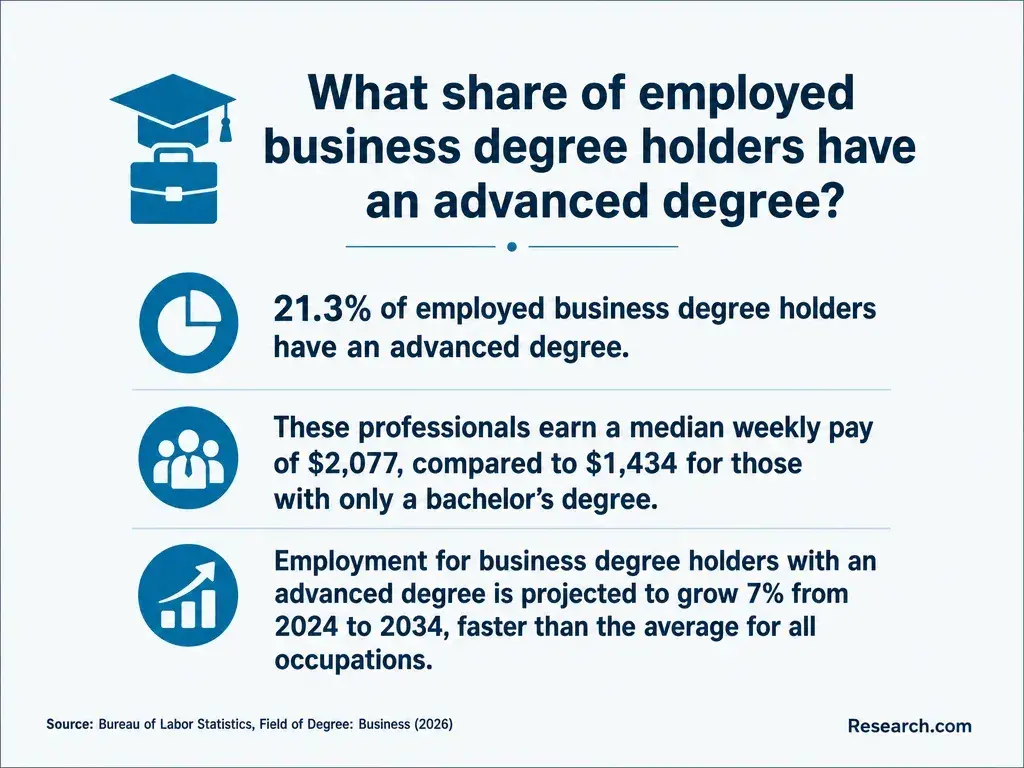
The degree can help an experienced employee meet a bachelor's requirement for advancement or build a foundation for roles in operations, HR, marketing, procurement, and project coordination. The stronger career case connects completed coursework to responsibilities you already handle or can document through an approved project. Graduation alone does not qualify someone to manage staff or enter a specialist role.
For context, the U.S. Bureau of Labor Statistics reports a $75,940 median annual wage for human resources specialists in May 2025. That is an occupation-wide median, not an expected starting salary for a business administration graduate; employers may seek HR-specific experience and skills. Evaluate job postings for your target role and location before using any salary figure to justify tuition.
If your experience is in purchasing or logistics, compare the general BS with supply chain program length and value comparisons. A specialized degree may offer more relevant coursework, but only if the added requirements make sense for your remaining credits and career goal.
Do Business Administration Graduates Need Licenses or Certifications?
There is no general license required simply to hold a BS in Business Administration or work in many business roles. Requirements arise from the specific occupation or activity: accounting licensure, certain financial services work, and other regulated work have separate rules. Voluntary HR or project management certifications have their own eligibility and examination requirements; a business course does not award them.
Check target job descriptions before adding a credential to your degree plan. If HR is your destination, explore the costs of an HR degree alongside the cost of finishing your existing BS. The more direct choice depends on whether employers want a bachelor's degree, HR-focused preparation, relevant experience, or a particular certification.
Other Things You Should Know About Business Administration
That depends on the institution's diploma and transcript policies. Ask the registrar how the degree title and delivery format appear on each document.
Possibly, if the school offers prior-learning assessment or an approved work-based course. Employment alone does not award credit; ask what evidence, fees, supervision, and approvals are required.
Request a new evaluation. Older credits may still transfer, but catalog changes, course equivalencies, and current major requirements can change what remains.
Only with the degree-awarding school's advance approval. Confirm the exact equivalency and whether taking it elsewhere would conflict with residency or graduation rules.
- Lombardo College of Business Online Bachelor's in Business Administration Degree. | Millersville University https://www.millersville.edu/mgmtmktg/general-business-admin-online.php
- Online Business Degree | AACSB Accredited | Adelphi University https://onlineprograms.adelphi.edu/programs/bs-bachelor-business/
- Requirements for the Bachelor's Degree | University at Albany https://www.albany.edu/undergraduate-bulletin/requirements-for-bachelors-degree.php
- Business Administration, B.S. Degree Completion Program | Strategic Planning, Accreditation, and Assessment https://www.citadel.edu/business/degree-completion/bs-business-transfer/
- Course Scheduling Options | McLennan Community College https://www.mclennan.edu/scheduling-types/
- Accelerated Nights and Weekends Program at Dallas College - Dallas College https://www.dallascollege.edu/special-programs/nights-weekends/
- Current Tuition Rates and Fees | WCC https://www.wccnet.edu/afford/cost/tuition/index.php