2027 BS in Business Administration Curriculum: How to Evaluate Preparation in Business Forecasting
Audited and Verified:
Our Editorial and Data Verification Process
Research.com uses government datasets, official education statistics and primary institutional information to support its career and degree guides. Our review process checks factual accuracy, occupational definitions, source dates and the requirements associated with the credentials discussed.
How This Article Was Fact-Checked
Our editorial team verifies salary estimates, employment projections, education requirements and program information against original data providers and official organizations. Salary figures are checked against the relevant occupational definitions and reporting periods. Information about licensure, accreditation and required in-person training is reviewed separately.
Fact-checked and verified on:

Co-Founder and Chief Data Scientist
A business administration program may advertise analytics, but that does not tell you whether graduates can build and explain a useful forecast. For students choosing a BS curriculum, the difference lies in course depth, access to realistic data, and opportunities to test predictions against outcomes.
This guide shows how to examine those features, from statistics prerequisites to capstone work, so you can choose a program that fits your forecasting interests rather than relying on a course title or concentration label.
Key Things You Should Know
- Look for a sequence connecting statistics and business data to finance, marketing, or operations - not just a single analytics elective.
- Strong applied work compares a forecast with actual results, explains error and uncertainty, and recommends a decision a business could reasonably make.
- For salary context, the U.S. Bureau of Labor Statistics reports a May 2025 median annual wage of $78,760 for market research analysts; that occupation-wide figure is not an expected starting salary for business graduates.
What Is Business Forecasting in a Business Administration Degree?
Business forecasting estimates a future quantity over a defined period so someone can make a decision. A sales team might estimate next quarter's demand to plan inventory; a finance team might project cash receipts to assess whether upcoming bills can be paid. The forecast is an estimate, not an observed result or a promise.
In a BS in Business Administration, forecasting should connect quantitative methods with business judgment: defining the measure and time horizon, checking the available data, choosing reasonable assumptions, and explaining what changes if the estimate is wrong. A revenue forecast, for example, is not automatically a profit or cash-flow forecast. The curriculum should teach students which measure the decision actually requires.
The right degree depends on the decisions you want to support. A general business program can provide breadth across functions; an operations or supply chain program may offer more depth in demand planning. If your main interest is predicting project costs and schedules, find budget-conscious project management degrees and compare their estimating coursework with the business programs on your list.
Which Courses Should a Business Forecasting Curriculum Include?
No single course title establishes forecasting preparation. Compare the required sequence, elective availability, prerequisites, and sample assignments. The table shows how common subjects contribute different parts of the skill; a course's actual syllabus matters more than its name.
| Curriculum component | Forecasting contribution | Evidence to look for |
| Statistics and quantitative methods | Variation, relationships, sampling, and error | Assignments interpreting results and limitations, not only calculating answers |
| Spreadsheets, analytics, or information systems | Data preparation, models, and visual presentation | Work with messy data, documented assumptions, and reproducible calculations |
| Accounting and finance | Budgets, financial statements, costs, and cash timing | Projects that distinguish sales, earnings, and cash needs |
| Marketing or operations | Customer demand, capacity, inventory, or staffing context | Forecasts tied to a specific operational decision |
| Applied elective or capstone | Integration and communication | Comparison with a baseline forecast and an explanation of uncertainty |
Check whether introductory statistics unlocks advanced analytics electives and whether those electives run often enough to fit your graduation plan. An advertised analytics concentration has greater value if it adds substantial methods and applied work without unexpected credits or delays; an informal elective cluster is not the same as an officially awarded concentration. You can compare ranked online business schools in America to build a shortlist, but use each school's current catalog and syllabi to judge forecasting depth.
How Does a Business Degree Prepare Students for Forecasting Careers?
A degree can provide business context and supervised practice, but employers need evidence that an applicant can turn an estimate into a sound recommendation. A useful student project starts with a question - such as how much inventory to order - then identifies available data, produces a forecast, tests it against a simple baseline, and explains the cost of ordering too much or too little.
Internships and workplace projects can add context that classroom exercises lack. Confirm who supplies the data, who supervises the work, and whether the school will assess it for credit; employment alone does not establish academic approval. If you plan to show a project to employers, obtain permission and remove confidential financial, customer, and employee information. A simulation can demonstrate method without being presented as a real company result.
Choose projects that match the function you hope to enter. Demand forecasts suit marketing and operations; budget projections suit finance; staffing estimates require particular care with employee data and organizational policy. Readers focused chiefly on workforce planning may also want to review understanding human resources degree levels before choosing a broad business curriculum over specialized HR study.
First, verify the institution's accreditation status and confirm that the accreditor is recognized by the U.S. Department of Education or the Council for Higher Education Accreditation. Then check whether any claimed AACSB, ACBSP, or IACBE business accreditation covers the school or program in which your BS is offered. Institutional accreditation and business-specific accreditation have different scopes; neither proves that a particular forecasting course is strong.
Ask the program for its current catalog, an elective rotation, sample learning outcomes, and information about faculty support for quantitative projects. Accreditation can help you screen programs, but a curriculum review tells you whether the program meets your goal. The same distinction matters when considering a specialized alternative: affordability checks for accredited project management programs should include both accreditation scope and the actual estimating coursework, not price or an accreditation claim alone.
A prepared graduate should be able to define the decision, measure, units, and forecast horizon before selecting a method. For a monthly demand estimate, that means identifying what counts as demand, whether past months are comparable, and whether promotions or supply shortages distorted the record.
The practical skill set combines spreadsheet modeling, data cleaning, basic statistical interpretation, and communication. Students should be able to make a simple baseline, compare it with a more elaborate estimate, examine forecast error, and present plausible scenarios when the data cannot support a precise answer. They should also distinguish correlation from causation and avoid treating a polished chart as evidence that assumptions are sound.
Ask whether students can practice these skills in the function that interests them. Supply chain work, for instance, connects forecasts to lead times and inventory decisions; students seeking that depth might compare three-year supply chain undergraduate degree routes with a general business BS. A shorter advertised route is worthwhile only if its requirements, transfer evaluation, and course availability fit the student's circumstances.
Yes, an online program can teach forecasting effectively if students can use the required software, obtain feedback on models, and complete applied assignments. Delivery mode alone does not establish those conditions. Request a sample quantitative-course syllabus and check whether assessments involve working with data or mainly recalling terminology.
For a working student, examine live-session times, group-project meetings, software access, technical support, proctored exams, and deadlines. An asynchronous lecture does not necessarily mean a self-paced course or a flexible team schedule. If keeping a job is essential, compare flexible online study for business administration career growth against the actual commitments in the forecasting-related courses you would take.
Requirements vary by institution and by entry route. Applicants may need a secondary-school credential or previous college transcripts, while entry to upper-level business courses can depend on earlier mathematics, statistics, accounting, or economics work. Admission to the university, admission to the business major, and permission to take an advanced analytics elective may be separate decisions.
Before applying, compare your transcript with the program's published prerequisite sequence and ask an adviser when any missing course must be completed. Transfer students should request an official evaluation showing whether accepted credits satisfy the business core or merely count as electives. For a closer look at possible entry-course requirements, review prerequisites for a business administration degree; the institution's current catalog and evaluation govern your own plan.
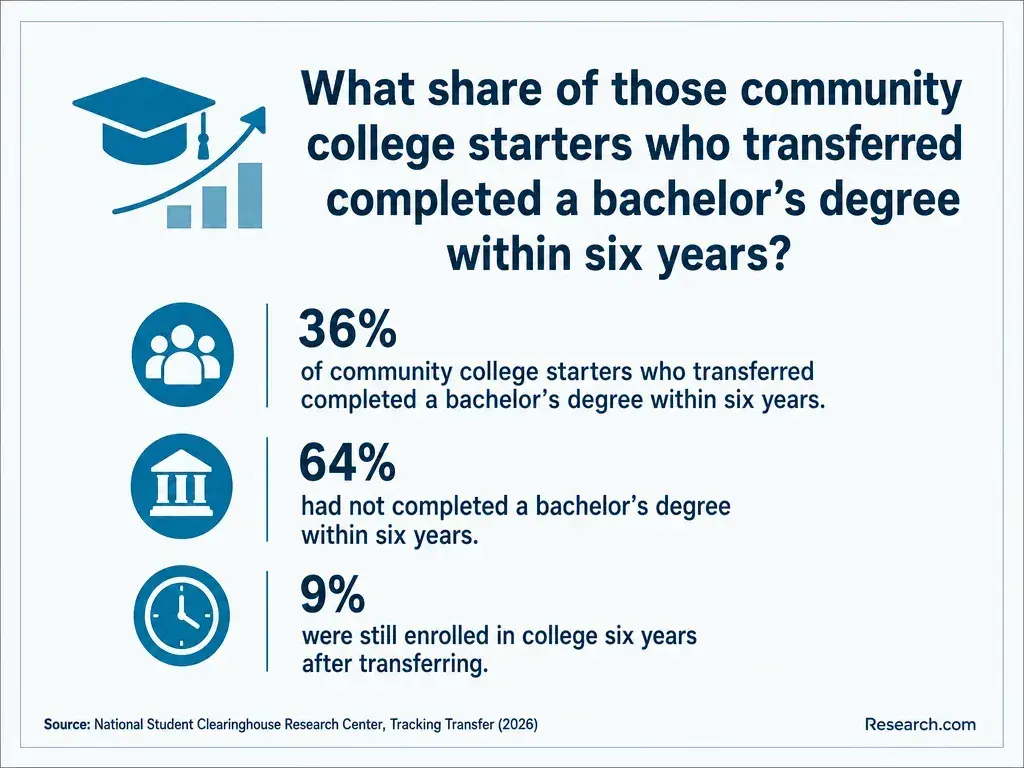
A bachelor's program commonly follows a four-year full-time plan, but a student's remaining time depends on applicable transfer credit, course sequencing, and enrollment pace. Forecasting preparation can take longer if statistics must be completed before an analytics elective or if a desired course is offered infrequently. Ask for a term-by-term plan that includes the courses you want - not just the minimum graduation requirements.
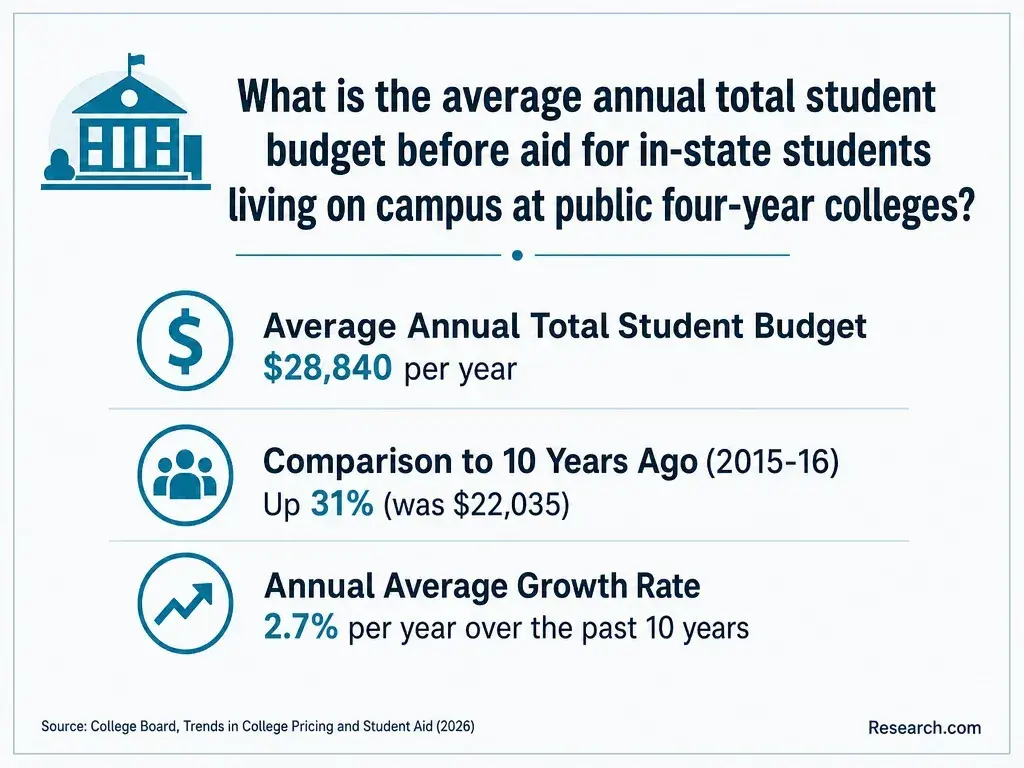
Compare total completion cost rather than tuition alone. Include required fees, software, materials, any campus visits, financing costs, and the effect of taking fewer classes while working. An elective or concentration may be valuable without adding credits, or it may extend enrollment; only an approved degree audit can settle that question. When you compare low-cost online business administration pathways, request a personalized estimate based on credits that actually apply to your degree.
Forecasting is a task within several occupations, not usually a job title earned with a business BS. Market research analysts may estimate customer demand; budget analysts examine financial plans; logisticians use demand information to support supply decisions. Entry-level openings differ in their expectations for technical methods, industry knowledge, internships, and prior work. A business graduate may first contribute to a team's forecast rather than own the model or approve a budget.
The U.S. Bureau of Labor Statistics reports a May 2025 median annual wage of $78,760 for market research analysts and projects 7% employment growth from 2025 to 2035. These are occupation-wide U.S. figures, not starting-pay or placement estimates for a particular BS program. Use them to understand the occupation, then examine local postings for the tools and experience employers seek.
For a first role, match your coursework and work samples to specific tasks: cleaning survey data, explaining a demand estimate, maintaining a budget model, or comparing actual results with a plan. If speed to completion is part of your decision, shorter business administration study options and career prospects can help frame the trade-off - but do not sacrifice the quantitative courses or experience your target job requires.
What Certifications Strengthen Business Forecasting Career Prospects?
A certification can complement forecasting coursework when it addresses a clear gap, such as spreadsheet modeling, business analytics, supply chain planning, or project cost estimation. It does not replace a bachelor's degree where an employer requires one, and a business degree does not automatically confer certification eligibility. Check the issuing organization's current prerequisites, exam content, fees, and renewal rules before enrolling.
Choose by the work you want to do rather than collecting credentials with overlapping content. A short, assessed course may be the more direct next step for an employed graduate who needs one tool; a specialized degree may make more sense for a substantial change of function. If you are weighing a separate project-management bachelor's against shorter training, investigate funding sources for a bachelor's in project management as part of the full cost comparison. Neither route substitutes for evidence that you can produce and explain a reliable estimate.
Other Things You Should Know About Business Administration
Not necessarily. Many undergraduate forecasting assignments emphasize statistics and spreadsheets, but prerequisites vary. Check the exact courses required for the electives you want.
Update it when new results or changed conditions could affect the decision. The appropriate schedule depends on the forecast horizon, data availability, and how quickly the business can respond.
Yes. Comparing it with actual results can reveal a flawed assumption or a change in conditions. Record the original estimate so later revisions do not hide the error.
Follow the course's AI policy. If use is allowed, document the tool and inputs, verify its calculations and claims, and avoid entering confidential organizational data without permission.
- Forecast evaluation for data scientists: common pitfalls... - PMC https://pmc.ncbi.nlm.nih.gov/articles/PMC9718476/
- Business Administration - Craig School of Business - Fresno State https://craig.fresnostate.edu/advising/degprog/businessadminmajor.html
- Economics BS, Economic and Business Forecasting Specialization | cwu.edu https://catalog.acalog.cwu.edu/preview_program.php
- Evaluating Forecasting Methods | upenn.edu https://repository.upenn.edu/bitstreams/d427551c-5daa-419d-bbc7-a55efebd8aaa/download
- Capstone: Learning In Action | Student Portal - NYU Wagner https://wagner.nyu.edu/portal/students/academics/capstone
- Capstone Experiences | Mercyhurst https://www.mercyhurst.edu/academics/capstone-experiences
- Guidelines for the Program Assessment Process | ou.edu http://www.ou.edu/assessment/program-assessment/guidelines.html
- Business Administration | General Studies | BABA - UF Catalog https://catalog.ufl.edu/UGRD/colleges-schools/UGBUS/BAG_BABA/
- business forecasting | tesu.edu https://www2.tesu.edu/syllabus/current/BFO-701/syllabus_BFO-701.html