2027 From Inventory Control to Operations Analysis: When Does a BS in Business Administration Make Sense?
Audited and Verified:
Our Editorial and Data Verification Process
Research.com uses government datasets, official education statistics and primary institutional information to support its career and degree guides. Our review process checks factual accuracy, occupational definitions, source dates and the requirements associated with the credentials discussed.
How This Article Was Fact-Checked
Our editorial team verifies salary estimates, employment projections, education requirements and program information against original data providers and official organizations. Salary figures are checked against the relevant occupational definitions and reporting periods. Information about licensure, accreditation and required in-person training is reviewed separately.
Fact-checked and verified on:

Co-Founder and Chief Data Scientist
Inventory control gives you firsthand knowledge of stock discrepancies, replenishment delays, and the decisions behind them. Operations analysis asks you to turn that knowledge into evidence for improving a process.
If you want to make that move, a BS in Business Administration may provide useful breadth - but it may not be the most direct route. This guide explains what the degree can add, what employers still need to see, and how to compare it with specialized study or targeted training before you commit.
Key Things You Should Know
- A BS in Business Administration makes the strongest case when you need a bachelor's degree for target roles and broader preparation in finance, operations, statistics, and organizational decision-making.
- Inventory experience is valuable evidence, but operations-analysis applications also need documented work with data, process measures, recommendations, and their limitations.
- The U.S. Bureau of Labor Statistics reports a $101,860 median annual wage for management analysts in May 2025; that occupation-wide figure is not an expected starting salary for someone changing roles.
What Is a Business Administration Degree, and Who Is It For?
A BS in Business Administration is an undergraduate degree covering several business functions rather than training for one occupation. Its mix of accounting, management, operations, economics, and quantitative work can suit an inventory employee who wants to understand why a stock problem affects purchasing, cash, customer service, and staffing - not just count accuracy.
The name alone does not establish the curriculum. A BBA may offer similar preparation, while a specialized supply chain or business analytics bachelor's may provide more courses in the target function. If your goal is specifically project scheduling or delivery, colleges accepting coursework toward project management bachelor's study offer a comparison point; check which prior credits would actually satisfy that major's requirements.
When Does a BS in Business Administration Make Sense?
The degree makes sense when the jobs you are targeting require or prefer a bachelor's, you lack one, and you want room to move beyond inventory into purchasing, process improvement, or broader operations. It is less compelling if you already hold an applicable bachelor's and chiefly need stronger spreadsheet, statistical, database, or process-mapping skills.
Use the distinction below to match the educational investment to the gap between your current work and your target role.
| Situation | More promising starting point | Reason to reconsider |
| No bachelor's; target postings ask for one and involve cross-functional decisions | BS in Business Administration with relevant operations and analytics coursework | A specialized degree may offer more functional depth |
| Already have a bachelor's; need to analyze inventory and workflow data | Targeted courses plus a documented work project | Some employers may require a particular degree or deeper technical preparation |
| Want planning, procurement, or logistics as a defined specialty | Compare supply chain programs with the general BS | Broader business study may better support several possible career directions |
Before enrolling, collect several relevant job postings and separate degree requirements from task requirements. Then ask whether the proposed program closes both gaps. Employees planning to study while working can use business administration degree planning for employed applicants to frame the scheduling decision. Neither continued employment nor enrollment guarantees access to an analyst role or an approved workplace project.
What Careers Can You Pursue With a Business Administration Degree?
An inventory employee may be able to pursue operations coordinator, purchasing assistant, inventory analyst, or supply chain coordinator openings, depending on their responsibilities and the employer's requirements. These roles can involve reconciling records, tracking service or fulfillment measures, investigating exceptions, and communicating findings. A management analyst role is a more substantial transition: it generally centers on studying organizational problems and recommending improvements, and employers commonly expect relevant experience alongside education.
Present your current work in terms of decisions, not just duties. For example, explain what measure you tracked, how you investigated a discrepancy, who used your findings, and what remains uncertain. If your goal shifts toward schedules, budgets, and project deliverables rather than recurring operations analysis, compare economical project management education online with the business degree before choosing a path.
For this transition, the most useful courses connect inventory measures to business choices. Managerial accounting can help you interpret costs; statistics and spreadsheet modeling can help you test patterns; operations courses can introduce capacity, process flow, and supply chain trade-offs. Communication and management coursework matter because an analysis is only useful if decision-makers understand its assumptions and can act on it.
Look past course titles for assignments. Can you compare stockouts and inventory levels over a defined period, explain missing or unreliable records, and recommend a feasible change? A classroom analysis demonstrates a method, not a proven workplace result. If a program advertises a supply chain concentration, confirm that it is officially awarded, which courses it contains, and whether prerequisites fit your schedule. Accelerated degree planning for supply chain undergraduates can provide a comparison, but a shorter advertised timeline may depend on transfer credit and course sequencing.
A bachelor's degree is commonly planned as four years of full-time study, but the time remaining for an employed student depends on accepted credits, which requirements those credits satisfy, course availability, and part-time pacing. An accepted inventory-related elective may not replace a required accounting or statistics course. Request an official degree audit before treating a transfer estimate as a completion date.
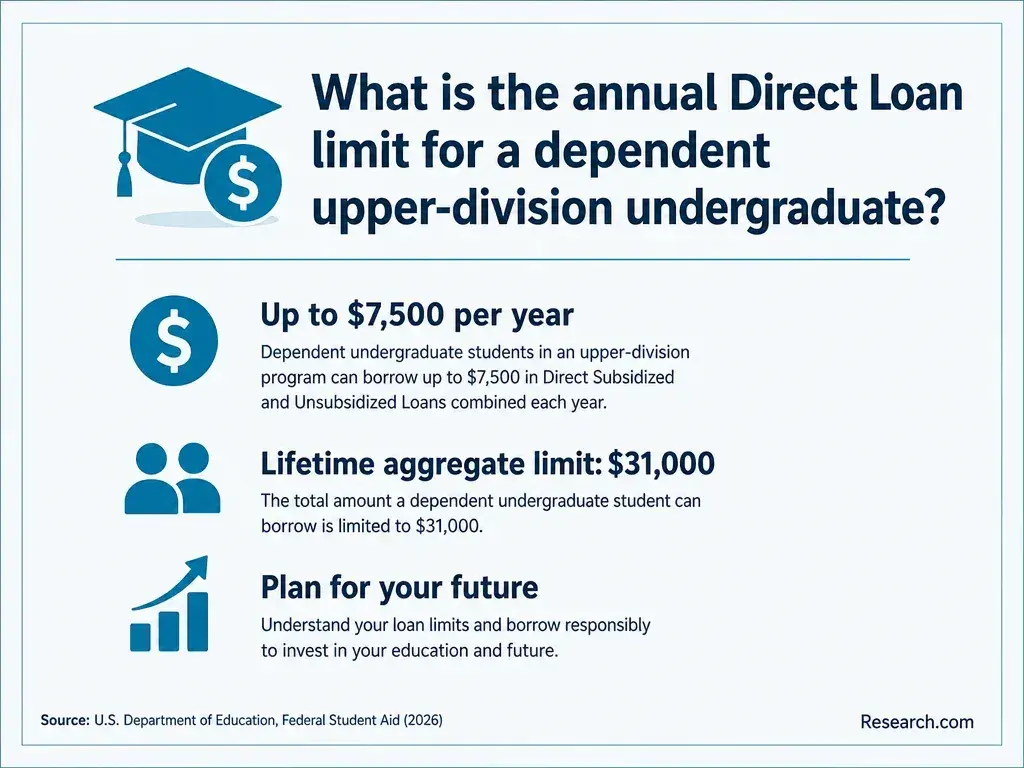
For cost, compare each school's tuition and mandatory fees against the remaining required courses, then account for books, software, travel or proctoring, borrowing, and any reduction in paid work. Ask when employer reimbursement arrives and whether grades or continued employment affect it. If a specialized alternative is under consideration, project management bachelor's tuition assistance options can help you identify funding questions to put to that school and your employer; aid eligibility is individual, not automatic.
Online study can preserve a work schedule, but it does not necessarily mean self-paced study. Ask about live meetings, timed exams, group assignments, software access, and whether an internship or capstone requires a particular site. Campus study may make in-person recruiting and collaboration easier, but commuting and fixed class times can add substantial constraints.
Compare formats against your actual weekly availability and the courses you still need - not just the program's advertised flexibility. When reviewing leading US colleges for online business study, confirm that the particular BS, its operations-relevant electives, and its required support services are available in the delivery format you intend to use.
Requirements vary by school and by whether you apply as a first-year or transfer student. Schools may request prior transcripts and apply separate rules for entry to the institution, entry to the business major, and prerequisite coursework. Prior inventory experience may strengthen your application or support a separately assessed prior-learning request, but it does not automatically replace a course.
Ask admissions for the entry requirements, the transfer office for course equivalencies, and a business adviser for a degree audit showing where accepted credits apply. In particular, check mathematics, statistics, economics, and accounting sequencing. If you are also considering a specialized people-operations route, HR bachelor's programs with flexible transfer pathways illustrate why transfer acceptance must be distinguished from progress toward a specific major.
Confirm the institution's current accreditation with the accreditor and verify that the accreditor is recognized by the U.S. Department of Education or the Council for Higher Education Accreditation. If a school cites AACSB, ACBSP, or IACBE, check the accreditor's listing for its actual scope; institutional accreditation and business-program accreditation are different claims.
Quality for this decision also means access to the courses and experiences that build analyst readiness. Request the current catalog, a sample degree plan, recent course schedules, and the rules for internships or employer-based capstones. If you compare fast-track business bachelor's schools, ask whether the advertised pace still works with your accepted credits and the operations or analytics courses you need. Accreditation by itself does not establish that graduates obtain particular jobs.
There is no single salary or growth rate for BS in Business Administration graduates; outcomes depend on the occupation, location, industry, and experience. For a possible longer-term path, the U.S. Bureau of Labor Statistics reports a $101,860 median annual wage for management analysts in May 2025 and projects 10% employment growth from 2025 to 2035. Those figures cover the occupation as a whole, not new graduates or inventory employees moving into their first analysis role.
Use local postings to identify the responsibilities and pay ranges of attainable next-step jobs before estimating a degree's financial value. If you are comparing a general business path with a logistics-specific one, supply chain education costs and career prospects can help frame that comparison; do not apply an occupation-wide median to either degree as a promised return.
Do Business Administration Careers Require Licenses or Certifications?
Inventory coordination and many operations-analysis roles do not have a universal occupational license. A business degree also does not confer a professional certification. Employers may value training in analytics, inventory systems, process improvement, or project methods, but the right credential depends on the tools and responsibilities in the job postings you are targeting.
Check any certification's eligibility, assessment, renewal obligations, and employer recognition before paying for it. If your intended move is toward employee relations or HR administration instead of operations, a human resources program selection guide may be more relevant than an operations-focused course plan. Do not treat either an academic concentration or a short course as a substitute for a separately awarded professional credential.
Other Things You Should Know About Business Administration
Possibly. Ask your employer what data you may use and your school what it will approve. If access is restricted, use a clearly labeled hypothetical or public-data example rather than exposing company records.
Describe the analysis you actually performed: the measure, method, audience, and recommendation. Separate proposed changes from changes that were implemented or measured.
It may help if it provides analysis responsibilities your current job does not. Ask whether a supervised project in your existing workplace is permitted; regular employment alone may not meet internship requirements.
Not necessarily. Compare postings with your present experience, apply to roles for which you meet the stated requirements, and use any skill gaps you find to guide your education decision.
- TEN_25-19_Attachment_1.pdf | dol.gov https://www.dol.gov/node/161266
- What Can You Do With a Business Administration Degree? | North Carolina Central University https://online.nccu.edu/blog/what-can-you-do-with-business-administration-degree/
- Investigation of Essential Skills for Data Analysts | sciencedirect.com https://www.sciencedirect.com/org/science/article/pii/S1062737523000240
- Operations Analyst (General) - NC State Online https://online-distance.ncsu.edu/career/operations-analyst-general/
- Is Business Administration a Good Major? | Campus.edu https://campus.edu/blog/business/why-study-business-administration
- What Do Students Want From Business Programs? | AACSB https://www.aacsb.edu/insights/articles/2024/05/what-do-students-want-from-business-programs
- 6 BS in Business Skills Employers Seek | University of Bridgeport https://www.bridgeport.edu/news/bs-in-business-administration-skills-employers-seek/
- Inventory Control Analysts: How to Become One | Franklin University https://www.franklin.edu/career-guide/logisticians/how-to-become-inventory-control-analysts
- What Can You Do With a Business Administration Degree? | snhu.edu https://www.snhu.edu/about-us/newsroom/business/what-can-you-do-with-a-business-administration-degree
- Everything you need to know before choosing an undergraduate business degree - Penn State World Campus https://www.worldcampus.psu.edu/about-us/news-and-features/choosing-a-business-degree-program