2027 Columbia Southern University BS in Business Administration: Comparing Course Availability with Your Work Schedule
Audited and Verified:
Our Editorial and Data Verification Process
Research.com uses government datasets, official education statistics and primary institutional information to support its career and degree guides. Our review process checks factual accuracy, occupational definitions, source dates and the requirements associated with the credentials discussed.
How This Article Was Fact-Checked
Our editorial team verifies salary estimates, employment projections, education requirements and program information against original data providers and official organizations. Salary figures are checked against the relevant occupational definitions and reporting periods. Information about licensure, accreditation and required in-person training is reviewed separately.
Fact-checked and verified on:

Co-Founder and Chief Data Scientist
A business degree can fit around a job only if the courses you need are offered when you can take them - and their deadlines fit the hours you can study. Columbia Southern University's online BS in Business Administration may appeal to employed adults, but online access alone does not settle those questions.
This guide shows you how to check course availability, assess weekly commitments, and plan for interruptions before enrolling. It also covers the program details that affect your schedule, including transfer credit, sequencing, cost, and time to completion.
Key Things You Should Know
- Compare the availability of required courses - not just the next start date - with your work calendar and any prerequisite sequence.
- Ask for the syllabus or assessment details for an upcoming course: asynchronous access does not necessarily mean movable deadlines, independent pacing, or no group work.
- Get an individualized degree audit and projected enrollment plan before estimating your completion date or total cost; accepted transfer credits may not satisfy every business requirement.
What is Columbia Southern University's BS in Business Administration?
Columbia Southern University (CSU) offers a BS in Business Administration as an online undergraduate degree. Its broad business focus is relevant to employees who want to develop knowledge across management and other business functions while continuing to work. A BS is a bachelor's degree, not an MBA or a professional license.
For a working student, the useful question is less whether the degree is online than whether its remaining required courses can be taken in a workable order. A student entering with substantial applicable credit may have a different schedule from someone starting with general education courses. If continuing employment is essential, use business administration education for employed professionals as a comparison point, then request CSU's own plan for your record.
Is Columbia Southern University's BS in Business Administration accredited?
CSU holds institutional accreditation from the Southern Association of Colleges and Schools Commission on Colleges (SACSCOC). Institutional accreditation applies to the university; it is not the same claim as separate accreditation of the business program by AACSB, ACBSP, or IACBE. If programmatic accreditation matters to an employer or a future graduate school, confirm whether the accreditor's published scope includes this exact degree and your enrollment period.
Accreditation does not establish that a required course will be available in a particular term or that another institution will accept its credits. Verify both questions independently. Students comparing institutions can also compare accredited schools with no application charge, but should check each school's current accreditation and course schedule directly.
How flexible is the course schedule for working students?
Online access and schedule flexibility are different things. Even if you can view materials outside business hours, graded discussions, assignments, exams, or team activities may have fixed deadlines. Course pacing and start dates may also vary by enrollment option. Ask CSU for the schedule and syllabus of a course you would actually take, rather than relying on a general description of online learning.
Test the fit against your least predictable workweek, not your easiest one. A rotating-shift employee needs to know whether deadlines fall at a fixed time and whether exams require a scheduled session. A parent or caregiver should check whether team meetings or presentations require evening or weekend coordination. Someone who travels for work should confirm technology, time-zone, and any proctoring requirements before registering.
The most useful scheduling check has three parts:
- Ask an adviser when each remaining required course is expected to be offered and which courses must be completed first.
- Obtain sample syllabi to identify recurring deadlines, live activities, group work, and assessment rules.
- Place those commitments beside your shifts, travel, and caregiving obligations; ask what happens if work prevents you from meeting a deadline or continuing a course.
If a shorter calendar timeline is important, compare accelerated degree options for working adults on weekly workload as well as duration. Faster completion can mean less time to absorb an unexpected work disruption.
A business administration curriculum combines general education with business subjects such as accounting, economics, finance, marketing, management, and organizational decision-making. The applicable CSU catalog and your degree audit - not a general list of business topics - determine your required courses, available electives or concentrations, and any prerequisites.
Course order matters to availability. A course offered at a convenient time may not move you toward graduation if you have not completed its prerequisite or if it fills only an elective slot. Ask an adviser to mark each course as a general education, business core, concentration, or elective requirement and identify any required final course. If human resources is your intended direction, a comparison of prior college coursework toward an HR bachelor's may help you frame transfer questions; CSU must decide how your own credits apply to its BS.
Before applying, check CSU's current undergraduate admission requirements for your situation, including proof of secondary education and official records from any colleges attended. Admission to the university and application of previous coursework to the BS are separate decisions. Professional experience alone should not be assumed to replace a course or award credit.
Send prior transcripts for an official evaluation and ask when you will receive a degree audit showing remaining requirements. If you need financial assistance, complete the school's aid process early enough to understand your first payment deadline. Resources on funding an online project management bachelor's degree explain common FAFSA and aid concepts, but CSU's financial-aid office must confirm what applies to this business program and your enrollment.
There is no dependable completion estimate without knowing your applied transfer credits, remaining requirements, course load, and the availability of courses in their required order. Taking fewer courses at once may protect your work schedule but extend the calendar timeline. Taking more can shorten it only if the courses are available and you can meet their overlapping deadlines.
Request a term-by-term projection that includes prerequisites and a backup plan if you must skip a start date. Ask when the next required course would be available after an interruption; that gap may matter more than the length of an individual course. If completion speed is your main priority, organizational leadership degrees with faster completion options offer an adjacent comparison, though the degree content and transfer fit may differ.
Your total depends on CSU's tuition and applicable fees, the credits still required after evaluation, and costs such as books or required technology. A published tuition rate alone cannot establish your final bill. Ask for the current charges that apply to your enrollment option and whether changing pace affects fees, aid eligibility, or the timing of payments.
For an employed student, cash flow matters alongside total cost: employer reimbursement may arrive after tuition is due and may depend on grades or continued employment. Compare CSU with cost-effective paths to a business degree using the same assumption about remaining required credits at each school. Do not count a transfer-related saving until the receiving school has evaluated the coursework.
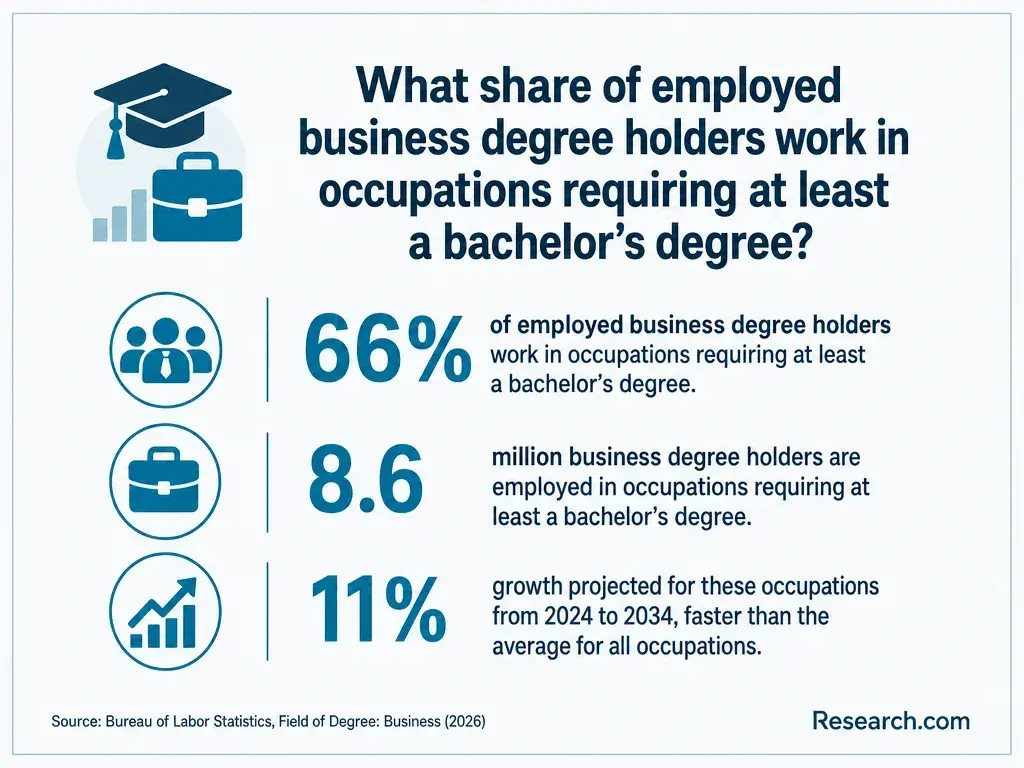
The degree can support applications for roles in business operations, administrative coordination, sales support, marketing, human resources, and related functions. The best target depends on what you already do at work. An employee who tracks purchasing and inventory, for example, may have more relevant evidence for an operations role than for a marketing role, regardless of the degree title.
Use coursework to fill a specific gap, then document the related responsibility you have handled - such as preparing a budget, improving a process, or communicating with stakeholders. Do not assume graduation qualifies you to supervise staff immediately. If purchasing and logistics are your established strengths, compare three-year-or-less supply chain degrees with a general business degree for subject depth and credit applicability, not speed alone.
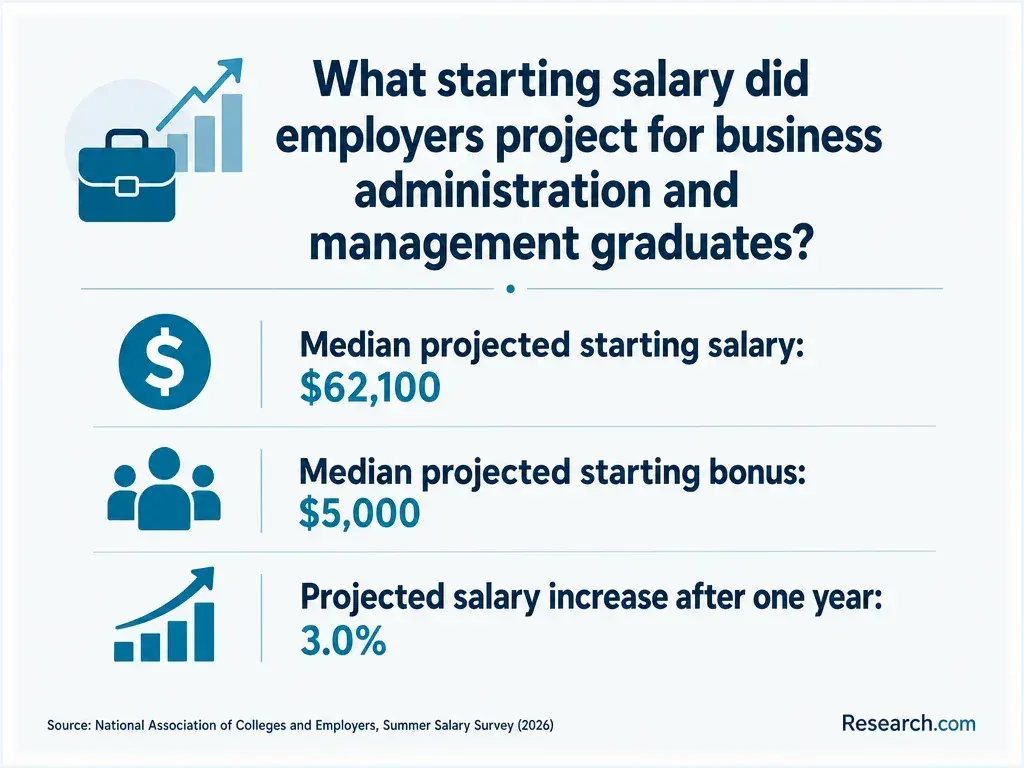
There is no single salary for the degree: pay attaches to an occupation, responsibilities, experience, employer, and location. For one relevant benchmark, the U.S. Bureau of Labor Statistics reports a $78,760 median annual wage for market research analysts in May 2025. That occupation-wide median includes experienced workers; it is not an expected starting salary for a CSU graduate or for someone moving into marketing from another function.
For a useful earnings comparison, identify jobs you could realistically apply for now and jobs your existing experience plus the degree might make attainable. Then compare their stated requirements with the time and cost of finishing. If project coordination is your goal, online degree options in project management at lower cost may be worth comparing with a broad business degree - but neither degree alone establishes eligibility for a particular project role or salary.
Does a business administration degree require professional certification or licensure?
Completing a general BS in Business Administration does not itself require a universal business license or confer a professional certification. A particular job may have separate requirements. Regulated accounting or financial work, for example, must be assessed against the applicable licensing rules; employers may also prefer function-specific credentials or experience.
Check the requirements of your target role before adding a credential to your education plan. If project work is your objective, compare the cost of degree study with any separate training or credential preparation you actually need. Information on project management tuition fees and financial aid can inform that comparison, but a project-management course or business degree should not be treated as certification.
Other Things You Should Know About Business Administration
Possibly. Before travel, check each course's deadlines, required technology, assessment access, and time-zone rules. Do not assume that internet access alone will let you complete every activity.
Contact your instructor and adviser promptly. Ask about the specific course's deadline policy and the university's options for changing or withdrawing from enrollment; check financial-aid and refund consequences before acting.
Ask the instructor whether it meets the assignment requirements and your employer whether you may use the information. Remove confidential, personal, or proprietary details unless their use is expressly authorized.
Keep the written degree audit, the catalog requirements that apply to you, and any written answers about course sequencing or substitutions. They are more useful for planning than an informal estimate of when you might graduate.
- Recommended Course Sequence | Texas Higher Education Coordinating Board https://www.highered.texas.gov/data-submission-reporting/recommended-course-sequence/
- Rule 3357:15-13-25 | Transfer and articulation. - Ohio Laws https://codes.ohio.gov/ohio-administrative-code/rule-3357:15-13-25
- General Requirements for Withdrawals and the Return of Title IV Funds | 2025-2026 Federal Student Aid Handbook https://fsapartners.ed.gov/knowledge-center/fsa-handbook/2025-2026/vol5/ch1-general-requirements-withdrawals-and-return-title-iv-funds
- B.S. Business Administration/Logistics | Columbia Southern University https://www.columbiasouthern.edu/online-degree/view-all-programs/bachelors/bs-business-administration-logistics
- Course Formats - CITT - University of Florida https://citt.it.ufl.edu/resources/course-design-basics/analyze-and-design/course-formats/
- Adding, Dropping and Withdrawing from Courses | University of Louisville Academic Catalogs https://catalog.louisville.edu/undergraduate/university-wide-unit-specific-policies/adding-dropping-withdrawing-courses/
- Core Curriculum, Prereqs, Electives: College Class Terms Explained | St. John's University https://www.stjohns.edu/news-media/johnnies-blog/core-curriculum-prereqs-electives-college-class-terms-explained
- What are Asynchronous Classes? | University of Bridgeport https://www.bridgeport.edu/news/what-are-asynchronous-classes/