2027 Online BS in Business Administration vs. a BS in Financial Planning: Which Route Fits Your Career Plan?
Audited and Verified:
Our Editorial and Data Verification Process
Research.com uses government datasets, official education statistics and primary institutional information to support its career and degree guides. Our review process checks factual accuracy, occupational definitions, source dates and the requirements associated with the credentials discussed.
How This Article Was Fact-Checked
Our editorial team verifies salary estimates, employment projections, education requirements and program information against original data providers and official organizations. Salary figures are checked against the relevant occupational definitions and reporting periods. Information about licensure, accreditation and required in-person training is reviewed separately.
Fact-checked and verified on:

Co-Founder and Chief Data Scientist
If you want a business career but are also drawn to helping people make financial decisions, these degrees lead toward different kinds of work. An online BS in Business Administration offers breadth across business functions; a BS in Financial Planning concentrates on personal finance and potential preparation for advisory credentials. That distinction matters before you commit to tuition, transfer credits, and specialized courses. This comparison shows where the programs overlap, where they diverge, and what to verify so you can choose a route that fits both your target role and your circumstances.
Key Things You Should Know
- Choose business administration for flexibility across functions; choose financial planning if client-focused personal finance is your clear goal and the program's specialized coursework meets your needs.
- Neither degree alone authorizes investment advice or awards the CFP® designation. Check the separate education, examination, experience, ethics, and applicable licensing requirements before enrolling.
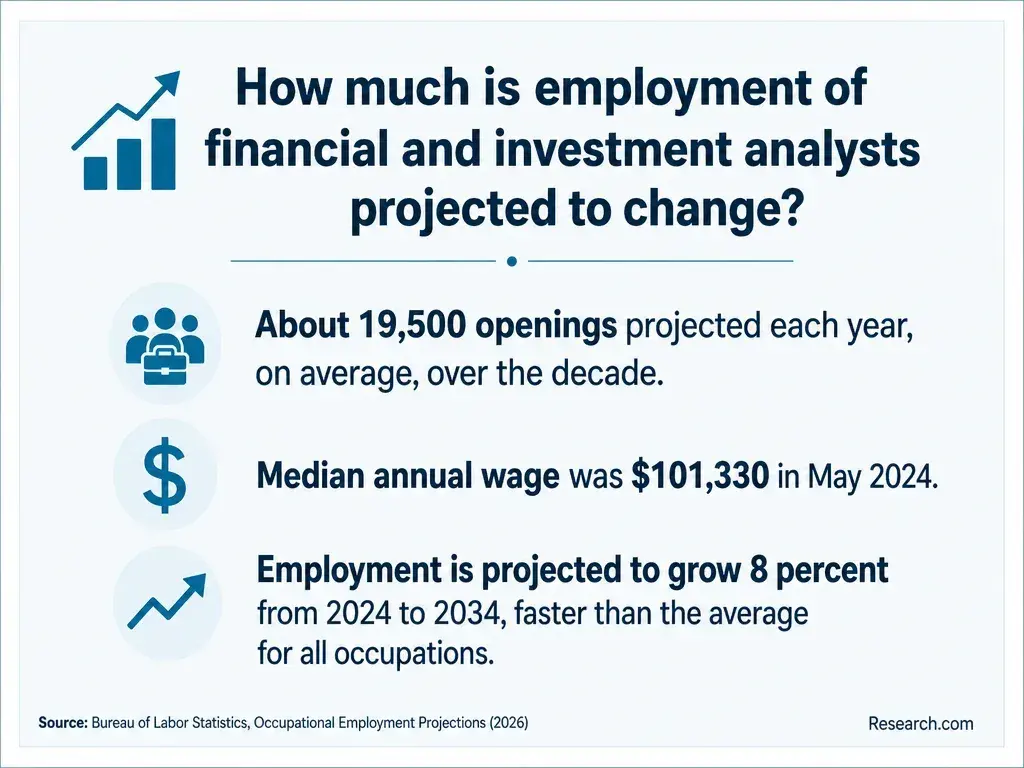
- A salary figure is not a graduate outcome: the U.S. Bureau of Labor Statistics reports a May 2025 median of $102,740 for financial and investment analysts, an occupation distinct from personal financial advisers.
What Is the Difference Between an Online Business Administration and Financial Planning Degree?
The central difference is breadth versus specialization. A BS in Business Administration typically combines accounting, management, marketing, finance, operations, and quantitative decision-making. A BS in Financial Planning focuses more closely on helping individuals and households address investments, retirement, taxes, insurance, and estate-planning considerations. Actual course lists vary by school.
This comparison describes the usual academic emphasis, not a guarantee that either degree qualifies you for a particular job or credential.
| Decision factor | BS in Business Administration | BS in Financial Planning |
| Primary focus | How organizations operate and make decisions | How advisers help clients plan personal finances |
| Best fit | Students exploring several business functions or advancing in an existing one | Students committed to personal financial advice or related client service |
| Specialization trade-off | Broader options, but less planning depth unless electives provide it | More planning depth, but fewer courses outside the specialty |
| Professional status | An academic degree, not a license | An academic degree, not a license or CFP® certification |
For an employee who needs a degree while continuing to work, delivery details may matter as much as the major. Use flexible business administration programs for career progression as a starting point, then confirm live sessions, deadlines, and required projects with each school.
Which Degree Offers Better Career Opportunities and Salary Potential?
Neither degree is universally better for earnings. Business administration can support applications across more functions, while financial planning aligns more directly with personal-advice roles. Your first job, relevant experience, location, employer, and any required registration or certification will affect opportunities more than the degree title alone.
The Bureau of Labor Statistics projects 7% employment growth for financial and investment analysts from 2025 to 2035. That signals demand for a specific analytical occupation, not a forecast for financial-planning graduates or personal financial advisers. Financial analysts generally evaluate investments for organizations; planners may instead work with individuals on broader financial goals. Compare postings for the exact role you want rather than using an adjacent occupation's wage or outlook as your expected outcome.
If you are more interested in organizational purchasing, inventory, or logistics than client finance, specialized alternatives may deserve a look. Shorter online supply chain degree pathways can help frame that comparison, but confirm whether their courses and required experience match local openings.
What Careers Can You Pursue With Each Bachelor's Degree?
Business administration graduates might pursue entry-level operations, sales support, marketing coordination, procurement, or administrative roles. A financial planning graduate might seek a planning associate, client service, or paraplanner position with a financial services firm. These are possible pathways, not jobs awarded by graduation; employers may require software skills, internships, sales experience, or regulatory registration.
For example, a planning associate may gather client information and prepare analyses under supervision, while an operations coordinator may track workflows and resolve process problems. The first calls for comfort discussing sensitive personal finances; the second often rewards cross-functional communication and process skills. Neither should be confused with immediately becoming an independent adviser or an operations manager.
If you already have operations experience, compare the business degree with fast undergraduate routes into supply chain management. That narrower route may fit a defined logistics goal better than either degree discussed here.
Both programs may require general education, accounting, economics, statistics, communication, and business law. The meaningful comparison is what happens after that shared foundation. Examine required courses rather than assuming that a finance elective makes a general business degree equivalent to a financial planning major.
The following contrasts show where course depth is likely to matter most for your intended work.
| Curriculum area | Business administration emphasis | Financial planning emphasis |
| Finance | Organizational budgets, financial statements, and business decisions | Household cash flow, investments, retirement, and risk management |
| People and decisions | Teams, customers, operations, and organizational strategy | Client goals, communication, financial behavior, and ethical advice |
| Applied work to check | Business cases, simulations, internships, or an organizational capstone | Client scenarios, planning software, supervised experience, or a planning capstone |
Ask whether a program teaches plan construction and client communication, not merely investment terminology. If your main goal is supervising teams rather than advising households, organizational leadership bachelor's routes of three years or less offer another curriculum to compare. A short advertised timeline still depends on accepted credits and course availability.
First, verify that the institution holds recognized accreditation and that it covers the school awarding the online degree. Then check any claimed business-school accreditation - such as AACSB, ACBSP, or IACBE - to see whether its scope includes the relevant school or program. Institutional and business accreditation are different claims.
For a financial planning degree, ask a separate question: Is the specific curriculum registered with the CFP Board as satisfying its education coursework requirement if CFP® certification is your goal? A school's accreditation does not establish CFP Board registration, and registration does not mean graduation awards certification. Confirm the program's status and your applicable catalog with the school and CFP Board before relying on that pathway.
Accreditation also matters when assessing federal aid eligibility, though it is not the only eligibility condition. You can compare accredited online business administration study with aid eligibility, then verify the institution's participation and your personal aid status directly.
A financial planning degree does not itself grant permission to perform every advisory activity. Requirements depend on what you do and for whom you work. Investment adviser representatives may be subject to state registration and examination rules; securities brokerage activities have separate registration rules. An employer's compliance team and the relevant regulator should confirm what applies before you advise clients or sell regulated products.
CFP® certification is a separate, voluntary professional designation. CFP Board requires qualifying education, an examination, relevant experience, and satisfaction of its ethics requirements. A bachelor's degree can be in a field other than financial planning, but the required planning education must still be completed through an acceptable route. If certification is central to your plan, obtain written confirmation of how the program addresses the education requirement and how you could gain qualifying experience.
Do not buy a degree to solve the wrong credential problem. If your intended work is coordinating business projects rather than advising clients, compare low-cost project management schools and aid options instead; a project management degree follows a different career and credential path.
Schools commonly request a high school credential or previous college transcripts, but minimum grades, math preparation, transfer rules, and admission to a business major vary. A specialized planning curriculum may have prerequisite sequences in accounting, economics, or quantitative courses. Admission to the university does not necessarily mean every earlier course will satisfy a major requirement.
For a transfer or returning student, the most useful admissions document is an official evaluation showing where accepted credits apply: general education, business core, specialized courses, or electives. Ask whether any required course is offered only in certain terms and whether prior coursework is too old to meet a requirement. The business administration degree admissions requirements guide can help you prepare questions, but the receiving school makes the final credit decision.
Completion time depends on credits that apply to the degree, course sequencing, enrollment pace, and any internship or capstone. An online format does not remove required coursework, and an accelerated calendar does not necessarily reduce the hours you must study. A student with many accepted electives could still have a long path if planning courses must be taken in sequence.
Do not compare advertised tuition alone. Request a degree audit and a written estimate covering remaining tuition, mandatory online and technology fees, books or planning software, possible travel or proctoring, and expected terms of enrollment. Check aid eligibility and employer reimbursement timing before treating either as cash available for the next bill. Colleges offering economical online business study can provide candidates for comparison, but your cost depends on the courses you actually need.
The substantive comparison is access to learning and experience, not whether one format is inherently easier. Online students may avoid commuting and retain work hours, but they still need time for deadlines, presentations, group work, and possibly supervised activities. Campus students may find in-person recruiting and peer contact more convenient; online students should ask how they will reach faculty, career advisers, alumni, and potential internship sites.
Request a sample course schedule and assessment description. Specifically check live attendance, proctored exams, required visits, time-zone expectations, and whether planning software can be used on your device. If speed matters, explore accelerated online degree programs only after confirming that the pace leaves room for work, learning, and any required practical experience.
How Can You Choose a Reputable Online Degree Program?
Start with your target role and compare programs against evidence you can obtain before paying an enrollment deposit. A strong choice is one whose required courses, credential pathway, schedule, and remaining cost all work for you - not simply the one with the broadest career claims.
Use the following sequence to test a shortlist and resolve the issues most likely to change your decision.
- Find several job postings for your target role and separate required qualifications from preferred ones.
- Confirm institutional accreditation, the exact online degree title, and any claimed business accreditation or CFP Board-registered curriculum.
- Request an official transfer evaluation, term-by-term course plan, and personalized cost estimate.
- Ask how students obtain relevant projects, internships, career support, and, if needed, supervised planning experience.
- Compare scheduling obligations and outcomes information, including whom reported outcomes represent.
Application cost is a small part of this decision, but it need not be overlooked: compare no-fee college applications while checking that each institution actually offers the degree and support you need. Choose financial planning when its client-focused training and credential alignment justify the specialization; choose business administration when your goal calls for a wider set of business options.
Other Things You Should Know About Business Administration
Yes, potentially. You may need additional planning coursework, relevant experience, certification, or regulatory registration depending on the role. Map those requirements before deciding whether the broader degree is worth the extra steps.
Often, but shared credits do not guarantee an on-time switch. Ask an adviser for a revised degree audit showing which completed courses satisfy the new major and when its remaining courses are offered.
Not necessarily. Some benefits cover degree tuition but exclude exam fees, preparatory courses, or professional memberships. Ask for the written policy and reimbursement schedule.
Yes. A clearly labeled fictional client scenario can demonstrate your process without exposing private information. Follow your course's rules and never present a hypothetical plan as work completed for an actual client.
- Types of Financial Aid: Grants, Work-Study, and Loans | studentaid.gov https://studentaid.gov/understand-aid/types
- What Financial Aid Offers Don't Tell You About the Cost of College | U.S. GAO https://www.gao.gov/blog/what-financial-aid-offers-dont-tell-you-about-cost-college
- DAPIP | Homepage - Office of Postsecondary Education (OPE) https://ope.ed.gov/dapip/
- Understanding U.S. Accreditation | EducationUSA https://educationusa.state.gov/understanding-us-accreditation
- Cost of Attendance (Budget) | 2025-2026 Federal Student Aid Handbook https://fsapartners.ed.gov/knowledge-center/fsa-handbook/2025-2026/vol3/ch2-cost-attendance-budget
- Steps to Earning Your CFP® Certification - Financial Planning https://financialplanningonline.bu.edu/articles/how-to-become-a-financial-planner-cfp/
- Course Delivery Methods - Ways to Learn | Riverland https://www.riverland.edu/academics/course-delivery-methods-ways-to-learn/
- Bachelor's Degree in Business: Administration or Accounting? | Bay Path University https://www.baypath.edu/news/bay-path-university-blogs/post/bachelor-s-degree-in-business-administration-or-accounting/
- Flexible Online CFP® Education Program | The American College of Financial Services https://www.theamericancollege.edu/learn/professional-designations-certifications/cfp
- Class Delivery Formats | ccp.edu https://www.ccp.edu/degrees-programs/all-academic-offerings/class-delivery-formats