2027 Online BS in Business Administration vs. a BS in Hospitality Management: Which Route Fits Your Career Plan?
Audited and Verified:
Our Editorial and Data Verification Process
Research.com uses government datasets, official education statistics and primary institutional information to support its career and degree guides. Our review process checks factual accuracy, occupational definitions, source dates and the requirements associated with the credentials discussed.
How This Article Was Fact-Checked
Our editorial team verifies salary estimates, employment projections, education requirements and program information against original data providers and official organizations. Salary figures are checked against the relevant occupational definitions and reporting periods. Information about licensure, accreditation and required in-person training is reviewed separately.
Fact-checked and verified on:

Co-Founder and Chief Data Scientist
An online bachelor's degree can help you move toward a business career, but the degree's focus matters more than its delivery format. A BS in Business Administration builds skills that apply across industries; a BS in Hospitality Management concentrates on service operations, guests, and events.
If you are entering the workforce or changing careers, this comparison will help you weigh coursework, hands-on requirements, costs, and realistic job paths - then identify which program better supports the work you actually want to do.
Key Things You Should Know
- Choose business administration for flexibility across industries; choose hospitality management when you want to build a career around lodging, events, food service, or guest experience.
- Online hospitality programs may still require in-person work or internships. Verify those obligations before assuming either degree fits your schedule.
- For salary context, the U.S. median for meeting and event planners was $61,160 in May 2025; that occupation-wide figure is not an expected starting salary for hospitality graduates.
What Is the Difference Between an Online BS in Business Administration and Hospitality Management?
A BS in Business Administration teaches broadly applicable business functions, such as accounting, marketing, finance, operations, and management. A BS in Hospitality Management applies business principles to service settings where guest experience, staffing, events, and day-to-day operations are central. Both can develop budgeting and leadership skills, but they give students different contexts in which to practice them.
The distinction is not a rigid career boundary. A hospitality graduate can work in general business, and a business graduate can enter hospitality. The practical difference is how much industry knowledge and relevant experience you may need to add after graduation. If your goal is specifically team leadership rather than hospitality operations, organizational leadership bachelor's completion planning offers another comparison - but verify its curriculum rather than treating the degree names as interchangeable.
Which Degree Offers Better Career Opportunities and Salary Potential?
Business administration usually offers broader industry mobility; hospitality management offers more targeted preparation for service-sector work. Neither degree has a single salary. Pay depends on the occupation, location, employer, experience, and responsibilities - not just the major printed on a diploma.
For one relevant comparison, the U.S. Bureau of Labor Statistics reports a May 2025 median annual wage of $78,760 for market research analysts, with employment projected to grow 7% from 2025 to 2035. The figure describes workers across that occupation, not new business graduates. A student targeting marketing research would still need evidence of data analysis and research skills; a student targeting hospitality events would need different operational experience.
Compare specific jobs rather than assigning an industry-wide earning potential to either degree. If logistics appeals more than guest services, shorter supply chain degrees and career value may be a more useful comparison than either broad business or hospitality study.
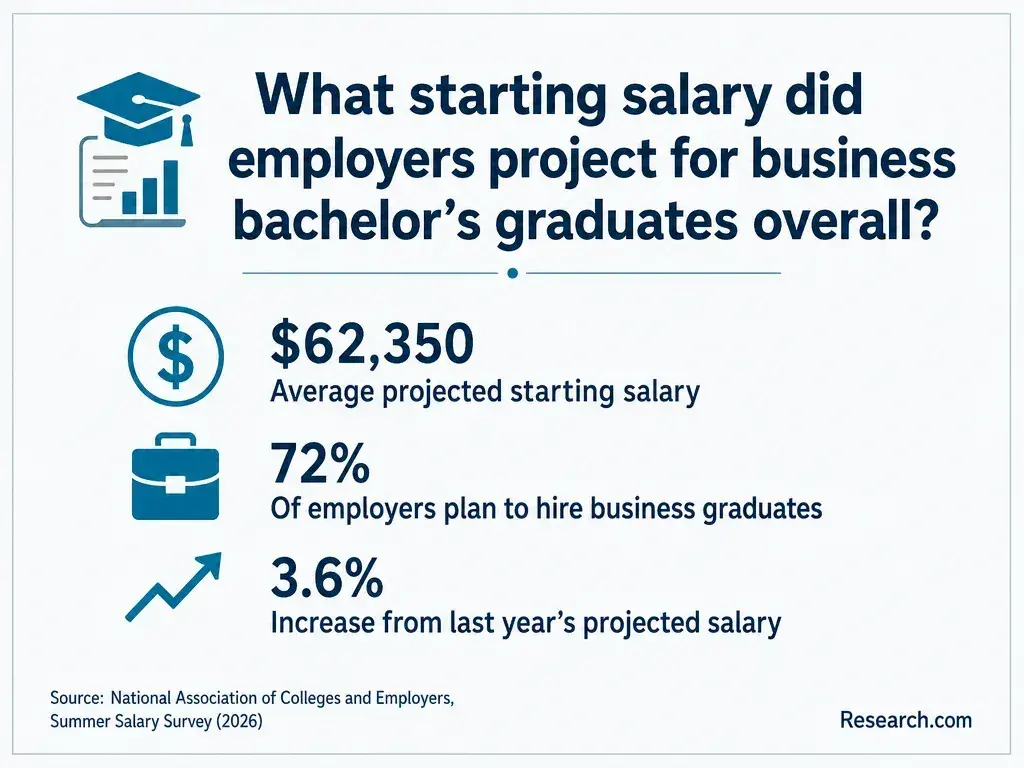
How Do Online Business Administration and Hospitality Management Programs Compare?
Online delivery changes where much of the coursework happens, not necessarily when it happens. Either program may use live classes, scheduled exams, group presentations, or fixed weekly deadlines. Hospitality study may also involve guest-facing practice, a supervised internship, or an approved worksite; an online label does not mean those requirements can be completed entirely from home.
Ask each program whether required courses are asynchronous, how often they are offered, and whether internships can be completed near you or through an eligible current job. Get written details about campus visits, supervision, technology, and assessment rules. Students balancing employment or caregiving can use online business administration programs with work-compatible schedules to develop a shortlist, then confirm actual course-level commitments.
Both degrees generally combine general education with a business core, but their upper-level requirements determine what you practice most. This table shows common emphases, not a universal course list; the current catalog and degree audit control your requirements.
| Area | BS in Business Administration | BS in Hospitality Management |
| Shared foundations | Accounting, economics, marketing, management, and quantitative reasoning | Business foundations applied to service organizations |
| Deeper emphasis | Finance, analytics, operations, strategy, or an official concentration | Lodging, food and beverage, events, revenue management, or guest experience |
| Applied work | Cases, simulations, projects, capstones, or internships, depending on the program | Service-operation projects and potentially supervised industry experience |
Inspect required courses - not just elective descriptions - if a target role depends on analytics, event operations, or hospitality technology. For transfer students, a school may accept a previous course as elective credit without applying it to the major. That same distinction matters when comparing project management degrees with prior-credit pathways: request a program-specific audit before assuming earlier coursework shortens either route.
Completion time depends on credits that apply to requirements, course availability, enrollment pace, and any internship or capstone sequence. Two programs can accept the same number of transfer credits yet leave you with different amounts of required coursework. An accelerated calendar may reduce elapsed time without reducing tuition or the work each course demands.
Compare written estimates of remaining tuition and mandatory fees alongside books, software, proctoring, travel to an internship, and earnings you might forgo. Ask financial aid offices about your eligibility and how part-time enrollment or required placements affect your budget. Online business administration degrees at lower prices can provide candidates to investigate, but an advertised tuition rate is not your final completion cost.
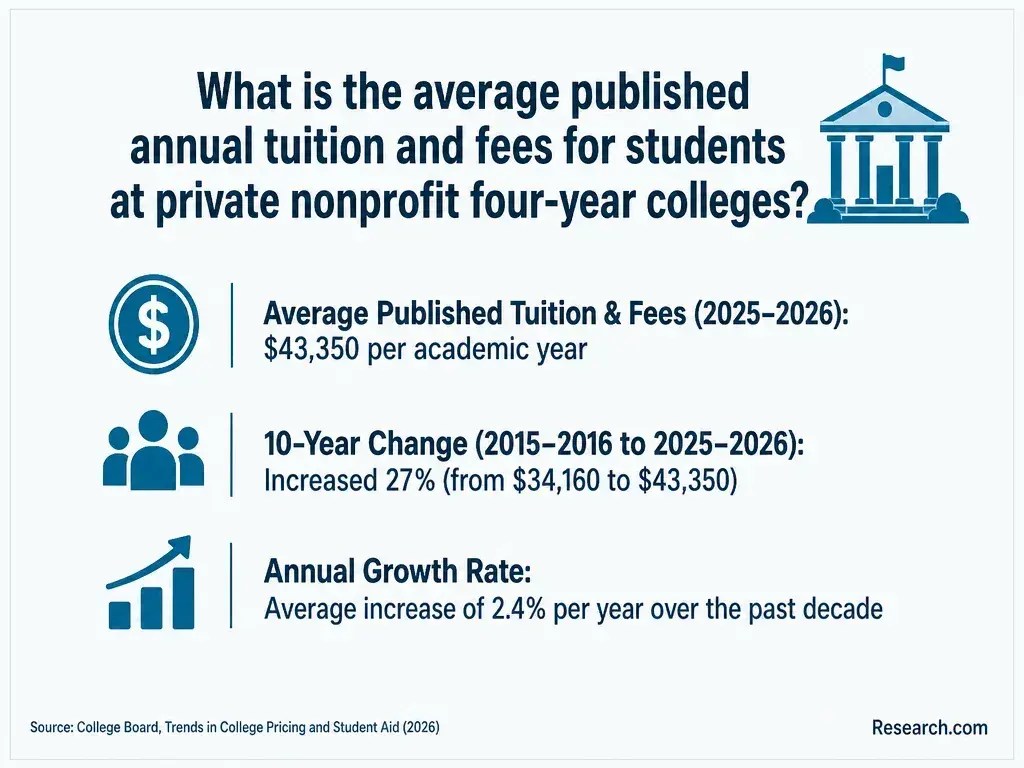
Requirements vary by school and by whether you apply as a first-year or transfer student. Programs commonly review previous academic records, while some set separate entry conditions for the major or require particular quantitative or introductory business courses before advanced study. Hospitality programs may also have eligibility steps for placements that are separate from admission.
Request an admission checklist and a preliminary evaluation of your prior coursework. Ask which requirements must be met before entry, which can be completed after enrollment, and whether earlier courses satisfy the business or hospitality major rather than electives alone. For a closer look at variable prerequisites, consult academic eligibility for business administration degree study. Only the receiving institution can confirm your admission and credit decisions.
Start with the institution's accreditation status and confirm that it covers the school offering the online degree. Then check any claimed business-school or programmatic accreditation - such as AACSB, ACBSP, or IACBE - against the accreditor's published scope. Institutional accreditation and specialized business accreditation are different; neither alone establishes internship access or job placement results.
For each program, review the current catalog, required-course schedule, faculty access, career support, placement rules, and published outcomes. Ask how outcomes were measured and whether they include online students. If a specialized alternative enters your shortlist, affordability checks for accredited project management programs illustrate why price and accreditation scope should be checked together rather than assumed from a program description.
Look for an entry route that matches both your coursework and your experience. Either degree may support applications for operations coordinator, sales support, customer-experience, or administrative roles. Business administration can align more directly with roles such as marketing coordinator or business operations associate; hospitality management can align more directly with event coordinator, guest-services supervisor trainee, or lodging operations roles. Job titles and requirements vary by employer.
For an early-career applicant, a completed scheduling project, supervised internship, or customer-service record often says more about readiness than the degree title alone. Management jobs generally require demonstrated responsibility beyond graduation. If speed of entry is your priority, compare the remaining requirements of bachelor's programs for faster completion with the time it would take to gain relevant work experience; a faster degree is useful only if it supports the role you want.
Neither bachelor's degree is a blanket professional license. Requirements depend on the job and location: some food-service work involves state or local food-safety rules, while certain finance or accounting activities have separate licensing pathways. Event, hospitality, HR, and project-management certifications may be voluntary or valued by particular employers; their eligibility rules are set by the issuing organizations, not by the bachelor's degree.
Check job postings and the responsible regulator or certifying organization before paying for an additional credential. If you are comparing a project-management degree with shorter training or a certification, consider both eligibility and financing; scholarship search options for project management majors address the degree-financing side, not certification eligibility or a promise of aid.
How Should You Choose the Right Degree for Your Career Plan?
Work backward from a target role. If you want to keep several industries open, lean toward business administration and seek projects or experience in the function you favor. If you want to build a career in lodging, events, food service, or guest operations, hospitality management may provide more relevant coursework and industry practice. If you already have strong industry experience, the best choice could instead be the program that fills your specific skill gap with the least unnecessary coursework.
Before applying, use the same comparison for each finalist:
- Name two realistic target jobs and identify the skills and experience employers request.
- Compare required courses and approved applied-learning opportunities against those requirements.
- Obtain a transfer evaluation, remaining-course plan, placement details, and full cost estimate from each school.
- Choose the program whose verified requirements fit your schedule and budget while giving you a credible way to demonstrate relevant work.
An application fee should not outweigh curriculum or fit, but it can matter when building an affordable shortlist. Application-cost-free online school options can help you explore additional candidates without assuming that a no-fee application means a low-cost degree.
Other Things You Should Know About Business Administration
Usually, you can request a change of major, but some hospitality courses may count only as electives. Ask for a new degree audit before switching so you can see the effect on graduation timing and aid.
No. Service operations skills can apply to events, venues, travel, and other customer-facing organizations. For a move outside hospitality, show employers how your specific experience matches their role.
Not automatically. Business coursework helps with finances and operations, while hospitality study may add food-service context. Direct operating experience and applicable local requirements matter whichever degree you choose.
Yes, subject to the graduate school's admissions rules. An MBA is a separate graduate credential, and applicants may need to address any preparation or experience requirements set by the program.
- Field of Study in College and Lifetime Earnings in the United States - PMC https://pmc.ncbi.nlm.nih.gov/articles/PMC5198720/
- Accreditation in the U.S. | ed.gov http://www.ed.gov/laws-and-policy/higher-education-laws-and-policy/college-accreditation/accreditation-in-the-us
- Annual Earnings by Educational Attainment - COE https://nces.ed.gov/programs/coe/indicator/cba/annual-earnings
- Programmatic Accrediting Agencies | congress.gov https://www.congress.gov/crs_external_products/R/HTML/R43826.web.html
- Online Bachelor's Degree in Hospitality Management | JWU Online https://online.jwu.edu/academics/undergraduate/hospitality-management/
- Hospitality vs. Business Administration Degree Comparison | NMSU Global Campus https://global.nmsu.edu/blog/agriculture-and-consumer-sciences/hrtm-vs-business-administration/
- Business and Hospitality Degree: Skills That Travel Far | Eastwick College | https://eastwick.edu/articles/essential-skills-gained-from-a-business-and-hospitality-degree/
- BA vs. BS in Business Administration | New England College https://www.nec.edu/news/ba-vs-bs-business-administration
- Cost of Attendance | Cal State LA https://www.calstatela.edu/financialaid/cost-attendance
- What Flexible Learning Means for Students in Higher Education | Miller-Motte College https://www.miller-motte.edu/blog/general/what-flexible-learning-means-for-students-in-higher-education/