2027 Online BS in Business Administration vs. a Broad Business Degree with a Minor: Which Route Fits Your Career Plan?
Audited and Verified:
Our Editorial and Data Verification Process
Research.com uses government datasets, official education statistics and primary institutional information to support its career and degree guides. Our review process checks factual accuracy, occupational definitions, source dates and the requirements associated with the credentials discussed.
How This Article Was Fact-Checked
Our editorial team verifies salary estimates, employment projections, education requirements and program information against original data providers and official organizations. Salary figures are checked against the relevant occupational definitions and reporting periods. Information about licensure, accreditation and required in-person training is reviewed separately.
Fact-checked and verified on:

Co-Founder and Chief Data Scientist
Choosing between an online BS in Business Administration and a broad business degree with a minor is less about which title sounds stronger and more about what each program lets you study, demonstrate, and finish. The distinction matters if you are transferring credits, changing careers, or trying to build a specific skill without adding unnecessary courses.
This comparison explains how the credentials differ, where a minor can add value, and what to check in actual degree plans before you enroll.
Key Things You Should Know
- Choose by curriculum, not title: A BS in Business Administration and a broadly titled business degree may share most core courses; a minor is valuable when it adds relevant depth and appears as an official credential on your record.
- Check the remaining-credit audit: A minor can fit within electives or require extra courses. Accepted transfer credits do not necessarily satisfy major, minor, or residency requirements.
- Keep earnings in context: The U.S. Bureau of Labor Statistics reports a May 2025 median annual wage of $78,760 for market research analysts, but that occupation-wide figure is not an expected starting salary for either degree path.
What Is the Difference Between an Online BS in Business Administration and a Broad Business Degree?
An online BS in Business Administration is a bachelor's degree with a business administration major delivered primarily online. A broad business degree with a minor might be a BA in Business, BBA, or similarly named degree whose required business courses leave room for an officially declared minor. "Broad" describes the curriculum, not a standard degree designation. The BS label alone does not establish greater quantitative depth, and online delivery does not establish greater flexibility.
The meaningful distinction is how each school allocates credits. One program may require additional accounting, analytics, or operations courses within the major; another may leave electives for a minor in a second business function or an outside field. A minor is a defined set of courses, not a second major, professional certification, or guarantee of specialist preparation. If human resources is your goal, compare the minor's required courses with those in online HR bachelor's programs accepting transfer credits before assuming the credentials offer the same depth.
Which Business Degree Better Fits Your Career Goals?
Start with the work you want to do and the skills you already have. For an early-career applicant seeking operations or general business roles, an administration major with strong accounting, spreadsheet, and project coursework may be the simpler choice. For a career changer with substantial experience in another field, a broad business core plus a minor can connect that experience to a target function - provided the minor supplies courses and projects the person would otherwise lack.
The following comparison identifies the condition under which each route is most useful; the program's actual course list can reverse the answer.
| Career plan | Likely better fit | What could change the choice |
| Explore several business functions | Either route with a substantial shared core | Internship access, electives, and remaining credits matter more than degree title. |
| Combine business with an existing discipline | Broad business degree plus a relevant minor | The minor must add skills beyond prior coursework and fit the graduation plan. |
| Enter a specific technical function | The route with deeper required study - or a specialized major | A minor may not provide enough accounting, analytics, or systems preparation. |
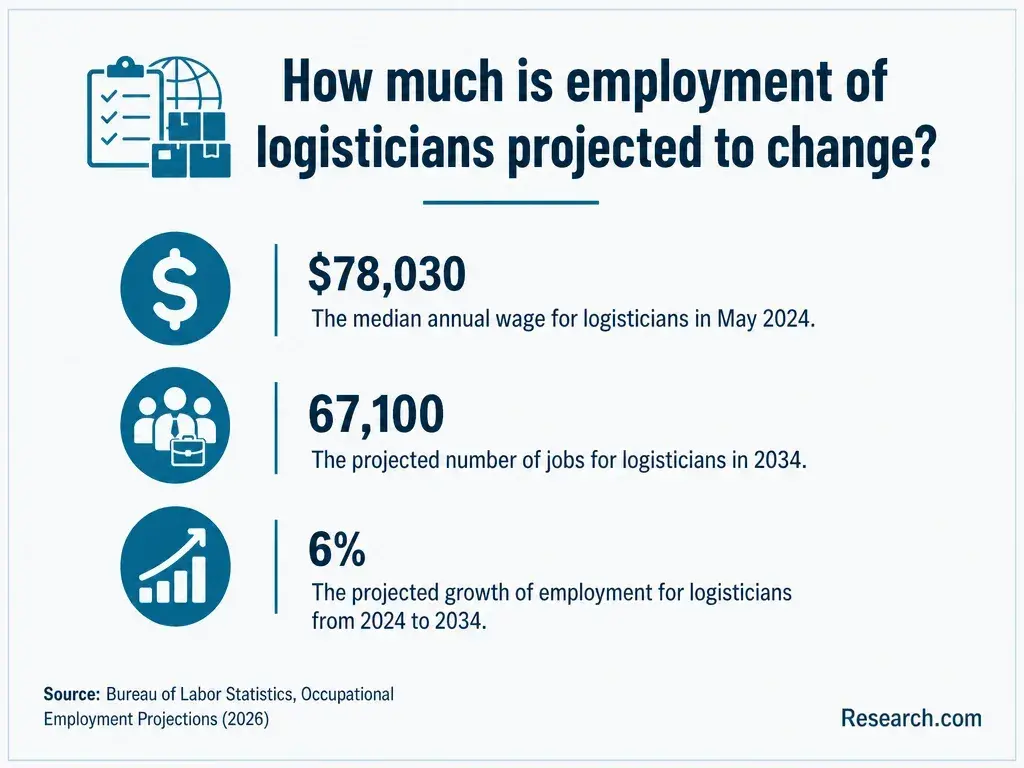
For example, someone targeting logistics should compare operations courses and applied work in both routes with an affordable supply chain degree planning guide. If the target role consistently calls for specialized supply chain skills, neither general-business label should decide the choice by itself.
Is an Online Business Administration Degree Respected by Employers?
An online format does not, by itself, determine whether an employer values a degree. Employers can assess the institution, relevant coursework, experience, and evidence that an applicant can perform the job. An online graduate who can explain a budget analysis or present a supervised process-improvement project has more to discuss than a graduate relying on the degree title alone. Neither pathway guarantees an interview or promotion.
Evaluate whether the format lets you produce that evidence. Ask about live attendance, group meetings, proctored exams, internship access, career services, and required campus visits. Shorter calendars at online colleges with accelerated business programs may appeal to working students, but compressed deadlines can make projects and employment harder to balance. Confirm obligations for the courses you would actually take, not just the program's advertised format.
Both routes commonly cover accounting, economics, finance, marketing, management, and business communication. What varies is the required depth, prerequisite sequence, elective space, and applied work. A BS program might devote more required credits to statistics or analytics; a broadly titled business program might do the same. Compare course descriptions and assignments rather than inferring content from BS, BA, or BBA.
Make a side-by-side degree map: mark shared core courses, major-specific requirements, courses required for the proposed minor, and electives that can count toward more than one requirement under school policy. Then identify a work sample each route could support, such as a spreadsheet forecast, customer research brief, or operations analysis. A minor that merely relabels courses you would take anyway offers less incremental learning than one that adds a coherent skill sequence. If supply chain is under consideration, accelerated degree planning for supply chain undergraduates is a useful comparison point for sequencing, not proof that a faster schedule will suit every student.
First, verify that the institution holds recognized accreditation and that it applies to the school awarding the degree. Then check any claimed business-school or programmatic accreditation with AACSB, ACBSP, or IACBE: their scopes differ, and a claim about a business school does not automatically establish coverage of every degree or minor. Ask the institution to confirm the status of the exact program for your enrollment term.
Accreditation is an important screening check, not evidence that two curricula, prices, or employment outcomes are identical. When reviewing budget-friendly colleges for business administration online, check accreditation alongside the published degree requirements, transfer policy, course availability, and total remaining cost. A lower advertised tuition rate is not useful if required courses add terms to your plan.
Requirements vary by school and by whether you apply as a first-year, transfer, returning, or second-degree student. Programs commonly request prior academic records; some impose separate business-major admission rules or prerequisite courses. Admission to the university does not mean every previous course will satisfy the business core, and eligibility to declare a minor may have its own conditions.
If you have college credit, request an official evaluation showing where it applies: general education, business major, proposed minor, or unrestricted electives. Ask whether accounting, economics, mathematics, or statistics courses meet current requirements and whether residency rules affect the minor. A preliminary credit estimate is not a graduation audit. Reviewing required credits before entering business administration study can help you prepare questions, but the admitting school decides equivalencies and exceptions.
Completion time depends on credits that apply to the chosen degree, remaining course sequences, enrollment pace, and how often required classes run. A minor may fit within available electives; it may also add prerequisites or credits that delay graduation. Online classes can have fixed deadlines and team assignments even when lectures are asynchronous.
For a fair cost comparison, obtain a written degree audit and price the remaining tuition and mandatory fees for each route. Add books, software, proctoring or travel costs where applicable, and consider earnings affected by your schedule. Compare grants, loans, and any employer reimbursement separately: a lower sticker price does not necessarily mean lower borrowing or easier monthly cash flow. Resources on how to reduce tuition costs for a business degree can inform your search, but use each school's current charges and your approved audit to estimate your own total.
Either path can support applications for roles such as operations coordinator, marketing coordinator, HR assistant, sales operations associate, or administrative specialist. The minor can make your preparation easier to explain - for example, business plus analytics for reporting tasks - but the hiring decision still depends on relevant skills, experience, and the employer's requirements. Supervisory roles generally require evidence of responsibility and results beyond introductory coursework.
Translate the curriculum into job evidence: match a posting's tasks to courses, software skills, internships, and approved projects you can describe accurately. If speed to entry-level work is your main constraint, compare course schedules in fastest online business bachelor's programs in the US, then check whether the faster option still leaves time to gain relevant experience. A fast degree without a suitable project or work opportunity may be a poor trade for a career changer.
There is no reliable salary premium that applies simply because one credential says "BS in Business Administration" and another includes a minor. Pay depends on the occupation, location, industry, responsibilities, and prior experience. The U.S. Bureau of Labor Statistics reports a May 2025 median annual wage of $75,940 for human resources specialists, with employment projected to grow 6% from 2025 to 2035. Those are occupation-wide figures, not starting-pay estimates for graduates with an HR minor or any particular business degree.
Use salary data to evaluate a plausible target occupation, not to calculate a guaranteed return on tuition. Compare local openings with your current qualifications, then weigh the remaining cost and time for each degree. If borrowing is necessary, the distinction between grants and repayable aid matters more to your finances than an unsupported claim that a minor will raise your salary. The same principle applies when considering grants versus loans for project management bachelor's study or another specialized alternative.
Do Business Careers Require Licenses, Certifications, or Graduate Degrees?
Many general business support roles do not require a professional license, but requirements change when the target job involves regulated work. A business degree or accounting minor does not by itself establish CPA eligibility; state accountancy boards set licensing rules. Financial services roles may require particular licenses, while HR and project management certifications have their own eligibility criteria. An MBA is not a standard prerequisite for entry-level business employment.
If your goal is project work, distinguish a project coordinator job from a certification and from a specialized bachelor's program. Compare the relevant courses and work opportunities in your general business options with project management schools with competitive tuition. Choose additional education only if it closes a demonstrated qualification gap that experience, employer training, or a targeted course cannot address more directly.
Other Things You Should Know About Business Administration
Often, yes, but permitted subjects and course restrictions depend on the institution. Confirm that the minor is available to your major and can be completed through your intended online format.
Not necessarily. Schools differ in whether they print minors on diplomas; ask whether the completed minor will appear on your official transcript.
Usually a change is possible under school policy, but previously completed courses may not meet the new requirements. Request an updated degree audit before switching.
Some schools allow limited overlap; others require distinct credits. Obtain the applicable catalog rule in writing before building a plan around double-counting.
- Accreditation in the U.S. | ed.gov http://www.ed.gov/laws-and-policy/higher-education-laws-and-policy/college-accreditation/accreditation-in-the-us
- Tuition & Fees | lowercolumbia.edu https://lowercolumbia.edu/pay-for-college/tuition/
- B.S. in Business Administration | University of Baltimore https://www.ubalt.edu/schools-and-colleges/merrick-school-of-business/academics/explore-all-programs/business-administration/index.cfm
- How Colleges Can Simplify Transfer Credit Policies | American College of Education https://ace.edu/blog/how-the-college-credit-transfer-process-works-and-how-it-can-be-improved/
- Lombardo College of Business Online Bachelor's in Business Administration Degree. | Millersville University https://www.millersville.edu/mgmtmktg/general-business-admin-online.php
- Requirements for a Bachelor's Degree - JHU catalogue https://e-catalogue.jhu.edu/ksas-wse/undergraduate-policies/academic-policies/requirements-bachelors-degree/
- 4.1.18 Credit Earned through Transfer, Examination, and Prior Learning | Illinois State https://policy.illinoisstate.edu/academic/4-1-18/
- Tuition in Detail - One Stop Student Services https://onestop.utk.edu/billing-payments/tuition-detail/
- Maximize Your College Transfer Credits | Explore 4 Ways | UMass Global https://www.umassglobal.edu/blog-news/4-ways-transfer-students-can-maximize-college-credits-prior-experience
- Business Degree Career Paths That Go Far Beyond Crunching Numbers | Rider University https://www.rider.edu/blog/business-degree-career-paths-go-far-beyond-crunching-numbers