2027 BS in Business Administration: Comparing the Cost of Degree Completion with Repeated Certificate Purchases
Audited and Verified:
Our Editorial and Data Verification Process
Research.com uses government datasets, official education statistics and primary institutional information to support its career and degree guides. Our review process checks factual accuracy, occupational definitions, source dates and the requirements associated with the credentials discussed.
How This Article Was Fact-Checked
Our editorial team verifies salary estimates, employment projections, education requirements and program information against original data providers and official organizations. Salary figures are checked against the relevant occupational definitions and reporting periods. Information about licensure, accreditation and required in-person training is reviewed separately.
Fact-checked and verified on:

Co-Founder and Chief Data Scientist
If you have college credits and keep buying business certificates, finishing a bachelor's degree may look expensive - until you compare what you still need to pay for each path. The decision matters most when an unfinished degree limits access to a target role, but a certificate fills a more immediate skill gap.
This guide shows returning students and employed professionals how to calculate comparable costs, assess what each credential offers, and avoid treating either spending or a future salary increase as a sure return.
Key Things You Should Know
- Compare the cost to finish the degree - not its full published tuition - with the cost of certificates you would otherwise buy over the same period.
- A certificate may be the better purchase for a specific skill; a completed BS may be more useful when a target employer requires a bachelor's degree. Neither replaces relevant experience.
- Do not use occupation-wide wages as your expected return: the U.S. Bureau of Labor Statistics reports a May 2025 median of $75,940 for human resources specialists, not for new business administration graduates.
What Is a Bachelor's Degree in Business Administration?
A BS in Business Administration is an undergraduate degree combining general education with business subjects such as accounting, finance, marketing, operations, and management. Its value in this comparison is both educational and formal: unlike a collection of short certificates, completion awards a bachelor's degree that can satisfy a degree requirement in a job posting.
A BS, BBA, and specialized business bachelor's degree are not interchangeable by name alone. Their required courses and transfer policies differ. If you are returning to college, ask for an official evaluation showing which prior credits satisfy general education, the business core, electives, and residency requirements. Accepted credits that count only as electives may leave more coursework - and more cost - than expected. If you have not applied yet, review what to check before applying for a business administration degree.
Is a Business Administration Degree Worth More Than Repeated Certificates?
It depends on the barrier you need to remove. If your target jobs consistently require a bachelor's degree and you have substantial applicable credit, finishing a BS may solve a qualification gap that another certificate cannot. If you already meet degree requirements but need to learn a particular tool or process, targeted training and a work sample may be more direct.
Certificates also vary. A college-awarded certificate, a course-completion certificate, and a separately administered professional certification have different requirements and recognition. Compare the actual syllabus, assessment, renewal terms, and employer relevance - not the number of badges. For someone pursuing HR work, for example, a guide to studying human resources can help clarify whether broader study addresses the goal better than another narrow HR course. Neither a business degree nor a certificate automatically confers an HR credential or qualifies someone to manage staff.
The strongest case for degree completion is often cumulative: it closes a formal education gap while connecting skills you have developed through work and short courses. The strongest case against it is equally concrete: the target role does not require a degree, the remaining credits are costly, or you need a specific skill sooner than a degree can provide it.
How Much Does a Business Administration Degree Cost?
There is no reliable universal price for finishing a BS. Your relevant figure is the net cost of the requirements you have left, not the advertised price of a full degree. Request a written degree audit and a charge estimate for your likely enrollment pattern before comparing schools. Economical online business administration college programs can provide candidates to investigate, but published tuition alone will not establish your personal completion cost.
Build the estimate from remaining required credits and the school's applicable per-credit, per-course, or per-term charges. Add mandatory fees, books, software, proctoring, travel, and any courses needed to meet prerequisites or residency rules. Then account separately for grants or employer payments you are confirmed to receive, borrowing costs, and earnings you may forgo if study reduces your working hours.
Timing changes the estimate. A required course offered infrequently can add another term of fees or delay a job application. Conversely, a higher-priced school that applies more of your existing credit could cost less to finish. Ask each institution for the same information - an official credit evaluation, remaining-course list, course schedule, and charges - before comparing totals.
Compare future spending over a defined period; money already spent on certificates is a sunk cost and should not be added to either option's price. The table separates the costs and outcomes that are easy to confuse.
| Path | Future costs to count | What the spending may - and may not - provide |
| Finish the BS | Remaining tuition and fees, materials, financing, and any work hours displaced | A bachelor's degree and broader coursework; no guaranteed promotion or specialist qualification |
| Keep buying certificates | Course or subscription payments, assessments, renewals, and learning time | Targeted learning or a specific credential; usually not a substitute for a required bachelor's degree |
| Pause purchases and use employer training | Any unreimbursed costs and time commitments | Potentially lower personal spending; training may be narrow or unavailable outside the employer |
A useful break-even test is: net degree-completion cost minus certificate spending you would avoid. That difference is the additional investment you must justify through access to target jobs, useful learning, or other goals - not an amount you can assume future wages will repay. Include only certificates you realistically planned to purchase; multiplying an occasional purchase into an imagined lifelong expense exaggerates the case for a degree.
Check cash flow as well as total cost. Financial aid eligibility depends on the institution, program, and your circumstances; employer reimbursement may arrive only after you pay and meet its conditions. If aid is important, use business administration colleges participating in federal aid programs as a starting point, then confirm program eligibility and your award with the school's financial-aid office.
Verify that the institution holds recognized institutional accreditation and that it covers the location and delivery arrangement in which you would enroll. Check the accreditor's record and the school's current disclosures rather than relying only on an advertisement. Accreditation is relevant to educational oversight and can affect aid or later study, but it does not guarantee that another school will accept your credits or that an employer will hire you.
AACSB, ACBSP, and IACBE are examples of business-focused accreditors. Their recognition applies to a defined school or set of programs; do not assume every degree at an institution is included. When using online business degree rankings for US college applicants to identify options, verify the exact BS program, accreditor scope, and current status directly before paying an application or enrollment fee.
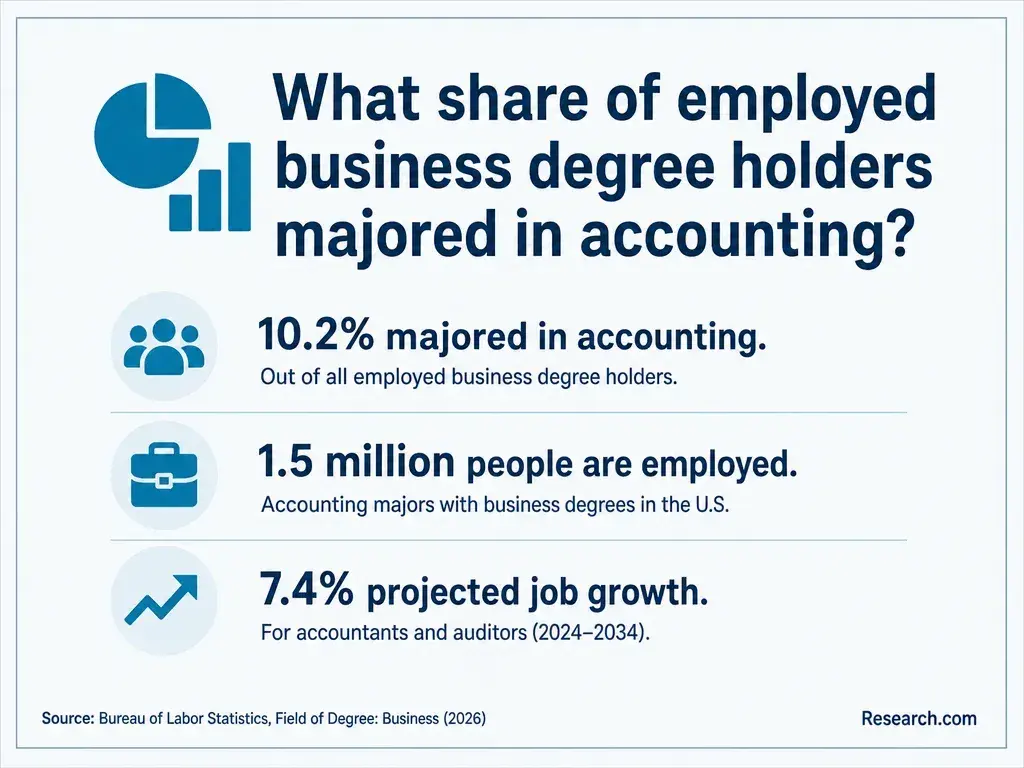
Most BS programs combine general education with a business core, but only a school's catalog and your degree audit establish what you must take. Accounting, economics, finance, marketing, management, statistics, and operations are common areas. A capstone, internship, concentration, or sequence of prerequisites may affect both the cost and the date you can finish.
Compare remaining courses with the certificates you have been buying. If you repeatedly purchase introductory courses in subjects already covered by your remaining business core, the degree may reduce duplicated learning. If your goal requires deeper supply chain preparation, check whether relevant electives form an official concentration or whether a specialized degree would be more useful. Online colleges with accelerated supply chain bachelor's study offer a separate pathway to compare, not proof that a general business degree includes that specialization.
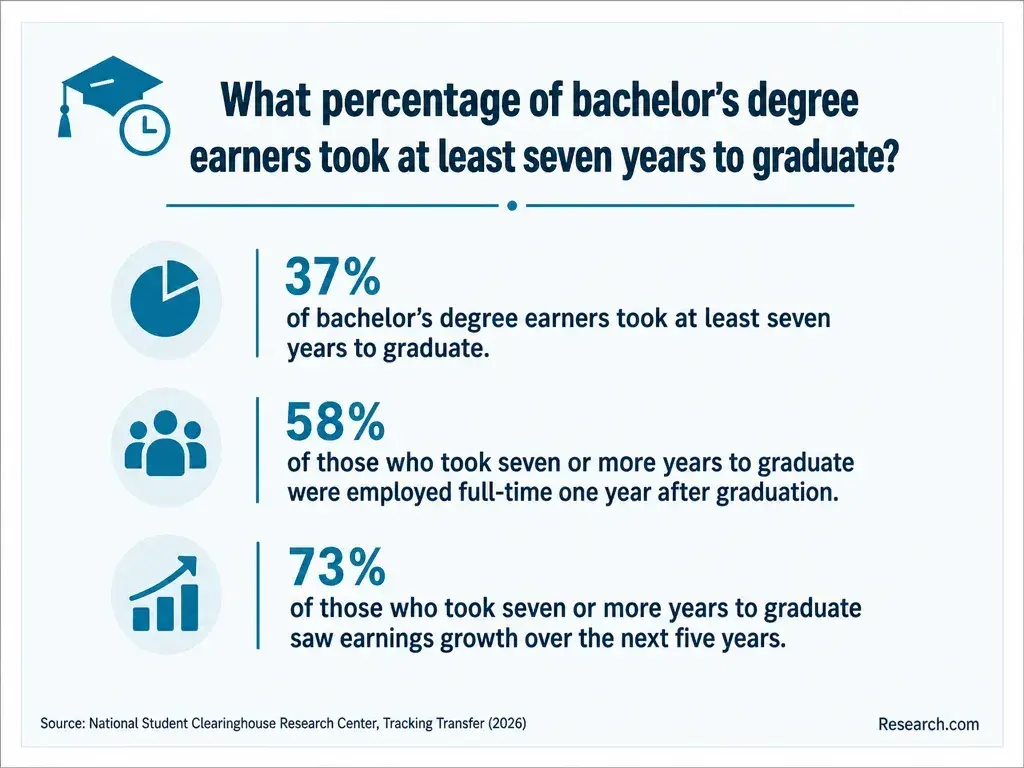
Completion time depends on credits that actually apply, prerequisite order, course availability, and how many classes you can sustain alongside work or caregiving. An accelerated calendar does not erase required coursework. Compare the proposed graduation term under a realistic schedule, not the shortest completion claim in a program description.
Ask an adviser to map every remaining requirement by term, including courses offered only periodically and any residency minimum. If speed is central to your decision, online colleges offering accelerated bachelor's can broaden the search. Confirm whether their pacing increases weekly study demands, term-based charges, or the risk that a missed course delays completion.
Choose the format that lets you complete required courses consistently at an acceptable total cost. Online study may reduce commuting, but fixed deadlines, live presentations, group assignments, proctored exams, and required visits can still conflict with a work schedule. Campus classes may provide easier in-person interaction but add travel and less flexible attendance.
Request sample course schedules and assessment requirements for the classes you still need - not just the program's general description. An employed student can also compare business administration education for employed professionals, then ask each school whether part-time enrollment changes tuition, aid, course access, or the expected graduation term.
A completed BS can support applications for roles in operations coordination, administrative services, sales support, marketing coordination, or HR, depending on your experience and the employer's requirements. It does not automatically qualify you for a management position. For a returning student, the best target may be an adjacent role where existing industry knowledge and new business coursework reinforce each other.
Read several postings for the role you want and separate bachelor's requirements from software skills, industry knowledge, and experience. If project coordination is your goal, compare a general BS with project management degrees with prior-credit pathways; then check which program applies more of your credits and which coursework addresses the tasks in those postings. A relevant work project or supervised experience may matter more than another unrelated certificate.
What Salary and Job Outlook Can Business Administration Graduates Expect?
There is no single salary or growth rate for BS in Business Administration graduates because the degree leads to different occupations. For one example, the U.S. Bureau of Labor Statistics reports a May 2025 median annual wage of $75,940 for human resources specialists and projects 6% employment growth from 2025 to 2035. The median describes workers across that occupation, not a starting salary or the return on this degree; HR roles also have employer-specific experience and skill requirements.
Use pay data for the specific occupation you intend to pursue, then compare local postings and your current qualifications. A degree's financial value is more plausible when it removes a documented hiring barrier, but do not insert an assumed raise into your break-even calculation. If comparing fast completion routes, compare shorter business administration college programs on your remaining cost and realistic job options rather than on implied earnings alone.
Other Things You Should Know About Business Administration
Some professional certifications require renewal; many course-completion certificates do not. Check the issuer's terms before paying, including whether access to course materials ends when a subscription ends.
Sometimes, but completion alone does not establish college credit. Ask the receiving school whether it awards credit for that specific learning and how any awarded credit would apply to your degree.
Check second-degree rules before starting another BS. If your target role does not require a business bachelor's specifically, selected courses, a certificate, or relevant experience may meet your goal with less additional study.
Usually you can discuss your own work, but check ownership and confidentiality rules first. Remove employer, customer, and other protected information unless you have permission to disclose it.
- Cost of Attendance (Budget) | 2025-2026 Federal Student Aid Handbook https://fsapartners.ed.gov/knowledge-center/fsa-handbook/2025-2026/vol3/ch2-cost-attendance-budget
- Employer-offered educational assistance programs can help pay for college | Internal Revenue Service https://www.irs.gov/newsroom/employer-offered-educational-assistance-programs-can-help-pay-for-college
- Employment Outcomes of Bachelor's Degree Holders - COE https://nces.ed.gov/programs/coe/indicator/sbc/bachelor-degree-holder-outcomes
- Prior Learning Credit (A/S Level, AP, BMT, CLEP, Credit-by-Exam, IB) | University of Maryland Catalog https://academiccatalog.umd.edu/undergraduate/registration-academic-requirements-regulations/prior-learning/
- and Ask For - Employer Tuition Reimbursement Benefits | Harvard Extension School https://extension.harvard.edu/blog/how-to-use-and-ask-for-employer-tuition-reimbursement-benefits/
- Degree vs. Certificate Programs: What's the Difference? | Northeastern University Bachelors Completion https://bachelors-completion.northeastern.edu/knowledge-hub/degree-vs-certificate/
- Degrees vs. Certificate Programs: What's the Difference? | snhu.edu https://www.snhu.edu/about-us/newsroom/education/certificates-vs-degrees
- Employer Tuition Reimbursement: How It Works and How to Pay for College | Winston-Salem State University https://ramsonline.wssu.edu/blog/employer-education-benefits/