2027 From Technical Supervision to General Management: When Does a BS in Business Administration Make Sense?
Audited and Verified:
Our Editorial and Data Verification Process
Research.com uses government datasets, official education statistics and primary institutional information to support its career and degree guides. Our review process checks factual accuracy, occupational definitions, source dates and the requirements associated with the credentials discussed.
How This Article Was Fact-Checked
Our editorial team verifies salary estimates, employment projections, education requirements and program information against original data providers and official organizations. Salary figures are checked against the relevant occupational definitions and reporting periods. Information about licensure, accreditation and required in-person training is reviewed separately.
Fact-checked and verified on:

Co-Founder and Chief Data Scientist
Technical supervisors often know how to keep work moving but have had fewer opportunities to manage budgets, staffing, customers, and organization-wide priorities. If general management is your next goal, a BS in Business Administration may help close those gaps - but it may not be the most direct route. This guide helps experienced employees compare the degree with targeted training and specialized study, connect coursework to management responsibilities, and check the cost and career evidence before committing.
Key Things You Should Know
- A BS in Business Administration makes the most sense when your target roles require a bachelor's degree and your main gaps are cross-functional business skills, not technical expertise or documented leadership results.
- The degree does not turn a technical supervisor into a general manager automatically; seek responsibility for budgets, people, customers, and operational decisions while you study.
- U.S. employment of general and operations managers is projected to grow 5% from 2025 to 2035, but occupation-wide figures describe the field - not a promotion probability for degree completers.
What Is a BS in Business Administration and Who Is It For?
A BS in Business Administration is an undergraduate degree covering several business functions rather than one technical specialty. Programs commonly combine accounting, finance, management, marketing, operations, and quantitative coursework, but the exact curriculum varies by school. A BBA or BA in Business may serve a similar broad purpose; the degree title alone does not establish which program is more rigorous or relevant.
For a technical supervisor, the degree is most useful when existing strengths - such as troubleshooting, scheduling, quality control, or leading a shift - need to be complemented by business-wide decision-making. It may also help someone who has substantial experience but cannot apply for a target role without a bachelor's degree. If the intended move is specifically into HR rather than general management, compare the curriculum with human resources degree costs and options before choosing a broad business program.
When Does a BS in Business Administration Make Sense?
A BS makes sense when it addresses a verified barrier: a bachelor's requirement in the roles you want, a need to understand several business functions, or limited access to advancement without a degree. It is less compelling if your employer values a specific technical qualification more, you already have a bachelor's degree, or the missing piece is a chance to demonstrate broader responsibility. In those cases, an internal assignment, certificate, or employer training may be faster and less costly.
The comparison below focuses on what each route can add to an experienced supervisor's record. None replaces evidence that you can make sound decisions beyond your technical team.
| Path | Best fit | Important limitation |
| BS in Business Administration | A bachelor's requirement plus gaps across finance, people, operations, and strategy | Requires substantial study; does not confer managerial authority |
| Targeted training or stretch assignment | One identifiable skill gap or a need to demonstrate results at work | May not satisfy a bachelor's requirement |
| Specialized degree | A clear goal in one function, such as supply chain or HR | May offer less breadth for a general management goal |
If project delivery is your intended route into management, compare the business core with the remaining requirements to finish project management studies with transferred college credits. Ask the target employer whether it prefers either degree - or primarily wants a record of managing projects.
What Careers Can You Pursue With a Business Administration Degree?
The most plausible next move depends on what you already supervise. A production supervisor might pursue operations coordination or broader plant responsibilities; a service-team supervisor might move toward administrative operations or customer-service management. Project coordination and procurement are other possibilities when your work includes schedules, vendors, or purchasing. General and operations manager roles typically require a wider record of accountability, not just a business diploma.
Read job descriptions for the decisions the role owns: hiring input, budget control, vendor selection, performance measures, and responsibility across teams. Compare those duties with examples you can document. If your experience is primarily technical and your target is HR, HR bachelor's completion with transferred coursework may provide a more focused route, though employers can also expect direct HR experience.
The most valuable courses for this transition connect work you already know to decisions made outside your team. Accounting and finance can help you interpret costs and budgets; organizational behavior and HR coursework can clarify staffing and employee-management responsibilities; marketing and strategy can show how operational choices affect customers and organizational goals. Statistics, spreadsheets, and operations courses can strengthen your ability to assess performance rather than rely on anecdotes.
Look beyond course titles for assignments involving budget analysis, process measures, written recommendations, and presentations to nontechnical audiences. An operations-focused supervisor may prefer greater supply-chain depth; an online supply chain bachelor's fast-track guide can help frame that alternative. Confirm whether a proposed concentration is formally awarded, whether its courses are available when needed, and whether a workplace project requires faculty approval and employer permission.
Online study can make attendance possible around shifts or travel, while campus study may offer easier in-person access to classmates, faculty, and local recruiting. Neither format is inherently better preparation for management. The deciding issue is whether you can complete the actual assessments - group work, presentations, exams, and projects - without repeatedly conflicting with supervisory duties.
Ask for sample course schedules and confirm live-session times, weekly deadlines, proctoring, campus visits, and the availability of required courses. An accelerated schedule can shorten calendar time while increasing the workload in each term; use an accelerated business college program guide to identify formats worth examining, then verify each school's requirements directly. Do not treat "online" as synonymous with self-paced.
Requirements vary by institution and by whether you apply as a first-time student, transfer student, or returning student. Schools may request secondary-school records, prior college transcripts, and evidence that required mathematics or business prerequisites are complete. Admission to the university, admission to a business major, and application of previous credits to that major can be separate decisions.
Gather every prior transcript before requesting an evaluation, including coursework outside business. Ask which credits satisfy general education, the business core, electives, and any residency requirement - not merely how many are accepted. If application expense is a concern, accredited colleges offering free online applications can be a starting point, but a waived application fee says nothing about the eventual cost or credit evaluation.
A traditional bachelor's path commonly takes about four academic years of full-time study; a supervisor's remaining time depends on applicable prior credit, course sequencing, enrollment pace, and school residency rules. Accepted transfer credits may count only as electives, so a preliminary credit total is not a completion date.
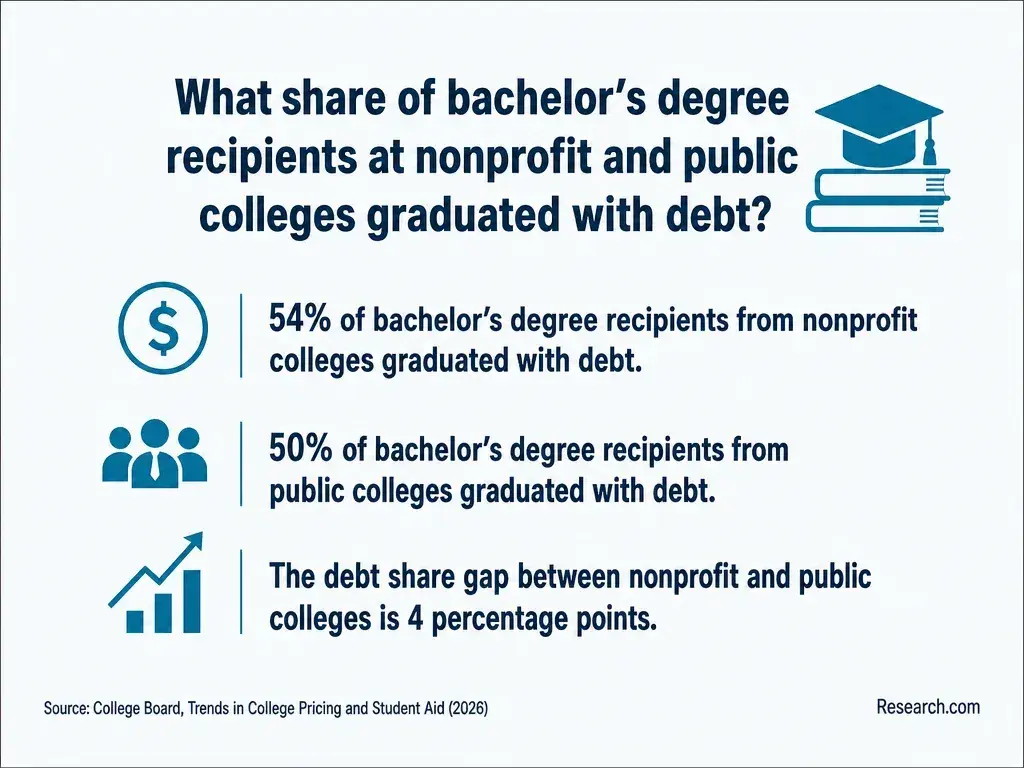
For a useful cost comparison, request an official degree audit and estimate tuition for remaining required courses, then add mandatory fees, books or software, travel, and any earnings lost to a changed work schedule. Check financial-aid eligibility and whether employer reimbursement arrives before or after you pay tuition. Compare affordable business administration programs with federal aid access, but calculate your own likely remaining cost; neither aid access nor an advertised low rate establishes your net price.
First, verify the institution's accreditation and standing through the school and the relevant accreditor. Then check whether a claimed business-school accreditation - such as AACSB, ACBSP, or IACBE - actually covers the school or program and academic level you plan to enter. Institutional accreditation and business-school accreditation have different scopes; neither, by itself, proves strong career outcomes.
Program quality also depends on course availability, advising, faculty access, and whether career services reach working adults. Request completion and employment information with its cohort and response-rate definitions, and ask to see the catalog rules for your intended enrollment term. When you compare lower-cost business degree options, apply these checks to each school rather than assuming the lowest advertised tuition represents the best completion path.
General management roles usually do not have a single business-administration license. Employers set their own education and experience requirements, however, and particular duties or professions may involve separate credentials. A business degree alone does not qualify someone for CPA licensure, a financial-services license, or a project-management certification.
Check the target job description before paying for an additional credential. If it calls for project-management methods rather than a general business degree, affordable online study routes in project management may be worth comparing. Confirm separately whether any certification you want has experience, education, or examination requirements; coursework does not automatically meet them.
What Are the Salary and Job Outlook for Business Administration Graduates?
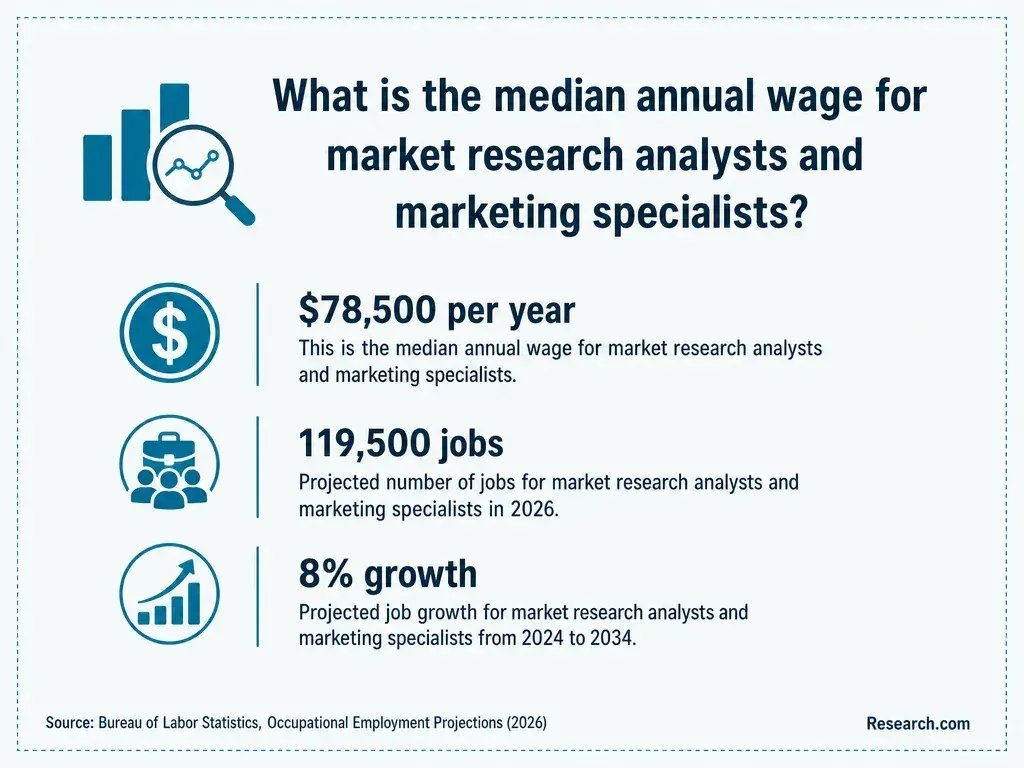
The U.S. Bureau of Labor Statistics reports a May 2025 median annual wage of $105,770 for general and operations managers and projects 5% employment growth for that occupation from 2025 to 2035. That median covers people across industries and experience levels; it is not an expected salary for a new business graduate or a forecast of your raise.
For a personal return-on-investment judgment, compare local postings for your target role with your current compensation and ask which requirements you do not yet meet. Include the time until you could realistically compete for those jobs, not just the time until graduation. A shorter route to an online bachelor's may reduce that wait if its credits and schedule work for you, but speed matters less if the program does not help you build the responsibilities employers seek.
Other Things You Should Know About Business Administration
Yes. A limited budget, vendor, staffing, or cross-team project can help reveal whether your main gap is business knowledge or an opportunity to demonstrate it.
Describe your responsibilities, decision process, and scope using information your employer permits you to share. Remove customer, employee, financial, and proprietary details unless disclosure is authorized.
Usually not. If your role requires an industry license or technical qualification, check its renewal rules separately; business coursework generally complements rather than replaces it.
Ask what roles the degree would make you eligible to pursue and what experience would still be required. Unless your employer makes a formal commitment, plan on improved eligibility - not a guaranteed promotion.
- General Schedule Qualification Policies | U.S. Office of Personnel Management https://www.opm.gov/policy-data-oversight/classification-qualifications/general-schedule-qualification-policies/
- Educational Attainment and Nonwage Labor Market Returns in the United States - PMC https://pmc.ncbi.nlm.nih.gov/articles/PMC10923559/
- The ADA: Your Responsibilities as an Employer | U.S. Equal Employment Opportunity Commission https://www.eeoc.gov/publications/ada-your-responsibilities-employer
- 15 Transferable Skills That Work Across Industries | CityU of Seattle https://cityu.edu/transferable-skills/
- Online Business Degree | AACSB Accredited - Online Programs | Adelphi University https://onlineprograms.adelphi.edu/programs/bs-bachelor-business/
- BS in Business Administration | Online Bachelor's Degree | Capella University https://www.capella.edu/online-business-degrees/bs-business-program/bachelors-business-administration/
- The Major Payoff: Evaluating Earnings and Employment Outcomes Across Bachelor's Degrees - CEW Georgetown https://cew.georgetown.edu/cew-reports/major-payoff/
- Career Outcomes - Bachelor's Degrees | Career Services Network I Michigan State University https://careernetwork.msu.edu/outcomes/
- Skills for Business Managers That Can Lead to Promotion | Webster University https://enroll.webster.edu/skills-for-business-managers/
- What Can You Do With a Business Administration Degree? | American Military University https://www.amu.apus.edu/area-of-study/business-administration-and-management/resources/what-can-you-do-with-a-business-administration-degree-exploring-options/