2027 A Second BS in Business Administration After a Bachelor's in Fine Arts: Credits, Cost, and Alternatives
Audited and Verified:
Our Editorial and Data Verification Process
Research.com uses government datasets, official education statistics and primary institutional information to support its career and degree guides. Our review process checks factual accuracy, occupational definitions, source dates and the requirements associated with the credentials discussed.
How This Article Was Fact-Checked
Our editorial team verifies salary estimates, employment projections, education requirements and program information against original data providers and official organizations. Salary figures are checked against the relevant occupational definitions and reporting periods. Information about licensure, accreditation and required in-person training is reviewed separately.
Fact-checked and verified on:

Co-Founder and Chief Data Scientist
A bachelor's in fine arts can prepare you to make and present creative work, but it may not cover the accounting, operations, or analytics expected in the business role you want next. A second BS in Business Administration is one way to fill those gaps - not necessarily the fastest or least expensive. This guide is for fine arts graduates weighing that investment. It explains how schools determine remaining credits and costs, what the degree could add to your experience, and when targeted training or a graduate pathway may serve you better.
Key Things You Should Know
- A business bachelor's commonly totals about 120 credits, but a fine arts graduate's remaining credits depend on a second-degree audit - not the number of credits the school accepts.
- Compare the price of required courses, fees, time away from work, and available aid; a prior bachelor's degree generally makes a student ineligible for a federal Pell Grant.
- Choose a second BS when a target role calls for substantial undergraduate business preparation; choose shorter training when you need only a specific skill or work sample.
What is a second bachelor's in business administration after a fine arts degree?
It is a separate undergraduate credential earned after your first bachelor's. Your fine arts degree remains intact. The new program adds a business curriculum, typically spanning accounting, economics, finance, marketing, management, and quantitative decision-making.
This route can suit an artist moving toward operations, marketing, or administration who wants structured preparation across several functions. It may be excessive for someone who already manages clients and budgets and needs only stronger bookkeeping or marketing skills. A BS in Business Administration is not interchangeable with every BBA or specialized business degree: compare actual required courses and the credential awarded, not just the title.
Application costs are a small but avoidable part of the decision. If you are comparing institutions, compare accredited schools with no application charge, then check whether each school accepts second-degree applicants into its business program.
How many credits are required for a second bachelor's in business administration?
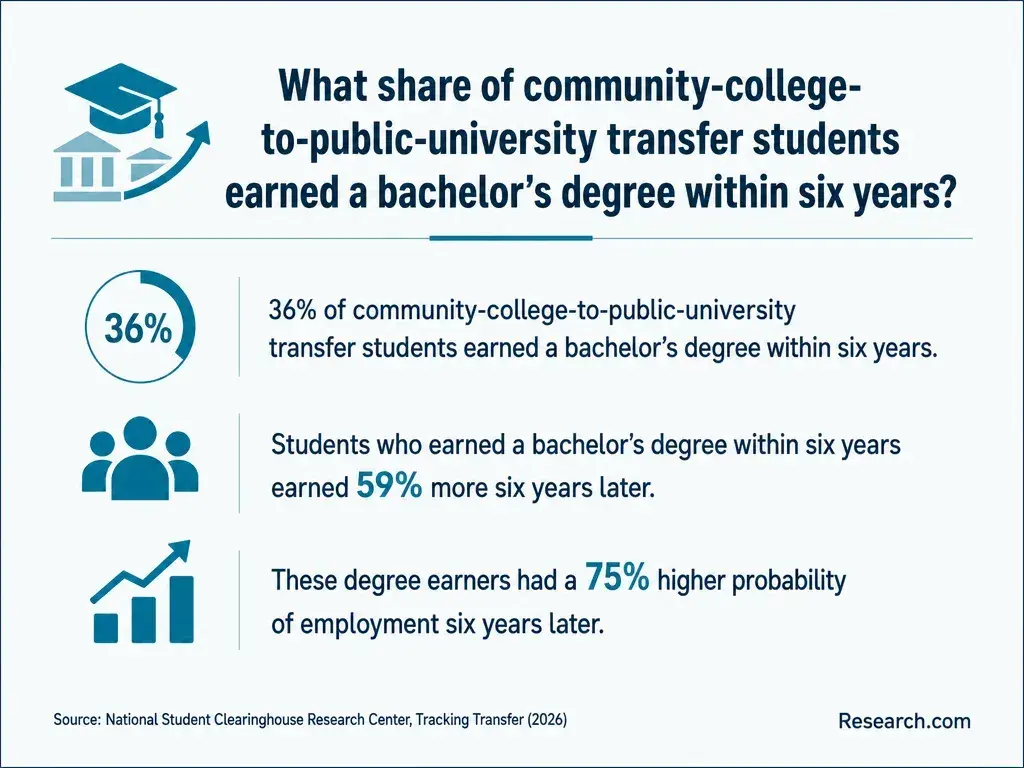
Many U.S. bachelor's programs require about 120 total semester credits. That does not mean you must earn another 120. A school may recognize general education from your fine arts degree while still requiring its business core, prerequisites, upper-division courses, and a minimum number of credits earned there. Policies vary enough that a general estimate cannot establish your completion time.
The key distinction is credits accepted versus requirements satisfied. Studio credits may transfer as electives without replacing accounting or statistics. Even if your prior degree fulfills general education, a residency rule or required course sequence can keep you enrolled longer than a simple credit subtraction suggests.
Request a written second-degree audit showing each unmet requirement and when its courses are offered. Use ranked programs for finishing a business bachelor's sooner as a shortlist, not as evidence of your personal graduation date.
How much does a second bachelor's in business administration cost?
There is no reliable single price without a school-specific audit and tuition schedule. To estimate your total, multiply the credits you still need by the applicable tuition rate, then add mandatory fees, materials, technology or travel costs, and any earnings you would give up. Check whether the school instead charges by course or term; a slower pace can change the cost under those models.
This table separates charges from financing so an attractive advertised tuition rate does not obscure the amount you must actually pay.
| Cost or funding item | What to verify | Why it matters |
| Tuition and required fees | Rate for your enrollment status; remaining required courses; per-credit, course, or term billing | Transferred electives may not reduce the bill if business requirements remain. |
| Indirect and opportunity costs | Books, software, commuting, and changes to work hours | A lower tuition quote can still produce a higher total burden. |
| Grants, loans, and employer support | Second-degree eligibility, loan limits, reimbursement conditions, and payment timing | A benefit may reduce eventual cost without covering the initial bill. |
A prior bachelor's degree generally rules out a federal Pell Grant. Other aid, including federal loans, depends on individual eligibility and applicable limits; ask the financial-aid office to assess your status before assuming you can finance the program. To compare schools on the same basis, use business administration tuition and FAFSA eligibility alongside each school's written cost estimate.
Yes, potentially - but transfer acceptance and degree applicability are different decisions. Your prior writing or mathematics courses might meet requirements, while studio courses may count only as electives. An introductory course you took for your fine arts degree will replace a business prerequisite only if the receiving school approves its equivalency.
Send official transcripts and, for any potentially relevant course, a syllabus to the transfer office or business adviser. Ask for an audit that labels credits as general education, business core, concentration, electives, or unused toward the new degree. Also ask about course recency, minimum grades, upper-division requirements, and appeals. Only the institution awarding the second degree can make the final determination.
If your intended role is project coordination rather than general administration, compare that audit with online undergraduate project management credit acceptance. A more specialized degree is useful only if its remaining requirements better match both your prior credits and career goal.
Neither format is inherently better for a fine arts graduate. Online study can preserve work hours and location flexibility; campus study may make it easier to attend recruiting events, meet faculty, or find a supervised internship. In either format, the decisive question is whether required courses and applied opportunities fit your schedule and transition goal.
Check for live classes, proctored exams, group presentations, required campus visits, internship rules, and how often upper-division courses run. "Online" does not necessarily mean self-paced. If you need to keep working while changing careers, review degree options for working business administration students, then confirm the actual attendance and deadline policies with each school.
Expect a business core that commonly includes financial and managerial accounting, economics, finance, marketing, management, operations, business law, and statistics or analytics. Schools differ in prerequisites, quantitative depth, electives, and capstone requirements. For a fine arts graduate, accounting and spreadsheets may be the largest new academic adjustment; client communication and presenting ideas may already be strengths.
Choose electives by the work you want to do. Marketing research can support a move into audience or customer analysis; operations and supply chain courses may better suit production or purchasing roles. An elective cluster is not necessarily an official concentration. If supply chain is your specific goal, supply chain bachelor's options focused on completion speed offer a useful comparison with a general BS - but verify required courses before assuming the specialized route is shorter.
Schools commonly ask for an application and official transcripts from every college attended. They may set a minimum prior GPA, require particular mathematics or business prerequisites, or apply separate admission rules to the business major. A fine arts degree does not itself bar admission, and lacking an accounting course does not automatically mean you must complete it before applying.
Start by asking whether the institution awards second bachelor's degrees in business administration and whether its business program admits second-degree students. Then confirm which prerequisites are required for admission and which can be completed after enrollment. The business administration degree admissions requirements guide can help you frame those questions; the school's current policy controls your application.
Begin with the role and the missing qualification, not the assumption that another degree is necessary. A fine arts graduate who has handled commissions, vendors, events, or client accounts may already have relevant evidence for an adjacent business position. A substantial transition into finance or another technical function may require deeper coursework than a short certificate provides.
The comparison below shows when each path could be worth investigating. Admission, credit requirements, and employer recognition still need to be checked for the specific option.
| Path | Potential fit | Main limitation to check |
| Targeted courses or certificate | You need accounting, analytics, or marketing skills rather than another broad credential. | It may not meet a job posting's degree or subject requirements. |
| MBA or other graduate program | You have relevant professional experience and want graduate-level business study. | Admissions expectations, foundational coursework, cost, and recruiting fit vary. |
| Specialized business bachelor's | You have a clear target function and want focused undergraduate preparation. | More specialized prerequisites may reduce transfer applicability. |
| Work projects, mentorship, or an entry-level move | You can build evidence of business responsibility without immediately earning another credential. | Some employers still require specified education. |
For a project-management goal, compare the second-degree estimate with affordability checks for accredited project management programs. Also consider whether a supervised project and targeted training would address the actual hiring gap more directly.
Fine arts experience can be relevant to marketing coordination, event operations, client services, purchasing support, or project coordination. The business degree can add vocabulary and analytical preparation, but employers will still look for evidence that you can manage schedules, interpret budgets, work with data, or serve customers. A sensible first move may be an assistant or coordinator role rather than a management position.
For context, the U.S. Bureau of Labor Statistics reports a May 2025 median annual wage of $78,760 for market research analysts and projects 7% employment growth from 2025 to 2035. That is an occupation-wide median, not a starting salary or a predicted return on a second degree. Research and data-analysis skills - not a general business title alone - matter for that occupation.
Before borrowing for school, compare local postings for your target role with the courses and experience you already have. The discussion of business administration tuition time commitment and career value can inform that comparison, but no program can promise a particular job or salary.
How can you choose an accredited business administration program?
Verify the institution's recognized accreditation and confirm that the exact business degree is available to second-degree students in your preferred format. Business-school accreditation, such as AACSB, ACBSP, or IACBE, is a separate distinction; check whether it applies to the school and program you are considering rather than assuming it covers every degree.
Then compare written degree audits, remaining-course schedules, total cost, career support for career changers, and access to internships or approved workplace projects. Ask who approves transfer substitutions and whether a capstone can use your own creative-business experience; academic approval and permission to use client information are separate matters. Ranked American online business degree options can narrow your search, but your best choice is the program with a credible, affordable path from your completed fine arts degree to the work you actually want.
Other Things You Should Know About Business Administration
No. Your fine arts degree remains an earned credential. If you complete the business program, you can list both degrees on your résumé.
Possibly, if the school offers prior-learning assessment or approved experiential credit and your documented work meets its criteria. Running a freelance practice does not automatically award credits.
Eligible loans may qualify for in-school deferment if you enroll at least half-time at an eligible school. Confirm your loan terms and enrollment reporting with your servicer; interest may continue to accrue.
Not by itself. CPA eligibility depends on state-specific education, examination, and experience rules. Ask the relevant state board to evaluate your planned coursework before choosing a degree for that purpose.
- One Big Beautiful Bill Act - Important Definitions https://studentaid.gov/announcements-events/big-updates/definitions
- Fast Facts: Tuition costs of colleges and universities (76) | ed.gov https://nces.ed.gov/fastfacts/display.asp
- School-Determined Requirements | 2024-2025 Federal Student Aid Handbook https://fsapartners.ed.gov/knowledge-center/fsa-handbook/2024-2025/vol1/ch1-school-determined-requirements
- Types of Business Degrees: Your Complete Guide | UWA Online https://online.uwa.edu/news/types-business-degrees/
- Program: General Management, BSBA - University of Pittsburgh https://catalog.upp.pitt.edu/preview_program.php
- Is a second bachelor's degree worth it? | Strayer University https://www.strayer.edu/buzz/why-get-a-second-bachelors-degree/
- Transfer Credits - Undergraduate - Policies - Campus Offices https://campus.collegeforcreativestudies.edu/policy/transfer-credits-undergraduate/
- Second Bachelor's - UF Online - University of Florida https://ufonline.ufl.edu/apply/admissions-requirements/second-bachelors/
- Second Bachelor's Degree Admission - Academic Catalog https://catalog.ucdenver.edu/cu-denver/undergraduate/admissions/undergraduate-admissions/transfer-student-admission/second-bachelors-degree-admission/
- Bachelor's Degree Credit Hour Requirements Explained | American InterContinental University https://www.aiuniv.edu/degrees/business/articles/how-many-credits-do-you-need-for-a-bachelors-degree