2027 BS in Business Administration: A Capstone Based on an External Organization
Audited and Verified:
Our Editorial and Data Verification Process
Research.com uses government datasets, official education statistics and primary institutional information to support its career and degree guides. Our review process checks factual accuracy, occupational definitions, source dates and the requirements associated with the credentials discussed.
How This Article Was Fact-Checked
Our editorial team verifies salary estimates, employment projections, education requirements and program information against original data providers and official organizations. Salary figures are checked against the relevant occupational definitions and reporting periods. Information about licensure, accreditation and required in-person training is reviewed separately.
Fact-checked and verified on:

Co-Founder and Chief Data Scientist
An external-organization capstone can turn a business administration degree requirement into a useful work sample - but only if the project is feasible, approved, and safe to discuss afterward. This guide is for prospective students and students preparing to work with a company, nonprofit, or public agency.
It explains what the partnership involves, how to choose a manageable business question, what evidence you can use, and how to judge programs that advertise applied learning. The goal is to help you select a capstone you can complete well, not merely one with an impressive-sounding client.
Key Things You Should Know
- An external-organization capstone is a faculty-assessed academic project addressing an approved organization's business question; it is not automatically an internship or an implemented consulting engagement.
- The strongest projects identify a decision-maker, a limited question, permitted data, a practical deliverable, and a backup plan if access changes.
- Career value comes from explaining your methods and judgment, not claiming business results you did not measure or permission to share confidential work.
What is a BS in Business Administration capstone with an external organization?
It is a culminating course project in which a student or team applies business concepts to a question posed by an organization outside the classroom. The partner might be a small business, nonprofit, public agency, or larger employer. A faculty member sets academic requirements and grades the work; an organizational contact supplies context and, when authorized, feedback or data. The final product could be a market analysis, process map, operating plan, or recommendation - not necessarily an implemented change.
Before enrolling, ask whether the program finds partners, permits students to propose one, or uses simulated cases when a partnership is unavailable. These are materially different experiences. If you compare accelerated business programs, check whether the shorter schedule still leaves enough time for partner approval, feedback, and revision.
A capstone differs from an internship: an internship generally centers on supervised work over a defined placement, while a capstone centers on an assessed academic deliverable. One experience can involve both only if the school explicitly approves that arrangement.
How does an external-organization capstone prepare students for business careers?
A well-designed capstone requires students to translate an unclear request into a decision the organization can actually make. That means asking stakeholders what matters, choosing credible measures, working within constraints, and explaining uncertainty. An employer-facing presentation also provides practice receiving feedback without treating every suggestion as an academic requirement.
The career benefit depends on the work you can substantiate. A student interested in operations might explain how they mapped a purchasing process and compared alternatives; a marketing applicant might discuss a research plan and the limits of its sample. Neither should claim improved revenue or efficiency unless the organization measured those results and authorized disclosure.
Match the project to the function you want to enter. For someone targeting HR, an approved onboarding-process review may be more relevant than a generic sales forecast; education options for future HR professionals can help clarify whether broad business preparation or deeper HR coursework better addresses the remaining skill gap. A capstone supports an application, but it does not replace experience or qualify a graduate automatically for a specialist or management role.
What do students do during an external-organization business capstone?
Students typically define the problem, agree on a permitted evidence base, analyze options, and present a recommendation. This compact project structure helps keep a partner's broad request within a semester's academic boundaries:
- Write the decision statement: Name the organizational decision-maker, the choice they face, the time horizon, and what the project will not address.
- Confirm permissions: Obtain faculty approval and ask the partner which records, interviews, branding, and outputs may be used or shared.
- Establish a baseline: Use authorized records or public information to describe current conditions; identify missing or unreliable data.
- Compare feasible options: State assumptions, costs or resource needs, risks, stakeholder effects, and measures the organization could monitor.
- Deliver and revise: Present a report or dashboard, record feedback, and distinguish the academic recommendation from any later implementation.
For example, a nonprofit might ask how to reduce delays in processing volunteer applications. A suitable output could be a process map and proposed measures; it should not assert that delays fell unless that outcome was observed. If the desired deliverable is instead preparation for a dedicated project-management degree, consider whether you can finish project management studies with transferred college credits rather than assuming a business capstone provides the same specialized curriculum.
Preparation depends on the project. Accounting and finance help with budgets and cost comparisons; statistics and spreadsheets help students examine patterns without mistaking correlation for causation. Marketing research supports customer questions, while operations and management courses help with process design, stakeholder responsibilities, and implementation constraints. Business communication is essential for writing a decision-ready recommendation rather than a collection of course concepts.
Check the catalog for prerequisite chains and when the capstone is offered. A dashboard project may require earlier analytics coursework and access to approved data; a financial model may require more than an introductory accounting class. Students reviewing US rankings for accelerated business bachelor's degrees should inspect the actual course sequence, not assume faster completion provides the same preparation for their preferred project.
Choose electives for the methods your capstone needs. An elective or project topic does not, by itself, create an official concentration.
Either format can support a substantial external project. The consequential differences are how students meet partners, access approved information, coordinate teams, and present their work. This comparison highlights commitments to confirm before choosing a format.
| Project condition | Online capstone | Campus-based capstone |
| Partner contact | May rely on scheduled video meetings and shared files | May offer in-person meetings, though partner access still varies |
| Team coordination | Requires clear remote handoffs and agreed meeting times | May use class time, with additional meetings outside class |
| Presentation | May involve live online attendance | May involve an on-campus event or partner-site visit |
Online does not mean self-paced. Ask for the capstone syllabus, live-session expectations, presentation requirements, and any travel obligations - particularly if work or caregiving limits availability. When considering bachelor's degrees with compressed schedules, allow time for a partner to answer questions or approve materials; the organization may not work to the course's accelerated deadlines.
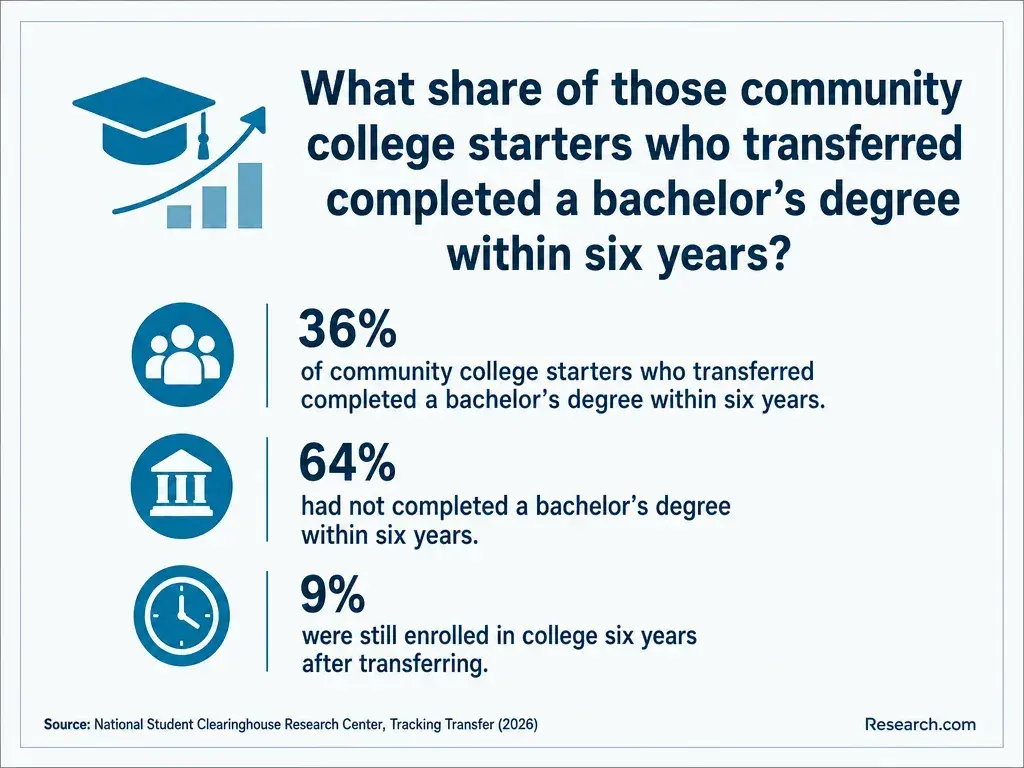
Requirements vary by institution and by whether an applicant is entering college, transferring, or seeking admission to the business major after initial enrollment. Schools may request prior transcripts and require particular general education or quantitative courses before upper-division business study. Admission to the university does not establish eligibility to take the capstone.
Ask admissions and a business adviser for the current catalog requirements, then request a degree audit showing which prior courses apply to the business core, prerequisites, electives, and residency requirement. If application costs matter, fee-free applications for online college may widen the initial search, but the decisive comparison is whether each program will accept and apply your credits and offer the capstone you want.
A full-time student entering without college credit commonly plans around four academic years for a bachelor's degree. Transfer credit, part-time enrollment, course sequencing, and capstone availability can change that timeline. An external project can also require time for partner meetings and revisions beyond scheduled class sessions.
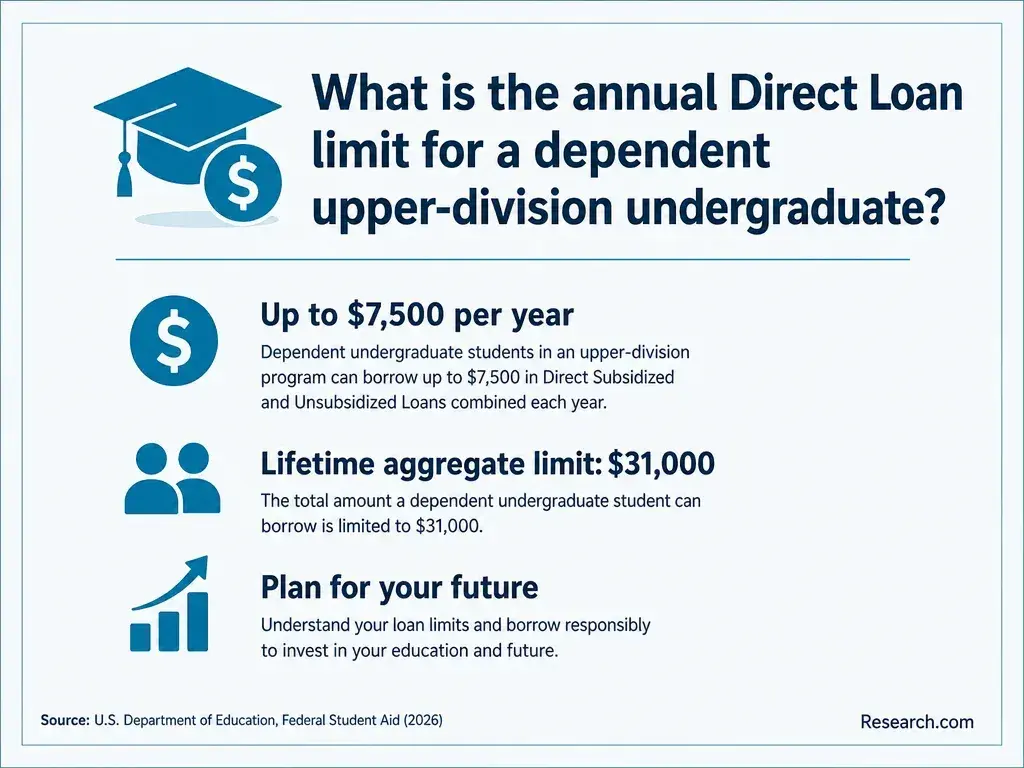
Compare programs using an official estimate of remaining required courses, tuition and fees, books or software, travel, and any income lost to scheduling demands. Ask whether the capstone has a separate fee or requires a presentation trip. Compare grants for project management undergraduates only if a project-management degree is a genuine alternative for your goal; aid examples for another program cannot establish what your business degree will cost or what you will receive.
A lower advertised tuition rate may not produce a lower completion cost if fewer credits apply or required courses are offered less often. Get the school's credit evaluation and financial-aid estimate before treating a proposed timeline as a budget.
First, verify the institution's accreditation with the accreditor and confirm that it covers the school awarding the degree. Then check any claimed AACSB, ACBSP, or IACBE business accreditation with that organization, including whether the relevant business unit and program are within its stated scope. Institutional accreditation and business accreditation answer different questions; neither proves that a particular capstone has strong partners.
For this decision, request a recent capstone syllabus or project brief. Check who recruits partners, how projects are approved, whether faculty guide scope and data ethics, what happens if a partner withdraws, and whether students may retain a redacted work sample. A school's published outcomes are more useful when it explains which students were counted and how results were collected.
Use cost guides such as economical online business administration college programs to build a comparison list, then verify accreditation scope and capstone policies directly. Low price alone says little about access to an appropriate external project.
The degree and a relevant capstone can support applications for roles such as marketing coordinator, operations coordinator, HR assistant, or project coordinator. The best match depends on the project's methods, prior experience, and each employer's requirements. A student who studied a workflow can discuss process analysis; that work does not automatically qualify them to manage an operations team.
For salary context, the U.S. Bureau of Labor Statistics reports a May 2025 median annual wage of $78,760 for market research analysts. That occupation-wide figure includes workers at different experience levels and is not an expected starting salary for business administration graduates. Students interested in a different function should compare its specific duties and hiring requirements rather than applying this figure to every business role.
If project coordination is the principal career goal, compare the business curriculum with specialized alternatives, including project management schools with competitive tuition. Consider which route supplies relevant coursework, supervised work samples, and an affordable path to completion - not just the capstone's title.
What certifications or licenses do business administration graduates need?
There is no general license required simply to hold a BS in Business Administration or present an academic capstone. Particular jobs may have separate rules: regulated accounting practice, for example, has state-specific licensure requirements, and some financial-services work requires appropriate licenses. Voluntary HR or project-management certifications have their own eligibility rules; a capstone or introductory course does not automatically satisfy them.
Start with the requirements for the specific role and jurisdiction, then compare those requirements with your transcript and documented experience. If a dedicated project-management degree is under consideration alongside a business degree or later certification, budgeting for online project management college study can help frame the education-cost comparison. Confirm credential eligibility with the relevant certifying body or regulator before paying for additional study.
Other Things You Should Know About Business Administration
Possibly, but ask the capstone instructor first. The school may require an independent organizational contact, safeguards against conflicts of interest, and evidence that the project can be assessed fairly.
Tell your faculty supervisor promptly. Keep records of agreed milestones and ask whether the project can proceed using already authorized information or an alternative case; do not invent missing partner feedback.
Only after checking school rules and the organization's permissions. A public portfolio may need a new, anonymized summary that omits confidential data, identifying details, and materials the organization owns.
Usually, the school controls academic assessment, though partner feedback may contribute. Check the syllabus for the grading rubric and how the instructor handles feedback that conflicts with academic or ethical requirements.
- Rubrics: Tools for Making Learning Goals and Evaluation Criteria Explicit for Both Teachers and Learners - PMC https://pmc.ncbi.nlm.nih.gov/articles/PMC1618692/
- What Is a Capstone Project? - Boston University Questrom https://www.bu.edu/questrom/blog/what-is-a-capstone-project/
- Confidentiality & intellectual property | Data management https://libraries.mit.edu/data-management/share/confidentiality/
- Rubric Creation and Use: Assessing Student Learning | indiana.edu https://citl.indiana.edu/teaching-resources/assessing-student-learning/rubric-creation-use/index.html
- Capstone Project | UCLA Anderson School of Management https://www.anderson.ucla.edu/degrees/full-time-mba/academics/capstone-projects
- Finishing touch: Capstone projects - W. P. Carey News https://news.wpcarey.asu.edu/20160711-finishing-touch-capstone-projects
- Research Guides: Organizing Your Social Sciences Research Paper: 6. The Methodology | usc.edu https://libguides.usc.edu/writingguide/methodology
- Capstone Project - MBA - Robins School of Business https://mba.richmond.edu/curriculum/capstone.html
- BUSI 4900 - Capstone: Strategic Business Management | Academics at Walden University https://academics.waldenu.edu/catalog/courses/busi/4900
- B.S. in Business Administration | sonoma.edu https://business.sonoma.edu/programs/undergraduate/bs-business-administration