2027 Is an Online BS in Business Administration the Right Next Step for Volunteer Coordinators?
Audited and Verified:
Our Editorial and Data Verification Process
Research.com uses government datasets, official education statistics and primary institutional information to support its career and degree guides. Our review process checks factual accuracy, occupational definitions, source dates and the requirements associated with the credentials discussed.
How This Article Was Fact-Checked
Our editorial team verifies salary estimates, employment projections, education requirements and program information against original data providers and official organizations. Salary figures are checked against the relevant occupational definitions and reporting periods. Information about licensure, accreditation and required in-person training is reviewed separately.
Fact-checked and verified on:

Co-Founder and Chief Data Scientist
Volunteer coordinators already recruit people, organize schedules, solve staffing problems, and communicate with community partners. An online BS in business administration could help turn that experience into broader budgeting, operations, or people-management opportunities, but it is a substantial investment, not an automatic promotion.
This guide examines when the degree fits, when a more targeted route may work better, and what to verify about careers, coursework, cost, and online scheduling before applying.
Key Things You Should Know
- An online BS in business administration is most useful when your target role calls for a bachelor's degree and broader responsibility for budgets, operations, or staff; it is less direct if you need one specific skill.
- Your volunteer-coordination experience provides evidence of scheduling and stakeholder management, but a degree alone does not qualify you for a management job or guarantee higher pay.
- Compare the credits you still need, total cost, course deadlines, and opportunities to complete approved workplace projects - not just the program's advertised speed.
Is an online BS in business administration right for volunteer coordinators?
It can be a good next step if you want to move from coordinating volunteers into wider nonprofit operations, administrative leadership, or a business role where employers expect a bachelor's degree.
A BS in business administration generally combines accounting, management, marketing, operations, and quantitative coursework. That breadth can address gaps left by a job centered primarily on recruitment and scheduling.
The deciding factor is your next role, not whether a business degree sounds broadly useful. The comparison below connects common goals to a proportionate education choice:
| Goal | Potentially useful route | Key limitation to check |
| Oversee budgets, staff processes, and several nonprofit programs | BS in business administration with relevant management or operations coursework | Employers may still require supervisory and budget experience |
| Improve volunteer recruitment or scheduling in your current role | Targeted training, mentoring, or an approved workplace project | A full degree may cost more time and money than the skill gap warrants |
| Move into fundraising, social work, or another specialized function | Compare function-specific education and experience requirements | A general business degree may not provide the required depth or credential |
Online study may let you keep working, but flexible accelerated bachelor's degrees still need scrutiny: shorter terms can mean more work each week. If you already hold a bachelor's degree, compare a short course or graduate option before committing to a second undergraduate degree.
What careers can volunteer coordinators pursue with a business administration degree?
The most plausible moves build on work you can already document. Volunteer coordinators who manage schedules, train people, track participation, and work with partners may be competitive for program operations coordinator, administrative specialist, event coordinator, or training coordinator positions.
Roles with hiring authority, large budgets, or organization-wide strategy usually call for additional experience.
A move into human resources, project coordination, or supply chain work is possible, but each requires evidence beyond a general degree. For example, coordinating donation distribution may support an operations application; it does not by itself establish procurement or logistics expertise.
Someone considering that more substantial transition can compare accelerated degree planning for supply chain undergraduates with a general business curriculum before choosing a major.
Read job postings for the role you actually want. Separate required degrees from preferred ones, then identify missing skills such as spreadsheet reporting, budget preparation, HR systems, or vendor management. Use your current work to produce measurable, appropriately anonymized examples rather than relying on the degree title alone.
How much can volunteer coordinators earn after earning a business administration degree?
There is no reliable salary figure for "a volunteer coordinator after a business degree." Pay depends on the occupation entered, location, employer, and experience.
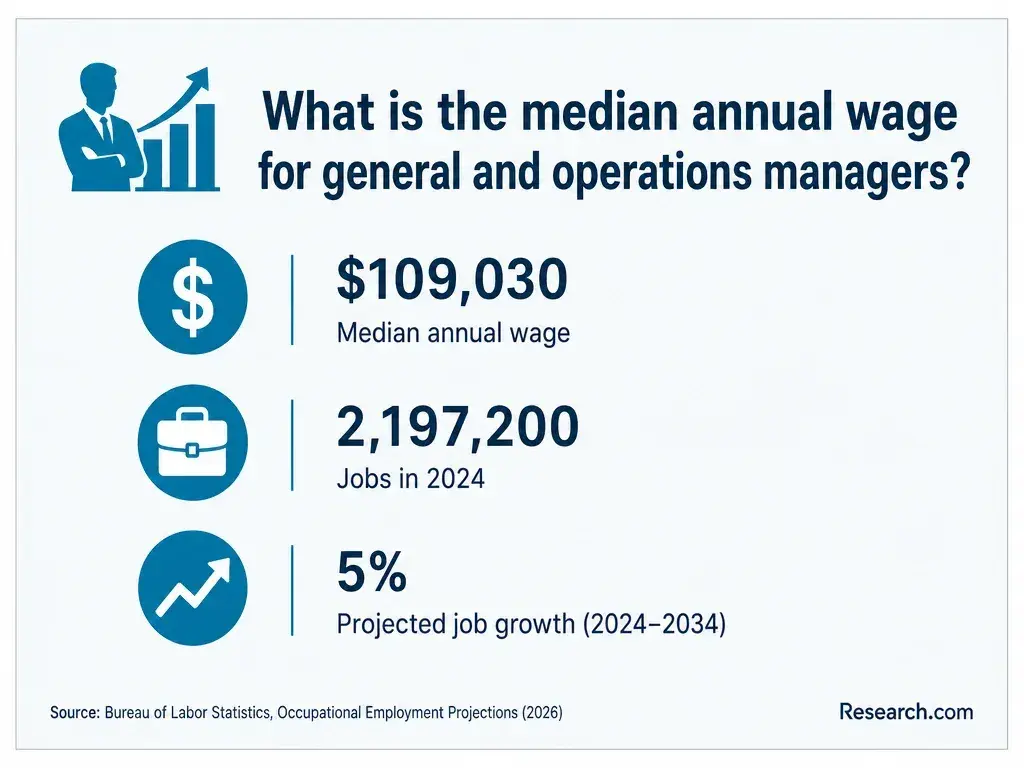
As one adjacent example, the U.S. Bureau of Labor Statistics reports a May 2025 median annual wage of $69,280 for training and development specialists. That is the median across people working in that occupation - not an entry-level offer or an expected return on this degree.
For a personal return-on-investment estimate, compare actual local job postings with your current compensation, then subtract the cost of finishing the degree and any earnings lost while studying.
If you are also considering a specialized project-management degree, financial aid packages for online project management bachelor's students are a separate comparison; aid eligibility does not establish that either degree will increase your pay. A promotion within a resource-constrained nonprofit may have a very different pay range from a transition to a larger employer.
Expect a general business core that may include financial and managerial accounting, economics, marketing, management, business law, statistics, finance, and operations.
For a volunteer coordinator, accounting and budgeting help with program costs; operations and analytics help with coverage and reporting; and organizational behavior helps with team practices. Check the actual catalog, since course requirements vary.
An HR or management concentration may add relevant depth, but an elective is not necessarily an official concentration. Before choosing one, ask whether its courses add credits, delay graduation, or replace electives you could use more effectively.
If you are comparing an HR-focused degree, human resources bachelor's residency and transfer rules may also change how much of your previous coursework applies.
Look for a capstone or approved workplace assignment that could address a real question, such as how to reduce unfilled volunteer shifts. Use only information your organization permits you to access and share. Employment in the setting does not automatically earn academic credit or authorize use of volunteer records.
Online and campus-based programs can lead to the same kind of business degree, but their day-to-day demands differ. Online courses may replace travel with discussion deadlines, recorded presentations, group meetings, or proctored exams.
Campus courses offer scheduled face-to-face contact but can conflict with evening events and other volunteer-coordination duties.
Ask each program for sample syllabi and the schedule of required courses, not just a statement that classes are "flexible." Check live attendance, group-project times, exam rules, campus visits, accessibility support, and whether required courses run often enough for your planned pace.
You can compare ranked online business schools in America as a starting point, but fit depends on the specific program's policies and your work schedule, not a ranking alone.
Requirements depend on whether you apply as a first-time student, a transfer student, or someone who already has a degree. Schools may request secondary-school records, previous college transcripts, and evidence that you meet their academic standards.
Admission to a university, entry to its business major, and application of prior credits toward graduation are separate decisions.
Gather transcripts and ask for a written evaluation showing which courses meet general education, business core, elective, and residency requirements. In particular, check how previous math, statistics, accounting, and economics work applies.
Business administration degree prerequisite planning can help you frame those questions, but the institution makes the final decision. Volunteer work may strengthen an application without replacing required academic coursework.
A bachelor's degree commonly requires about 120 semester credits, but your remaining time depends on the school's requirements, how prior courses apply, your course load, and when required classes are offered. An accelerated calendar does not necessarily reduce the number of credits or the weekly workload.
Build a completion estimate from a school-approved degree audit. Multiply the remaining billable credits by the applicable tuition rate, then add required fees, books, software, proctoring, and any travel.
Account separately for borrowing costs and reduced work hours. Online business administration program cost-and-time comparisons can help identify candidates, but an advertised total may not reflect your transfer evaluation or enrollment pace.
If an employer offers tuition assistance, confirm which courses qualify, when reimbursement arrives, and whether grades or continued employment affect payment. A lower eventual cost is not the same as being able to pay a tuition bill upfront.
No general business-administration license is required to earn the degree or work as a volunteer coordinator. Employers may value separate credentials for particular functions, but a business course or concentration does not automatically confer an HR certification, project-management credential, or professional license.
Choose any additional credential only after checking target job postings and the credential issuer's eligibility rules. If you are considering another bachelor's program instead, such as an HR-focused degree, its graduation requirements are a different question from certification eligibility.
For applicants comparing schools, colleges with no upfront application payment may reduce application expense, but that feature says nothing about professional credentials or total degree cost.
Check the institution's recognized accreditation before weighing price or speed. It is an important part of evaluating an academic credential, though it does not guarantee that credits will transfer to another school or that an employer will hire you.
Confirm the institution and program listed in its current records rather than assuming every online offering has the same status.
Business-specific accreditation from AACSB, ACBSP, or IACBE is a separate consideration. Verify the accreditor's actual scope and whether it covers the business program you intend to enter; do not confuse it with institution-level accreditation.
When you reduce tuition costs for a business degree, compare accredited options on remaining required credits and support as well as advertised price.
How can volunteer coordinators choose a reputable online business program?
Start with a target job description and a record of the responsibilities you already hold. Then request a degree audit, full cost estimate, required-course schedule, and sample assignment expectations from each school.
These documents reveal whether the program addresses a genuine skill or credential gap while fitting around recruitment cycles, events, and other work obligations.
Ask who advises transfer students, whether a current workplace project could qualify for a capstone, what approval it requires, and how career services support nonprofit-to-business transitions.
Ranked online business bachelor's completion routes can broaden your shortlist, but select a program only after comparing its verified requirements with your own credits, budget, and schedule. If a targeted course closes the gap at lower cost, it may be the better next step.
Other Things You Should Know About Business Administration
Possibly, if a school offers prior-learning assessment and accepts evidence of relevant learning. Work experience alone does not automatically award credit; ask what documentation and evaluation the school requires.
Describe your responsibilities and verifiable results: scheduling, training, partner communication, process changes, or budget support. Use figures only when you can substantiate them and share them without disclosing private information.
Ask your organization and instructor first. Remove identifying details where appropriate, follow data-use and confidentiality rules, and use a hypothetical dataset if permission is unavailable.
Compare the MBA's admissions requirements, cost, and intended career outcomes with shorter training or a specialized course. A second bachelor's degree or an MBA is not automatically necessary for advancement in volunteer management.
- Educational Attainment and Nonwage Labor Market Returns in the United States - PMC https://pmc.ncbi.nlm.nih.gov/articles/PMC10923559/
- Understanding U.S. Accreditation | EducationUSA https://educationusa.state.gov/understanding-us-accreditation
- Accreditation in the U.S. | ed.gov http://www.ed.gov/laws-and-policy/higher-education-laws-and-policy/college-accreditation/accreditation-in-the-us
- Fact Sheet #14A: Non-Profit Organizations and the Fair Labor Standards Act (FLSA) | U.S. Department of Labor https://www.dol.gov/agencies/whd/fact-sheets/14a-flsa-non-profits
- What adult learners should consider about online degrees | wisc.edu https://dcs.wisc.edu/blog/what-adult-learners-should-consider-about-online-degrees-2/
- Online Bachelor's Degree in Business Administration | Purdue Global https://www.purdueglobal.edu/degree-programs/business/bachelor-business-administration/
- Volunteer Coordinator | CU Online https://online.campbellsville.edu/career-outcomes/volunteer-coordinator/
- D'Amore-McKim School of Business | Northeastern University Academic Catalog https://catalog.northeastern.edu/undergraduate/business/
- BS in Business Administration | Online Bachelor's Degree | Capella University https://www.capella.edu/online-business-degrees/bs-business-program/bachelors-business-administration/
- Nonprofit Management (For Adult Students) | depaul.edu https://www.depaul.edu/academics/programs/nonprofit-management