2027 A Second BS in Business Administration After a Bachelor's in Public Administration: Credits, Cost, and Alternatives
Audited and Verified:
Our Editorial and Data Verification Process
Research.com uses government datasets, official education statistics and primary institutional information to support its career and degree guides. Our review process checks factual accuracy, occupational definitions, source dates and the requirements associated with the credentials discussed.
How This Article Was Fact-Checked
Our editorial team verifies salary estimates, employment projections, education requirements and program information against original data providers and official organizations. Salary figures are checked against the relevant occupational definitions and reporting periods. Information about licensure, accreditation and required in-person training is reviewed separately.
Fact-checked and verified on:

Co-Founder and Chief Data Scientist
A bachelor's in public administration may have given you experience with budgets, procurement, policy, and organizational work, but it may not provide the accounting, finance, or marketing preparation you want for a business role.
Before enrolling in a second BS in Business Administration, you need to know which prior courses will satisfy its requirements, what the remaining work will cost, and whether another qualification would serve your goal faster.
This guide helps public-sector professionals and career changers compare those choices using a degree audit, a realistic cost estimate, and the requirements of their target jobs.
Key Things You Should Know
- A completed public administration bachelor's may satisfy much of a second degree's general education, but only the receiving school can determine which credits meet its business core, concentration, and residency rules.
- Estimate cost from the courses still required, not from the program's advertised total tuition. Most students who already hold a bachelor's are ineligible for a federal Pell Grant, although other aid may be available.
- Choose a second BS when a target role calls for substantial undergraduate business preparation or a specific bachelor's credential. For a narrower skill gap, targeted coursework, an employer-approved project, or a graduate pathway may be more direct.
What Is a Second Business Administration Bachelor's Degree After Public Administration?
It is a separately awarded undergraduate degree earned after your public administration bachelor's, not a conversion of your first diploma. A BS in Business Administration generally combines a business core with any required electives, concentration, and applied work.
A BBA or BS in Management may cover similar subjects but can have different quantitative, major, and graduation requirements.
The potential value lies in filling an identifiable gap. Public administration can prepare you for government budgeting, accountability, and policy implementation; business study may add financial accounting, corporate finance, marketing, or commercial operations.
Neither degree automatically qualifies you to manage staff or move into the private sector. Guides to shorter routes to an online bachelor's can help you frame timing questions, but a second-degree student must obtain a school-specific evaluation rather than assume a standard first-degree completion route applies.
How Many Credits Transfer Toward a Second Business Administration Bachelor's Degree?
There is no dependable credit total without an official evaluation. The key distinction is between credits accepted by the school and credits applied to the second degree. Your transcript may clear general education requirements while leaving most of the business core unfinished.
Schools can also require a minimum amount of new coursework at their institution or limit how much of a second major may be fulfilled with prior courses.
The categories below show where a public administration graduate is most likely to encounter an unexpected requirement:
| Prior learning | What the school needs to determine |
| General education and electives | Whether the first bachelor's fulfills these requirements or whether specific courses remain. |
| Public budgeting, procurement, or administration | Whether course content matches a business requirement rather than counting only as an elective. |
| Economics, statistics, accounting, or mathematics | Whether content, level, grade, and any recency rule meet the business program's prerequisites. |
| Work or professional training | Whether a formal prior-learning process exists and which requirements, if any, an award can satisfy. |
Send official transcripts and, for possible business-course matches, syllabi to the transfer office. Ask the business adviser for a written degree audit showing the business core, concentration, electives, residency requirement, and remaining course sequence.
If a course is assigned only elective credit, request the school's substitution or appeal process before enrolling elsewhere. The same distinction matters when comparing colleges accepting credits toward human resources study: a credit accepted by an institution may not fulfill a specialized major.
How Much Does a Second Business Administration Bachelor's Degree Cost?
Your useful estimate is required remaining coursework × the applicable tuition rate, plus required fees and other expenses. Confirm whether the school charges by credit, course, term, or subscription period.
Then account for books, software, assessment fees, travel, and any courses needed before you can enter the major. A lower advertised tuition rate may not be cheaper if more courses are required or a needed class is offered infrequently.
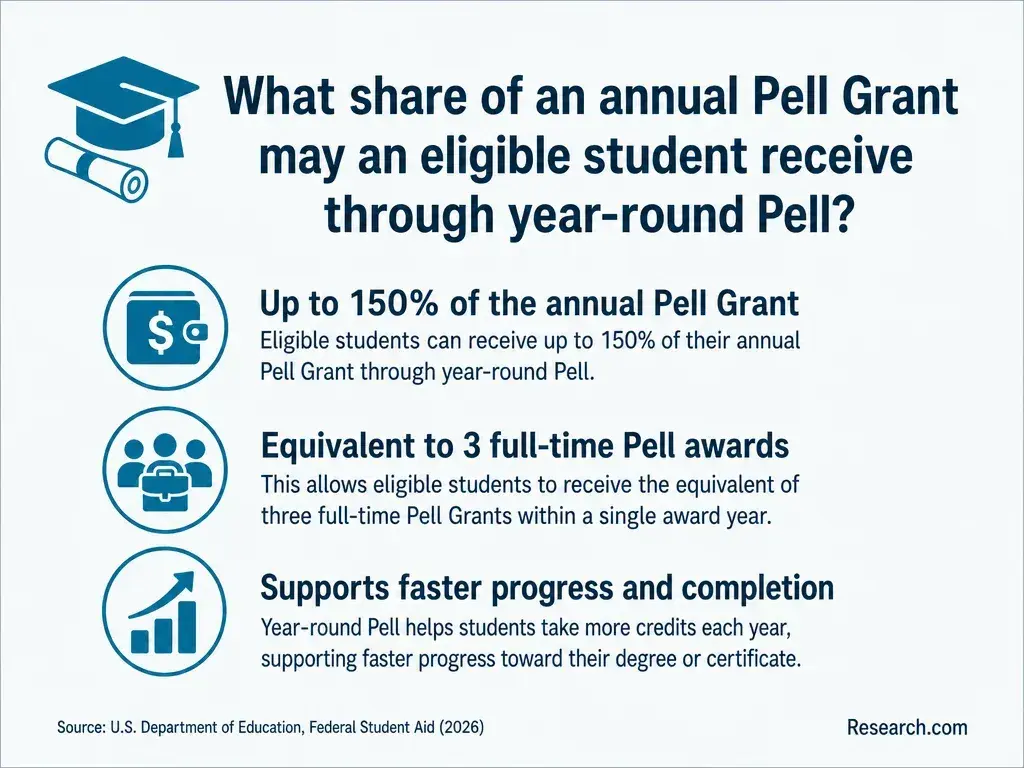
Request a financial-aid estimate for your status as a student who already has a bachelor's. Federal Pell Grants generally are not available for a second bachelor's; federal student loans may still be possible, subject to eligibility, borrowing limits, and satisfactory academic progress.
Ask an employer whether tuition assistance covers a second undergraduate degree, when reimbursement occurs, and whether grades or continued employment affect payment. When comparing affordable accredited business administration programs accepting FAFSA, remember that accepting the FAFSA does not mean every second-degree applicant qualifies for a grant.
Compare written estimates using the same remaining-credit assumption. Keep total cost, the cash you must pay before reimbursement, potential borrowing, and time away from paid work separate; each can change the decision.
Schools typically ask for an application and transcripts from previous colleges, but requirements vary. Admission to the university may be separate from admission to its business major.
A completed public administration degree does not necessarily waive a minimum GPA, quantitative prerequisite, or business-school application requirement.
Before applying, ask admissions and the business department whether they accept second-bachelor's applicants, which catalog will govern your degree, and when any accounting, economics, mathematics, or statistics prerequisites must be completed.
Submit syllabi when prior courses might qualify for equivalency; do not register for a replacement until the school rules on the original course. A guide to compare business administration admission prerequisites can help you prepare questions, but the prospective school's current requirements control.
Expect the audit to focus on the business core: commonly accounting, finance, marketing, management, economics, quantitative analysis, operations, and business law. The exact mix differs by school.
A public budgeting course, for example, may develop useful financial judgment without covering the financial statements required in a business accounting course.
Choose remaining electives around the job you actually want. Procurement or operations work may call for supply chain and process analysis; an HR transition may call for employment practices and workforce data.
If HR is your main goal, compare the BS curriculum with colleges accepting credits toward human resources study before assuming general business electives offer equivalent depth.
Check prerequisites and course rotation as carefully as credit totals. A required finance course may depend on accounting, and a capstone may be available only after the core. An approved workplace project can provide relevant evidence of skill, but current employment alone does not fulfill an internship or capstone requirement.
We recommend exploring no-application-fee online college choices for a seamless and cost-effective education journey.
Online delivery can remove a commute, but it does not guarantee control over your schedule. Ask whether classes have live sessions, proctored exams, fixed group meetings, presentations, internships, or campus visits. For a government employee with a fixed workday, or a caregiver, those obligations may matter more than the online label.
A campus program may be preferable if its evening classes, faculty access, or local recruiting fit your transition. An online program may work better if required courses are offered predictably and you can meet deadlines around work.
Compare the actual schedules of your remaining courses, not a sample first-year timetable. Use online business administration programs with work-compatible schedules as a starting point, then confirm live attendance, pacing, and leave policies with each school.
First, verify that the institution holds recognized institutional accreditation. Then check whether any advertised AACSB, ACBSP, or IACBE accreditation covers the relevant business school or program; institutional accreditation and business accreditation are different claims. Use the institution's and accreditor's own records to confirm scope rather than relying on an advertisement.
For a second degree, quality also means a dependable path to completion. Ask for a current course schedule, a written transfer evaluation, second-degree residency rules, access to advising, and any published outcomes with their cohort definitions.
A US online business college selection guide can help you assemble candidates, but no ranking replaces those program-specific checks.
Start with the qualification your target employer requires and the skills you cannot yet demonstrate. If a posting accepts a bachelor's in public administration or a related field, another undergraduate diploma may add less value than relevant business experience.
If it explicitly requires accounting coursework or a business degree, identify whether a few courses will suffice before committing to the full BS.
These alternatives solve different problems; they are not interchangeable credentials:
| Path | Potential fit | Main limitation |
| Targeted courses or certificate | A defined gap in accounting, analytics, marketing, or operations. | May not meet an employer's degree requirement. |
| Employer training or approved work project | Advancement where documented results matter more than another credential. | Access to projects and recognition of the work depend on the employer. |
| MBA or specialized graduate study | Graduate-level preparation when admission requirements and career goals align. | Cost, prerequisites, and expected work experience vary; it is not a substitute for every undergraduate prerequisite. |
| Second BS or a specialized bachelor's | A substantial undergraduate skill gap or a clearly stated degree requirement. | May require more credits and time than a narrower route. |
An accelerated business college program guide can help if the second bachelor's remains your best option. Verify that acceleration applies to your required courses; a shorter calendar does not eliminate credits or automatically reduce cost.
Your public administration background is particularly relevant to roles involving budgets, contracts, stakeholder communication, and regulated processes.
For a move into a business function, compare job duties with your actual experience: an operations or procurement role may be adjacent, while financial analysis or marketing research may require more substantial technical preparation. A degree can help establish knowledge, but employers may also expect spreadsheets, work samples, industry familiarity, and evidence of results.
For salary context, the U.S. Bureau of Labor Statistics reports a May 2025 median annual wage of $75,940 for human resources specialists. That is an occupation-wide median, not a starting salary or an earnings forecast for second-degree graduates; location, sector, and experience affect offers.
The BLS projects 6% employment growth for that occupation from 2025 to 2035, which describes national demand rather than an individual's hiring prospects.
If your aim is project coordination rather than broad business administration, compare the required skills and degree audit with credit mapping for online project management programs. A focused path is worthwhile only if its additional coursework and cost match the roles you intend to pursue.
Do Business Administration Careers Require Licenses or Certifications?
Many general business, operations, and administrative roles do not require an occupational license. Specialized work may be different: CPA licensure is governed by state accountancy boards, financial-services activities can require role-specific licenses, and HR or project management certifications have requirements set by their awarding organizations. A BS in Business Administration does not confer any of these credentials automatically.
Check the exact job posting and the relevant board or certifying organization before selecting courses. If a voluntary credential addresses your goal, compare its eligibility requirements and preparation cost with another degree.
If you still need undergraduate business education, investigate online business education on a smaller budget, but base the comparison on your audited remaining requirements, not the published tuition alone.
Other Things You Should Know About Business Administration
No. Both remain separately awarded credentials, subject to the institution's rules for conferring the new degree.
Usually, yes. Put the degree most relevant to the role first, and use your experience to show how the two fields connect.
Not without appropriate permission. Ask the instructor and agency about data-use, privacy, and intellectual-property rules; a public dataset or fictionalized case may be safer.
Yes, if that university admits second-degree students. Its own transfer evaluation, residency rules, and degree requirements will determine what you must complete there.
- Degree Credit and Residency Policy | SUNY Empire https://sunyempire.edu/policies/degree-credit-and-residency-policy.html
- College of Business Undergraduate Academic Programs | 2024-2025 University Bulletin https://2024bulletin.loyno.edu/undergraduate/business/academic-programs
- 10 Best Business Degrees for High Pay and Career Growth | Pace University New York https://www.pace.edu/news/best-business-degrees-undergrad-grad
- Is a second bachelor's degree worth it? | Strayer University https://www.strayer.edu/buzz/why-get-a-second-bachelors-degree/
- View Transfer Guide - AA - ECSU - Business Administration (BS) https://coursetransfer.northcarolina.edu/guide/2024-2025/551
- Pursuing a Second Associate's Degree? Read Up on What You May Qualify For. - Goldey-Beacom College https://www.gbc.edu/about/news/pursuing-a-second-associates-degree-read-up-on-what-you-may-qualify-for/
- College of Business Administration - Academic Catalog https://catalog.uic.edu/ucat/colleges-depts/business-administration/
- New Pathways to a College Degree: How Transfer Credits Save Time | University of Arkansas Grantham https://www.uagrantham.edu/blog/transfer-college-credits-online-pathways-degree/
- BSBA as a Second Bachelor's Degree | unomaha.edu https://catalog.unomaha.edu/undergraduate/college-business-administration/college-business-administration-bsba-second-bachelors-degree/
- What kind of aid am I eligible for as a second-degree student? | unc.edu https://studentaid.unc.edu/faq/what-kind-of-aid-am-i-eligible-for-as-a-second-degree-student/