2027 BS in Business Administration Curriculum: How to Evaluate Preparation in Construction Business Operations
Audited and Verified:
Our Editorial and Data Verification Process
Research.com uses government datasets, official education statistics and primary institutional information to support its career and degree guides. Our review process checks factual accuracy, occupational definitions, source dates and the requirements associated with the credentials discussed.
How This Article Was Fact-Checked
Our editorial team verifies salary estimates, employment projections, education requirements and program information against original data providers and official organizations. Salary figures are checked against the relevant occupational definitions and reporting periods. Information about licensure, accreditation and required in-person training is reviewed separately.
Fact-checked and verified on:

Co-Founder and Chief Data Scientist
A business administration degree may teach budgeting and management without preparing you to handle a construction bid, subcontractor agreement, or schedule change. If you want to work in construction operations, the curriculum matters more than the degree title alone.
This guide shows prospective students, tradespeople, and early-career employees how to examine courses, assignments, and field experience; compare a general business degree with more specialized study; and judge whether a program is worth its time and cost for their target role.
Key Things You Should Know
- Look for evidence that students apply accounting, procurement, scheduling, and contract concepts to construction scenarios - not merely take introductory business courses.
- Confirm whether construction courses form an official concentration, an elective cluster, or a separate degree, and whether required field experience is accessible to you.
- The U.S. Bureau of Labor Statistics reports a $102,320 May 2025 median wage and 7% projected 2025-2035 growth for project management specialists; these occupation-wide figures are not starting-pay estimates for graduates.
What Is a BS in Business Administration for Construction Operations?
It is an undergraduate business degree applied to the commercial decisions behind construction work: estimating costs, purchasing materials, coordinating vendors, tracking budgets, and communicating with owners and project teams. "Construction operations" may describe a formal concentration, a set of electives, or simply the work a graduate hopes to do. Check the catalog rather than assuming it appears on the diploma or transcript.
A general BS can suit someone who wants business flexibility or already has construction experience. A specialized construction management bachelor's may be the better fit when the goal requires substantial instruction in building methods, drawings, estimating, and field coordination. If finishing an existing business degree is the immediate priority, ranked online business bachelor's completion routes can provide options to investigate - but compare their actual construction coursework before choosing one.
What Does a Construction-Focused Business Administration Curriculum Include?
The useful question is how far a program moves beyond its business core. The following comparison separates broadly transferable courses from construction-specific applications and shows what to look for in assignments.
| Curriculum area | Business foundation | Evidence of construction application |
| Accounting and finance | Financial statements, managerial accounting, cash planning | Job-cost reports, bid assumptions, cash-flow timing, and cost-to-complete estimates |
| Operations and analytics | Process analysis, spreadsheets, forecasting | Schedule dependencies, labor and equipment constraints, and variance analysis |
| Procurement and law | Purchasing, negotiation, business law | Subcontractor selection, contract terms, change orders, and documentation |
| Management and communication | Teamwork, supervision, stakeholder communication | Coordination among owners, designers, suppliers, and field teams |
Ask whether these applications appear in required courses or only in electives that may not run when you need them. A supply chain pathway can deepen purchasing and logistics but may provide less instruction in jobsite coordination; three-year supply chain undergraduate degree routes are worth comparing if materials planning is your principal goal. Verify prerequisite chains and whether a construction-focused capstone is permitted.
How Do You Choose an Accredited Construction Business Degree Program?
First, verify the institution's recognized accreditation and the exact degree it awards. Then check whether any claimed AACSB, ACBSP, or IACBE business accreditation covers the relevant school or program; institution-level and business accreditation are different claims. If comparing a specialized construction management degree, examine its accreditation separately rather than assuming business-school recognition covers it.
Request the current catalog, a sample degree audit, required-course rotation, and the rules for internships or workplace projects. Ask who teaches construction-related courses, what students produce, and whether employers participate in supervised learning. Published employment outcomes are useful only if you know which graduates were counted and how the information was collected. Application cost is a separate consideration: you can apply to accredited online colleges for free at some institutions, but a waived fee says nothing about curriculum quality.
A strong curriculum should teach students to connect a project decision to its cost, schedule, contractual obligations, and people affected. For example, a material substitution is not just a purchasing decision: it can change delivery timing, specifications, documentation, and the amount the contractor may recover. Look for assignments that require students to explain assumptions and revise a plan when conditions change.
For operations roles, valuable evidence includes a documented estimate, a schedule with dependencies, a cost-variance explanation, or a subcontractor comparison that addresses more than the lowest bid. Students should also learn when to escalate safety, legal, or technical questions to qualified personnel rather than acting beyond their authority. Workforce planning matters on larger projects, but someone aiming primarily at recruiting or employee relations may find human resources degree planning basics more relevant than construction operations coursework.
Online delivery can work well for accounting, contracts, spreadsheets, and case analysis. Its limitation is not the screen itself but whether students can practice with realistic construction decisions, receive feedback, and gain appropriate exposure to how projects operate. A campus program is not automatically stronger; an online program with supervised industry work may provide better applied preparation than a campus program with little construction content.
Before enrolling, check live-session times, group assignments, exam rules, software access, and any site visits or internships. Working students should ask whether an existing job can be used for an approved project; employment alone does not earn academic credit, and employer records require permission to use. If speed matters, compare online colleges offering accelerated bachelor's with a realistic weekly workload and the availability of required construction courses.
Requirements depend on the institution and whether you apply as a first-year, transfer, or returning student. Check the published rules for transcripts, academic standing, mathematics preparation, and any separate admission process for the business major. Construction experience may strengthen an application or support a prior-learning review, but it does not automatically replace accounting, statistics, or degree requirements.
If you have college credits, request a written evaluation showing which ones satisfy general education, the business core, construction electives, and residency requirements. Someone switching from another field can use using existing credits in a human resources degree as a comparison point for transfer-friendly pathways, but only the construction program's registrar or transfer office can determine how those credits apply to its degree. Confirm the final plan with an academic adviser before relying on an estimated completion date.
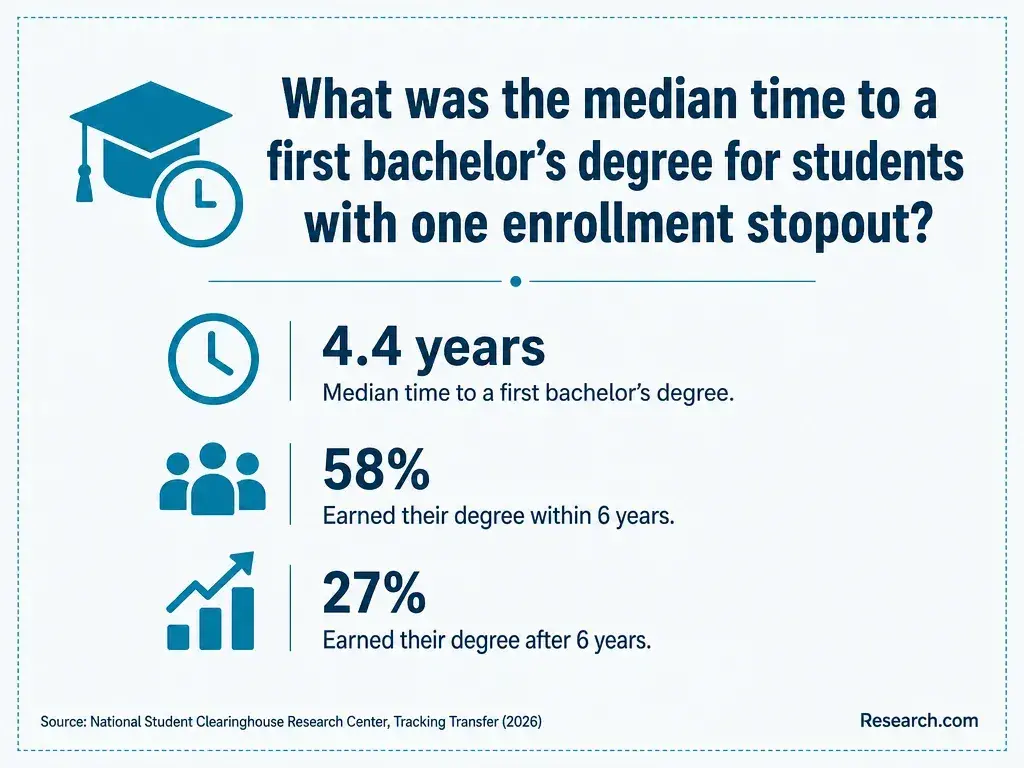
A bachelor's degree is commonly planned as four years of full-time undergraduate study, but your remaining time depends on accepted credits, how those credits apply, course sequencing, and enrollment pace. Construction electives offered infrequently can delay completion even when most business requirements are finished.
Compare schools using the cost of the courses you still need - not an advertised per-credit price alone. Include mandatory fees, software, books, travel or site visits, and any reduction in paid work. Ask whether aid applies to your enrollment pattern and whether an employer reimburses tuition only after a course is completed. Lists of low-tuition business administration schools accepting FAFSA can help identify candidates, but request a school-specific aid offer and degree audit before estimating your total cost.
The most direct starting points are project coordinator, purchasing assistant, estimating assistant, scheduling support, and construction office or operations coordinator. These roles may involve tracking documents, comparing supplier quotes, updating budgets, and helping experienced staff resolve handoffs. Actual job requirements vary; some employers place greater weight on field familiarity or technical estimating skills than on a general business degree.
Construction manager and senior project roles typically require demonstrated responsibility for projects, not just graduation. Tradespeople or construction employees may be able to pair existing field knowledge with business coursework to pursue broader operational duties.
Students without that background should seek supervised work and retain nonconfidential samples of their analysis. Faster-paced business degree study options may shorten the academic route, but they do not replace the project experience a target employer expects.
There is no single salary for graduates of this curriculum. As one relevant benchmark, the U.S. Bureau of Labor Statistics reports a May 2025 median annual wage of $102,320 for project management specialists and projects 7% employment growth from 2025 to 2035. The median covers workers across industries and experience levels; it should not be treated as an entry-level construction offer or a return guaranteed by a degree.
For a useful comparison, examine local postings for the specific role you can plausibly enter, including their experience and technical requirements. Set those opportunities against your remaining education cost and current earnings. Lower-tuition online business administration programs may improve the cost side of that comparison, provided their courses and applied opportunities address the work you want to do.
Do Construction Business Graduates Need Licenses or Professional Certifications?
A BS in Business Administration is an academic degree, not a contractor's license or a professional certification. Licensing rules depend on the state and the work performed; responsibility for regulated contracting or technical decisions cannot be inferred from a business transcript. Employers may value safety training or voluntary construction and project-management credentials, but each credential has its own eligibility and assessment rules.
Work backward from the job description: determine whether it calls for a license, training, a certification, or simply demonstrated experience. If you are considering a separate project management bachelor's instead of business administration, compare its curriculum and financing as well as its title; grants versus loans for project management bachelor's study explains a consequential funding distinction. Neither degree should be mistaken for automatic certification eligibility.
Other Things You Should Know About Business Administration
Usually, software familiarity is something to assess against the program's stated prerequisites, not assume. Ask which spreadsheet, scheduling, estimating, or drawing tools courses actually use and whether students receive access.
No. Business coursework can help a student understand the operational consequences of technical decisions, but it does not grant engineering authority. Refer design and other regulated technical judgments to appropriately qualified professionals.
They can. Public work may involve procurement, reporting, and contract conditions that differ from private work. If that is your target, look for coursework or supervised experience addressing the rules relevant to the agencies and roles you hope to serve.
Show the question, assumptions, method, and limitations. Use public or authorized information, remove confidential details, and label a classroom estimate or proposed plan as student work rather than a completed company result.
- Detail for CIP Code 52.0211 | ed.gov https://nces.ed.gov/ipeds/cipcode/cipdetail.aspx
- Bachelor's in Business Administration Concentrations | Purdue Global https://www.purdueglobal.edu/degree-programs/business/business-administration-concentrations/
- Business Administration, B.S. | School of Management https://catalog.nyit.edu/management/business_administration_bs/
- Bachelor's Degree in General Business - Construction Management - Lamar University https://www.lamar.edu/academics/degrees/general-business/general-business-construction-management-bachelors-degree.html
- Internship and Co-op Support - Careers | Coles College of Business https://campus.kennesaw.edu/offices-services/careers/students/internships-co-ops.php
- AACSB Global Standards for Business Education https://www.aacsb.edu/educators/global-standards
- Cost Management | pmi.org https://www.pmi.org/learning/library/cost-management-9106
- The Complete Guide to Construction Accounting | constructionexec.com https://constructionexec.com/article/the-complete-guide-to-construction-accounting/
- A Practical Guide to Financial Planning in Construction | cmicglobal.com https://cmicglobal.com/resources/article/construction-financial-management-guide
- What can you do with a business degree? | Go Construct https://www.goconstruct.org/faqs/construction-careers/what-can-you-do-with-a-business-degree