2027 Choosing a BS in Business Administration When You Have General Education Credit but No Business Courses
Audited and Verified:
Our Editorial and Data Verification Process
Research.com uses government datasets, official education statistics and primary institutional information to support its career and degree guides. Our review process checks factual accuracy, occupational definitions, source dates and the requirements associated with the credentials discussed.
How This Article Was Fact-Checked
Our editorial team verifies salary estimates, employment projections, education requirements and program information against original data providers and official organizations. Salary figures are checked against the relevant occupational definitions and reporting periods. Information about licensure, accreditation and required in-person training is reviewed separately.
Fact-checked and verified on:

Co-Founder and Chief Data Scientist
Having general education credit but no business coursework does not mean you must start a bachelor's degree from scratch. It does mean you need to find out whether your credits satisfy specific degree requirements - and how many business courses remain.
For transfer and returning students, that distinction can change the best school, first-term schedule, and total cost. This guide explains how to read a transfer evaluation, identify business prerequisites, and compare completion plans before you enroll.
Key Things You Should Know
- General education credit can shorten a BS in Business Administration, but accepted credits do not necessarily satisfy required courses; use an official degree audit to identify what remains.
- Having no business courses usually means completing the introductory prerequisites and business core, even if most general education requirements are met. Admission rules and course sequencing vary by school.
- Compare programs by credits applied to the degree, remaining required courses, course availability, and total cost - not by the number of credits a school says it will accept.
How Do General Education Credits Transfer to a Business Administration Degree?
A school first decides whether it will accept prior credit. It then decides where that credit applies in its BS in Business Administration: general education, a business prerequisite, the major, or a free elective. Only the receiving institution can make that determination for its degree.
The distinction matters most when your transcript contains courses with similar names but different content. This table shows what to look for in a transfer evaluation; the examples are possibilities, not promised equivalencies.
| Previous course | Possible application | What to verify |
| College writing | General education communication requirement | Whether the degree requires a particular writing course or grade |
| Statistics or mathematics | Quantitative general education or a business prerequisite | Whether the course meets the major's specific quantitative requirement |
| Social science | General education or elective credit | Whether economics must be completed separately |
| Other approved coursework | Electives | Whether elective space remains after all required courses are counted |
An AA or AS degree may satisfy a school's general education block under an articulation agreement, but the agreement's terms control. Applied associate degrees, quarter credits, exam credit, military learning, and older coursework may receive different treatment. Ask the transfer office for a course-by-course evaluation and the business adviser for an audit showing remaining requirements. If a course appears misclassified, submit its syllabus for a formal equivalency review rather than assuming an elective will substitute for it.
If your goal is specifically HR rather than broad business study, you can also investigate whether you could finish an HR bachelor's using previous college credits. Compare the two schools' actual degree audits before choosing between them.
What Is a Bachelor's Degree in Business Administration?
A BS in Business Administration combines general education with undergraduate study across business functions such as accounting, finance, marketing, operations, and management. Its breadth can suit a student who wants business preparation without committing immediately to one function. The BS label does not guarantee a particular amount of mathematics or analytics; compare course requirements rather than degree titles alone.
A BBA or BA in Business may cover similar ground, while a specialized bachelor's degree may devote more courses to one field. If you already know you want HR-focused coursework, a guide to studying human resources can help you assess whether that narrower route fits better. Check how your existing credits apply to each option: the academically closest degree is not always the quickest to finish.
How Many Business Courses Are Required for a BS in Business Administration?
There is no reliable universal course count. A student with completed general education but no business courses may still need introductory accounting and economics, the entire business core, upper-division business courses, electives or concentration courses, and a capstone. Schools also set minimum credits that must be earned through their own institution, sometimes including upper-division credits.
Ask for an audit that separates credits remaining from courses remaining. Then check prerequisites: an introductory course may be required before an advanced course that is offered only in certain terms. This sequence can extend your calendar even when your remaining credit total looks manageable.
Advertised bachelor's programs for faster completion are worth comparing only after you confirm that their business core, prerequisite sequence, and residency rules work with your transcript. A faster course schedule cannot remove requirements you have not met.
Admission to the university and admission to its business major may be separate decisions. A school may admit you as a transfer student while requiring a particular GPA, quantitative course, introductory business course, or additional application before you enter the major. Other programs allow students to begin the business sequence after enrollment. Having no previous business courses is therefore not, by itself, evidence that you are ineligible.
Start with official transcripts from every college attended. Ask admissions whether you can enter the BS directly, which prerequisites must be completed first, and whether any can be taken after enrollment. Ask the business department whether its requirements differ from the university's transfer requirements. For a closer look at entry conditions for prospective business administration students, compare the guidance with the current catalog of each school on your shortlist.
Choose the format that lets you complete the remaining business courses consistently. Online delivery can reduce travel, but it does not necessarily mean self-paced study. Some courses have live meetings, scheduled exams, group presentations, or fixed weekly deadlines. Campus courses may offer easier in-person access to classmates and local employers but create commuting and timetable constraints.
Request a sample schedule for the business core - not just general education courses you have already completed. Check whether required courses run online every term, whether exams are proctored, and whether an internship, capstone, or campus visit is mandatory. If scheduling is your main obstacle, shorter online bachelor's pathways in organizational leadership may be another option, provided their curriculum and transfer evaluation support your goal. Do not assume a different major will accept more of your credits.
A business core typically introduces financial and managerial accounting, economics, finance, marketing, management, operations, business law or ethics, and quantitative decision-making. Programs differ in whether statistics, spreadsheets, and information systems sit within the core or are separate prerequisites. Advanced courses often build on introductory work, so your first-term choices affect later enrollment.
If the school offers a concentration, confirm that it is an officially designated part of the degree rather than an informal set of electives. A supply chain concentration, for example, may be useful if you want deeper operations coursework; a specialized degree may be a better fit if that is your clear career target. You can compare accelerated supply chain bachelor's degrees, but check whether switching majors changes the treatment of your existing credits or adds prerequisites.
Your completion estimate should come from the approved degree audit and a term-by-term course plan, not the number of credits on your old transcript. Add the courses that remain after transfer evaluation, identify their prerequisites and availability, and decide how many you can take each term. Ask whether part-time enrollment changes your access to required courses or financial aid.
For cost, compare tuition and mandatory fees for remaining required coursework, plus books, software, proctoring, and any travel. Include the cost of a prerequisite that transfers as elective credit but does not satisfy the business requirement. When comparing ways to reduce tuition spending on an online business administration degree, use the same assumed course load and your school-specific audit for each estimate. A lower price per credit may not mean a lower completion cost if more courses remain.
Check the institution's current accreditation status with its accreditor and confirm that the accreditor is recognized by the U.S. Department of Education. Then check whether any claimed business accreditation - such as AACSB, ACBSP, or IACBE - covers the particular school and program you plan to enter. Institutional accreditation and business-program accreditation are different checks.
Accreditation alone does not tell you how prior credits will apply or whether aid will cover your planned schedule. After verifying the school, request its written transfer evaluation and ask its financial-aid office about your eligibility and enrollment plan. A comparison of accredited business administration programs and federal student aid can help build a shortlist, but confirm each school's current status and aid information directly.
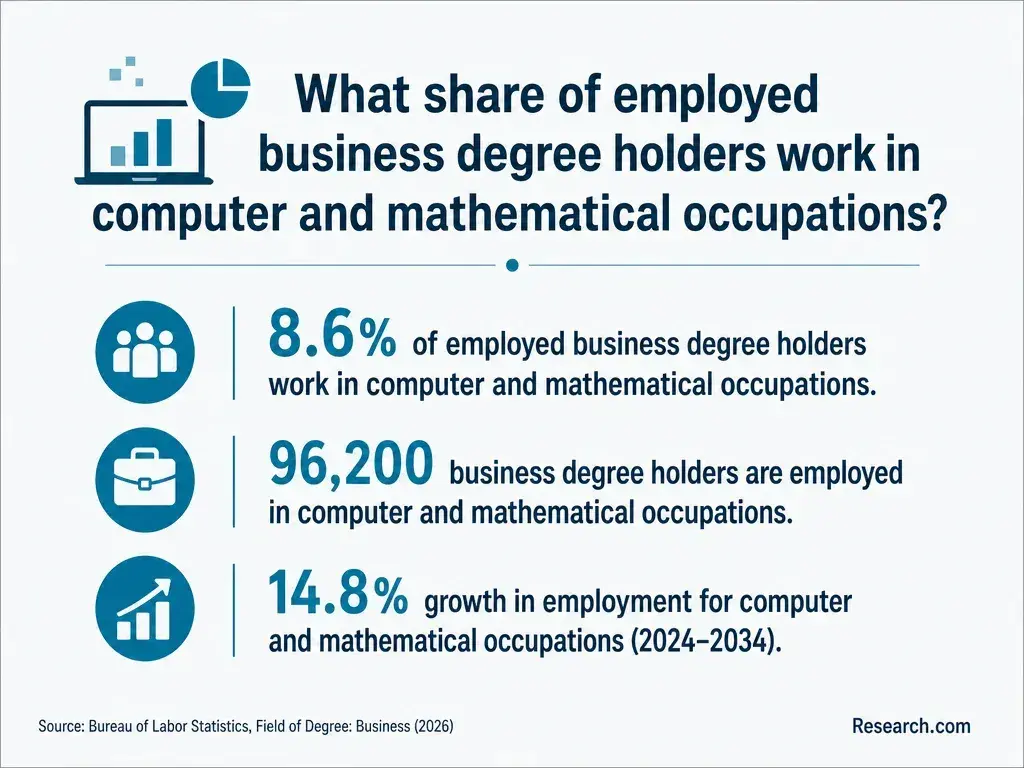
A broad business degree can support applications for coordinator and specialist-track roles in operations, marketing, HR, sales support, procurement, or project work. Your strongest entry point depends on experience you already have and evidence of relevant skills - not simply on the degree title. For example, customer-facing experience paired with marketing coursework may support a marketing coordinator application; spreadsheet and process work may be more relevant to operations support.
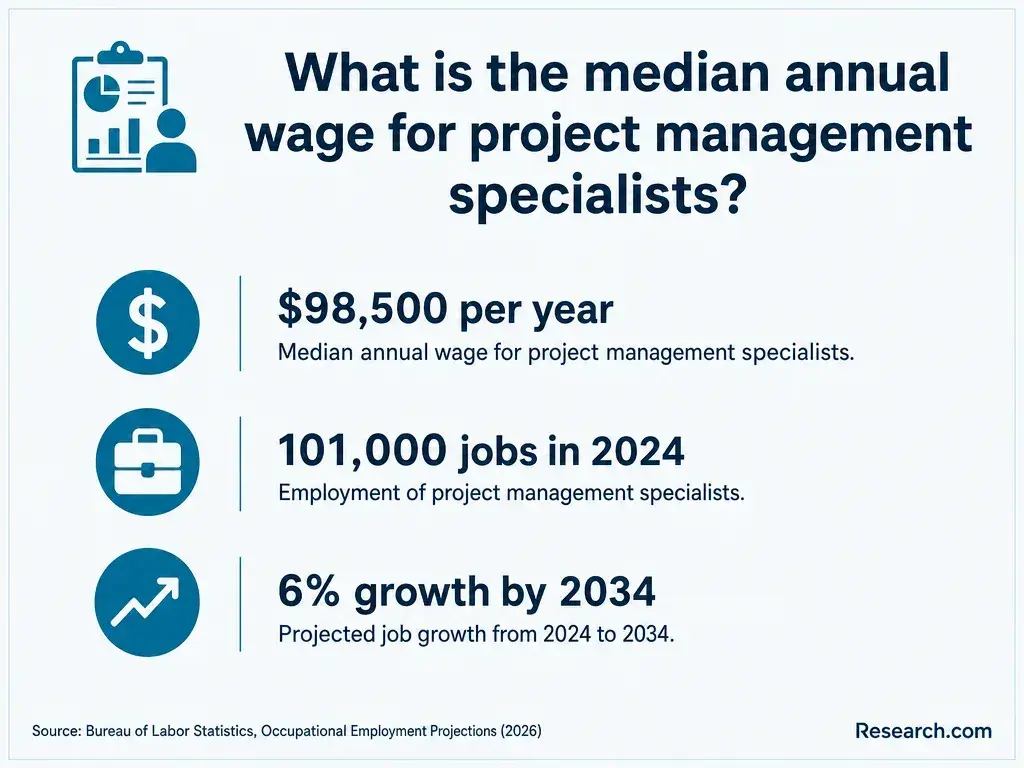
Use electives, supervised projects, or an internship to build work samples for a target function, while checking employer requirements for each job. A new graduate should not equate business coursework with qualification for a management position. If project work is your specific goal, online project management programs for smaller budgets offer a comparison point; weigh their specialized coursework against the flexibility of a broader business degree and your existing experience.
What Salary and Job Outlook Can Business Graduates Expect?
There is no single salary or growth rate for BS in Business Administration graduates: labor statistics describe occupations, not degree-wide outcomes. As one example, the U.S. Bureau of Labor Statistics reports a $75,940 median annual wage for human resources specialists in May 2025 and projects 6% employment growth from 2025 to 2035. The median covers workers across experience levels; it is not an expected starting salary for someone finishing a business degree.
For your decision, compare postings for realistic first roles in your location with the skills they request, then weigh that pathway against your remaining tuition, time, and borrowing. If you are considering a project-focused degree instead, investigate project management bachelor's tuition assistance options as part of its net-cost comparison. Neither a salary median nor available aid establishes your personal return on the degree.
Other Things You Should Know About Business Administration
Only if the school awards applicable credit through an approved prior-learning process or permits a documented substitution. Relevant work experience alone does not remove a degree requirement.
Possibly. Obtain written confirmation that each proposed course will meet a specific requirement at the destination school before enrolling, especially if it is meant to replace an upper-division course.
It may. Policies differ by institution and subject, so ask the transfer office whether the course has a recency restriction and whether its content still meets the intended requirement.
Ask about second-bachelor's rules before applying. A school may waive some general education requirements while still requiring its business core, residency credits, and a minimum amount of new coursework.
- Cost of Attendance (Budget) | 2025-2026 Federal Student Aid Handbook https://fsapartners.ed.gov/knowledge-center/fsa-handbook/2025-2026/vol3/ch2-cost-attendance-budget
- Accreditation in the U.S. | ed.gov http://www.ed.gov/laws-and-policy/higher-education-laws-and-policy/college-accreditation/accreditation-in-the-us
- Requirements | General Business | University of Baltimore https://www.ubalt.edu/schools-and-colleges/merrick-school-of-business/academics/explore-all-programs/bsba-general-business/requirements.cfm
- Tuition and Fees - Student Financial Services https://studentfinance.northeastern.edu/billing-payments/tuition-and-fees/
- Transfer Credit FAQ - KU Registrar's Office https://registrar.ku.edu/transfer-credit-faq
- What Is an Accredited University? Understanding Accreditation | National University https://www.nu.edu/blog/what-is-an-accredited-university/
- How Do Transfer Credits Work When You Go Back to School? | Whitworth Online https://online.whitworth.edu/news-articles/how-do-transfer-credits-work-when-you-go-back-to-school/
- Major vs. Minor vs. Concentration: What's the Difference? | snhu.edu https://www.snhu.edu/about-us/newsroom/education/major-vs-minor-vs-concentration
- Stony Brook University Transfer Credit Policies https://www.stonybrook.edu/credit-eval/policies.html