2027 A Second BS in Business Administration After a Bachelor's in Communication: Credits, Cost, and Alternatives
Audited and Verified:
Our Editorial and Data Verification Process
Research.com uses government datasets, official education statistics and primary institutional information to support its career and degree guides. Our review process checks factual accuracy, occupational definitions, source dates and the requirements associated with the credentials discussed.
How This Article Was Fact-Checked
Our editorial team verifies salary estimates, employment projections, education requirements and program information against original data providers and official organizations. Salary figures are checked against the relevant occupational definitions and reporting periods. Information about licensure, accreditation and required in-person training is reviewed separately.
Fact-checked and verified on:

Co-Founder and Chief Data Scientist
A communication degree can prepare you for client-facing work, but a move into finance, operations, HR, or another business function may expose gaps in your training. A second BS in business administration could fill them - if enough prior coursework applies and the remaining cost serves your career goal.
This guide is for communication graduates weighing that decision. It explains how to check credits and expenses, compare shorter alternatives, and identify the evidence you need from schools before committing.
Key Things You Should Know
- A second bachelor's usually preserves your first degree, but accepted credits do not necessarily satisfy the new business major; request a degree audit before estimating your finish date.
- yet second-degree residency, major, and prerequisite rules - not the total alone - determine what you still owe.
- If your target role mainly requires a specific skill or work sample, targeted courses or experience may cost less than another degree; compare the remaining degree cost with that narrower route.
Is a second bachelor's degree in business administration worth pursuing after communication?
It can be worth pursuing when your target roles consistently call for undergraduate business coursework you lack, and a school's official audit shows a manageable path to completion. Communication graduates may already bring writing, presentation, audience research, and stakeholder skills. The value of a second degree lies in what it adds: accounting, financial decision-making, operations, analytics, and other applicable business work.
Start with the job, not the credential. Moving from communications into marketing coordination may call for campaign measurement and a portfolio more than another bachelor's. Moving toward operations or finance may require a broader set of prerequisites and stronger quantitative preparation. A degree still will not substitute for function-specific experience or qualify you automatically for management.
Ask each school for the courses remaining after your communication degree is evaluated, then compare those courses with the roles you want. If speed matters, use resources on shorter undergraduate business programs across the US to identify programs to investigate - not as evidence that your own credits will produce the advertised timeline.
How many credits transfer into a second business administration bachelor's degree?
There is no reliable universal number. A school may accept much of your first bachelor's degree while still requiring its business core, a concentration, upper-level coursework, and credits earned at that institution. Some schools waive or recognize completed general education for second-degree students; others assess individual courses. Only the receiving institution can determine what applies.
The distinctions below explain why a large transfer-credit total can leave a substantial course load. Request a written evaluation that shows each category separately.
| Credit category | What a communication graduate should check |
| General education | Whether the prior bachelor's satisfies the requirement as a whole or courses are reviewed individually. |
| Business prerequisites | Whether prior statistics, economics, or quantitative courses meet the school's specific equivalents. |
| Business core and concentration | Which accounting, finance, management, and specialized courses still must be completed. |
| Electives | Whether accepted communication courses count only toward an overall credit total. |
| Residency and upper-level work | How much of the new degree must be earned at the awarding school and at the required course level. |
Send the transfer office official transcripts and, where requested, syllabi for potentially equivalent courses. Ask an adviser for a current-catalog degree audit and a term-by-term plan; appeal a questionable equivalency before enrolling in a duplicate course. If HR is your intended function, an HR bachelor's transfer credit evaluation can also help you compare whether a specialized degree applies more of your previous work.
What does a second bachelor's degree in business administration cost?
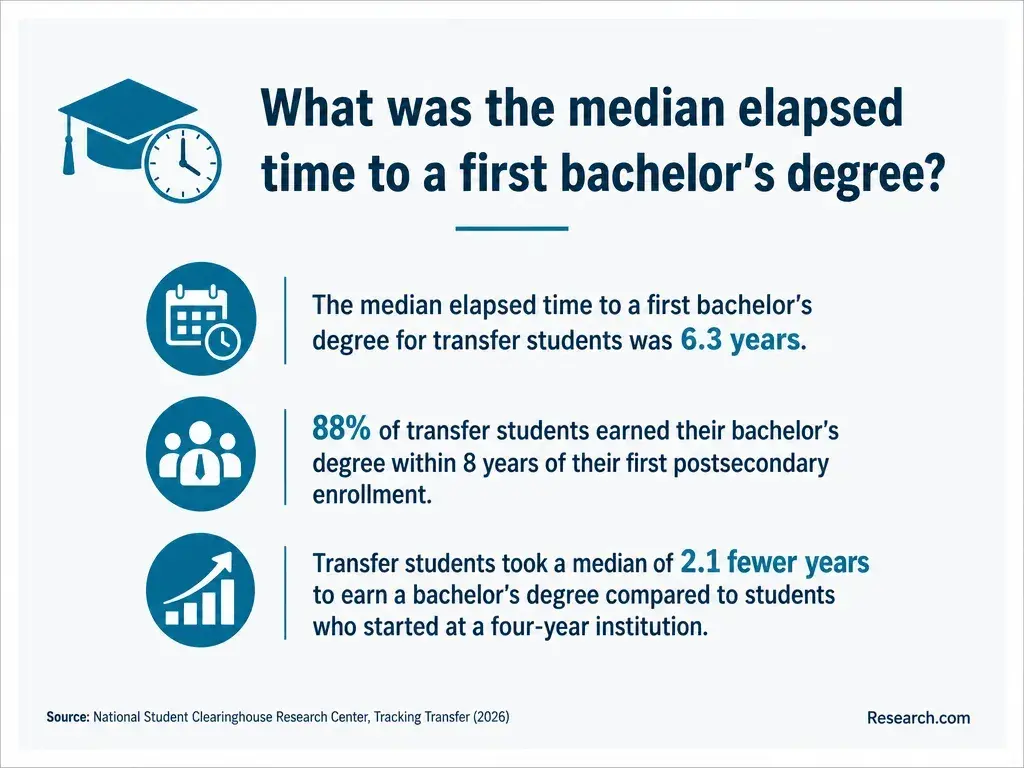
Your useful price is the cost to finish, not the advertised price of a full bachelor's program. Obtain the school's remaining-course plan and its charges for your intended enrollment terms. A lower per-credit price can still lead to a higher total if more courses are required or a needed class delays completion.
Compare schools using the same categories. The table separates costs that appear on a bill from costs that affect your budget outside it.
| Cost component | What to compare |
| Tuition and required fees | Charges for every remaining course or term, including online, technology, and graduation fees. |
| Course materials | Books, software, and any assessment or proctoring charges. |
| Attendance costs | Commuting or required campus visits, if applicable. |
| Financing and time | Loan interest, time away from paid work, and the effect of delayed required courses. |
A prior bachelor's generally makes a student ineligible for a federal Pell Grant; eligibility for federal loans depends on applicable aid rules and remaining limits. Ask the financial-aid office about second-degree eligibility, satisfactory academic progress, scholarships, and whether an employer pays upfront or reimburses after grades are posted. Use a business degree tuition comparison guide to shortlist schools, then replace published estimates with your own audited remaining credits and written aid information.
Choose the narrowest pathway that closes a demonstrated gap. Your communication degree already establishes that you hold a bachelor's; another undergraduate credential is most useful when the business curriculum itself is necessary for your goal.
The alternatives differ in depth, cost, and what an employer or graduate school will recognize. Match each to a target role rather than treating them as interchangeable credentials.
- Targeted courses or a certificate: Useful for gaps such as accounting, spreadsheets, or marketing analytics, but a certificate is not a second degree.
- Relevant work and projects: Useful when postings emphasize demonstrated campaign, customer, budget, or process results; seek permission before sharing employer data in a portfolio.
- A specialized bachelor's: Worth comparing if HR, accounting, or supply chain is the clear destination, provided its additional requirements and transfer evaluation make sense.
- Graduate study: An MBA or specialized master's may fit someone with appropriate experience and preparation, but admissions prerequisites, curriculum depth, and cost differ by program.
For example, someone committed to HR can compare business administration with the curriculum and requirements involved in choosing a degree in human resources. Someone already succeeding in communications may be better served by employer-supported analytics training than by repeating undergraduate general education.
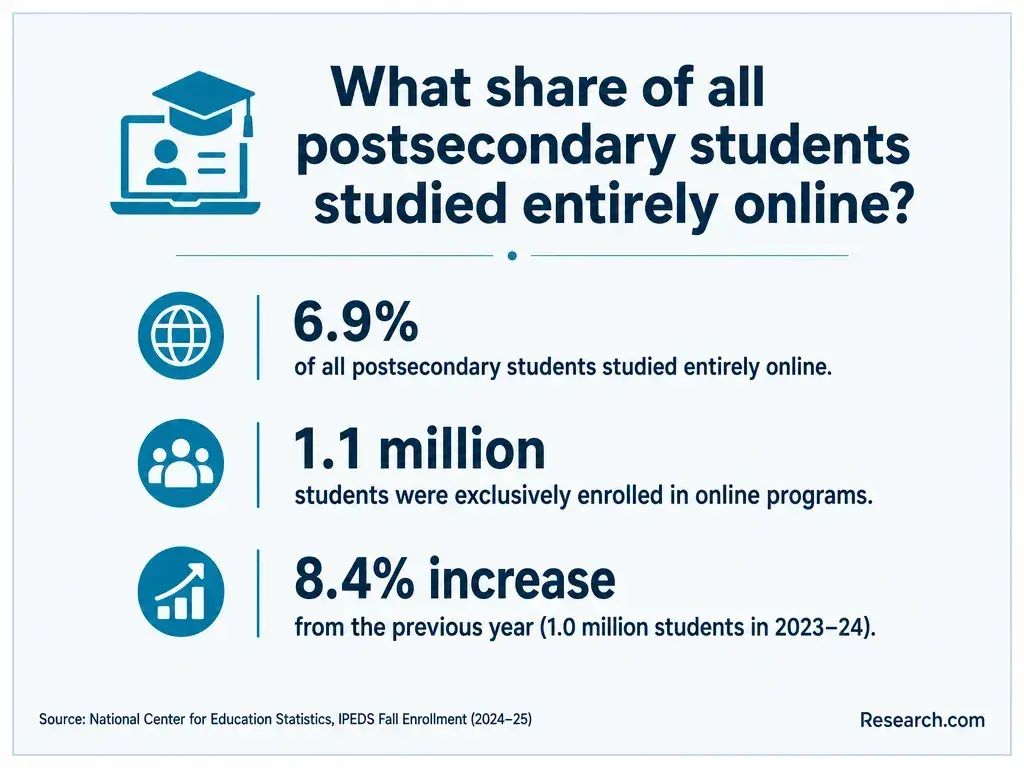
Choose the format that lets you complete the remaining required courses consistently. Online does not necessarily mean self-paced: classes may have live meetings, fixed deadlines, group presentations, proctored exams, or an in-person requirement. Campus study may offer easier access to classmates, faculty, and local recruiting but add commuting and scheduling constraints.
Request sample schedules for accounting, statistics, and the upper-level courses on your audit - not just a general program description. Confirm when required courses run, whether internships or capstones are mandatory, and whether career services serve second-degree and online students. For a working communication graduate, flexible online study for business administration career growth is a useful starting point, but the school's actual attendance and assessment policies should decide the fit.
Business administration programs commonly cover financial and managerial accounting, economics, finance, marketing, management, operations, business law, and quantitative analysis. Requirements and sequencing vary: introductory accounting or statistics may precede advanced courses, while a concentration may add specialized work. A communication graduate's earlier marketing or research course counts toward the business major only if the school approves the equivalency.
Compare the course list with your intended function. For operations, examine process analysis and supply chain offerings; for finance, look beyond an introductory finance course to its math and accounting prerequisites. If project coordination is the goal, compare the business degree's actual project coursework with project management undergraduate transfer pathways. An elective called "project management" does not by itself create a formal concentration or professional qualification.
First confirm that the institution admits applicants who already hold a bachelor's and that its business major accepts second-degree students. Applications commonly call for official college transcripts and proof of the first degree; a school may also set GPA rules or require business-major prerequisites. Admission to the university, admission to the major, and approval of transfer credit can be separate decisions.
Ask admissions which requirements must be met before entry and which can be completed during the program. Send the transfer office syllabi for courses you hope will meet math, statistics, economics, or other prerequisites. If you are considering an accelerated option, verify second-degree eligibility and course sequence before assuming its schedule applies to you; accelerated study schedules for business majors provide options to investigate, not a guaranteed finish date.
Check the institution's accreditation with the accreditor and confirm that the accreditor is recognized by the U.S. Department of Education or the Council for Higher Education Accreditation. Then check any claimed business accreditation - such as AACSB, ACBSP, or IACBE - in that accreditor's directory. Confirm the accredited unit's scope and ask whether the specific second-degree BS, its delivery format, and your campus or location are covered.
Institutional and business accreditation answer different questions; neither proves that your credits will transfer or that graduates obtain particular jobs. A list of ranked US college pathways in online business can help generate candidates, but verify accreditation and second-degree policies directly before applying.
Your first role after the new degree will depend on your existing communication work, business skills, and relevant experience. Marketing coordination or customer-facing operations may build directly on your background. HR, procurement, financial analysis, and project coordination may require additional technical preparation or evidence of work in that function. Supervisory roles generally require demonstrated responsibility beyond coursework.
For perspective, the U.S. Bureau of Labor Statistics reports a $78,760 median annual wage for market research analysts in May 2025 and projects 7% employment growth from 2025 to 2035. Those are occupation-wide figures - not starting pay, a return on a second degree, or evidence that every business graduate qualifies. If logistics appeals more than marketing, compare the required coursework and experience with online supply chain programs balancing cost and completion time before choosing a general business degree.
What certifications or licenses complement a business administration degree?
A voluntary credential can document a focused skill, but check its issuer's eligibility rules, exams, fees, and experience requirements. HR and project-management certifications, for example, are separate from a university's degree or concentration. A business administration BS alone does not award CPA licensure or a financial-services license; those pathways have distinct requirements set by regulators or credentialing bodies.
Choose a credential only after identifying the roles you will pursue and checking their requirements. If project work is your goal, compare a certification's eligibility and employer value with affordable online study routes in project management. That comparison may show that supervised project experience plus targeted preparation is more useful than another full bachelor's - or that a degree supplies coursework you genuinely lack.
Other Things You Should Know About Business Administration
No. Your first awarded degree remains part of your academic record. The school awarding the second degree determines how both appear on its transcript and diploma.
A school may recognize prior coursework toward requirements for the new degree, but its second-degree, minimum-new-credit, and residency rules control how it counts. Ask for the policy in writing.
Possibly, if the program permits it and approves the duties, supervision, and assessment in advance. Employment or past experience alone does not automatically earn internship credit.
Some schools allow nondegree enrollment. Confirm that the course will be available to you and will later apply to the intended degree; nondegree status may also affect financial-aid eligibility.
- Eligibility Requirements | Federal Student Aid https://studentaid.gov/understand-aid/eligibility/requirements
- Accreditation in the U.S. | ed.gov http://www.ed.gov/laws-and-policy/higher-education-laws-and-policy/college-accreditation/accreditation-in-the-us
- Fast Facts: Tuition costs of colleges and universities (76) | ed.gov https://nces.ed.gov/fastfacts/display.asp
- Student Eligibility for Pell Grants | ed.gov https://fsapartners.ed.gov/knowledge-center/fsa-handbook/2024-2025/vol7/ch1-student-eligibility-pell-grants
- Higher Education: Students Need More Information to Help Reduce Challenges in Transferring College Credits | U.S. GAO https://www.gao.gov/products/gao-17-574
- Second Bachelor's - UF Online - University of Florida https://ufonline.ufl.edu/apply/admissions-requirements/second-bachelors/
- Bachelor of Science in Business | GW School of Business https://business.gwu.edu/academics/programs/undergraduate/bsb
- Second baccalaureate - UC Admissions - University of California https://admission.universityofcalifornia.edu/counselors/preparing-transfer-students/second-baccalaureate.html
- What kind of aid am I eligible for as a second-degree student? | unc.edu https://studentaid.unc.edu/faq/what-kind-of-aid-am-i-eligible-for-as-a-second-degree-student/
- B.S. in Business Administration | sonoma.edu https://business.sonoma.edu/programs/undergraduate/bs-business-administration