2027 Can a BS in Business Administration Prepare You for a Warehouse Operations Manager Role? Skills and Entry Requirements
Audited and Verified:
Our Editorial and Data Verification Process
Research.com uses government datasets, official education statistics and primary institutional information to support its career and degree guides. Our review process checks factual accuracy, occupational definitions, source dates and the requirements associated with the credentials discussed.
How This Article Was Fact-Checked
Our editorial team verifies salary estimates, employment projections, education requirements and program information against original data providers and official organizations. Salary figures are checked against the relevant occupational definitions and reporting periods. Information about licensure, accreditation and required in-person training is reviewed separately.
Fact-checked and verified on:

Co-Founder and Chief Data Scientist
A warehouse operations manager must keep inventory moving accurately while coordinating people, equipment, safety, and costs. A BS in Business Administration can build useful management and analytical skills, but it does not replace experience on a warehouse floor. This guide is for students, warehouse employees, and career changers deciding whether the degree is a practical route into the role.
It explains what employers may expect, which coursework and credentials help, and when gaining operational experience first is the better move.
Key Things You Should Know
- A BS in Business Administration can support warehouse management, but employers may also expect direct experience with inventory, staff supervision, safety, and warehouse systems.
- For someone new to distribution, a coordinator, inventory, or shift-lead role is usually a more realistic first step than warehouse operations manager.
- The BLS reports a May 2025 median annual wage of $105,770 for general and operations managers; that broad occupational figure is not a starting salary or a warehouse-specific wage.
Can a BS in Business Administration Prepare You for Warehouse Operations Management?
Yes, as part of a broader pathway. A warehouse operations manager oversees some combination of receiving, storage, picking, packing, shipping, staffing, safety, and performance. Business administration coursework can help with budgeting, process design, data interpretation, and managing teams. The degree alone cannot demonstrate that you can resolve a shipment backlog, investigate inventory discrepancies, or lead a shift safely.
Your starting experience changes the value of the degree. If you already work in a warehouse, it may help you move from supervising daily tasks to planning labor, reporting results, and managing budgets.
If you are changing careers, seek a role that puts you close to warehouse workflows while you study. A specialized supply chain or operations program may offer more technical depth; business administration may offer broader options if your long-term interests include other management functions.
If coordinating improvement projects appeals to you more than running a facility, explore transfer-friendly undergraduate project management schools as a separate pathway, not an equivalent warehouse qualification.
What Skills Do Warehouse Operations Managers Need to Succeed?
The job combines physical-flow decisions with people management. Employers will look for evidence that you can use operational information to make a sound decision, communicate it, and check the result - not just name a business concept from class.
The strongest evidence usually connects a skill to a task you have actually handled:
- Inventory and systems: Reconcile counts, investigate discrepancies, and work accurately in a warehouse management system (WMS).
- Labor and leadership: Plan coverage, train employees, address performance problems, and coordinate across shifts.
- Safety and quality: Follow site procedures, respond to incidents, and reduce errors without sacrificing safe work practices.
- Analysis: Interpret measures such as order accuracy, throughput, labor hours, and on-time shipping before changing a process.
- Communication: Work with carriers, purchasing, customer service, and employees when priorities conflict.
Staffing responsibilities overlap with HR, but managing a warehouse team is not the same as becoming an HR specialist. If that people-focused function is your actual goal, online human resources programs for associate degree holders offer a more targeted comparison.
What Are the Entry Requirements for Warehouse Operations Manager Jobs?
There is no universal degree or certification requirement. Employers set qualifications according to facility size, goods handled, equipment, staffing, and the scope of the position. Some consider substantial warehouse leadership experience without a bachelor's degree; others prefer a degree alongside experience with inventory systems and supervisory responsibility.
Read a posting for the work it assigns, not just its title. A position directing several shifts and owning a budget calls for different evidence than one primarily coordinating a small team. If you have not worked in distribution, target inventory control, shipping, logistics coordination, or shift-lead opportunities and document the decisions you make.
A project-management degree is a different investment: affordable online study routes in project management may suit someone aiming to coordinate projects, but should not be mistaken for hands-on warehouse preparation.
Look beyond the degree title to the actual catalog. Operations and supply chain courses are especially relevant if they cover capacity, inventory, purchasing, and process flow. Managerial accounting can support cost decisions; statistics and spreadsheet work can support performance analysis; management and employment-related courses can help with staffing and communication. Information systems coursework is useful, though classroom software will not necessarily match an employer's WMS.
An official operations concentration may offer more focused study than a general elective, but verify its required courses, availability, and whether it adds time or cost. Ask whether you can complete a supervised inventory or workflow project using approved data. If a project-management degree is the alternative you are weighing, compare its complete financing - not just its course descriptions - using college aid options for project management bachelor's applicants.
It can be, particularly if you already have access to warehouse work and need to study around shifts. Online courses can teach accounting, analytics, and management concepts, while your job provides opportunities to observe operations. Online delivery does not, by itself, provide equipment experience, employer permission to use workplace data, or an internship placement.
Before enrolling, check live-session times, group assignments, exam requirements, internship rules, and whether required operations courses run when you need them. An accelerated calendar may clash with peak-season schedules even if classes are online. Compare workload and course sequencing - not just advertised completion speed - when reviewing bachelor's programs for faster completion.
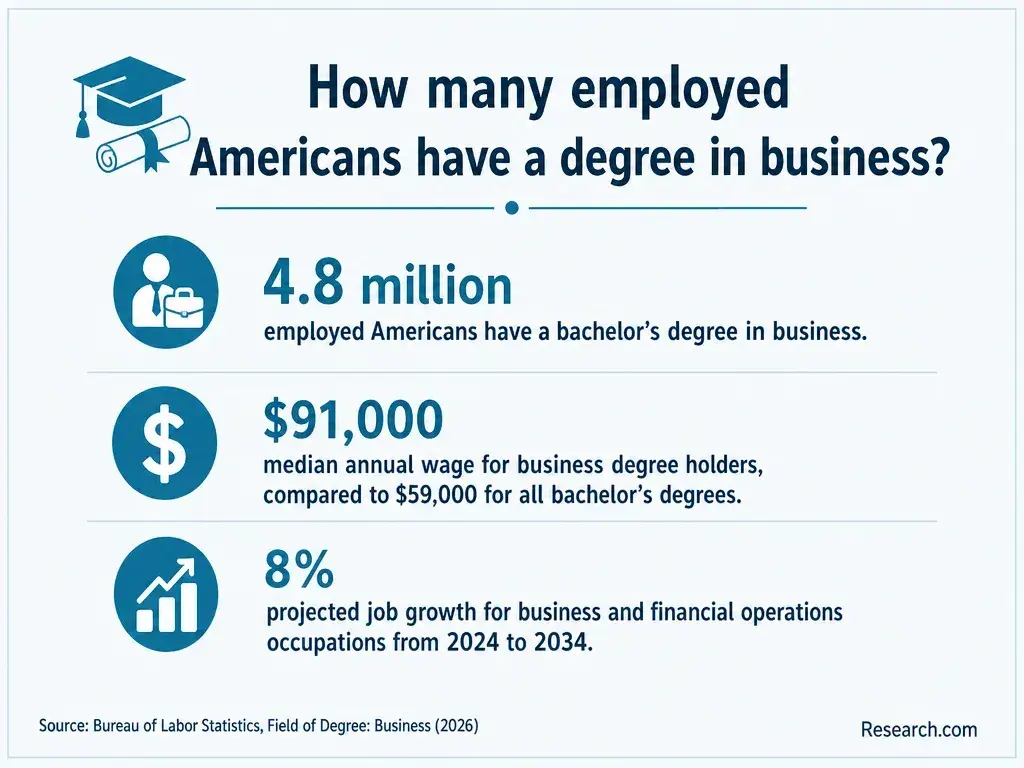
A bachelor's degree commonly takes about four years of full-time study from the beginning; part-time enrollment can take longer. Prior college credit may shorten the path, but only the receiving school can determine which credits satisfy general education, business, concentration, and residency requirements.
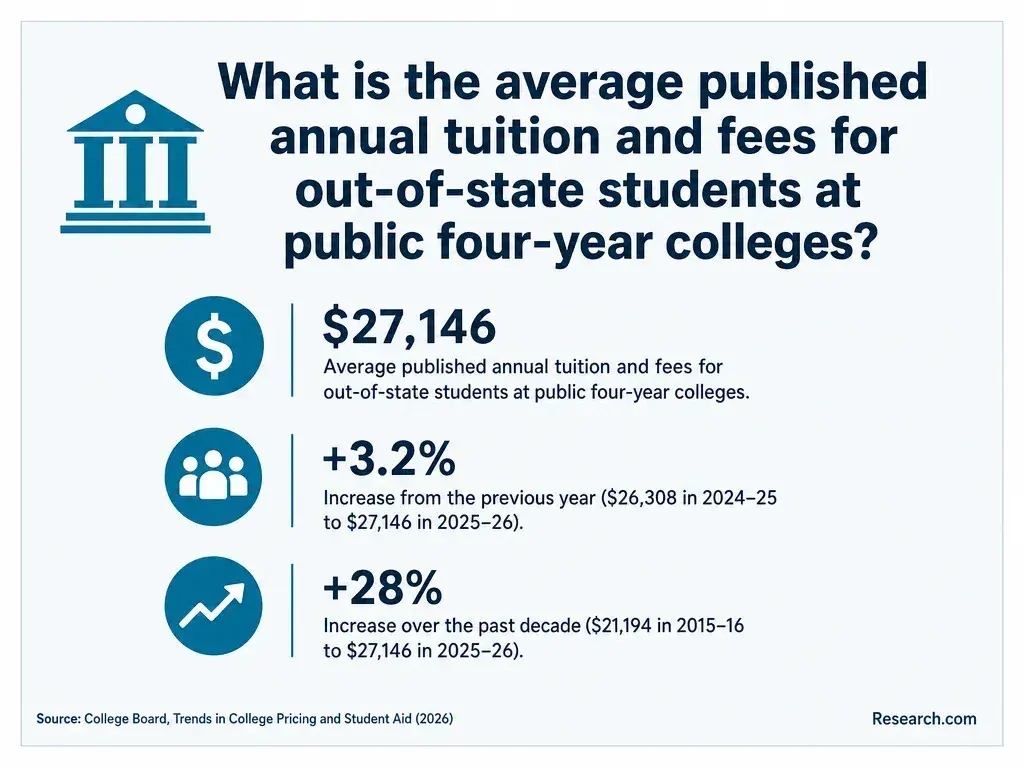
There is no reliable single price for this degree. Compare each school's tuition basis, required fees, remaining credits after an official evaluation, books or software, and likely time to finish. If you work in a warehouse, also weigh forgone wages or shifts against any employer education benefit. For a financing comparison, review FAFSA-accepting colleges for business administration students, then confirm your own aid eligibility and net cost with each school.
A relevant credential can supplement experience, but no single certification substitutes for managing warehouse work. Supply chain or inventory credentials may help if their content matches your duties. Process-improvement training may be useful when you can apply it to a documented workflow problem. WMS training is often most valuable when it concerns the system your employer actually uses.
Check prerequisites, assessments, renewal rules, and employer recognition before paying. Distinguish a voluntary professional certification from site-required safety or equipment training. If you are comparing a short credential with another degree, include the full educational cost; tuition and aid questions for project management students illustrate the kinds of costs to examine, although project management is a different career focus.
For this goal, the useful question is which role will let you build evidence for a later management application. Inventory control, receiving or shipping coordination, logistics coordination, and warehouse shift leadership can develop different parts of that record. A graduate with substantial distribution experience may qualify for broader supervisory openings; a graduate without it should not assume a management title is the next step.
Keep examples of improvements you helped make, the scope of any staff responsibility, and the systems you used, while respecting employer confidentiality. If you discover that hiring, employee relations, or training interests you more than inventory flow, compare that change in direction with human resources degree costs and options rather than assuming every business role requires the same preparation.
The Bureau of Labor Statistics does not provide a single wage figure that isolates every job titled "warehouse operations manager." The broader general and operations managers occupation had a median annual wage of $105,770 in May 2025, with employment projected to grow 5% from 2025 to 2035. That median includes experienced managers across industries; it is not a forecast for a new business graduate or a specific warehouse opening.
Compare local postings by responsibilities, shift, facility type, and experience requirements before using pay to justify a degree. Finishing sooner may affect when you can apply, but it does not assure higher pay; treat online undergraduate business rankings for shorter study paths as a starting point for checking total cost and realistic completion time, not expected earnings.
How Do You Choose an Accredited Business Administration Program?
Start by confirming the institution's recognized accreditation and the exact BS curriculum. Institutional accreditation and specialized business accreditation, such as AACSB, ACBSP, or IACBE, have different scopes; check whether any claimed business accreditation covers the program you would enter.
Then ask for an official transfer evaluation, a term-by-term plan, and evidence that relevant operations courses are offered often enough for your schedule. Ask who approves workplace projects, whether an internship is required, and what career support reaches distribution employers. You can compare accredited schools with no application charge, but assess curriculum, remaining cost, and access to operational experience before choosing one.
Other Things You Should Know About Business Administration
Not always. A manager who operates a forklift needs the employer's applicable training and evaluation; overseeing operators is a different responsibility. Check the job's duties and site rules.
Some reporting and planning tasks may be remote, but supervising floor operations usually requires a regular on-site presence. Confirm the schedule and location for each opening.
It can. Supervisors may need to follow a collective bargaining agreement when assigning work, scheduling, or addressing employee issues. Employer training and the agreement itself govern those decisions.
It may be highly relevant. Translate your experience into civilian terms: inventory accountability, personnel supervised, systems used, safety duties, and measurable responsibilities. Employers will still assess fit with their facility and operations.
- Safety Management - A safe workplace is sound business | Occupational Safety and Health Administration http://www.osha.gov/safety-management
- Warehouse manager | Explore careers | National Careers Service https://nationalcareers.service.gov.uk/job-profiles/warehouse-manager
- What Can You Do With a Business Administration Degree? | snhu.edu https://www.snhu.edu/about-us/newsroom/business/what-can-you-do-with-a-business-administration-degree
- Career Path for Business Operations Managers in the USA | Edgewood College https://online.edgewood.edu/blog/business-operations-manager-career-path-in-the-usa/
- How to Become a Business Operations Manager | GMercyU https://www.gmercyu.edu/academics/learn/become-operations-manager
- Operations Management Career Path | Roles, Skills & Salary | YSU https://online.ysu.edu/degrees/undergraduate/bsba/management/operations-manager-career-path/
- Warehouse manager | Prospects.ac.uk https://www.prospects.ac.uk/job-profiles/warehouse-manager/
- What Degree Do You Need to Be a Logistics Manager? | American Military University https://www.amu.apus.edu/area-of-study/business-administration-and-management/resources/what-degree-do-you-need-to-be-a-logistics-manager/
- How to Become a Warehouse Manager (With Salary, Skills, and Tips) | Indeed.com Canada https://ca.indeed.com/career-advice/finding-a-job/how-to-become-warehouse-manager
- What Training Do You Need to Be a Warehouse Manager? | Wonolo https://info.wonolo.com/what-training-do-you-need-to-be-a-warehouse-manager/