2027 Is an Online BS in Business Administration the Right Next Step for Customer Success Associates?
Audited and Verified:
Our Editorial and Data Verification Process
Research.com uses government datasets, official education statistics and primary institutional information to support its career and degree guides. Our review process checks factual accuracy, occupational definitions, source dates and the requirements associated with the credentials discussed.
How This Article Was Fact-Checked
Our editorial team verifies salary estimates, employment projections, education requirements and program information against original data providers and official organizations. Salary figures are checked against the relevant occupational definitions and reporting periods. Information about licensure, accreditation and required in-person training is reviewed separately.
Fact-checked and verified on:

Co-Founder and Chief Data Scientist
Customer success associates already practice parts of business administration: they communicate with clients, resolve problems, track accounts, and coordinate across teams. An online BS in Business Administration could help turn that experience into broader analytical and operational responsibility - but it may be more education than a specific next role requires.
This guide helps working associates compare the degree with targeted training, assess whether online study fits their schedule, and check the cost, credits, and career evidence before enrolling.
Key Things You Should Know
- An online BS in Business Administration is most useful when a target role calls for a bachelor's degree and broader skills in finance, analytics, operations, or management; it does not replace demonstrated customer success results.
- Evaluate the credits that will satisfy degree requirements, not just the credits a school accepts. A typical US bachelor's degree requires about 120 semester credits, but the school determines what remains.
- Do not use occupation-wide pay as a promised return: the US Bureau of Labor Statistics reports a May 2025 median of $78,760 for market research analysts, a distinct occupation that generally requires skills beyond customer success experience alone.
Is an online BS in Business Administration right for customer success associates?
Usually, it is a good next step when a bachelor's degree is a recurring requirement for the roles you want and your main gaps extend beyond customer communication. A BS in Business Administration offers broad undergraduate study across business functions. It can help an associate who wants to analyze retention, coordinate revenue operations, or eventually take on team and budget responsibilities. It does not, by itself, qualify someone to manage people or own a major account portfolio.
Start with the work you already do. Account notes, onboarding support, renewal preparation, product feedback, and issue escalation provide evidence of stakeholder communication and process knowledge. Compare that evidence with several actual job postings for your next role. If they chiefly ask for stronger CRM reporting or product expertise, a focused course, mentorship, and a documented workplace project may be a faster route than a degree.
The degree becomes more compelling if postings repeatedly require a bachelor's, you lack one, and you want mobility beyond customer success. Ask whether you can sustain coursework alongside peak renewal periods and whether your employer offers education assistance. For a comparison grounded in continued employment, review business administration degree planning for employed applicants, then verify each program's actual schedule and policies.
What careers can customer success associates pursue with a business administration degree?
The most realistic move depends on the responsibilities you can already document, not the degree title alone. This comparison separates adjacent moves from roles that normally require additional functional experience.
| Potential direction | Relevant customer success evidence | Gap to address |
| Customer success manager or account manager | Onboarding, relationship management, renewal support, and escalations | Account ownership, commercial judgment, and measurable retention work |
| Revenue or customer operations coordinator | CRM hygiene, workflow coordination, and recurring issue tracking | Spreadsheet analysis, reporting definitions, and process documentation |
| Marketing or customer insights coordinator | Customer feedback and knowledge of adoption barriers | Research methods, campaign measurement, and audience analysis |
| Project coordinator | Cross-team follow-up and implementation support | Schedules, scope control, risk tracking, and project documentation |
People-management roles generally require evidence of coaching, decisions, and results beyond an undergraduate credential. Human resources is a more substantial change: customer-facing communication transfers, but employment practices and HR systems must be learned separately. If that is the goal, compare human resources college study options with a general business degree before choosing a major.
How much does an online business administration degree cost and how long does it take?
There is no reliable single price or completion time for this decision. Schools may charge by credit, course, or term; your bill depends on the degree audit, enrollment pace, and fees. A typical bachelor's degree totals about 120 semester credits, but previously earned credits may satisfy some requirements while leaving business-core, upper-division, or institutional residency requirements unfinished.
For a useful comparison, request an itemized estimate showing remaining required credits, tuition, mandatory technology or proctoring fees, books, and any travel. Ask when required courses run, because a low per-credit price may not help if a missing course delays completion. Compare part-time study against a faster schedule without assuming acceleration reduces the total work or cost; online business bachelor's degrees with shorter timelines are worth considering only after checking how their calendars apply to your credits.
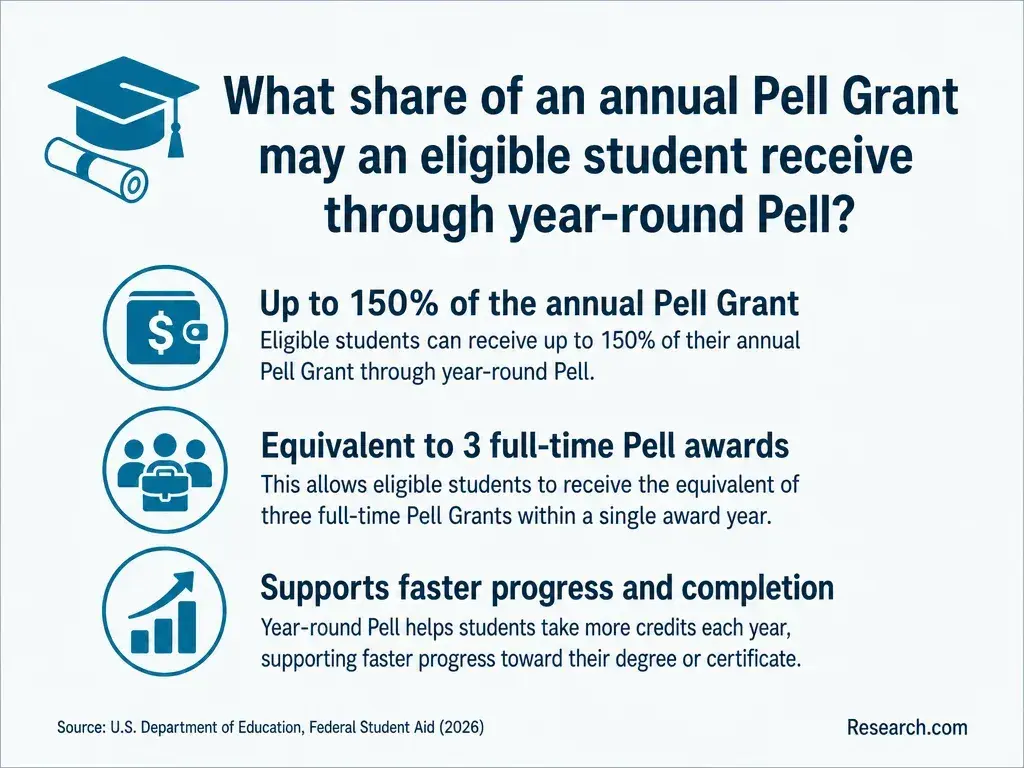
Separate sticker price from cash flow. Confirm federal-aid eligibility with the school, ask your employer when reimbursement is paid and what grades or continued employment it requires, and account for any borrowing. Aid availability is not a reason to choose an otherwise poor-fit degree.
Expect a general business core rather than a curriculum devoted to customer success. Accounting and finance can help you interpret costs and revenue; marketing can sharpen customer research; operations and management can support workflow improvement; and statistics or analytics can strengthen reporting. The exact depth, prerequisites, and electives vary by school. A BS, BBA, and specialized business bachelor's should not be assumed to have identical courses.
For a customer success associate, the strongest assignments connect those concepts to a decision: defining an onboarding measure, comparing reasons for support escalation, or mapping a handoff between sales and service. A classroom proposal is not proof that an employer implemented a change. Obtain permission before using customer records or proprietary metrics, and use anonymized or simulated data when approval is unavailable.
Choose electives by the next job's tasks. Analytics and information systems may fit operations roles; marketing research may fit customer insights. If your objective is primarily project delivery, compare the curriculum and total remaining cost of a specialized route, including lower-tuition online programs for project management, rather than assuming a general business elective provides equivalent depth.
Online delivery can remove a commute, but it does not necessarily make study self-paced. An online course may still require scheduled discussions, team meetings, presentations, proctored exams, or an internship. On-campus study may offer easier in-person recruiting and group collaboration, while creating travel and fixed-time demands that conflict with customer coverage hours.
Before choosing a format, obtain sample course schedules and ask about live attendance, weekly deadlines, group-work time zones, exam arrangements, campus visits, accessibility support, and leave policies. Check whether required courses are offered often enough for your planned pace. Online colleges offering accelerated bachelor's may provide a shorter calendar, but compressed terms can be a poor fit during a busy onboarding or renewal cycle.
Requirements vary by institution and by whether you apply as a first-year, transfer, or returning student. Schools commonly request prior academic transcripts and may set minimum academic-standing rules. Some admit students to the institution first and require separate eligibility for the business major; mathematics, accounting, or other courses may be prerequisites to particular upper-level classes rather than admission itself.
Collect transcripts from every college attended, then ask admissions which requirements apply to your applicant category and when any missing courses must be finished. Ask the business adviser separately about entry to the major and course sequencing. Professional experience can strengthen your account of your goals, but it does not automatically waive academic requirements. To prepare specific questions, compare business administration admission prerequisites before relying on a general admissions summary.
Work experience may qualify for an evaluation, but it is not automatically college credit. A school might offer a prior-learning assessment, portfolio review, approved examination, or evaluation of documented employer training. Its faculty and academic policies determine whether an award is made and whether that award satisfies the business core, an elective, or another requirement.
Ask the transfer or prior-learning office what evidence it accepts, what the assessment costs, and whether an award counts toward residency requirements. Suitable evidence might include training records, redacted process documentation, or a supervisor's verification of your responsibilities. Do not submit identifiable customer information or confidential account data.
Obtain an official degree audit before calculating time saved: accepted credit and credit applied to graduation requirements are different things. If project coordination experience is central to your comparison, you can also compare transfer policies at online project management colleges; each institution must evaluate your record individually.
First, confirm the institution's current accreditation and standing through its named institutional accreditor and the US Department of Education's accreditation information. Then check the exact business program: AACSB, ACBSP, and IACBE accreditation, when applicable, has a defined scope and should not be inferred from an unrelated program or a school-wide claim.
Ask the school for the official degree name, the unit awarding it, the accreditor's name, and confirmation that the online program is covered. Accreditation is an important quality and eligibility check, not proof of job placement or a particular salary. If federal aid is part of your plan, compare online business administration degrees accepting federal aid applications and confirm the specific institution and program's eligibility with its financial-aid office before applying.
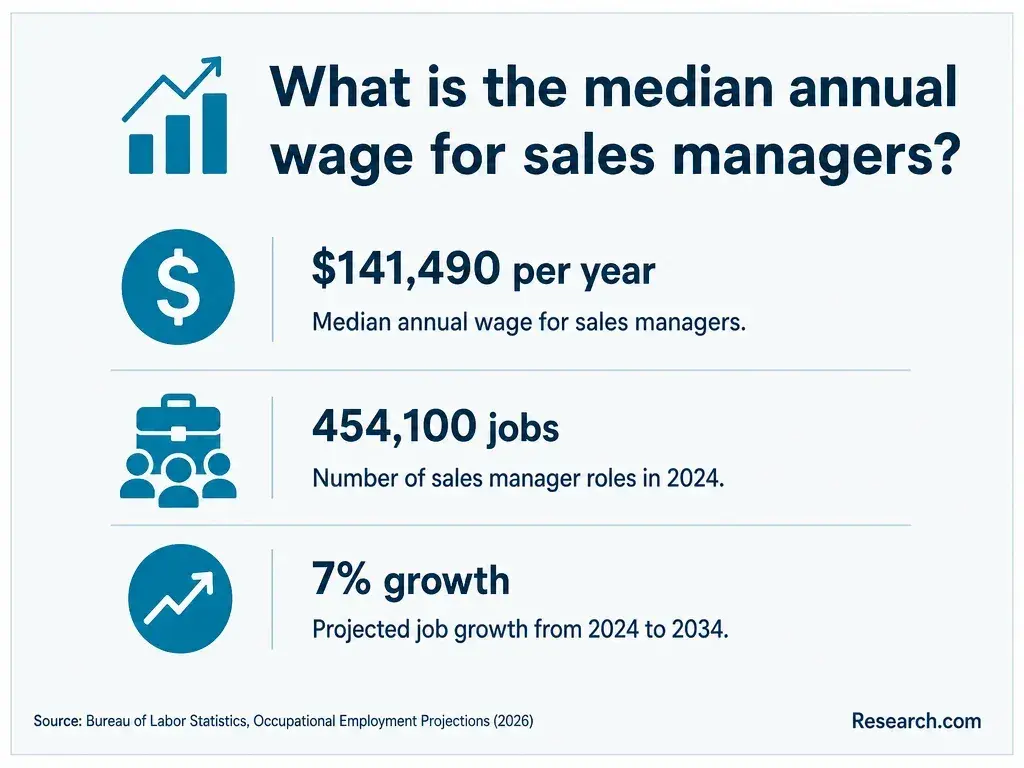
There is no single salary for a business administration graduate or a standard federal occupation called "customer success associate." Pay depends on the job's duties, industry, location, and experience. For one possible move into customer insights, the US Bureau of Labor Statistics reports a May 2025 median annual wage of $78,760 for market research analysts and projects 7% employment growth from 2025 to 2035. Those figures describe everyone in that occupation - not starting pay for customer success associates or outcomes attributable to this degree.
Use occupation data to assess a specific target role, then compare local postings with your skills. A move into supply chain analysis, for example, calls for different operational knowledge than customer success; supply chain bachelor's programs with compressed schedules would be a separate pathway to investigate, not an implied outcome of general business study. For your own return-on-investment estimate, use plausible job offers or employer pay bands, not an occupation-wide median as an expected raise.
Do customer success professionals need licenses or certifications after graduation?
Customer success roles generally do not require a government-issued occupational license. Employers may value training in their CRM, product, customer onboarding methods, data analysis, or project workflows, but a vendor certificate is not the same as a degree or evidence of job performance. Check job postings before paying for one.
Choose a credential to close an identified gap: product or CRM training for account workflows, analytical training for reporting, or a project credential only if its experience and exam requirements fit your work. Regulated work, such as licensed financial services or public accounting, has separate rules that a general business BS does not satisfy automatically.
If your target employer instead requires a bachelor's degree, a short certification will not substitute for that requirement; evaluate the degree's remaining time and cost rather than collecting unrelated credentials. If you are comparing a specialized project-management bachelor's, college aid options for project management bachelor's applicants can inform that separate cost comparison
Other Things You Should Know About Business Administration
Yes, if it is safe to do so. Ask which responsibilities would make you competitive for your next role and whether the employer offers scheduling support, mentorship, or education benefits. Keep any promise of promotion separate from a general expression of support.
Only with appropriate employer permission. Remove personal and proprietary information, follow company policies, and clearly label whether the work was proposed, completed, or implemented.
Neither title is inherently better. Compare required courses, useful electives, transfer applicability, and opportunities to demonstrate the skills your target roles request.
You do not need a permanent plan, but you should identify a plausible next role before committing to tuition. If that role's requirements remain unclear, review postings and seek relevant work assignments first.
- Accreditation in the U.S. | ed.gov http://www.ed.gov/laws-and-policy/higher-education-laws-and-policy/college-accreditation/accreditation-in-the-us
- What Can You Do With a Business Administration Degree? | American Military University https://www.amu.apus.edu/area-of-study/business-administration-and-management/resources/what-can-you-do-with-a-business-administration-degree-exploring-options/
- Is an Online Business Degree Worth It? | American College of Education https://ace.edu/blog/what-employers-think-about-online-business-degrees/
- Online vs Traditional Business Admin Degrees: What's Best? | UAGC https://www.uagc.edu/blog/online-vs-traditional-business-administration-degrees-whats-best-you
- Bachelor of Science in Business Administration Online | Arkansas State University Online https://degree.astate.edu/online-programs/undergraduate/bsba/
- Business Bachelor's Degree Programs Online | WGU https://www.wgu.edu/online-business-degrees/bachelors-programs.html
- Bachelor of Business Administration Online - AUM https://online.aum.edu/programs/online-bba/
- How to Break Into Customer Success in 2026 (Without Experience) - Aspireship https://aspireship.com/how-to-break-into-customer-success-without-experience/