
2027 What is the Highest Paid Phlebotomist Role?

Co-Founder and Chief Data Scientist
Phlebotomy can be a fast entry point into healthcare, but the pay ceiling depends heavily on where you work, what credentials you hold, and whether you move beyond routine blood draws into lead, laboratory, mobile, research, or supervisory roles. For professionals already in the field, the key question is not simply “How much do phlebotomists make?” but “Which phlebotomy jobs pay the most, and what steps actually increase earnings?”
This guide explains the highest-paid phlebotomist roles for 2027, the salary factors that matter most, the industries and states where pay tends to be stronger, and the career moves that can turn phlebotomy into a longer-term healthcare pathway. You will also find practical guidance on certifications, salary negotiation, hospital versus clinic work, technology trends, and transitions into higher-paying healthcare careers.
Quick answer: What are the highest-paid phlebotomist jobs?
The highest-paid phlebotomist roles are usually leadership, mobile, laboratory, and specialized collection positions. In 2024, phlebotomy supervisors can earn between $48,000 and $70,000 per year, while traveling phlebotomists can earn between $42,000 and $61,000. Laboratory phlebotomists commonly earn between $45,500 and $60,500. Pay is strongest when a phlebotomist combines experience, certification, flexible scheduling, specialized patient skills, and employment in higher-paying settings such as outpatient care centers, scientific research services, hospitals, or high-cost metropolitan areas.
Key Things You Should Know About the Highest Paid Phlebotomist Roles for 2027
- Leadership roles offer the clearest pay upside. In 2024, phlebotomy supervisors can earn up to $70,000 annually, especially in high-demand markets such as California.
- Work setting has a major effect on income. Phlebotomists in Outpatient Care Centers average $51,180 annually, while those in Scientific Research and Development Services average $49,390.
- Location still matters. States and metro areas with higher demand and higher living costs, including California, San Francisco, and New York City, often offer stronger compensation than many rural markets.
- Salary growth is expected to continue. Phlebotomist salaries are projected to increase by 15.35% between 2023 and 2027, moving from an average annual salary of $40,580 in 2022 to approximately $46,810 by 2027.
- Credentials can improve access to better roles. Certifications such as Certified Phlebotomy Technician (CPT) and Specialist in Phlebotomy (SP) can support movement into hospitals, laboratories, blood donation centers, and research environments.
- What is the average salary of a phlebotomist for 2027?
- What factors influence phlebotomist salaries for 2027?
- What is the highest paying phlebotomist role for 2027?
- Are phlebotomist salaries expected to increase in the next few years?
- Which industries pay the most for phlebotomists for 2027?
- What certifications can increase a phlebotomist’s salary?
- How does continuing education affect long-term phlebotomy careers?
- How can advanced online training improve phlebotomy earning potential?
- How can healthcare policy changes influence phlebotomist compensation?
- Which states offer the highest-paying jobs for phlebotomists for 2027?
- How should phlebotomists negotiate salary?
- How are new healthcare technologies changing phlebotomy jobs?
- How does hospital work compare with clinic work for phlebotomist pay?
- How can networking and mentorship help phlebotomists advance?
- Can phlebotomists earn extra income in related roles?
- What advancement paths are available for high-earning phlebotomists?
- How can phlebotomists move into better-paying healthcare careers?
- Is advanced education worth it for increasing phlebotomist salaries?
- Can an online AGNP program change a phlebotomist’s career path? Advanced education options Healthcare transition routes Other related career choices Steps to transition
What is the average salary of a phlebotomist for 2027?
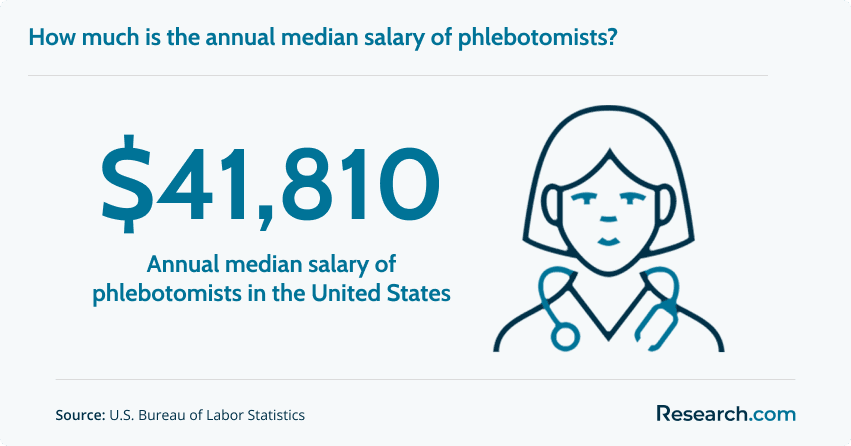
Phlebotomists collect blood samples for diagnostic testing, donations, transfusions, and research. In 2024, the average salary for a phlebotomist in the United States is approximately $41,810 per year. Entry-level jobs often begin around $35,000, while experienced phlebotomists in stronger labor markets or specialized settings can earn more than $50,000.
The average alone does not tell the full story. A phlebotomist working in a busy hospital laboratory, outpatient care center, research facility, or large metro area may have a different pay outlook than someone working in a small physician office or rural clinic. Shift differentials, overtime, travel assignments, and supervisory responsibilities can also change total compensation.
Phlebotomy remains attractive because it typically requires a shorter training period than many clinical careers. It can also serve as a first healthcare credential for people who want direct patient contact before deciding whether to pursue nursing, laboratory science, radiologic technology, or healthcare administration.
| Salary level | Typical 2024 figure | What it usually means |
| Entry-level phlebotomist | Around $35,000 | Newer workers, often in routine collection settings or lower-paying regions |
| Average phlebotomist | Approximately $41,810 | General national benchmark for phlebotomists in 2024 |
| Experienced or specialized phlebotomist | Upwards of $50,000 | More experience, stronger credentials, high-demand settings, or metro-area employment |
| Phlebotomy supervisor | Up to $70,000 | Leadership responsibility, staff oversight, workflow coordination, and compliance duties |
What factors influence phlebotomist salaries for 2027?
Phlebotomist pay is shaped by a combination of market conditions and individual qualifications. The most important factors are location, experience, certification, employer type, schedule flexibility, and the complexity of the patients or specimens handled.
Geographic location
Where a phlebotomist works can make a substantial difference. Large metropolitan areas, regions with high living costs, and markets with healthcare staffing shortages often pay more than smaller or less competitive labor markets. New York City and San Francisco are examples of metro areas where wages may be higher because employers compete for skilled healthcare workers and employees face higher living expenses.
Experience and certification
Experience improves speed, accuracy, patient communication, and confidence with difficult draws. Employers may also value documented credentials from recognized organizations. Relevant medical certifications can help applicants stand out for hospital, laboratory, blood bank, and outpatient center positions, particularly when employers require or strongly prefer certification.
Employment setting
Hospitals, diagnostic laboratories, outpatient care centers, mobile services, and research facilities may pay differently because the work differs. A clinic phlebotomist may perform routine collections on a predictable schedule, while a hospital phlebotomist may work with emergency, pediatric, oncology, or critically ill patients. Mobile phlebotomists may receive higher pay because they manage travel, scheduling, specimen integrity, and patient communication outside a fixed facility.
Education and career direction
Most phlebotomists enter the field through a postsecondary certificate or non-degree training program. Additional education can matter when the goal is advancement. Some workers use phlebotomy as a stepping stone toward laboratory technology, nursing, or operations roles. Those considering nursing may compare bridge to nursing programs, while those interested in management may eventually consider a healthcare administration degree.
Specialized patient populations and procedures
Employers may pay more for phlebotomists who can work safely with children, older adults, oncology patients, emergency department patients, difficult veins, or high-volume collection workflows. Specialized skills are especially useful in hospitals, research facilities, blood donation centers, and large outpatient systems.
| Salary factor | Why it affects pay | How to use it strategically |
| Location | Wages often rise in high-cost or high-demand markets | Compare pay against rent, transportation, taxes, and commute costs before relocating |
| Certification | Credentials show verified competency and may meet employer requirements | Choose certifications recognized by hospitals, labs, and employers in your state |
| Experience | Experienced workers handle higher volume, difficult draws, and patient concerns more effectively | Track performance, error reduction, training duties, and patient satisfaction examples |
| Employer type | Hospitals, outpatient centers, and research employers may pay differently | Apply beyond small clinics if your goal is higher compensation |
| Schedule flexibility | Nights, weekends, holidays, travel, and overtime may increase earnings | Ask whether shift differentials or travel reimbursement are available |
| Leadership duties | Supervisors manage staff, compliance, scheduling, and quality control | Volunteer to train new hires, document procedures, or assist with workflow improvements |
What is the highest paying phlebotomist role for 2027?
The highest-paying phlebotomy role in 2024 is typically phlebotomy supervisor, with salaries ranging from $48,000 to $70,000 per year. This role pays more because it combines clinical skill with management responsibility, quality assurance, scheduling, compliance, and staff training.
| High-paying role | 2024 salary range | Why it pays more | Best fit for |
| Phlebotomy Supervisor | $48,000 to $70,000 per year | Oversees staff, workflow, quality standards, training, and protocol compliance | Experienced phlebotomists with leadership ability and strong documentation habits |
| Traveling Phlebotomist | $42,000 to $61,000 per year | Requires mobility, independent judgment, scheduling flexibility, and specimen-handling reliability | Phlebotomists comfortable working across patient homes, facilities, and mobile sites |
| Laboratory Phlebotomist | $45,500 to $60,500 per year | Involves lab workflows, specimen processing, quality control, and collaboration with diagnostic teams | Workers interested in laboratory operations and possible advancement into MLT or MLS roles |
These roles are not automatically available to every phlebotomist. Employers usually look for reliable collection skills, low specimen rejection rates, strong patient communication, knowledge of safety procedures, and the ability to work accurately under pressure. Certification and documented training experience can make a candidate more competitive.
Are phlebotomist salaries expected to increase in the next few years?
Phlebotomist salaries are expected to rise over the next several years as diagnostic testing, preventive care, outpatient services, and healthcare staffing needs continue to support demand for trained collection professionals.
Historical salary growth
Between 2018 and 2022, the average annual income for phlebotomists increased by 16.91%, moving from $34,710 to $40,580.
Projected salary growth
From 2023 to 2027, phlebotomist salaries are expected to grow by approximately 15.35%, reaching an average of $46,810 by 2027.
Employment outlook
The U.S. Bureau of Labor Statistics projects 8% employment growth for phlebotomists from 2023 to 2033, which is faster than the average for all occupations.
Phlebotomy is one of several healthcare support paths that can lead to stable employment. If you are comparing administrative and clinical support careers, Research.com also explains the pros of medical billing and coding, including how that path differs from patient-facing roles.
Which industries pay the most for phlebotomists for 2027?
Industry choice can affect compensation as much as job title. According to the U.S. Bureau of Labor Statistics, the top-paying industries for phlebotomists in 2024 include outpatient care, scientific research, relief services, residential care, and state government.
| Industry | Average annual wage | What to consider before applying |
| Outpatient Care Centers | $51,180 | Often high-volume and efficiency-focused; may offer strong pay without overnight hospital schedules |
| Scientific Research and Development Services | $49,390 | May require careful specimen handling, protocol adherence, and research documentation |
| Community Food and Housing, and Emergency and Other Relief Services | $48,390 | Can involve community-based work, variable patient needs, and mission-driven service environments |
| Residential Intellectual and Developmental Disability, Mental Health, and Substance Abuse Facilities | $48,330 | Requires patience, communication skill, and comfort working with specialized populations |
| State Government, excluding schools and hospitals | $47,990 | May offer structured benefits, public-sector hiring processes, and formal qualification requirements |
When comparing industries, do not focus only on hourly wage or annual salary. Consider benefits, schedule stability, overtime rules, commute time, staffing levels, training support, and whether the role builds experience that helps you move into leadership or another healthcare occupation.
What certifications can increase a phlebotomist’s salary?
Certifications can improve a phlebotomist’s marketability by showing employers that the worker has met recognized training or competency standards. A certification does not guarantee a raise, but it can help with hiring, promotion, specialty roles, and eligibility for employers that require credentialed staff.
| Certification | Common issuing organization | How it may support higher pay |
| Certified Phlebotomy Technician (CPT) | Organizations such as the National Healthcareer Association (NHA) | Widely recognized credential that can strengthen applications for hospitals, outpatient care centers, and larger healthcare systems |
| Phlebotomy Technician Certification (PBT) | American Society for Clinical Pathology (ASCP) | Respected in laboratory environments and useful for candidates targeting diagnostic or research settings |
| Registered Phlebotomy Technician (RPT) | American Medical Technologists (AMT) | Highlights hands-on experience and patient care skills for employers in specialized healthcare environments such as those described by specialized healthcare environments |
| Certified Donor Phlebotomist (CDP) | American Society for Clinical Pathology (ASCP) | Supports work in blood donation, donor collection, and transfusion-related settings |
| Specialist in Phlebotomy (SP) | American Society for Clinical Pathology (ASCP) | Can support advancement in hospital laboratories, research facilities, and higher-complexity specimen workflows |
| Certified Phlebotomist Instructor (CPI) | Organizations such as the National Phlebotomy Association (NPA) | Useful for experienced phlebotomists who want to train students or new employees |
| Advanced Phlebotomy Certification | Multiple credentialing agencies | May demonstrate skill with complex venipuncture, patient care, and specialized collection techniques |
How does continuing education affect long-term phlebotomy careers?
Continuing education helps phlebotomists stay current with safety standards, specimen handling procedures, patient communication practices, and technology used in healthcare settings. It can also make a worker more adaptable if employer expectations change or if the phlebotomist wants to move into a broader clinical role.
Cross-training can be useful when it matches a realistic career goal. For example, a phlebotomist who wants more exposure to medication workflows or pharmacy operations might review an online pharmacy technician course. The best choice depends on whether the additional training leads to a defined role, employer requirement, or advancement path rather than simply adding another credential.
How can advanced online training improve phlebotomy earning potential?
Online training can help working phlebotomists add skills without leaving their jobs, but the payoff depends on program quality, accreditation, employer recognition, and relevance to the role. Courses in leadership, specimen processing, patient safety, medical terminology, laboratory operations, and healthcare technology can be more practical than broad programs with no clear connection to phlebotomy advancement.
Flexible learning may be helpful for phlebotomists balancing shifts, family responsibilities, and career planning. When comparing options such as accredited self-paced online colleges, check whether credits transfer, whether the credential is recognized by employers, and whether the coursework supports a specific next step such as supervisor, instructor, laboratory technician, or nursing student.
How can healthcare policy changes influence phlebotomist compensation?
Healthcare policy can indirectly affect phlebotomist pay by changing reimbursement pressures, staffing expectations, documentation requirements, and compliance responsibilities. Employers that face stricter quality or safety requirements may place higher value on trained, certified, and dependable phlebotomy staff.
Policy changes also reinforce the importance of career flexibility. A phlebotomist planning for long-term advancement may eventually consider nursing, leadership, or advanced clinical education. Programs such as DNP online options are not direct phlebotomy credentials, but they illustrate how further education can support advanced clinical leadership for professionals who later move into nursing pathways.
Which states offer the highest-paying jobs for phlebotomists for 2027?
State-level pay varies by employer demand, cost of living, healthcare system size, and local labor market conditions. As of 2024, the following states are listed among competitive options for phlebotomists seeking higher pay:
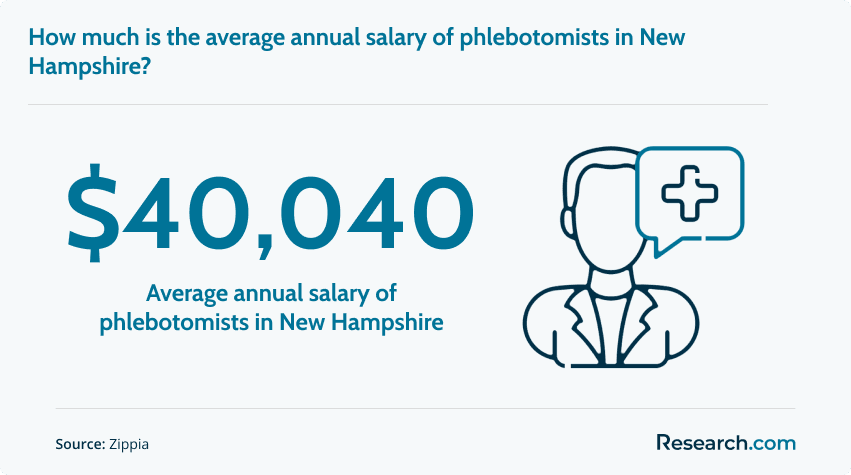
- New Hampshire: Average annual salary of $40,040
- Massachusetts: Average annual salary of $41,084
- Connecticut: Average annual salary of $39,809
- Washington: Average annual salary of $39,644
- Minnesota: Average annual salary of $37,518
These averages should be used as starting points, not final answers. A certified phlebotomist with strong experience may earn more than the state average, while a new worker in a lower-paying setting may earn less. Employer type, shift, benefits, and city-level demand can change the total value of a job offer.
California deserves separate attention because certain cities, including San Jose and San Francisco, can offer higher average salaries for phlebotomists due to high living costs and strong healthcare demand. New York metro areas such as New York City and Syracuse can also pay more than rural parts of the same state.
Before relocating for a higher wage, compare net income. A larger paycheck may not improve your financial position if housing, commuting, childcare, parking, licensing costs, or taxes absorb the increase. Advanced credentials and broader education, including options such as an master's degree in healthcare, may also improve long-term advancement prospects, especially for workers moving toward management rather than bedside collection.
How should phlebotomists negotiate salary?
Successful salary negotiation starts before the interview or performance review. Phlebotomists should know the local pay range, document their value, and connect their request to measurable workplace contributions such as lower redraw rates, faster patient throughput, training new staff, flexible scheduling, or experience with difficult draws.
- Research local compensation. Compare wages by state, city, employer type, and shift. Use credible sources and current job postings.
- List your strongest evidence. Include certifications, years of experience, patient populations served, equipment used, and any leadership duties.
- Quantify performance when possible. Bring examples of improved workflow, reduced errors, reliable attendance, or training support.
- Ask about total compensation. Salary is only one part of the offer. Review shift differentials, overtime, paid leave, health insurance, retirement benefits, tuition assistance, mileage reimbursement, and certification reimbursement.
- Practice the conversation. State a clear target, explain your value, and prepare a backup request if the employer cannot raise base pay.
Some phlebotomists use additional education to support a larger career move rather than a small raise. For example, someone planning to become an advanced practice nurse might eventually compare online FNP programs, but that path requires a broader nursing education sequence and should be evaluated carefully for cost, time, licensure, and clinical requirements.
How are new healthcare technologies changing phlebotomy jobs?
Technology is changing how phlebotomists document, track, label, schedule, and process specimens. Electronic health records, barcode systems, automated sample analyzers, digital scheduling platforms, and point-of-care testing tools can make workflows faster but also require stronger attention to data accuracy and procedure compliance.
Automation does not remove the need for skilled phlebotomists because blood collection remains a hands-on patient care task. However, technology can raise employer expectations. Phlebotomists who are comfortable with digital systems, specimen tracking, quality checks, and interdisciplinary communication may be better positioned for lead or laboratory-adjacent roles. Those considering a broader clinical transition may compare options such as the cheapest RN to BSN programs after confirming that the program fits their prior education and licensure status.
How does hospital work compare with clinic work for phlebotomist pay?
Hospitals and clinics can both provide stable phlebotomy jobs, but they often differ in pay structure, schedule, workload, patient complexity, and advancement opportunities. Hospitals may offer higher earnings through shift differentials, overtime, and complex clinical experience. Clinics may offer more predictable hours and less intense workflows.
| Factor | Hospital phlebotomy | Clinic phlebotomy |
| Pay potential | Often higher, especially with nights, weekends, holidays, overtime, or specialized departments | May be lower, but can be competitive in large outpatient networks or high-demand markets |
| Schedule | May include 24/7 coverage, rotating shifts, weekends, or holidays | Often more predictable, with daytime hours more common |
| Patient complexity | Can include emergency, ICU, oncology, pediatric, surgical, or critically ill patients | Usually more routine outpatient collections, preventive care, and diagnostic testing |
| Stress level | Can be higher because of urgent draws, larger patient volume, and rapid turnaround expectations | Often steadier, though busy clinics can still be demanding |
| Advancement | May offer broader exposure to departments, lab workflows, and supervisory pathways | May offer stability and patient familiarity but fewer internal promotion levels in smaller practices |
| Benefits | Large hospitals often provide stronger benefit packages and training opportunities | Benefits vary widely; larger clinic systems may be comparable to hospitals |
When a hospital role may be the better choice
A hospital job may make sense if you want higher earning potential, broader clinical exposure, overtime opportunities, and experience that can support advancement into laboratory, nursing, or leadership roles. Hospitals may also provide more formal opportunities for career advancement through internal training and department transfers.
When a clinic role may be the better choice
A clinic role may be a better fit if schedule predictability, lower intensity, and work-life balance matter more than maximizing earnings. Clinic phlebotomy can still be a strong career choice, especially in large outpatient networks. If your priority is a calmer healthcare environment, it may help to compare work settings alongside Research.com’s discussion of the least stressful healthcare jobs.
How can networking and mentorship help phlebotomists advance?
Networking can expose phlebotomists to better job openings, employer expectations, certification advice, and advancement paths that are not obvious from job boards alone. A mentor can help a phlebotomist decide whether to pursue supervisor roles, laboratory training, nursing, teaching, mobile work, or another healthcare field.
- Ask experienced colleagues which certifications local employers respect most.
- Join professional groups, employer committees, or training sessions when available.
- Request feedback from supervisors on readiness for lead duties.
- Build relationships with laboratory staff, nurses, and department managers.
- Discuss education plans before enrolling so you understand the real career outcome.
If nursing is the intended next step, admission requirements matter. Some candidates research a nursing school with high acceptance rate, but acceptance rate should never be the only selection factor. Accreditation, NCLEX preparation, clinical placement quality, cost, and state licensure alignment are also critical.
Can phlebotomists earn extra income in related roles?
Some experienced phlebotomists supplement income by training new hires, teaching in certificate programs, working per diem shifts, taking mobile assignments, supporting blood drives, or helping with clinical research specimen collection. These options are most realistic for phlebotomists with strong technical skill, reliable documentation habits, and excellent patient communication.
Side roles should be evaluated carefully. Extra shifts can increase income but may also increase fatigue, scheduling conflicts, and burnout. Teaching or consulting may require additional credentials. Phlebotomists planning a major clinical expansion may eventually explore advanced nursing routes, including affordable online family NP programs, but those programs are designed for nursing pathways and should be assessed in terms of prerequisites, clinical hours, licensure, and long-term career fit.
What advancement paths are available for high-earning phlebotomists?
High-earning phlebotomists usually advance by adding responsibility, technical scope, leadership duties, or formal education. The right path depends on whether the worker wants to stay close to blood collection, move deeper into laboratory science, transition into nursing, or shift into administration.
| Advancement path | What the role involves | Typical requirements | Best for |
| Phlebotomy Supervisor or Lead Phlebotomist | Coordinates daily operations, trains staff, monitors quality, and manages schedules | Phlebotomy experience, leadership skill, strong organization, and possibly additional certification or management training | Experienced phlebotomists who want higher pay without leaving the field |
| Laboratory Technician or Technologist | Processes and analyzes specimens, performs diagnostic testing, and maintains lab equipment | Additional education or certification in medical laboratory technology or medical laboratory science | Workers who enjoy lab operations and want a technical clinical career |
| Blood Bank Technician | Handles, processes, stores, and matches blood products for transfusion-related use | Additional training or certification in blood banking through organizations such as the American Society for Clinical Pathology or similar bodies | Phlebotomists interested in transfusion medicine and donor services |
| Clinical Research Coordinator or Clinical Trial Assistant | Collects and processes biological samples, organizes patient data, and helps follow research protocols | Research knowledge, documentation skill, organization, and possibly clinical research training or Clinical Research Coordinator (CRC) certification | Phlebotomists who want to work in research rather than routine clinical care |
| Medical Laboratory Science or Medical Technologist | Performs diagnostic testing on blood, urine, and other samples | Often a bachelor’s degree in medical laboratory science and certification as a medical technologist through organizations such as ASCP | Phlebotomists seeking a higher-skill laboratory career |
How can phlebotomists move into better-paying healthcare careers?
Phlebotomy can be a launch point into higher-paying healthcare roles, but most transitions require additional education, certification, licensure, or clinical training. Before enrolling, confirm accreditation, state requirements, transfer credit policies, clinical placement support, tuition, fees, and realistic completion time.
Medical Laboratory Technician or Medical Technologist
Medical Laboratory Technicians and Medical Technologists perform advanced laboratory testing, analyze blood and body fluid samples, operate diagnostic equipment, and help clinicians identify disease. This is one of the most natural transitions for phlebotomists because it builds on specimen collection and laboratory workflow knowledge.
Requirements: For MLT roles, an Online associate degrees pathway in medical laboratory technology or clinical laboratory science is typically required and can take about two years to complete. MT roles usually require a bachelor’s degree in medical laboratory science, and certification from organizations such as the American Society for Clinical Pathology (ASCP) is common.
Salary potential: MLTs typically earn $50,000–$60,000 annually, while MTs can earn $60,000–$80,000 or more depending on experience, specialty, and location.
How to transition: Look for accredited laboratory science programs, ask whether phlebotomy experience helps with admission or clinical placement, and confirm certification eligibility before enrolling.
Registered Nurse or Nurse Practitioner
Nursing is a common upward path for phlebotomists who want broader patient care responsibilities. Registered Nurses provide direct care, administer medications, coordinate treatment plans, and work across hospitals, clinics, long-term care, and community health settings. Nurse Practitioners take on advanced clinical responsibilities. Some professionals also build broader health knowledge through areas such as a public health degree.
Requirements: An RN path generally requires a two-year Associate Degree in Nursing or a four-year Bachelor of Science in Nursing, followed by passing the NCLEX-RN exam. Candidates who already have college credits may compare accelerated options such as the easiest ABSN programs to get into. Becoming an NP requires a Master’s in Nursing and board certification in a specialty.
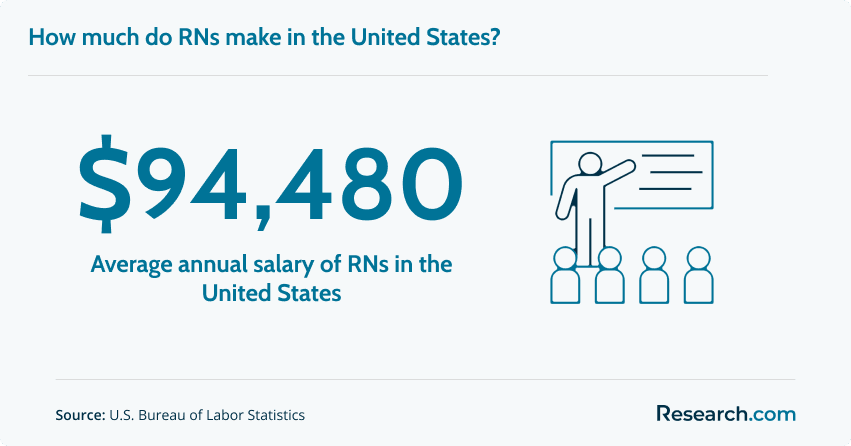
Salary potential: RNs typically earn $70,000–$90,000 per year, while Nurse Practitioners can earn $100,000–$120,000 or more annually, depending on specialty and location.
How to transition: Verify nursing program accreditation, prerequisites, clinical placement structure, NCLEX support, state licensure alignment, and total cost before enrolling.
Radiologic Technologist
Radiologic Technologists perform diagnostic imaging procedures such as X-rays, MRIs, and CT scans. This route may appeal to phlebotomists who like patient interaction but want to work with imaging technology rather than blood collection.
Requirements: A two-year associate degree in radiologic technology is typically required. Many states require licensure, and certification from the American Registry of Radiologic Technologists (ARRT) is commonly required. Some technologists later specialize in MRI or CT scanning.
Salary potential: Radiologic Technologists earn an average of $55,000–$70,000 annually. Specialized roles, including MRI Technologist positions, may earn more.
How to transition: Compare accredited radiologic technology programs, clinical rotation requirements, state licensure rules, and certification exam eligibility.
Surgical Technologist
Surgical technologists prepare operating rooms, organize sterile instruments, and assist surgeons and nurses during procedures. It can be a strong fit for phlebotomists who want hands-on clinical work in a procedural setting.
Requirements: Completion of a surgical technology program is usually required, and these programs typically last between 9 months and 2 years. Certification from the National Board of Surgical Technology and Surgical Assisting (NBSTSA) may be required.
Salary potential: Surgical Technologists earn an average salary of $45,000–$60,000 annually, with higher potential in specialized surgical fields.
How to transition: Review program accreditation, hands-on lab training, clinical placement sites, certification preparation, and employer preferences in your area.
| Better-paying path | Additional education usually needed | Salary potential stated | Decision point |
| Medical Laboratory Technician | Associate degree in medical laboratory technology or clinical laboratory science | $50,000–$60,000 annually | Best if you want to stay in the lab environment |
| Medical Technologist | Bachelor’s degree in medical laboratory science | $60,000–$80,000 or more | Best if you want deeper diagnostic responsibility |
| Registered Nurse | ADN or BSN plus NCLEX-RN | $70,000–$90,000 per year | Best if you want broader patient care and licensure |
| Nurse Practitioner | MSN and specialty board certification | $100,000–$120,000 or more annually | Best if you are committed to advanced nursing practice |
| Radiologic Technologist | Associate degree in radiologic technology | $55,000–$70,000 annually | Best if you prefer diagnostic imaging technology |
| Surgical Technologist | Surgical technology program lasting between 9 months and 2 years | $45,000–$60,000 annually | Best if you want operating room experience |
Is advanced education worth it for increasing phlebotomist salaries?
Advanced education can be worth it when it leads to a specific higher-paying role, meets employer or licensure requirements, and has a manageable cost. It is less useful when the program is expensive, not properly accredited, unrelated to your target job, or unlikely to improve your employment options.
Phlebotomists considering major career changes should calculate return on investment carefully. Include tuition, fees, books, technology costs, transportation, lost work hours, clinical placement requirements, exam fees, and the time needed to qualify for the new role. Programs such as online MSN programs for non-nurses may be relevant for people pursuing nursing pathways, but they are not simple phlebotomy salary boosters. They require careful planning around prerequisites, clinical requirements, licensure, and long-term career goals.
Can an online AGNP program change a phlebotomist’s career path?
An online AGNP program can support a transition into advanced nursing practice only after the learner meets the necessary nursing education and licensure prerequisites. It is not a direct next step for every phlebotomist. For someone who first becomes a registered nurse and wants to specialize in adult-gerontology care, an AGNP path may expand clinical responsibility and earning potential.
The key is sequencing. A phlebotomist generally needs to map the full route: prerequisite courses, nursing admission, RN licensure, clinical experience, graduate nursing admission, AGNP clinical hours, board certification, and state practice rules. Without that plan, advanced nursing education can become costly and inefficient.
Common mistakes phlebotomists make when trying to earn more
| Mistake | Why it can hurt your earnings | Better approach |
| Choosing the first job offer without comparing settings | Small differences in employer type, shift, and benefits can change total compensation | Compare hospitals, outpatient centers, labs, mobile services, and clinics before deciding |
| Focusing only on base pay | A job with lower hourly pay may offer better benefits, tuition support, or shift differentials | Evaluate total compensation, including overtime, paid leave, insurance, retirement, and reimbursement |
| Getting a certification without checking employer recognition | Not all credentials carry the same weight in every market | Review job postings and ask local employers which certifications they prefer |
| Assuming online training automatically raises pay | Training only helps if it matches a real job requirement or advancement path | Select programs tied to supervisor, instructor, lab, nursing, or other defined goals |
| Ignoring cost of living | A higher wage in an expensive city may not improve take-home financial comfort | Compare housing, commute, taxes, and daily expenses against salary |
| Waiting for a promotion without documenting value | Managers need evidence to justify raises or lead roles | Track training duties, accuracy, patient volume, difficult draws, and workflow improvements |
Questions to ask before choosing a higher-paying phlebotomy path
- Does this role pay more because of skill, schedule, travel, overtime, or management responsibility?
- Will the employer recognize my certification, or do they prefer a different credential?
- Does the job provide benefits, tuition reimbursement, paid certification renewal, or career ladders?
- Am I comfortable with the patient population, shift expectations, and workload?
- Will this position help me qualify for supervisor, laboratory, nursing, research, or teaching roles?
- If I relocate, will the higher salary still make sense after cost-of-living changes?
- If I enroll in another program, is it accredited and aligned with state licensure or certification requirements?
References
- Bureau of Labor Statistics. (2024). Phlebotomists. U.S. Department of Labor. Bureau of Labor Statistics.
- Bureau of Labor Statistics. (2024). Registered nurses. U.S. Department of Labor. Bureau of Labor Statistics.
- Zippia. (2023, May 25). Phlebotomist salary. Zippia.
- Zippia. (2023, June 1). Best states for phlebotomists. Zippia.
Key Insights
- The highest-paid phlebotomy jobs are usually not entry-level collection roles. Supervisory, traveling, laboratory, research, and specialized roles provide the strongest earning opportunities.
- In 2024, phlebotomy supervisors can earn between $48,000 and $70,000 per year, making leadership the clearest path to higher pay within the field.
- Industry choice matters. Outpatient Care Centers and Scientific Research and Development Services report average annual wages of $51,180 and $49,390, respectively.
- Location can raise pay, but cost of living can reduce the real benefit. Compare take-home value, not just salary.
- Certifications can improve employability and advancement potential, especially when they match employer requirements in hospitals, laboratories, blood banks, and outpatient systems.
- Hospital roles may offer stronger pay and advancement exposure, while clinic roles may provide more predictable schedules and lower stress.
- Phlebotomy can be a stepping stone into better-paying healthcare careers, including MLT, MT, RN, NP, radiologic technologist, and surgical technologist roles, but most transitions require additional education and careful planning.
- The smartest salary strategy is specific: choose the right setting, document your value, earn recognized credentials, negotiate total compensation, and pursue further education only when it leads to a defined career outcome.
Other Things You Should Know About the Average Salary of Phlebotomists
In 2027, the highest paid phlebotomists typically hold certifications like a Certified Phlebotomy Technician (CPT) and may specialize in areas such as mobile phlebotomy or advanced laboratory technology. Additional qualifications can include years of experience and specialized training, which can lead to higher salaries in more prestigious healthcare facilities. **Question** Do phlebotomists earn more in hospitals compared to clinics in 2027? **Answer** Yes, in 2027, phlebotomists working in hospitals tend to earn more compared to those in clinics. Hospitals often have larger budgets and can offer higher salaries due to the increased complexity and volume of work. Additionally, roles in hospitals may provide more opportunities for specialized duties, which can also result in higher pay. **Question** Which U.S. state offers the highest salary for phlebotomists in 2027? **Answer** In 2027, California is among the U.S. states offering the highest salaries for phlebotomists. The state's high cost of living and demand for skilled healthcare workers contribute to competitive wages. Urban areas within California, such as San Francisco and Los Angeles, typically offer the most lucrative opportunities for phlebotomists. **Question** What is the job outlook for phlebotomists in 2027? **Answer** The job outlook for phlebotomists in 2027 is strong with a consistent demand for these professionals across various healthcare settings. As healthcare services expand and the population ages, the need for skilled phlebotomists to perform blood draws and carry out diagnostic tests is expected to grow, offering stable employment opportunities.
In 2027, acquiring certifications such as the Certified Phlebotomy Technician (CPT) or the Registered Phlebotomy Technician (RPT) can significantly boost a phlebotomist's salary. These credentials demonstrate advanced skills and expertise, making certified individuals more attractive to employers and often leading to higher pay.
A lead phlebotomy trainer usually needs a phlebotomy certificate, current CPR certification, and 2 to 5 years of venipuncture experience. Many employers also require an ASCP or NHA credential and documented training skills for supervising new staff and teaching collection procedures.
In 2027, regions like California, New York, and Massachusetts often offer the highest salaries for phlebotomists, driven by higher living costs and demand for healthcare services. Salary differences can be significant depending on the location, with urban areas typically paying more.


