2027 Online BS in Business Administration vs. a BS in Organizational Leadership: Which Route Fits Your Career Plan?
Audited and Verified:
Our Editorial and Data Verification Process
Research.com uses government datasets, official education statistics and primary institutional information to support its career and degree guides. Our review process checks factual accuracy, occupational definitions, source dates and the requirements associated with the credentials discussed.
How This Article Was Fact-Checked
Our editorial team verifies salary estimates, employment projections, education requirements and program information against original data providers and official organizations. Salary figures are checked against the relevant occupational definitions and reporting periods. Information about licensure, accreditation and required in-person training is reviewed separately.
Fact-checked and verified on:

Co-Founder and Chief Data Scientist
If you want to finish a bachelor's degree and move toward business or leadership work, the degree title alone will not tell you which route is better. A BS in Business Administration usually builds broader financial, analytical, and operational knowledge; organizational leadership usually focuses more closely on people and change.
For working adults and transfer students, the better choice also depends on which credits count, how online courses run, and what your target job requires. This comparison helps you test both degrees against those practical constraints before you enroll.
Key Things You Should Know
- Choose business administration when your target role calls for accounting, finance, marketing, analytics, or operations knowledge; choose organizational leadership when your main gap is leading teams and organizational change.
- Neither degree automatically leads to a management job. Compare your remaining required courses - not just accepted transfer credits - before judging speed or cost.
- The U.S. Bureau of Labor Statistics reports a $75,940 median annual wage for human resources specialists in May 2025, but that occupation-wide figure is not a starting salary or an outcome promised by either degree.
What is the difference between a business administration and organizational leadership degree?
A BS in Business Administration generally teaches how business functions work together: accounting, finance, marketing, operations, management, and quantitative decision-making. A BS in Organizational Leadership generally concentrates on how people lead, communicate, collaborate, and manage change. Both may include management courses, but the balance of functional business knowledge and leadership study differs by institution.
This comparison shows what to look for in the actual degree requirements; program titles are not standardized.
| Decision point | Business administration | Organizational leadership |
| Typical emphasis | Business functions and organizational decisions | People, teams, culture, and change |
| Potential gap to check | Depth of leadership practice and coaching | Depth of accounting, finance, and analytics |
| Applied work to seek | Budget, market, operations, or strategy project | Team, training, or change-management project |
Neither is automatically an HR degree. If your goal is HR operations or employee relations, compare the employment-law and HR coursework in both programs with specialized online HR bachelor's programs accepting transfer credits.
Which degree better fits your career goals: business administration or organizational leadership?
Start with the work you want to do, then identify the skills you cannot yet demonstrate. Business administration is usually the stronger default if you want flexibility among business functions or need to read financial statements, analyze a market, or improve an operating process. Organizational leadership may fit better if you already know your industry and want to develop team communication, training, conflict resolution, or change-management skills.
Experience can reverse either recommendation. A supervisor with substantial budgeting and operations experience might gain more from focused leadership study; someone who has led teams but lacks accounting or analytics may benefit more from business administration. For a specific destination such as project coordination, compare the required courses, applied projects, and price of both degrees with affordable project management schools. A specialized program, employer training, or targeted certificate may be more direct than either broad bachelor's degree.
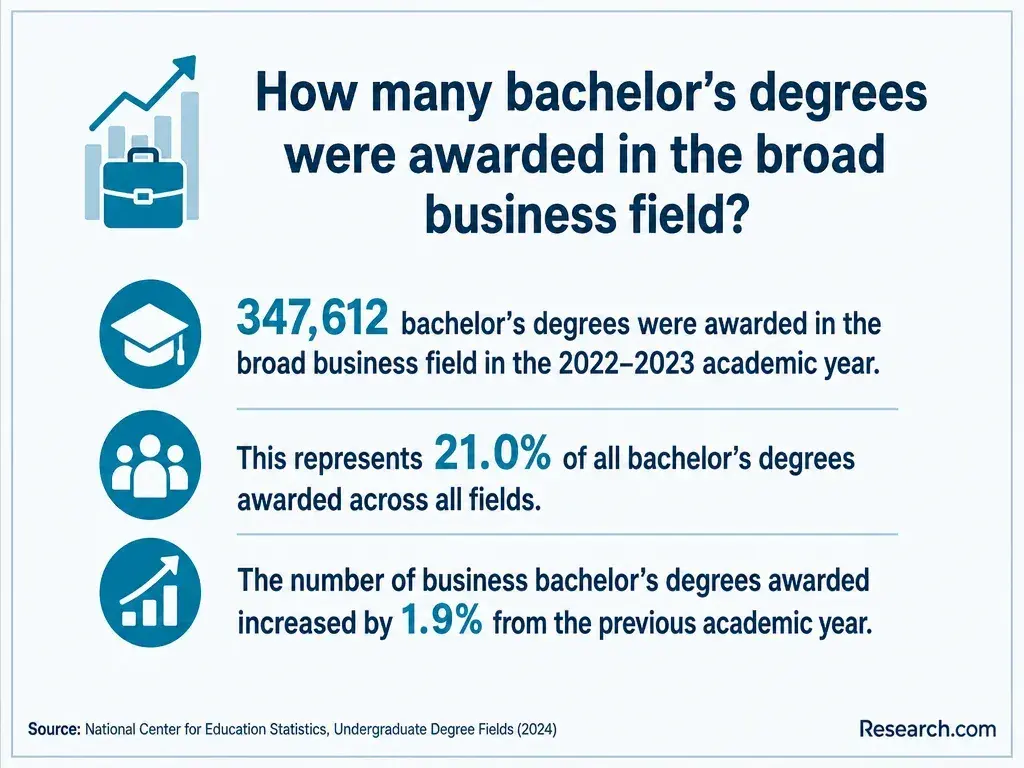
How do online business administration and organizational leadership programs compare?
The subject does not determine online flexibility. Either program may use recorded lectures alongside fixed deadlines, live discussions, proctored exams, group presentations, or an internship. Leadership courses may rely heavily on team interaction; business courses may require spreadsheets, simulations, or scheduled assessments. Ask for recent syllabi for required courses rather than relying on an "asynchronous" label for the program as a whole.
If work or caregiving limits your availability, check when group meetings occur, whether a capstone can use an approved workplace project, and whether required courses run every term. Listings of undergraduate leadership programs with shorter timelines can help you identify options, but a published timeline does not establish your personal schedule or transfer-credit award.
Business administration programs commonly require introductory accounting, economics, marketing, finance, management, statistics, and operations. An official concentration may add a coherent set of advanced courses; a few electives do not necessarily create a concentration. Organizational leadership programs commonly emphasize organizational behavior, leadership theory, communication, ethics, team development, and change. Some also require business courses, so compare course descriptions and prerequisites rather than assuming a subject is absent.
Look closely at the assignments. A financial analysis or process-improvement project provides different evidence of skill than a team-development plan. If supply chain is your aim, determine whether the business degree offers meaningful operations and procurement study or whether a specialized route - such as supply chain undergraduate programs with shorter terms - better matches the function. A shorter term alone does not guarantee more relevant coursework or a faster finish.
Requirements vary by school and by whether you apply as a first-year, transfer, or degree-completion student. Schools may request prior-school transcripts, evidence of secondary-school completion, and prerequisite coursework; some admit students to the institution before they enter a particular major. A prior non-business major does not, by itself, rule out either degree.
Before applying, ask admissions which mathematics or business prerequisites must be completed for entry and ask the transfer office which prior courses will apply to the chosen degree. The business administration applicant eligibility checklist can help you prepare those questions. Obtain a program-specific evaluation: a school may accept a course for credit without using it to satisfy the business core.
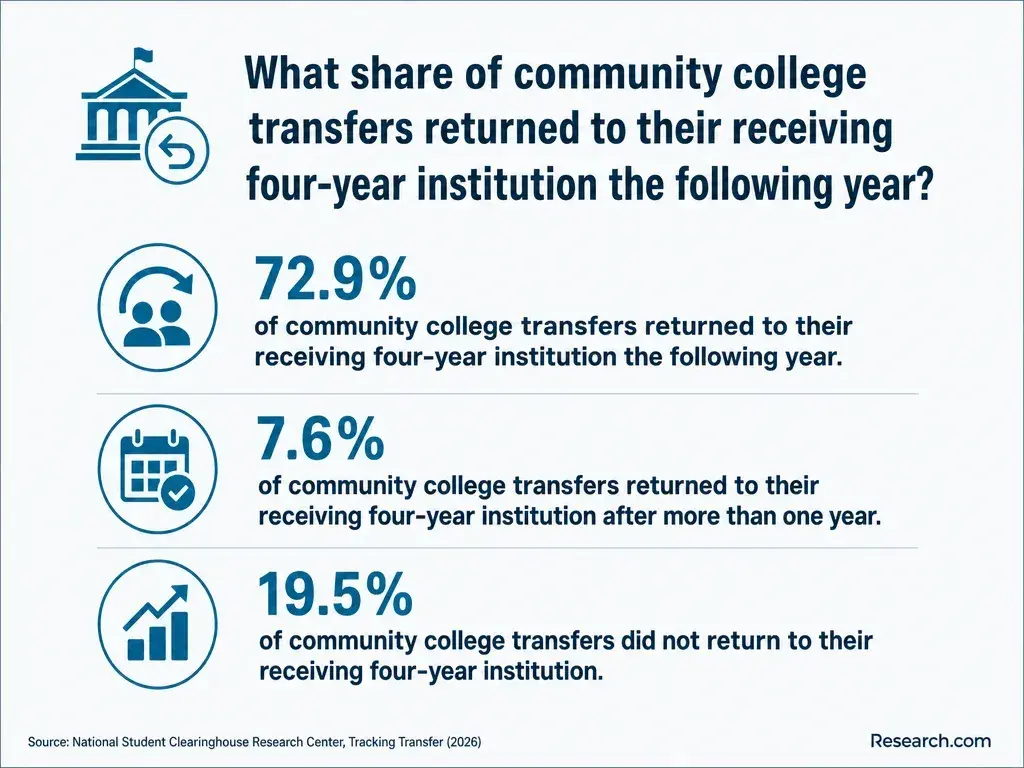
Many U.S. bachelor's degrees require about 120 semester credits, but the relevant number is how many applicable credits you still need. Required-course sequencing, residency rules, enrollment pace, and term availability may matter more than the degree name. A leadership program can be slower for a student whose prior accounting and economics courses apply directly to a business administration major; the reverse can also be true.
Request an official degree audit for each option and a term-by-term schedule for the remaining courses. Check accelerated programs for finishing a business bachelor's sooner against that schedule, including prerequisites and the frequency of required courses. Faster calendar completion may require a heavier weekly workload rather than fewer courses.
There is no dependable degree-wide price difference: schools set their own tuition and fees, and your remaining requirements determine much of the bill. Compare the same enrollment pace for both options, including tuition for required credits, mandatory technology or course fees, materials, and any travel or proctoring costs. Then account separately for grants, employer assistance, and borrowing; none should be assumed before eligibility is confirmed.
Use each school's written degree audit and current charges to estimate the cost to finish, not the advertised price of an entire program. Online business administration program cost-and-time comparisons are a starting point, but confirm the charges and your applicable credits directly with the school. If an employer reimburses tuition only after a passing grade, include the amount you must pay upfront in your decision.
Either degree can support applications for roles such as operations coordinator, HR specialist, training coordinator, or project coordinator, provided you also meet the employer's skill and experience requirements. Business administration may offer a closer academic match for marketing analysis, purchasing, or business operations. Organizational leadership may offer a closer match for employee development and team-focused work. Neither degree makes a new graduate immediately qualified to manage staff or major budgets.
Translate coursework and prior employment into evidence of role-specific ability: a clearly scoped process analysis for operations, for example, or an approved training plan for employee development. If project coordination is your target and you have prior college work, compare how those credits apply using credit mapping for online project management programs. An accepted elective is not necessarily a substitute for a required project course.
National labor statistics track occupations, not the earnings of graduates from these two majors. The following U.S. Bureau of Labor Statistics figures show the range across relevant roles. The wages are May 2025 occupation-wide medians, and the growth projections cover 2025-2035; neither predicts a new graduate's pay or chance of being hired.
| Occupation | Median annual wage | Projected employment growth |
| Training and development specialist | $69,280 | 11% |
| Human resources specialist | $75,940 | 6% |
| Market research analyst | $78,760 | 7% |
| Project management specialist | $102,320 | 7% |
The useful comparison is your realistic entry route, not the highest median. Project management specialist pay, for example, includes experienced workers; a project coordinator may need to build experience before pursuing specialist responsibilities. If that pathway interests you, compare local openings and total program charges using resources on project management tuition and mandatory fees before treating a national wage figure as a return on your tuition.
Do these degrees require accreditation, licensure, or professional certifications?
For either degree, verify the school's recognized institutional accreditation and confirm that the accreditation covers the institution offering your program. Business-focused accreditation through AACSB, ACBSP, or IACBE is a separate question: check the accreditor's listing and the scope of coverage rather than assuming every degree at the school is included.
Neither bachelor's degree generally grants occupational licensure or an HR or project-management certification. Such credentials have their own eligibility rules, and regulated accounting or financial-services work may require additional education, exams, or licenses. When building an application shortlist, online schools with free applications may reduce one upfront expense; a waived application fee is not evidence of program quality or credential eligibility.
Other Things You Should Know About Business Administration
That depends on the institution. Ask the registrar for its diploma and transcript wording before enrolling; do not infer it from the program website.
Possibly. Ask whether the school offers an official leadership minor or concentration and whether its courses fit within your remaining electives without delaying graduation.
It may meet the bachelor's-degree requirement for MBA admission. Individual MBA programs set their own admissions criteria and may expect quantitative preparation or relevant work experience.
Check whether your target job requires another bachelor's degree at all. A graduate program, focused certificate, or documented workplace experience may address your skill gap with less repeated coursework.
- Cost of Attendance (Budget) | 2025-2026 Federal Student Aid Handbook https://fsapartners.ed.gov/knowledge-center/fsa-handbook/2025-2026/vol3/ch2-cost-attendance-budget
- Accreditation in the U.S. | ed.gov http://www.ed.gov/laws-and-policy/higher-education-laws-and-policy/college-accreditation/accreditation-in-the-us
- Employer-offered educational assistance programs can help pay for college | Internal Revenue Service https://www.irs.gov/newsroom/employer-offered-educational-assistance-programs-can-help-pay-for-college
- Employer Tuition Reimbursement: How It Works and How to Pay for College | Winston-Salem State University https://ramsonline.wssu.edu/blog/employer-education-benefits/
- How Do Transfer Credits Work When You Go Back to School? | Whitworth Online https://online.whitworth.edu/news-articles/how-do-transfer-credits-work-when-you-go-back-to-school/
- Why Is Accreditation Important? | ACE Blog https://ace.edu/blog/why-is-accreditation-important/
- Organization and Business Administration, B.S. - CPS, CPSO | University of New Hampshire https://www.unh.edu/program/bachelor-science/business-management-organization-business-administration
- Financial Aid & Paying for College | Commonwealth University https://www.commonwealthu.edu/cost-and-aid/financial-aid-paying-college
- Types of Business Degrees: Your Complete Guide | UWA Online https://online.uwa.edu/news/types-business-degrees/
- Evidence-based change management | sciencedirect.com https://www.sciencedirect.com/science/article/pii/S0090261622000067