2027 BS in Business Administration and Real Estate: What Math and Data Skills Should You Compare?
Audited and Verified:
Our Editorial and Data Verification Process
Research.com uses government datasets, official education statistics and primary institutional information to support its career and degree guides. Our review process checks factual accuracy, occupational definitions, source dates and the requirements associated with the credentials discussed.
How This Article Was Fact-Checked
Our editorial team verifies salary estimates, employment projections, education requirements and program information against original data providers and official organizations. Salary figures are checked against the relevant occupational definitions and reporting periods. Information about licensure, accreditation and required in-person training is reviewed separately.
Fact-checked and verified on:

Co-Founder and Chief Data Scientist
A real estate concentration can teach you to describe a market - or to test whether a property decision makes financial sense. The difference lies in the math, data, and applied work behind the degree.
If you are comparing BS in Business Administration programs, this guide shows which skills matter for valuation, investment analysis, and market research; how to spot them in a curriculum; and when a more specialized path may fit better. You will also learn what to verify about format, cost, careers, and licensing before enrolling.
Key Things You Should Know
- Compare course outcomes and assignments, not concentration names: look for financial modeling, statistics, market-data analysis, and documented work with assumptions and uncertainty.
- Property calculations answer different questions: cash-flow models test financial feasibility, while market analysis tests whether demand and comparable-property evidence support the inputs.
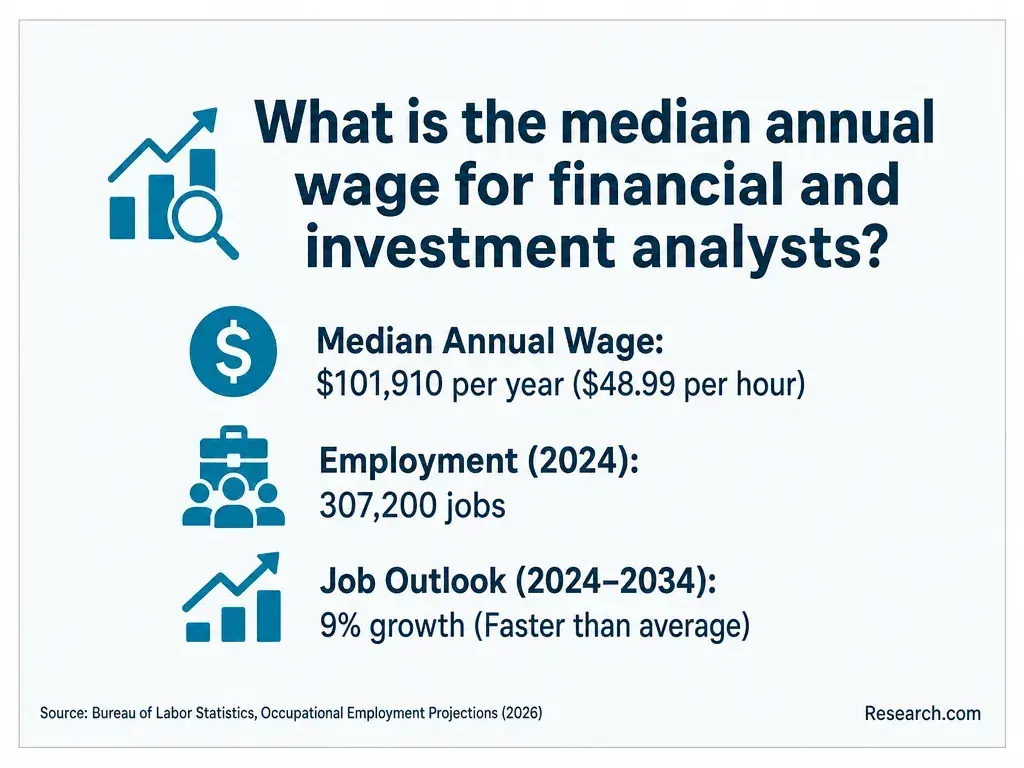
- A degree does not replace state licensing or experience. For context, the U.S. median annual wage for financial and investment analysts was $102,740 in May 2025; it is an occupation-wide figure, not a new graduate's expected salary.
What Is a Business Administration and Real Estate Degree?
It is typically a business bachelor's degree with real estate coursework added through a formal concentration, minor, or electives. A BS in Business Administration usually provides a foundation in accounting, finance, economics, management, and quantitative methods. Real estate study applies selected concepts to property markets, transactions, development, and investment decisions. Schools use different degree titles and structures, so confirm whether "real estate" appears as an officially awarded concentration or simply describes available classes.
The distinction matters if your goal is analytical work. A general business degree with one real estate elective may offer less valuation or market-research practice than a specialized real estate major. Conversely, a broad business core may suit someone interested in operating a brokerage or property-services firm. If your interests are primarily staffing and employee relations rather than property decisions, explore education options for future HR professionals instead of choosing a real estate focus for its business label.
What Math Skills Do Real Estate and Business Administration Programs Teach?
The most useful comparison is between calculation and judgment. A student should be able to calculate a result, explain the inputs, and show how the conclusion changes when an assumption changes. Introductory requirements vary, but these skill areas reveal whether a program goes beyond memorizing formulas.
This table connects common quantitative topics to the property decisions they support; it describes skills to look for, not a promise that every program teaches them.
| Skill area | Real estate application | Evidence of depth |
| Accounting and financial statements | Separating operating expenses, debt payments, and cash flow | Analysis of a property operating statement |
| Time value of money | Comparing cash flows received at different times | A model that states discount-rate assumptions |
| Valuation math | Relating net operating income to an assumed capitalization rate | Comparison of valuation methods and sensitivity to inputs |
| Statistics | Interpreting rents, vacancies, and comparable properties | An explanation of sample limits and variation |
For example, dividing net operating income by a capitalization rate produces an indicated value, not a verified sale price. The income estimate, treatment of expenses, and selected rate all deserve scrutiny. If you prefer project budgets and schedules to property valuation, project management schools with competitive tuition offer an adjacent path to compare - but check their quantitative assignments, not just their prices.
What Data and Analytics Skills Should Real Estate Students Develop?
Real estate analysis draws on listings, recorded transactions, property characteristics, leases, demographic information, and local economic measures. Access and quality differ by source. A useful undergraduate project should show how the student defined a market, selected comparable observations, cleaned inconsistent records, and distinguished an observed fact from a forecast.
Prioritize spreadsheet skills for organizing transactions, checking formulas, and modeling scenarios. Courses may also introduce database queries, mapping tools, or dashboards, but software names alone say little about proficiency. Strong work explains missing observations, unusual properties, the period covered, and why a comparison group is appropriate. A rising rent series, for example, does not by itself prove that a particular renovation caused the increase.
Ask to see assignment descriptions or anonymized examples: Does the student merely display a chart, or defend the data and assumptions behind a recommendation? If you already have transferable analytics coursework and are weighing a property focus against project operations, guidance on how to finish project management studies with transferred college credits can help frame the alternative. In either path, only the receiving institution can determine how prior credits apply.
Expect a business core alongside general education, then compare the real estate courses for their incremental depth. Common subjects include real estate principles, finance, investment analysis, market analysis, property management, and law or regulation. Course titles are insufficient: one "real estate finance" class may center on mortgage concepts, while another requires a property cash-flow model.
Check prerequisite chains before choosing electives. Accounting and introductory statistics may need to come before upper-level finance or analytics, and an appealing course may not run every term. Ask whether students can complete an approved internship, case analysis, or capstone using suitable property data - and whether the concentration adds credits beyond the standard degree. When reviewing accelerated business programs, confirm that a faster schedule still leaves room for the specific real estate and quantitative courses you want.
Online delivery can support the same academic goals, but effectiveness depends on the work students actually do. A remote course can assess spreadsheet models, data interpretation, and written investment recommendations. A campus program may make it easier to attend local property tours or meet regional employers; neither format automatically provides those opportunities.
Request syllabi for the quantitative courses and ask about live sessions, group-modeling assignments, exam proctoring, software access, faculty feedback, and any required visits or internships. For a working student, deadlines and team availability may matter more than whether lectures are recorded. Bachelor's degrees with compressed schedules may shorten the calendar, but check the weekly workload and whether advanced courses are offered when you need them.
First, confirm that the institution holds recognized institutional accreditation. Then check whether its business school or specific program has applicable AACSB, ACBSP, or IACBE accreditation; coverage is not interchangeable, and a school-level claim may not establish the status of every degree. Consult the accreditor and institution for the exact scope rather than assuming a real estate concentration is separately accredited.
Accreditation is a quality-assurance consideration, not proof that a program teaches property modeling well or places graduates in particular jobs. Compare syllabi, faculty expertise, applied work, and available outcomes alongside it. If application costs are a concern while building a shortlist, fee-free applications for online college can be a secondary filter - not a substitute for verifying accreditation and curriculum.
Requirements depend on whether you are entering as a first-year student, transferring into the university, or seeking admission to a business major or concentration after enrollment. Schools may review prior transcripts and require specific standing or prerequisite courses before advanced business study. Do not assume that admission to the university means you can immediately take real estate finance.
For a quantitative focus, ask which algebra, statistics, economics, and accounting courses must be completed - and when. Transfer applicants should request an official evaluation showing whether previous courses satisfy those requirements rather than count only as electives. If speed matters, use US rankings for accelerated business bachelor's degrees to identify possibilities, then verify each school's current admission rules and course sequence directly.
A bachelor's is commonly planned as a four-year, full-time course of study, but transfer credit, part-time enrollment, prerequisites, and course availability can change the completion date. No reliable single price represents these programs: tuition policies, fees, and the number of credits you still need vary by institution and student.
Compare written estimates for remaining required credits, tuition and mandatory fees, software, materials, and any travel for field activities. Ask whether a real estate concentration fits within the standard elective space or adds courses and terms. Published prices for economical online business administration college programs are useful starting points, but an official degree audit and financial-aid offer are more informative for your own total cost.
Possible starting points include real estate research assistant, property operations coordinator, brokerage support, or analyst-support roles. Investment analysis and valuation positions may require deeper modeling, relevant internships, or industry experience; property and brokerage roles may also involve separate state credentials. Match job postings to tasks you can demonstrate, such as checking operating statements, researching comparable properties, or explaining a model's limitations.
For a broader finance comparison, the U.S. Bureau of Labor Statistics reports a May 2025 median annual wage of $102,740 for financial and investment analysts and projects 7% employment growth from 2025 to 2035. These figures cover the occupation, not real estate graduates or entry-level hires, and the role may demand specialized experience.
If construction project coordination appeals more than property investment, compare its duties and education costs separately; grants for project management undergraduates are one funding consideration when evaluating that alternative.
Does a Business Administration Degree Meet Real Estate Licensing Requirements?
Not automatically. State real estate commissions set requirements for sales and broker licenses, while appraisal and other regulated work can follow different rules. A business degree or real estate course may be relevant, but its title alone does not establish that it satisfies required education, examination, experience, or application conditions.
Before enrolling for a licensed goal, check your state regulator's requirements and ask the school whether particular courses have documented approval for that license. Keep the education budget separate from licensing expenses and any supervised-experience obligations. If your goal is construction project work rather than licensed property transactions, budgeting for online project management college study addresses a different education path; neither path should be treated as a shortcut to the other's qualifications.
Other Things You Should Know About Business Administration
It may if it adds modeling, investments, or advanced financial analysis that the concentration lacks. Check prerequisites and extra credits before assuming the minor improves your preparation enough to justify more time or cost.
A small, clearly labeled market comparison is enough to start. State the decision it informs, identify lawful data sources, document cleaning choices, and explain what the evidence cannot establish. Do not present a classroom estimate as a professional appraisal.
Some roles benefit from mapping parcels, access, and neighborhood patterns. Check target job descriptions before prioritizing GIS over spreadsheet and financial-modeling fundamentals.
Yes, but an MBA is a separate graduate degree with its own admission requirements. Relevant work experience and a clear career objective may matter more than pursuing graduate study immediately after the bachelor's.
- Commercial Real Estate Analysis and Investment Online Short Course - MIT Center for Real Estate https://cre.mit.edu/commercial-real-estate-analysis-and-investment-online-short-course/
- Business Administration, Real Estate Concentration, B.A. | fullerton.edu https://catalog.fullerton.edu/preview_program.php
- Data Analysis for Social Scientists | MIT Learn https://learn.mit.edu/courses/course-v1:MITxT+14.310x
- How Quantitative Skills Are Used Outside of STEM Careers | upenn.edu https://lpsonline.sas.upenn.edu/features/how-quantitative-skills-are-used-outside-stem-careers
- Bachelor of Business Administration, Major in Business Administration: Real Estate Concentration | shsu.edu https://catalog.shsu.edu/undergraduate/colleges-academic-departments/business-administration/business-administration-and-entrepreneurship/bba-general-business-administration-real-estate-concentration/
- What is GIS? - Geographic Information Systems (GIS) https://libguides.lib.fit.edu/GIS
- B.S. in Business Administration with a Concentration in Real Estate | Leon Hess Business School | Pre-Health Advising https://www.monmouth.edu/business-school/departments/department-of-economics-finance-real-estate/programs-of-study/bs-business-admin-concentration-in-real-estate/
- What Is Information Science? Definition, Skills, and Careers | Syracuse University https://ischool.syracuse.edu/what-is-information-science/
- Overview of Quantitative Courses for 2026-2027 | uchicago.edu https://voices.uchicago.edu/qrmeth/courses/
- Real Estate Specialization | Business Administration (BS) | University of Baltimore https://www.ubalt.edu/schools-and-colleges/merrick-school-of-business/academics/explore-all-programs/bsba-real-estate-and-economic-development/index.cfm