2027 BS in Business Administration Curriculum: How to Evaluate Preparation in Data Privacy in Business Projects
Audited and Verified:
Our Editorial and Data Verification Process
Research.com uses government datasets, official education statistics and primary institutional information to support its career and degree guides. Our review process checks factual accuracy, occupational definitions, source dates and the requirements associated with the credentials discussed.
How This Article Was Fact-Checked
Our editorial team verifies salary estimates, employment projections, education requirements and program information against original data providers and official organizations. Salary figures are checked against the relevant occupational definitions and reporting periods. Information about licensure, accreditation and required in-person training is reviewed separately.
Fact-checked and verified on:

Co-Founder and Chief Data Scientist
A business project can produce a useful customer dashboard or staffing recommendation while mishandling the personal data behind it. If you are comparing BS in Business Administration programs, look beyond whether a catalog mentions "ethics" or "analytics." You need to know whether students practice deciding what data to collect, who may access it, and what can be shared in a final report.
This guide shows prospective and current students how to examine courses, assignments, and program evidence so they can choose preparation that fits their projects and career goals.
Key Things You Should Know
- Look for assessed work, not just a course title, in which students classify personal data, limit access, document permitted uses, and produce a shareable project deliverable.
- A useful 3-part curriculum check examines instruction, supervised practice, and a grading rubric that evaluates privacy decisions alongside business results.
- Privacy laws depend on the organization, data, and jurisdiction; a general business degree provides preparation for responsible decisions, not automatic qualification to give legal advice or lead a privacy program.
What Is Data Privacy in Business Administration Projects?
Data privacy concerns how an organization collects, uses, shares, retains, and disposes of information about identifiable people. In a business project, the practical question is whether the team needs particular data for a legitimate purpose and has permission to use it that way. Customer purchase histories, employee schedules, survey responses, and donor records may all require different treatment.
Privacy is related to, but distinct from, cybersecurity. Security controls such as restricted access help protect data; privacy also asks whether the data should have been collected or disclosed at all.
For example, an HR staffing analysis might need shift totals rather than named employees' absence histories. Students interested specifically in handling employee information can compare a general business curriculum with human resources education and career options.
A sound student project identifies its decision-maker, permitted data source, minimum necessary fields, access limits, retention plan, and reporting audience before analysis begins. Removing names is not always enough: small groups or combinations of details can still identify individuals.
What Should a BS in Business Administration Curriculum Teach About Data Privacy?
A strong curriculum teaches students to make privacy decisions throughout a project, not merely recite a policy. In marketing research, that means explaining why customer information is needed and whether a proposed secondary use is permitted.
In operations, it can mean limiting employee-level detail in a scheduling report. In analytics, it includes checking whether a dashboard exposes individuals through filters or small categories.
Look for progression from foundational business ethics and information systems to applied work. By the capstone, a student should be able to justify data selection, describe permissions and limitations, restrict a working file, and present findings without exposing personal information. This is business judgment, not a substitute for legal, cybersecurity, or specialist privacy training.
Functional depth matters. A student focused on supplier records and procurement should check for relevant operations coursework; accelerated undergraduate supply chain programs may offer a more targeted course sequence, but their speed or specialization alone does not establish privacy coverage.
How Can You Evaluate Data Privacy Training in Business Projects?
Request recent syllabi, assignment descriptions, and anonymized assessment rubrics from the department. A catalog description establishes the topic of a course, but the assessment shows what students must actually do.
Use this sequence when speaking with a program adviser or faculty member:
- Identify the required courses and approved electives that address personal data, confidentiality, and responsible analytics; ask whether they are offered in the terms you need.
- Ask for a project prompt that requires a documented data-use purpose, permissions, access controls, and a plan for reporting results.
- Check whether faculty assess privacy choices explicitly and give feedback before students submit a final deliverable.
- Confirm who approves workplace data use and what alternative assignment is available when an employer cannot release records.
For transfer students, also ask whether prior project-management coursework applies to the business core, an elective, or neither. Transfer credit evaluations for project management majors can help frame that comparison, but only the receiving institution can determine how a course applies to its degree.
Course names vary, so compare learning objectives and assignments rather than assuming every BS curriculum covers the same material. The table shows where privacy practice can fit and what a student should be able to produce.
| Course area | Relevant project work | Important limit |
| Business law and ethics | Explain a proposed data use, stakeholder interests, and when to seek specialist review | Does not qualify students to interpret law for an employer |
| Information systems and analytics | Classify fields, restrict access, and design a dashboard that avoids unnecessary personal detail | Software proficiency alone does not prove privacy judgment |
| Marketing or HR | Assess customer research or employee-data uses in context | Coverage may be limited to that function |
| Capstone or applied project | Document permissions, data limitations, and a safe reporting version | Workplace implementation requires separate approval |
Check prerequisite chains before planning electives: an advanced analytics assignment may depend on statistics or information systems. If employee-data work is your priority and you are transferring, compare the business degree's HR options with human resources degree options for college transfers. An HR elective is not necessarily a formal concentration, and accepted credits do not necessarily satisfy major requirements.
Accreditation and privacy competence are different kinds of evidence. First, verify the institution's recognized accreditation. Then check whether any AACSB, ACBSP, or IACBE accreditation covers the relevant business school or program; scope matters. None of these labels, by itself, proves that a particular BS course teaches data privacy well.
The stronger evidence is program-specific: stated learning outcomes, a curriculum map showing where responsible data use is taught and assessed, project rubrics, and examples of improvements made after reviewing student work. Ask whether privacy is assessed in a required course or only an optional elective.
When using online business degree rankings for US college applicants to build a shortlist, verify these details with each school rather than treating a ranking as an assessment of privacy instruction.
Students need to recognize when a project may trigger a rule and know when to escalate a question, not memorize every jurisdiction's requirements. Useful US examples include the FTC's authority over unfair or deceptive practices; state consumer privacy laws, where applicable.
The Health Insurance Portability and Accountability Act (HIPAA) in covered healthcare settings; and the Gramm-Leach-Bliley Act, including applicable safeguards requirements, in financial services. Coverage depends on the organization, information, activity, and location.
The NIST Privacy Framework offers a voluntary way to organize privacy-risk discussions; it is not a law or a certification earned through a course. A good assignment asks students to identify applicable constraints, avoid claiming that one rule governs every dataset, and refer unresolved legal questions to qualified staff.
Supplier and customer records can also cross organizational boundaries. Readers comparing business administration with low-cost shorter supply chain degree options should inspect how each curriculum addresses vendor access and data-sharing responsibilities, not just procurement efficiency.
Either format can teach privacy well. Online courses may use simulated datasets, shared documents, and recorded project reviews; campus courses may use supervised workshops and live case discussions. The deciding factor is whether students receive feedback on their data-handling choices before presenting results, not where the class meets.
Ask where project files are stored, whether students must use approved tools, how group access is managed, and whether personal or employer data is prohibited on consumer AI platforms. Also verify live meeting times, group-work expectations, and any campus visit or proctored assessment.
An accelerated schedule can compress the time available to obtain permissions and revise a project; readers considering fast-track online business programs should check actual project deadlines rather than assuming online work is self-paced.
The most convincing work sample shows the reasoning behind a business result without revealing the records used to reach it. A privacy-aware capstone could use a synthetic customer dataset to produce a dashboard, accompanied by a short data inventory, access plan, explanation of omitted fields, and disclosure review. A faculty rubric should assess both the business recommendation and those safeguards.
For an employer-based project, students need faculty approval and the organization's permission before accessing or submitting internal information. A portfolio version may require aggregate results, redaction, or an entirely recreated example; replacing names alone may not remove identification or proprietary risks.
Students considering online degree options in project management at lower cost can use the same evidence test for project deliverables: does the assessment address data rights as well as scope, schedule, and outcomes?
Privacy-aware business skills matter in marketing operations, HR coordination, procurement, project coordination, and business analysis.
Entry-level responsibilities may include following access procedures, preparing appropriately aggregated reports, documenting a vendor's data needs, or escalating a questionable request. Owning a privacy program or providing legal advice generally requires additional expertise and authority.
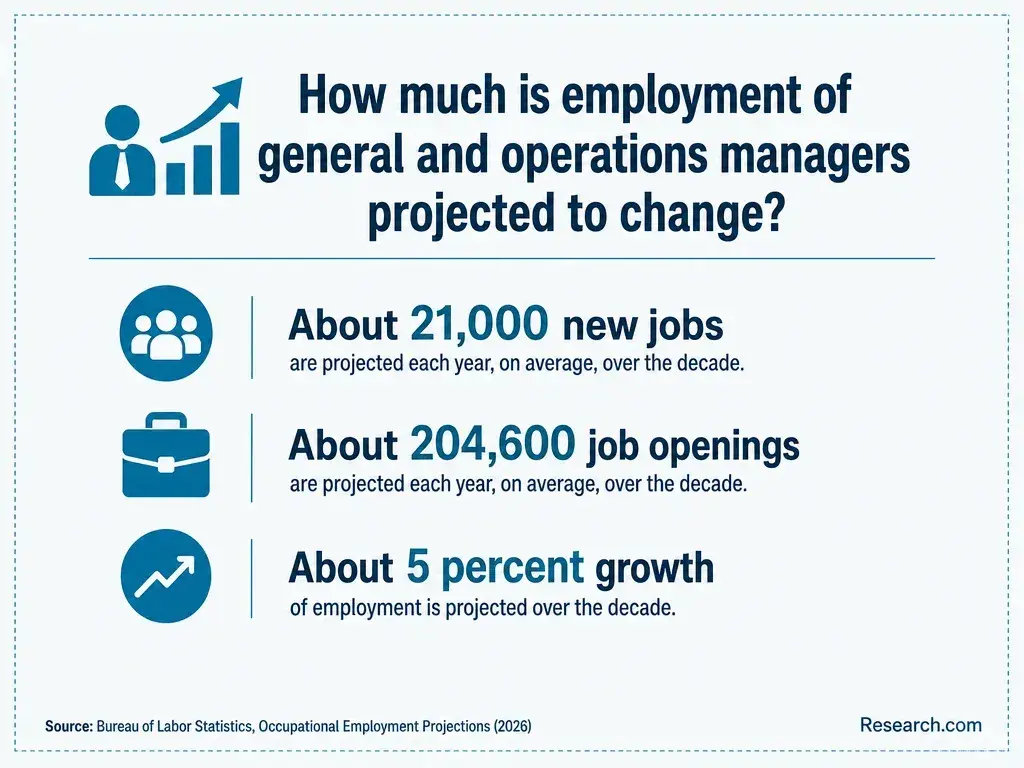
For salary context, the US Bureau of Labor Statistics reports a May 2025 median annual wage of $101,860 for management analysts. That occupation-wide figure is not an expected starting salary for business graduates or a measure of privacy-specific pay.
Analyst roles and employers differ in their experience requirements. Build role readiness with supervised projects, clear documentation, and relevant work experience.
If the intended move is toward supervising teams rather than analyzing data, organizational leadership bachelor's completion planning offers an adjacent comparison. Check whether that path includes the data and systems work your target role requires; a leadership title alone does not supply it.
How Should You Compare Business Administration Programs for Privacy Preparation?
Shortlist programs by the work you want to do, then compare equivalent evidence: required privacy-related learning, available electives, a recent project prompt, assessment criteria, and rules for using real organizational data.
Favor a program with repeatable, assessed practice over one that mentions privacy only in promotional language. If you already have substantial business experience, a targeted course or employer training may be more direct than another degree.
Check the cost of the remaining degree requirements, not just advertised tuition. Transfer-credit applicability, prerequisite courses, software, and a delayed capstone can change both cost and completion time.
If you are weighing a project-management alternative, project management bachelor's scholarship options may inform the financing comparison; confirm eligibility and the actual award before including aid in your budget.
Before enrolling, ask for a degree audit or written course plan and obtain a direct answer to one project question: "What would I have to submit to demonstrate responsible use of personal data, and how would it be graded?" The answer connects the curriculum to the skill this decision is meant to develop.
Other Things You Should Know About Business Administration Programs
Usually not for foundational business projects. You do need to understand the fields you use, who can access them, and what a report might reveal. Technical privacy roles may require additional systems or programming skills.
No universal certification is required to study business administration or complete a privacy-aware class project. A particular employer or specialist role may value additional training or a separate credential.
Possibly, if the institution offers a relevant prior-learning assessment and approves the evidence. Completing employer training does not automatically award academic credit or replace a required course.
Ask the instructor about a synthetic dataset, public information suitable for the assignment, or a case simulation. Do not export records or describe confidential operations without authorization.
- Privacy Impact Assessment - An Essential Tool for Data Protection | ASPE https://aspe.hhs.gov/privacy-impact-assessment-essential-tool-data-protection
- Privacy Impact Assessments - U.S. Department of Commerce https://www.commerce.gov/opog/privacy/PIA
- Frequently Asked Questions | Protecting Student Privacy https://studentprivacy.ed.gov/frequently-asked-questions
- Protecting Personal Information: A Guide for Business | Federal Trade Commission https://www.ftc.gov/business-guidance/resources/protecting-personal-information-guide-business
- The Data Lifecycle - Harvard Information Security Policy https://privsec.harvard.edu/data-lifecycle
- Privacy Assessments - Information Technology (UW-IT) https://it.uw.edu/guides/privacy/take-action/manage-impacts-risks/privacy-assessments/
- Minding the data: protecting learners' privacy and security | unesco.org https://unesdoc.unesco.org/ark:/48223/pf0000381494
- Data protection laws in the United States | DLA Piper https://www.dlapiperdataprotection.com/countries/united-states/law.html
- Data Privacy Regulations: GDPR, CCPA & Global Laws | cdp.com https://cdp.com/glossary/data-privacy-regulations/