2027 Online BS in Business Administration vs. a BBA: Which Route Fits Your Career Plan?
Audited and Verified:
Our Editorial and Data Verification Process
Research.com uses government datasets, official education statistics and primary institutional information to support its career and degree guides. Our review process checks factual accuracy, occupational definitions, source dates and the requirements associated with the credentials discussed.
How This Article Was Fact-Checked
Our editorial team verifies salary estimates, employment projections, education requirements and program information against original data providers and official organizations. Salary figures are checked against the relevant occupational definitions and reporting periods. Information about licensure, accreditation and required in-person training is reviewed separately.
Fact-checked and verified on:

Co-Founder and Chief Data Scientist
An online BS in Business Administration and a BBA can both prepare you for business work, but the initials alone will not tell you which degree fits your career plan. The consequential differences are in required courses, available concentrations, transfer-credit rules, scheduling, and opportunities to demonstrate your skills.
If you are choosing a first degree or returning to finish one, this comparison will help you identify which details to check - and when a more specialized route may be worth considering.
Key Things You Should Know
- Neither a BS nor a BBA is inherently more valuable to employers; compare each school's actual curriculum, applied work, and fit with your target role.
- Online does not necessarily mean self-paced. Live sessions, group projects, course sequencing, and accepted transfer credits can change your completion plan.
- For context, the U.S. Bureau of Labor Statistics reports a May 2025 median annual wage of $78,760 for market research analysts and 7% projected employment growth from 2025 to 2035. Those are occupation-wide figures, not expected pay or guaranteed jobs for graduates of either degree.
What Is the Difference Between an Online BS in Business Administration and a BBA?
A BS in Business Administration is a Bachelor of Science degree with a business administration major. A BBA is a Bachelor of Business Administration. Both are undergraduate business degrees, and both may cover accounting, finance, marketing, management, and operations. "Online" describes how courses are delivered; it does not change the degree level.
Schools determine their own requirements, so the title is a clue - not a reliable measure of quantitative rigor or career value. This table shows tendencies worth testing against the catalogs of the programs you are considering.
| Comparison point | Online BS in Business Administration | BBA |
| Degree designation | Bachelor of Science with a business administration major | Bachelor of Business Administration |
| Possible emphasis | May include more specified quantitative, science, or technical general-education requirements | May allow a different mix of business, general-education, and elective courses |
| What to verify | Actual math and statistics sequence, major requirements, and available concentrations | Actual math and statistics sequence, major requirements, and available concentrations |
A BBA can be analytically demanding, and a BS can be broadly managerial. If finishing quickly matters, compare required courses and your evaluated credits rather than assuming one title is faster. Listings of fastest bachelor's-level business study options can help you find programs to investigate, but your degree audit determines your likely timeline.
Is an Online BS in Business Administration or BBA Better for Your Career Goals?
Choose by the work you want to do, not by which abbreviation sounds stronger. For general business operations, either degree can be a sound choice if its courses build financial literacy, communication, data interpretation, and process skills. For an analytics-oriented goal, favor the program with relevant statistics, spreadsheet or information-systems work, and assessable projects - whether it awards a BS or BBA.
If you want to enter a particular function, compare the depth of its courses and opportunities for experience. A prospective HR employee might value employment-law and staffing coursework; a future project coordinator might value scheduling, budgeting, and supervised project work. If the target role calls for deeper functional preparation, explore economical project management degree programs alongside general business options rather than assuming a concentration offers the same depth.
For a career changer, existing experience matters as much as the new coursework. A customer-service supervisor may be able to build toward operations work by adding accounting and process-analysis skills. A move into technical finance or accounting may require substantially different preparation. Ask employers what entry-level tasks they hire for, then select the degree - or targeted training and experience - that closes your specific gaps.
How Do Online Business Administration Degrees Compare With Campus Programs?
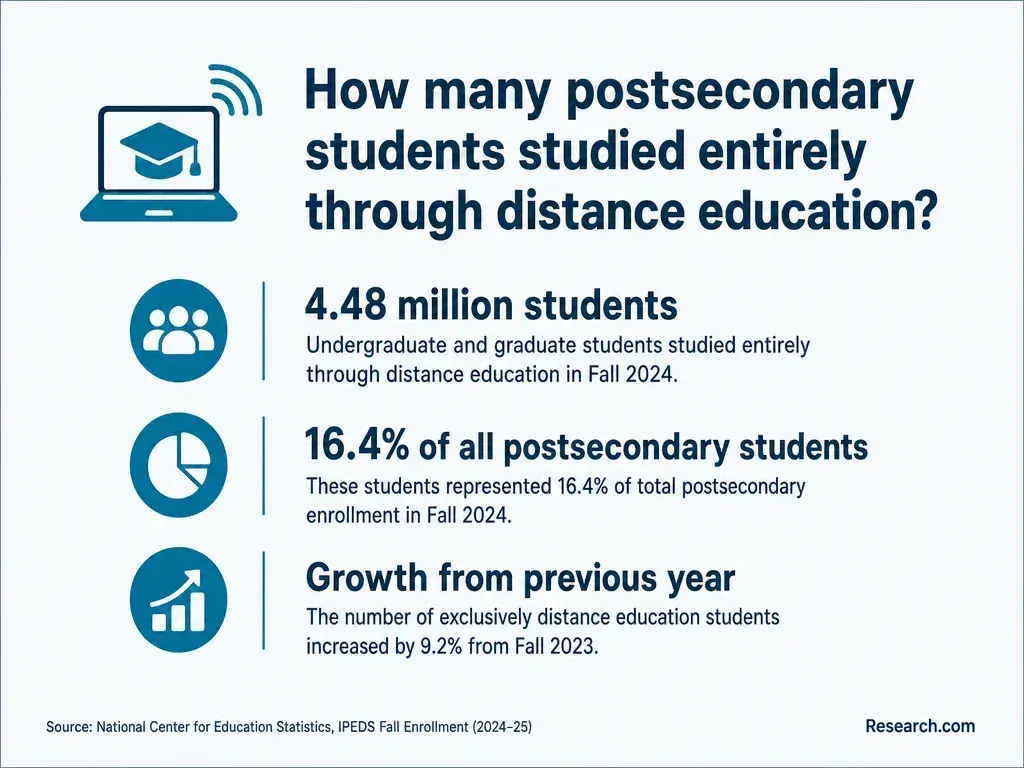
An online BS or BBA can teach the same academic subjects as a campus program, but the learning experience depends on its design. Recorded lectures and flexible access may help you study around work; fixed deadlines, live discussions, proctored exams, and team presentations may still require predictable availability. Campus programs can make in-person recruiting and collaboration easier, while online programs may let you remain employed and use local opportunities.
Before choosing a format, request a sample course schedule and confirm whether any internship, orientation, exam, or residency requires travel. Also check how online students reach faculty, career services, tutoring, and recruiters. You can compare nationally ranked online business programs to build a shortlist, but verify these practical details with each school rather than treating a ranking as proof of fit.
Both degrees commonly combine general education with accounting, economics, marketing, management, finance, business law, operations, and quantitative coursework. Programs differ in how much of each subject they require and whether students complete a concentration, internship, simulation, or capstone. Read course descriptions and prerequisite chains: a program that advertises analytics may offer anything from introductory spreadsheet work to a sequence of statistics and data courses.
Applied assignments are especially useful when they produce evidence of a skill you can discuss with an employer. Compare what students actually make - such as a budget, market analysis, or process proposal - and whether faculty assess the work. If your interests lean toward supervising teams rather than studying several business functions, shorter online bachelor's pathways in organizational leadership are another curriculum to compare. Check whether their narrower focus helps or limits your intended career move.
Requirements depend on the school and whether you apply as a first-year, transfer, or returning student. Institutions may request secondary-school records, previous college transcripts, or both; admission to the university does not always establish admission to the business major. Some programs require particular math or introductory business courses before students enter upper-level classes.
If you have prior college work, ask for an official evaluation showing not just which credits are accepted, but which satisfy general education, the business core, electives, and residency requirements. A credit accepted as an elective may not replace required accounting or statistics. To identify possible preparation gaps before applying, check prerequisites before applying to business administration programs, then confirm the rules for your intended school and entry term.
A traditional full-time bachelor's path is commonly planned around four academic years, but a transfer student's remaining time depends on credits that apply to the chosen degree, required-course availability, and enrollment pace. Neither BS nor BBA has a built-in speed advantage. Accelerated terms may shorten the calendar without reducing the coursework or making it easier to combine with a job.
Compare written, program-specific estimates rather than advertised tuition alone. The following cost components can change which option is more affordable after transfer evaluation:
- Tuition for remaining required credits, plus mandatory technology, course, and graduation fees
- Books, software, proctoring, and any required travel
- Potentially repeated courses, additional terms, and interest on borrowed funds
Ask the financial-aid office what aid may apply at your planned enrollment pace and whether employer reimbursement arrives after you pay the bill. Resources on business administration college affordability and FAFSA participation can support an initial shortlist; a school-specific aid offer and degree audit are needed for a meaningful comparison.
First, identify the institution awarding the degree and confirm its current institutional accreditation through the accreditor or the U.S. Department of Education's accreditation database. Then check whether the business school or named program has separate accreditation from AACSB, ACBSP, or IACBE, and verify its scope with the accreditor. Institutional accreditation and business-specific accreditation are different claims; neither alone establishes that a program will meet your career goals.
Check the school's catalog for the exact degree title and online format, too. A directory of accredited colleges offering free online applications may help you narrow application costs, but a waived fee does not replace verifying accreditation and program details yourself.
Either degree can support applications for business roles, but hiring depends on your skills, experience, and the position's requirements. Possible starting points include operations coordinator, marketing coordinator, HR assistant, procurement support, sales operations, and administrative specialist. Their day-to-day tasks differ: an operations coordinator may track workflows, while a marketing coordinator may help execute campaigns and report results.
Build evidence for the function you want through relevant work, an internship, or approved course projects. For HR, that could mean demonstrating careful record handling and communication; for operations, it might mean explaining a process map and its limitations. Transfer students who already know they want HR can also compare online HR degrees for transfer students against a general BS or BBA. A business bachelor's may help you enter a field, but it does not by itself qualify you to manage staff or budgets.
There is no single salary or growth rate for a BS or BBA graduate. U.S. Bureau of Labor Statistics figures describe occupations, including workers with different education and experience levels - not outcomes for people who hold either degree. These examples show why your target role matters more than the degree initials.
| U.S. occupation | Median annual wage, May 2025 | Projected employment growth, 2025-2035 |
| Human resources specialist | $75,940 | 6% |
| Market research analyst | $78,760 | 7% |
These medians are not entry-level offers; pay varies by location, industry, duties, and experience. Use occupation data to judge whether a field interests you, then compare local openings with the courses and work samples each program would help you develop. When weighing educational return against borrowing, account for the full completion cost; project management fees books and aid considerations provide a useful comparison if that specialized career route is also on your shortlist.
Do Business Administration Graduates Need Licenses or Certifications?
Most general business roles do not require a license simply because you hold a BS or BBA. Requirements attach to particular work and jurisdictions: regulated accounting or financial-services activities may require separate qualifications, while HR and project management certifications have their own eligibility rules. A concentration or individual course is not a professional credential.
Before paying for an additional credential, check job postings for your target role and the issuing organization's eligibility requirements. If your goal is a specialized bachelor's rather than a certification, project management bachelor's routes for associate degree graduates illustrate another option to evaluate - but confirm how your own credits would apply before changing programs.
Other Things You Should Know About Business Administration
Diploma wording is set by the institution, not by the BS or BBA designation. Ask the registrar for the exact wording used for the program you plan to enter.
Possibly, if the school offers both. Request a new degree audit first: changing programs can alter requirements and move previously useful courses into electives.
Only if the institution has an applicable prior-learning or credit policy and approves your evidence. Employment alone does not waive a course or award credit.
No. An MBA is a separate graduate degree, not a standard requirement for most business jobs. Consider it only when its curriculum and admissions expectations fit a defined career goal.
- Credit for Prior Learning | Transfer Credit Ohio https://transfercredit.ohio.gov/students/student-programs/Prior-Learning-Assessments
- Accreditation in the U.S. | ed.gov http://www.ed.gov/laws-and-policy/higher-education-laws-and-policy/college-accreditation/accreditation-in-the-us
- Annual Earnings by Educational Attainment - COE https://nces.ed.gov/programs/coe/indicator/cba/annual-earnings
- In-Person vs. Online Learning: An Educator's Guide | American College of Education https://ace.edu/blog/examining-in-person-instruction-from-a-virtual-mindset-what-can-we-improve/
- A Guide To Experiential Learning, Internships, Capstones, and Practicums - UOnline - The University of Utah https://online.utah.edu/blog/posts/learning-experiences.php
- Online vs. In-Person Classes: Which Is Right for You? | Notre Dame de Namur University https://www.ndnu.edu/articles/guides-tips/online-vs-in-person-classes-which-is-right-for-you.html
- BBA vs. BS: Business Program Differences | North Carolina Central University https://online.nccu.edu/blog/bba-vs-bs/
- What Flexible Learning Means for Students in Higher Education | Miller-Motte College https://www.miller-motte.edu/blog/general/what-flexible-learning-means-for-students-in-higher-education/
- Is an Online Degree Respected by Employers? (2025 Research) | Newlane University https://newlane.edu/is-online-degree-respected-by-employers/
- Credit for Prior Learning - The City University of New York https://www.cuny.edu/academics/academic-policy/credit-prior-learning/