
2027 What to Major in to Become a Dentist

Co-Founder and Chief Data Scientist
Your undergraduate major can influence how efficiently you complete dental school prerequisites, prepare for the Dental Admission Test (DAT), and build a strong application—but it does not determine whether you can become a dentist. Dental schools admit students from science and non-science backgrounds as long as they meet required coursework, perform well academically, gain relevant experience, and show clear motivation for dentistry.
This guide is for college students, transfer students, career changers, and high school seniors planning a path to dental school. You will learn which majors make dental preparation easier, when a non-science major can be a smart choice, what courses dental schools commonly expect, how long the full dentist pathway takes, and how to compare undergraduate programs without relying on myths or generic pre-health advice.
Quick answer: What major should you choose for dental school?
The best major for dental school is usually the one that lets you earn strong grades, complete prerequisites on time, prepare well for the DAT, and stay engaged enough to perform at a high level. Biology, chemistry, biochemistry, and biomedical sciences are common because they overlap with dental school requirements. However, psychology, business, public health, English, and other majors can also work if you carefully plan the required science courses.
Key things to know before choosing a pre-dental major
- Becoming a dentist generally requires a bachelor’s degree, a DDS or DMD program, and state licensure exams.
- Dentistry offers career stability, patient-facing work, and opportunities to improve oral health, prevention, function, and confidence.
- Dentists earn a median annual salary of around $170,910, although earnings vary by specialty, practice model, location, and experience.
- Best majors for dental school in 2027
- How long the dentistry education path takes
- Non-science majors dental schools accept
- Whether a double major helps dental school applicants
- How much your major matters in admissions
- Dental school prerequisite courses to plan for
- Pre-med vs. pre-dental: key differences
- How online education can support a dental career
- Ways to fund dental education
- Technology and continuing education in dentistry
- How to choose an undergraduate school for pre-dental preparation
- Short postgraduate programs for dental professionals
- Online doctorate options for dental career advancement Related postgraduate options
- How your major can prepare you for future dental opportunities
- How to prepare for a dental school interview
- How to study for the DAT
- How healthcare administration can help dental practice owners
- Dentist salary and job outlook
- Extracurriculars that strengthen a dental school application
- Specialized certifications for dental professionals Application-building activities Career outlook Common mistakes to avoid
What is the best major for dental school for 2027?
There is no required undergraduate major for dental school. Admissions committees are usually more interested in whether you completed the required science courses, earned competitive grades, scored well on the DAT, understood the profession through exposure to dentistry, and demonstrated the maturity needed for clinical training.
That said, some majors make the pathway simpler because they include many of the courses dental schools and the DAT already emphasize. Science-heavy majors can reduce scheduling conflicts and help students build a stronger foundation in biology, chemistry, and physiology. Non-science majors can also be excellent choices when students deliberately add prerequisite coursework and use their major to develop communication, leadership, public health, or business skills.
Common majors for pre-dental students
| Major | Why pre-dental students choose it | Best fit for students who... |
| Biology | Includes topics such as anatomy, microbiology, genetics, and cell biology that connect closely to oral health and dental science. | Want broad life-science preparation and a straightforward route through many prerequisites. |
| Chemistry | Builds strength in general and organic chemistry, which are important for DAT preparation and dental school applications. | Enjoy lab-based science and want strong preparation for materials, reactions, and biochemical concepts. |
| Biochemistry | Connects biological systems with chemical processes and can support deeper understanding of metabolism, proteins, enzymes, and molecular disease. | Like challenging science coursework and want rigorous preparation for advanced health programs. |
| Biomedical Sciences | Often focuses on human physiology, pathology, disease mechanisms, and health-related research. | Prefer a curriculum designed around human health and clinical science. |
| Psychology, Business, Public Health, English, or Liberal Arts | Can strengthen patient communication, practice management, ethics, writing, community health, or cultural understanding. | Have strong interests outside the lab and are willing to plan science prerequisites carefully. |
The strongest choice is not automatically the hardest major or the one most classmates choose. A student who earns excellent grades in public health while completing all science requirements may be more competitive than a biology major with weak academic performance. Choose a major you can sustain for four years while still building the academic and experiential profile dental schools expect.
How long does it take to complete a degree program in dentistry?
The traditional route to becoming a licensed dentist typically takes 8 years of higher education: 4 years for an undergraduate degree followed by 4 years in a Doctor of Dental Surgery (DDS) or Doctor of Dental Medicine (DMD) program. Some students take longer if they change majors, repeat prerequisites, pursue research, enter a dual-degree pathway, or take a gap year to strengthen their application.
After earning a DDS or DMD and meeting state licensure requirements, a general dentist may begin practice. Students who want to specialize complete additional postdoctoral training. Specialty programs vary in length: orthodontics commonly takes about 2-3 years, while oral and maxillofacial surgery typically requires 4-6 years. Depending on the specialty, total training can extend well beyond the standard 8-year timeline.
Typical timeline to become a dentist
| Stage | Typical length | Main goals |
| Undergraduate degree | 4 years | Complete prerequisites, maintain a strong GPA, prepare for the DAT, shadow dentists, and build service or research experience. |
| DDS or DMD program | 4 years | Study biomedical and clinical dentistry, develop hands-on patient care skills, and prepare for licensure. |
| General dentistry licensure | Varies by state | Meet examination and state board requirements before independent practice. |
| Specialty residency | 2 to 6 additional years | Train in areas such as orthodontics, pediatric dentistry, prosthodontics, or oral and maxillofacial surgery. |
Accelerated dental pathways may reduce the timeline for some students, but they often require early commitment and strong academic performance. If you are considering one, compare the program’s admissions standards, advising support, dental school linkage, and flexibility if your goals change.

What non-science majors do dental schools accept?
Dental schools accept applicants from many academic disciplines. A non-science major does not disqualify you, but it does make planning more important. You must still complete the required biology, chemistry, physics, and other prerequisite courses, and you need enough science preparation to perform well on the DAT and handle the first-year dental curriculum.
- Psychology: This major can help future dentists understand patient anxiety, behavior change, motivation, and communication. Those skills matter in dental care, where patients may fear procedures or struggle with treatment adherence. Students interested in communication-heavy healthcare fields may also compare related paths such as the easiest speech pathology programs to get into.
- Business or Economics: These majors can be useful for students who hope to own or manage a dental practice. Coursework in accounting, marketing, operations, and leadership may later support decisions about staffing, budgeting, patient acquisition, and growth.
- English or Liberal Arts: Reading, writing, argumentation, and ethical reasoning can strengthen patient education and professional documentation. These majors can also help applicants communicate clearly in personal statements and interviews.
- Public Health: Public health helps students understand prevention, health systems, community programs, and oral health disparities. Students drawn to population health may also explore flexible public health education options such as the cheapest online MPH degree.
When a non-science major makes sense
- You are genuinely more motivated by the subject than by a traditional science major.
- You can still fit every required science course into your degree plan without delaying graduation.
- You are willing to seek additional science support if your major does not include advanced lab coursework.
- You can explain how your background connects to patient care, dental practice, research, access to care, or leadership.
Is double majoring worth it for dental school?
A double major can be valuable, but it is not automatically an admissions advantage. Dental schools do not require two majors, and a second major will not compensate for a weak GPA, missing prerequisites, limited dental exposure, or a low DAT score. The decision should come down to whether the second field improves your preparation without harming your academic performance or delaying your application.
Potential benefits of a double major
- It can show academic discipline: Completing two fields successfully may demonstrate planning, persistence, and workload management.
- It can broaden your skill set: Pairing biology with business, psychology, public health, or data-related coursework can prepare you for practice ownership, patient communication, prevention programs, or research.
- It can strengthen problem-solving: A second discipline may expose you to different methods of analysis, writing, quantitative reasoning, or leadership.
- It can preserve career flexibility: If your plans change, a second major may support alternatives in healthcare management, research, public health, business, or science-related roles.
Double majoring is usually not worth it if it overloads your schedule, lowers your science GPA, prevents you from shadowing or volunteering, or forces you to rush DAT preparation. A minor, certificate, elective cluster, or targeted experience may provide the same benefit with less risk.
Students weighing biology against other high-return academic paths may also compare career options beyond dentistry, including the highest paying jobs with a biology degree. For those who do continue into dentistry, specialization can affect long-term income. For example, oral and maxillofacial surgeons and orthodontists earn around $239,200 or more annually, prosthodontists make approximately $234,000, and other dental specialists average about $227,690 per year. General dentists also have competitive earnings of around $166,300. The chart below shows the median annual wagaes for dentists as of May 2023:
How does your undergraduate major affect your chances of getting into dental school?
Your major has limited direct impact on dental school admission. What matters more is how well you perform within that major and whether your academic record proves you can succeed in a demanding professional program. Admissions committees typically evaluate GPA, science GPA, DAT scores, prerequisite completion, letters of recommendation, dental shadowing, service, leadership, and interview performance.
A science major may make DAT preparation more convenient because required courses often overlap with biology, general chemistry, and organic chemistry content. A non-science major may require more intentional scheduling, but it can also help you stand out when your application clearly connects that background to dentistry. For example, business skills can support practice ownership, psychology can improve patient interaction, and public health can strengthen work with underserved communities.
Students who are also exploring healthcare management, certifications, or backup career paths may find it useful to review what certifications make the most money, especially when comparing clinical and administrative options. Still, no certificate or second field replaces the core dental school requirements.
What dental schools usually value more than your major
| Admissions factor | Why it matters | How to strengthen it |
| Overall and science GPA | Shows academic consistency and readiness for rigorous coursework. | Plan balanced semesters, use tutoring early, and avoid stacking too many difficult labs at once. |
| DAT score | Provides a standardized measure of science knowledge, reasoning, reading, quantitative skills, and perceptual ability. | Use the official content outline, take timed practice exams, and review weak areas systematically. |
| Prerequisite completion | Confirms you have the required foundation for dental school. | Check each target school’s requirements before senior year. |
| Dental exposure | Demonstrates that you understand the profession beyond classroom assumptions. | Shadow general dentists and, when possible, specialists in different settings. |
| Service and professionalism | Shows maturity, empathy, reliability, and commitment to patient-centered work. | Volunteer consistently rather than collecting short, unrelated activities. |
What courses are required for dental school admission?
Dental school prerequisites vary by institution, so students should confirm requirements directly with each school they plan to apply to. However, many dental programs expect applicants to complete a core set of science courses with laboratory components before enrollment.
- General Biology with lab: Often taken across 2 semesters, this sequence introduces cellular processes, genetics, evolution, ecology, and living systems. It also helps students build a foundation for anatomy, microbiology, and physiology. Students comparing science-major outcomes can also review information related to biology major salary.
- General Chemistry with lab: Typically completed over 2 semesters, general chemistry covers atomic structure, bonding, thermodynamics, reactions, and chemical principles used later in health science and dental materials.
- Organic Chemistry with lab: This 2-semester sequence focuses on carbon-based compounds, structure, reactions, and properties. It is important for DAT preparation and for understanding biochemical and material-related concepts in dentistry.
- Physics with lab: Often required for 1 or 2 semesters, physics introduces motion, force, energy, electricity, and related concepts that can connect to imaging, equipment, bite mechanics, and dental procedures.
- Biochemistry: Usually completed in 1 semester, biochemistry examines proteins, enzymes, metabolism, and molecular processes in living organisms. It is especially relevant to disease mechanisms and human physiology.
Planning tip
Do not assume your major automatically covers every dental school requirement. Meet with a pre-health advisor early, create a course map, and check whether your target schools require additional coursework such as anatomy, physiology, microbiology, statistics, psychology, or English composition.
What is the difference between pre-med and pre-dental?
Pre-med and pre-dental are advising tracks, not usually separate majors. Both can include biology, chemistry, physics, math, and social science coursework. The difference is the professional goal, the entrance exam, the type of clinical exposure expected, and how students frame their experiences.
| Category | Pre-med | Pre-dental |
| Professional goal | Preparation for medical school and physician training. | Preparation for dental school and oral healthcare training. |
| Admissions test | Medical school applicants typically prepare for a medical admissions exam. | Dental school applicants prepare for the DAT. |
| Experience focus | Clinical volunteering, physician shadowing, patient care exposure, and sometimes research. | Dentist shadowing, dental office exposure, oral health service, and dental-related research or outreach. |
| Career exploration | Often includes hospitals, clinics, surgery, primary care, and specialties. | Often includes general dentistry, orthodontics, oral surgery, pediatric dentistry, prosthodontics, and community dentistry. |
Pre-med
Pre-med students prepare for medical school and careers as physicians, surgeons, or medical specialists. Their coursework often overlaps with pre-dental science requirements, but their shadowing, service, and application narrative should show sustained interest in medicine. Students who want a faster clinical entry point before committing to long professional training may also compare options such as accelerated medical assistant programs.
Pre-dental
Pre-dental students prepare specifically for dental school. They commonly complete the same core sciences but should seek dental environments, observe procedures, understand oral health prevention, and learn how dentists diagnose, educate, restore function, and manage patient care. Courses in anatomy, physiology, microbiology, pathology, and dental-related topics can be especially useful when available.
In 2023, the U.S. had around 160,600 general dentists, with projections indicating a growth by 2033. Furthermore, out of 160,600 dentists, there are 141,000 general dentists, 4,800 oral and maxillofacial surgeons, 7,400 orthodontists, 700 prosthodontists, and 6,700 dentists of all other specialties. This mix of roles shows that dentistry includes both broad general practice and specialized career routes. The chart below shows the number of dentists with various occupational titles as of 2023:
What role can online education play in enhancing your dental career?
Online education cannot replace the hands-on clinical training required in dental school, but it can strengthen preparation and professional development. Undergraduate students may use online courses to complete general education requirements, explore business or public health topics, or build skills in communication, data, ethics, or healthcare systems. Practicing professionals may use online learning for continuing education, leadership training, technology updates, or practice management.
Quality matters. Before enrolling, verify accreditation, transfer policies, faculty qualifications, course rigor, and whether credits will be accepted by your home institution or future programs. Students comparing flexible options can begin by reviewing nationally accredited online colleges, especially if they need coursework that fits around shadowing, work, or family responsibilities.
What are the financial options for funding your dental education?
Dental education can involve substantial undergraduate and professional-school costs, so funding should be part of your planning from the beginning—not something you address after admission. Compare total cost of attendance, living expenses, fees, supplies, transportation, interest, and the amount you may need to borrow.
- Scholarships and grants: Look for institutional awards, merit scholarships, need-based aid, community scholarships, and dental association opportunities.
- Federal and private loans: Understand interest rates, repayment terms, borrowing limits, and whether future income assumptions are realistic.
- Work-study and part-time work: These may help with undergraduate costs, but dental school itself can be too demanding for heavy employment.
- Lower-cost pathways: Transfer credits, community college prerequisites when accepted, in-state tuition, and careful school selection can reduce debt.
- Financial-aid eligible online study: Students using online coursework should confirm aid eligibility and accreditation. A helpful starting point is this guide to online colleges that offer financial aid.
How can technology and continuing education advance your dental career?
Dentistry continues to be shaped by digital tools, improved imaging, practice management software, tele-dentistry, patient communication platforms, and new clinical techniques. Students do not need to master every tool before dental school, but they should be comfortable learning technology, evaluating evidence, and adapting to changing standards of care.
Continuing education is also a long-term part of dental practice. Dentists may pursue training in new treatment methods, digital workflows, leadership, compliance, or specialty-related topics. Flexible programs from accredited online universities can be useful for non-clinical learning areas, but clinical competencies still require appropriate supervised and hands-on training.
How do you choose the best undergraduate school for dentistry?
The best undergraduate college for a future dentist is not always the most famous school. It is the school where you can complete prerequisites, earn strong grades, access pre-dental advising, gain dental exposure, manage costs, and receive support for the DAT and application process.
- Accreditation and science quality: Choose an accredited institution with the lab-based biology, chemistry, physics, and advanced science courses dental schools commonly expect. Accreditation for dental schools is primarily granted by the Commission on Dental Accreditation (CODA), which is recognized by the U.S. Department of Education.
- Pre-dental advising: Look for advisors who understand dental school timelines, prerequisite planning, committee letters, DAT timing, and application strategy.
- Clinical and shadowing access: Schools near dental offices, clinics, hospitals, or community health programs may make it easier to gain meaningful exposure.
- Research and outreach: Dental-related research, public health initiatives, or service programs can help you connect academic interests to oral health.
- Cost and debt: Since dental school itself is a major investment, avoid overpaying for undergraduate education unless the value is clear.
- Student outcomes: Ask how many pre-dental students apply, how many are admitted, and what support is available for students who need to reapply.
Questions to ask before choosing a pre-dental undergraduate school
| Question | Why it matters |
| Does the school offer all common dental prerequisites with labs? | Missing courses can force summer enrollment, transfer coursework, or delayed applications. |
| Is there a dedicated pre-health or pre-dental advisor? | Dental admissions has specific expectations that general academic advising may not cover. |
| Can students shadow dentists through school partnerships or local networks? | Dental schools expect applicants to understand the profession through direct exposure. |
| How does the school support DAT preparation? | Structured planning can help students avoid last-minute test preparation. |
| What is the realistic total cost for four years? | Lower undergraduate debt can make dental school financing more manageable. |
Is a short-term postgraduate degree beneficial for dental professionals?
Short postgraduate programs can be useful after dental school when they fill a clear skill gap. They may support goals in practice management, research methods, education, public health, leadership, or technology adoption. They are less useful when chosen only to collect credentials without a defined career purpose.
Before enrolling, ask whether the program is accredited, whether the curriculum is relevant to your role, how much time it requires, and whether the cost makes sense compared with continuing education, mentorship, or specialty training. Dental professionals who want a condensed academic option can compare 1 year master programs online while weighing clinical obligations and return on investment.
Is an online doctorate a smart investment for advancing your dental career?
An online doctorate may make sense for dental professionals pursuing research leadership, education, administration, policy, or non-clinical academic work. It is not a substitute for a DDS or DMD, and it will not independently qualify someone to practice dentistry. Its value depends on your current credentials, career goal, program quality, faculty support, research expectations, and total cost.
Compare accreditation, dissertation or research requirements, time to completion, residency expectations, and whether the degree is respected in your intended setting. Cost is especially important because many dental professionals already carry significant educational debt. A practical starting point is to compare the cheapest online PhD programs while confirming that lower cost does not come at the expense of academic credibility.
How can your undergraduate major support evolving dental career opportunities?
Dentistry increasingly rewards professionals who can combine clinical knowledge with communication, business judgment, technology awareness, prevention, and population health thinking. Your major can help you develop those strengths before dental school.
- Science majors can prepare you for biomedical coursework, research, and specialty training.
- Business majors can support future practice ownership, operations, marketing, and financial planning.
- Public health majors can prepare you for community dentistry, prevention programs, and access-to-care initiatives.
- Psychology majors can strengthen patient communication, anxiety management, and behavior change strategies.
- Technology or data-related coursework can help you adapt to digital practice systems and evidence-based decision-making.
If you are still deciding among fields, review broader labor-market and academic considerations in this guide to the best college majors for the future. Then compare those options against the specific prerequisite demands of dental school.
How can you excel in your dental school interview?
A dental school interview tests more than your ability to repeat your personal statement. Schools want to see whether you communicate clearly, understand dentistry, respond ethically to difficult situations, and show the maturity to work with patients, classmates, faculty, and staff.
How to prepare
- Practice explaining why dentistry—not just healthcare in general—is the right fit for you.
- Prepare examples from shadowing, volunteering, work, leadership, research, or patient-facing experiences.
- Review the school’s mission, curriculum, clinical model, and community programs before the interview.
- Be ready for behavioral questions about conflict, failure, teamwork, ethics, and stress.
- Answer directly, then support your answer with a specific example.
If you are balancing interview preparation with work or family obligations, resources designed for flexible learners, such as guides to the best affordable online schools for job holders, can help you think through scheduling and academic planning strategies.
How do you prepare for the dental admission test?
Preparing for the DAT requires structure, repetition, and honest review of weak areas. Do not wait until all prerequisites are finished to learn the test format. Start by understanding what the exam measures, then build a study calendar that gives enough time for content review and timed practice.
- Learn the exam structure: The DAT includes Natural Sciences, Perceptual Ability, Reading Comprehension, and Quantitative Reasoning. The Natural Sciences portion includes Biology, General Chemistry, and Organic Chemistry.
- Use the official content outline: The American Dental Association’s DAT outline helps you identify tested topics and avoid wasting time on material outside the exam scope.
- Create a 2–3 month study plan: Many students study over 2–3 months, but the right timeline depends on your course background, schedule, and baseline practice results.
- Take full-length practice tests: Simulated testing helps you build pacing, stamina, and familiarity with the exam experience.
- Review mistakes deeply: Do not only track your score. Identify why you missed each question: content gap, misread prompt, timing issue, or poor strategy.
- Practice perceptual ability consistently: The Perceptual Ability Test rewards repeated exposure and spatial reasoning practice, not last-minute cramming.
DAT preparation checklist
| Step | Action | Why it helps |
| 1 | Take a diagnostic practice test. | Shows your starting point and helps you prioritize study time. |
| 2 | Map topics to weekly goals. | Prevents uneven preparation across science, reading, math, and perceptual sections. |
| 3 | Schedule timed practice. | Builds test-day pacing and reduces anxiety. |
| 4 | Keep an error log. | Turns missed questions into targeted review. |
| 5 | Adjust the plan before test day. | Lets you focus final review on the highest-impact weaknesses. |
Can a background in healthcare administration benefit your dental practice?
Healthcare administration can be valuable for dentists who plan to manage teams, own a practice, work in group practice leadership, or improve clinic operations. Clinical skill is central to dentistry, but practice success also depends on scheduling, staffing, billing, compliance, patient experience, budgeting, and workflow design.
Students interested in leadership may combine pre-dental coursework with business, economics, public health, or administration electives. Practicing dentists may later pursue formal management training if they move into ownership or executive roles. If you are comparing graduate-level administrative pathways, this overview of whether is an MHA a good career may help you think through the trade-offs between clinical and administrative advancement.
What is the job outlook for dentists?
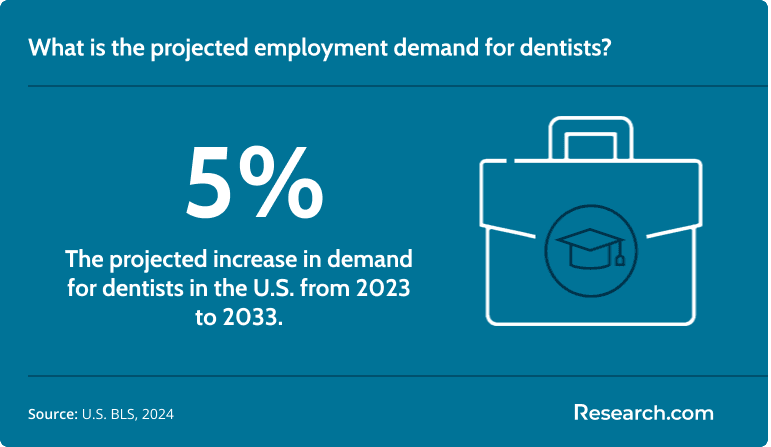
The job outlook for dentists remains positive. According to the U.S. Bureau of Labor Statistics (BLS), employment of dentists is projected to grow five percent from 2023 to 2033, which is faster than the average for all occupations. Demand is influenced by preventive care, population needs, oral health awareness, cosmetic services, and access to dental services in underserved areas.
Career outcomes still vary. Location, specialty, ownership status, payer mix, patient volume, debt, and business skills can all affect income and stability. A general dentist may have a different career path from an orthodontist, oral and maxillofacial surgeon, prosthodontist, public health dentist, academic dentist, or dental practice owner.
What extracurricular activities enhance your dental school application?
Strong extracurriculars show that you understand dentistry, care about service, and can manage commitments beyond coursework. Admissions committees generally prefer sustained, meaningful involvement over a long list of disconnected activities.
- Dental shadowing: Observe general dentists and, if possible, specialists to understand daily practice, patient interaction, procedures, and office workflow.
- Community service: Volunteer in settings that demonstrate empathy, reliability, and commitment to helping others.
- Oral health outreach: Participate in prevention, education, screening, or community dental events when available.
- Research: Dental, biomedical, public health, or behavioral research can strengthen analytical skills and expose you to evidence-based practice.
- Leadership: Roles in pre-dental clubs, service organizations, student government, or campus programs can show initiative and teamwork.
- Work experience: Jobs in healthcare, customer service, tutoring, or administrative roles can help demonstrate responsibility and communication skills.
Students also exploring flexible academic paths may compare online degrees that pay well, but dental school applicants should prioritize prerequisite quality, dental exposure, and academic performance over speed alone.
Can specialized certification programs enhance your dental career?
Specialized certifications can help dental professionals build focused skills after they have the proper clinical foundation. They may be useful in areas such as digital workflows, practice management, patient communication, compliance, or specific technologies. However, certifications should be evaluated carefully because not all credentials carry the same value with employers, patients, or professional boards.
Before choosing a certificate, ask whether it is recognized in your intended practice setting, whether it requires hands-on training, whether it supports licensure or continuing education requirements, and whether the cost is justified. Professionals comparing credentials across healthcare and business fields can review certification programs that pay well, while remembering that earnings are never guaranteed by a credential alone.
Common mistakes to avoid when choosing a major for dental school
| Mistake | Why it can hurt you | Better approach |
| Choosing biology only because “everyone pre-dental does it.” | You may lose motivation if the subject does not fit your strengths. | Choose a major you can excel in while completing dental prerequisites. |
| Ignoring prerequisite planning. | You may discover too late that you are missing required labs or advanced courses. | Create a four-year course map and verify requirements for each target dental school. |
| Overloading on difficult lab sciences in one semester. | A lower science GPA can weaken your application. | Balance demanding courses with realistic time for studying, work, and shadowing. |
| Assuming a double major impresses admissions committees by itself. | Extra credentials do not offset poor grades or limited dental experience. | Add a second major only if it supports your goals without damaging performance. |
| Focusing only on tuition when choosing a college. | Low tuition may not help if advising, course access, or transfer policies are weak. | Compare total cost, prerequisite availability, advising, shadowing access, and outcomes. |
| Relying only on rankings or reputation. | A famous school may not be the best environment for your GPA, support needs, or finances. | Choose the institution where you can build the strongest complete application. |
Resources
- Aurora University. (2023). How long does it take to become a dentist? https://aurora.edu/blog/au-today/2023/06/how-long-does-it-take-to-become-a-dentist.html
- U.S. Bureau of Labor Statistics. (2024). Occupational Outlook Handbook: Dentists. https://www.bls.gov/ooh/healthcare/dentists.htm#tab-5
Key Insights
- There is no mandatory dental school major. Biology, chemistry, biochemistry, and biomedical sciences are common because they align well with prerequisites and DAT content, but non-science majors can also be competitive.
- Your GPA, science GPA, DAT score, prerequisite completion, dental exposure, service, and interview performance usually matter more than the title of your undergraduate major.
- The standard dentist pathway typically takes 8 years of higher education: 4 years of undergraduate study and 4 years in a DDS or DMD program. Specialization can add 2 to 6 additional years.
- Double majoring is only worth it if it strengthens your preparation without lowering your grades, delaying graduation, or reducing time for DAT preparation and dental experience.
- Before choosing a college, confirm accreditation, lab science availability, pre-dental advising, shadowing access, DAT support, transfer policies, and total cost.
- Dentistry has a positive outlook, with BLS projecting five percent employment growth from 2023 to 2033 and a median annual salary of around $170,910, but individual outcomes depend on specialty, location, debt, ownership, and experience.
Other Things You Should Know About Majors To Take To Become a Dentist
Yes. Most U.S. dental schools require the Dental Admission Test, or DAT, for entry. The exam is administered by the American Dental Association and includes biology, general chemistry, organic chemistry, perceptual ability, reading comprehension, and quantitative reasoning.
In 2027, prerequisites for dental school typically include courses like General Biology, General Chemistry, Organic Chemistry, and Physics. Some schools may require additional courses such as Biochemistry or Anatomy. It's essential to verify specific requirements with the dental schools to which you plan to apply.


