
2027 Computer Programming Careers: Guide to Career Paths & Salary

Co-Founder and Chief Data Scientist
Choosing a computer programming career is no longer as simple as learning one language and applying for a “programmer” job. Employers now hire for specialized skills: software development, cybersecurity, cloud systems, data analytics, AI-assisted coding, web applications, systems administration, and technical support. This guide is for beginners, career changers, students comparing degree options, and working programmers who want a clearer path to better roles. You will learn which programming careers are worth considering for 2027, what skills employers expect, how education and portfolios affect hiring, and how to make practical decisions about training, salary expectations, and long-term career growth.
Quick Answer: Is Computer Programming a Good Career Path?
Computer programming can be a strong career path for people who enjoy problem-solving, logical thinking, continuous learning, and building software or systems that solve real business or user needs. The average annual salary for computer programmers is $61,731, and projections indicate about 5,500 job openings per year between 2024 and 2034. However, the traditional computer programmer occupation is expected to decline by 6 percent from 2024 to 2034, so job seekers should think beyond basic coding roles and build skills in software engineering, cloud computing, cybersecurity, AI, web development, data, and systems design.
What are the benefits of getting a career in computer programming?
- Competitive earning potential: Computer programmers typically earn an annual average salary of $61,731, with higher compensation possible as professionals gain experience, specialize, or move into leadership and advanced technical roles.
- Ongoing replacement demand: It is anticipated that there will be an average of 5,500 job opportunities annually for computer programmers between 2024 and 2034, mainly as workers move into other occupations or leave the labor force.
- Room to advance: Experienced programmers often progress from writing and testing code to managing complex software projects, mentoring junior developers, leading teams, or contributing to systems that directly affect a company’s performance.
- Best computer programming careers for 2027
- Most in-demand programming skills for 2027
- How to start a computer programming career
- Soft skills that matter in programming jobs
- Getting a programming job without a college degree
- How to advance in computer programming
- Why a programming portfolio matters
- Changing careers into programming with no experience
- How interdisciplinary knowledge strengthens programming careersCareer-change options
- How location and experience affect programmer salaries
- Mentorship and networking for programmers
- Computer programming job outlook
- Cybersecurity skills that help programmers stand outJob outlook context
- Highest-paying computer science jobs and advancement optionsLabor market considerations
- Lesser-known computer programming career paths
- Online education options for computer programming
- Using interdisciplinary expertise to expand career options
- Internships and co-op programs in programming careers
- How to finance computer programming education
- How artificial intelligence may reshape programming careers
- How to future-proof programming skills
- Educational pathways to become a computer programmerAdvanced career optionsKey insights
Best Computer Programming Careers for 2027
The strongest programming-related careers are not limited to people with the title “computer programmer.” Many employers now hire candidates who can combine coding with systems thinking, security awareness, user experience, cloud platforms, analytics, or technical leadership. The roles below show where programming skills can lead.
- Computer Programmers: Write, test, debug, and maintain code for applications, software tools, and internal systems based on technical requirements.
- Computer Support Specialists: Help users and organizations troubleshoot software, hardware, network, and system problems, often serving as an entry point into broader IT careers.
- Web Developers and Digital Designers: Build and maintain websites, web applications, and digital experiences while balancing functionality, performance, accessibility, and user-centered design.
- Network and Computer Systems Administrators: Manage, monitor, secure, and maintain organizational networks and computer systems to keep operations reliable.
- Computer Systems Analysts: Evaluate an organization’s technology needs and recommend systems, software, or process improvements that support business goals.
- Information Security Analysts: Protect systems, networks, and data by implementing security controls, monitoring threats, and improving organizational cyber resilience.
- Computer Network Architects: Plan and design data communication networks that support an organization’s scale, performance, security, and connectivity needs.
- Computer Hardware Engineers: Design, develop, test, and improve computer hardware components and related systems.
- Computer Scientists: Use computing theory, algorithms, software design, and research methods to create new systems, models, applications, or technical solutions.
- Computer and Information Systems Managers: Lead technology teams, manage IT strategy, oversee systems implementation, and align technology investments with organizational priorities.
| Career direction | Best fit for | What to build early |
| Software and application programming | People who like building products, automating workflows, and solving logic-heavy problems | Projects using Python, Java, C++, databases, APIs, testing, and version control |
| Web development and digital design | People interested in websites, user interfaces, accessibility, and interactive applications | Responsive websites, HTML, CSS, JavaScript, front-end frameworks, and portfolio case studies |
| Cybersecurity and secure coding | People who enjoy risk analysis, system defense, vulnerability testing, and security-focused development | Secure coding samples, threat modeling practice, vulnerability labs, and security certifications |
| Systems, network, and cloud roles | People who want to work with infrastructure, deployment, automation, and reliability | Linux, networking fundamentals, cloud services, scripting, containers, and monitoring tools |
| Data, AI, and analytics programming | People who like math, statistics, algorithms, and extracting insights from data | Python notebooks, SQL projects, machine learning basics, visualization, and data cleaning work |
The chart below presents the average annual salary for the occupations discussed in this guide.
What Graduates Say About Studying Computer Programming
“Programming gives me a way to think creatively while still working through highly logical problems. I enjoy taking an idea, breaking it into smaller pieces, and turning it into a working application. The field also keeps changing, which means I am always learning something new and working on projects that feel relevant.” - Sarah
“What I value most is using code to address practical problems. One project I worked on helped improve data analysis for medical research, and that made the work feel meaningful. I also found the programming community to be collaborative, generous with knowledge, and open to helping newer developers improve.” - Ben
“The flexibility has been one of the biggest advantages for me. Programming can support remote work, independent projects, and roles across many industries. The learning curve never disappears, but that is part of what makes the career interesting.” - Emily
What Are the Most In-Demand Programming Skills for Jobs for 2027?
Employers rarely hire for coding knowledge alone. They look for candidates who can write reliable code, understand the systems around that code, collaborate with teams, and keep learning as tools change. The most useful skills depend on the role, but several skill areas appear across many programming-related careers.
- Coding and cloud computing: Languages such as Java, Python, and C++ remain useful because they support software development, automation, data work, systems programming, and cloud-based applications. Programmers who understand cloud-native development can work more effectively with distributed systems and modern deployment environments.
- Mathematics and structured problem-solving: Many programming tasks involve algorithms, data structures, performance trade-offs, testing, and debugging. Strong problem-solving skills help programmers move from “the code runs” to “the solution is efficient, maintainable, and correct.”
- Web development: Knowledge of HTML, CSS, and related web technologies helps programmers understand how users interact with software. Even non-web programmers often benefit from knowing how front-end and back-end systems connect.
| Skill area | Why it matters | How to prove it to employers |
| Programming languages | Languages are the tools used to build applications, scripts, systems, and data workflows. | Publish working projects, document your code, and explain why you chose each language. |
| Data structures and algorithms | These concepts help programmers write efficient, scalable, and reliable software. | Include problem-solving exercises, technical write-ups, or projects that handle real data. |
| Version control | Most teams use version control to collaborate and manage code changes. | Use repositories that show commit history, branching, documentation, and issue tracking. |
| Testing and debugging | Employers need developers who can find problems, prevent regressions, and improve reliability. | Add tests to portfolio projects and describe how you fixed major bugs. |
| Cloud and deployment basics | Modern software often runs in cloud, containerized, or distributed environments. | Deploy a project, document the setup, and explain security and performance choices. |
How Can I Start My Career in Computer Programming?
Start by choosing a target role, not just a programming language. A future web developer, cybersecurity programmer, data-focused developer, and systems programmer may need different tools, projects, and credentials. Once you know the direction, you can select the most efficient education path and build evidence that you can do the work.
Aspiring programmers may pursue an in-person program or an online computer programming degree. These programs often cover data structures, algorithms, systems analysis and design, programming languages, and advanced mathematics. Degree programs can be especially helpful for students who want a structured curriculum, internship access, career services, and a credential recognized by many employers.
Students who want a shorter or lower-cost starting point may compare associate programs, including options connected to the highest-paying associate degrees. Others may choose a four-year program if they want broader preparation for software engineering, computer science, systems analysis, cybersecurity, or graduate study.
Programming skills also apply in specialized creative and technical fields. Graduates from universities or focused programs such as video game design colleges may pursue work in gaming, cybersecurity, data science, application development, and interactive media. Additional certifications, advanced degrees, or targeted training can help programmers move into specialized roles faster.
A practical first-year roadmap
- Pick one primary language: Choose a language that fits your target path, such as Python, Java, C++, or JavaScript.
- Learn the fundamentals: Focus on variables, control flow, functions, object-oriented concepts, data structures, algorithms, and debugging.
- Build small projects: Create practical tools, websites, scripts, data projects, or apps that solve real problems.
- Use version control: Learn Git and publish clean, documented repositories.
- Study computer science basics: Add databases, operating systems, networking, security, and software design concepts.
- Get feedback: Join coding communities, ask for code reviews, and revise projects based on comments.
- Apply strategically: Target internships, apprenticeships, junior developer roles, QA automation, technical support, and entry-level IT roles that use programming.
What Are Some Soft Skills That Are Important for Programming Jobs?
Technical ability gets programmers considered; soft skills often determine whether they succeed on a team. Most professional programming work requires explaining trade-offs, receiving feedback, translating vague requirements into usable systems, and staying calm when code fails.
- Analytical thinking and resilience: Programmers need to examine how code behaves, trace problems, test assumptions, and keep working through repeated failures without losing focus.
- Organization and attention to detail: A small coding mistake can create larger system problems. Organized programmers write readable code, track changes, document decisions, and maintain clean project structures.
- Communication: Programmers regularly work with developers, designers, product managers, clients, and nontechnical stakeholders. Clear communication helps teams avoid rework and align technical decisions with business or user needs.
| Soft skill | What it looks like at work | How to develop it |
| Communication | Explaining technical issues in plain language and asking clarifying questions before coding | Write project summaries, practice demos, and document technical decisions |
| Teamwork | Reviewing code respectfully, accepting feedback, and coordinating with designers or analysts | Contribute to group projects, open-source work, or class assignments with shared responsibilities |
| Persistence | Debugging difficult issues without guessing or giving up too quickly | Keep a debugging journal and describe how you narrowed down problems |
| Adaptability | Learning new frameworks, tools, or requirements as projects change | Rebuild one project using a different tool or framework and compare trade-offs |
Can I Get a Good Computer Programming Job Without a College Degree?
Yes, it is possible to get a programming job without a college degree, but the path is usually more competitive and evidence-driven. Some employers still prefer or require a degree, while others evaluate candidates based on skills, portfolios, certifications, technical assessments, and work experience.
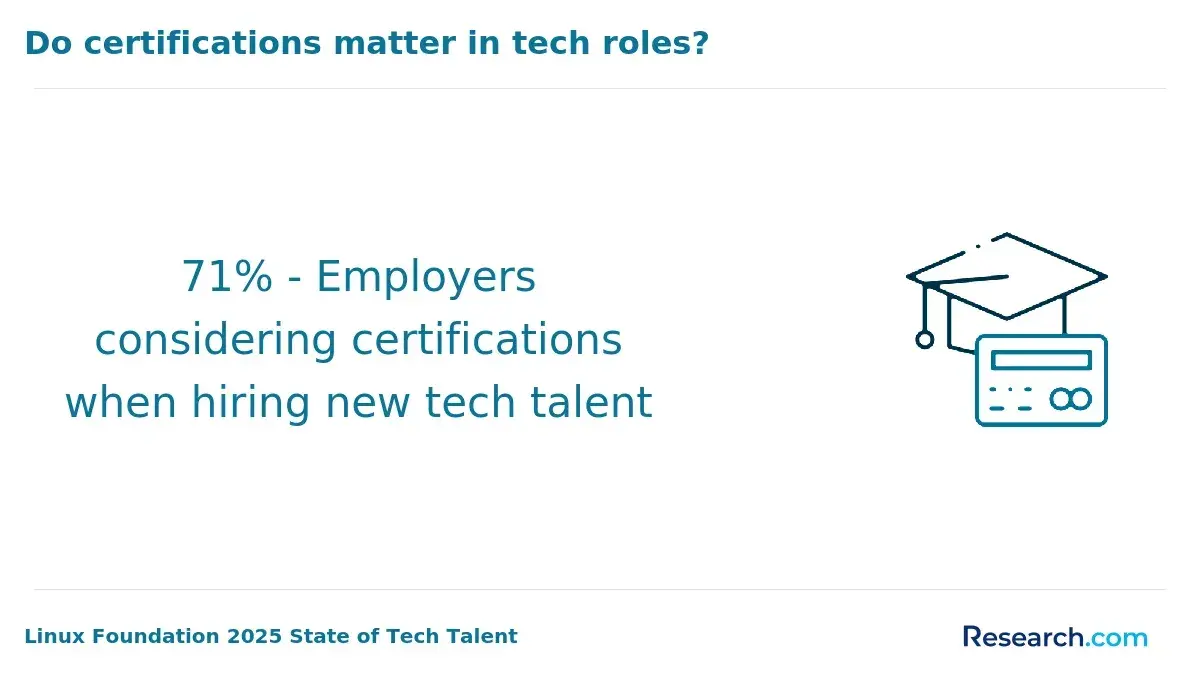
A bachelor’s degree or an associate's in computer programming can provide structure and credibility, but certifications can also strengthen a candidate’s profile. In technology, tools and expectations change quickly, so current credentials can signal that a job seeker is actively maintaining relevant skills.
Certifications alone are rarely enough if you cannot demonstrate practical ability. Non-degree candidates should build a strong portfolio, contribute to open-source projects, complete freelance or volunteer work when appropriate, and show that they can work with real requirements. Companies are increasingly using skills-based hiring practices, with 60% of employers reporting greater success in recruiting new talent.
| Path | Advantages | Trade-offs | Best for |
| College degree | Structured curriculum, broader theory, career services, internship access, recognizable credential | Requires time, tuition, and sustained academic commitment | Students who want comprehensive preparation and broader career mobility |
| Associate degree | Shorter academic path and potential transfer option | May not meet degree preferences for some software engineering jobs | Students seeking entry-level preparation or a bridge to a bachelor’s program |
| Bootcamp | Fast, practical, project-focused training | Quality varies and the pace can be intense | Career changers who can commit to concentrated training and portfolio building |
| Self-study plus certifications | Flexible and potentially lower cost | Requires discipline and may need stronger proof of ability | Motivated learners who can build projects and network independently |
How Can I Advance My Career in Computer Programming?
A programming degree can help establish a foundation, but career growth usually depends on what you do after the credential. Advancement comes from solving harder problems, owning larger systems, communicating well, and building expertise that employers value.
- Specialize deliberately: Choose an area such as cybersecurity, cloud computing, data science, machine learning, mobile development, or systems programming. Specialization can help you move from general coding tasks into more strategic or higher-responsibility roles.
- Contribute to open source: Open-source work can show collaboration, code quality, initiative, and familiarity with professional development workflows. It also allows newer programmers to learn from experienced contributors.
- Keep learning: Programming tools change often. Read technical documentation, follow industry publications, attend workshops, and participate in communities where working professionals discuss current practices.
- Build a network: Meet other programmers through conferences, meetups, online forums, alumni groups, and professional associations. Many opportunities come through relationships before they appear on job boards.
- Develop leadership skills: Senior programmers often influence architecture, mentor others, review code, and explain trade-offs to business stakeholders. Communication and judgment become more important as responsibility increases.
What Is a Computer Programming Portfolio and Why Is It Important?
A computer programming portfolio is a curated collection of projects that shows what you can build, how you solve problems, and how you communicate technical decisions. It is especially important for entry-level candidates, career changers, and applicants without a traditional degree because it gives employers concrete evidence of ability.
- It proves skills with examples: Instead of listing Python, Java, or C++ on a resume, you can show projects that use those languages in practical ways.
- It reveals your problem-solving process: Strong portfolios explain the problem, your approach, the trade-offs you considered, and what you would improve next.
- It shows code quality: Employers can review your structure, naming, documentation, testing, and maintainability.
- It highlights creativity: A portfolio can demonstrate original thinking, useful features, clean interfaces, or thoughtful automation.
- It signals motivation: Building and maintaining a portfolio takes effort, which helps employers see your commitment to the field.
What to include in a strong programming portfolio
- Three to five polished projects that match your target role.
- A short explanation of the user problem or technical challenge each project addresses.
- Clean code repositories with readable documentation.
- Notes about tools, languages, frameworks, databases, APIs, and deployment choices.
- Testing examples, screenshots, demos, or deployment links when appropriate.
- A brief reflection on what you learned and what you would improve.
Can I Transition Into a Computer Programming Career With No Prior Experience?
Yes. People do move into programming from unrelated backgrounds, but the transition requires focused effort, realistic expectations, and consistent practice. The main challenge is not only learning syntax; it is learning how to think like a developer, debug systematically, understand software architecture, and work with professional tools.
Several paths can help you enter the field, and each has different costs, timelines, and risks.
- Formal education: You can study computer science or a related field through traditional or online programs, including options among the cheapest online computer science degree programs. A degree provides a broad foundation in programming, algorithms, databases, systems, and software engineering, but it requires a significant time and financial commitment.
- Bootcamps: Coding bootcamps focus on job-oriented skills and portfolio development. They can be faster than degrees, but quality, employer recognition, support services, and cost vary widely.
- Self-learning: Free and low-cost tutorials, documentation, online communities, and practice platforms can work well for disciplined learners. The challenge is creating structure, getting feedback, and proving readiness to employers.
| Career-change step | What to do | Why it matters |
| Choose a target job | Research junior developer, web developer, QA automation, technical support, data analyst, and IT roles. | A clear target prevents random course-taking and helps you build relevant projects. |
| Build fundamentals | Study programming logic, data structures, databases, Git, testing, and debugging. | Fundamentals transfer across languages and frameworks. |
| Create proof of work | Develop portfolio projects that solve real problems and explain your process. | Employers need evidence that you can apply what you learned. |
| Gain practical experience | Pursue internships, volunteer technical work, freelance tasks, open-source contributions, or internal projects. | Experience helps close the gap between tutorials and workplace expectations. |
| Network intentionally | Talk with developers, alumni, mentors, recruiters, and hiring managers. | Career changers often need referrals and advice to identify realistic entry points. |
How Does Interdisciplinary Knowledge Enhance Computer Programming Careers?
Programmers who understand another field can often build better software for that field. Interdisciplinary knowledge helps developers understand users, workflows, constraints, and industry language. This can be especially valuable in areas such as healthcare, finance, education technology, gaming, cybersecurity, biotechnology, data analytics, and design.
For example, design knowledge can help programmers create better interfaces, clearer user flows, and more accessible digital products. Students who want to combine coding with visual communication may consider a graphic design online degree to develop skills in design theory, typography, layout, and digital media tools. This combination can support roles in UX/UI development, web applications, interactive media, game development, and virtual reality programming.
Interdisciplinary expertise also supports leadership. Programmers who can translate between technical teams and business, design, scientific, or clinical stakeholders are often better prepared to manage projects, define requirements, and propose practical solutions.
How Do Factors Like Location and Experience Affect Programmer Salaries?
Programmer salaries vary by location, experience, specialization, employer type, and whether the role requires advanced technical knowledge. Averages are useful starting points, but they do not guarantee what an individual candidate will earn.
Location
- Tech hubs and high-cost markets: Cities with many technology employers, such as Silicon Valley, New York City, or Seattle, often offer higher salaries because companies compete for talent and local living costs may be higher.
- Smaller or less competitive markets: Areas with fewer technology employers may offer lower salaries, although they may also have lower living costs.
- Remote work: Remote hiring has changed salary expectations. Some employers adjust pay based on where employees live, while others use more standardized compensation bands.
Experience
- Entry-level versus senior roles: More experienced programmers generally earn more because they can handle complex systems, mentor others, reduce technical risk, and make architecture decisions. Entry-level programmers might start in the low six figures in some settings, while senior developers with specialized skills can reach salaries well over $100,000.
- Depth of experience: Years of experience can matter, but employers also evaluate the quality of that experience. Programmers who have shipped products, led projects, improved performance, strengthened security, or modernized systems may command stronger compensation.
The table below shows the highest-paying cities for computer programmers in the US.
| City | Annual Salary |
| Morrisville, PA | $97,514 |
| San Jose, CA | $76,856 |
| Albany, NY | $70,066 |
| Seattle, WA | $65,021 |
| Fargo, ND | $64,960 |
| Orlando, FL | $63,971 |
| Pittsburgh, PA | $60,000 |
| Yuma Proving Ground, AZ | $52,951 |
| El Paso, TX | $50,134 |
How Can Mentorship and Professional Networking Accelerate My Computer Programming Career?
Mentorship can shorten the trial-and-error phase of a programming career. Experienced professionals can help you choose a realistic learning path, review your projects, explain hiring expectations, identify weak spots, and recommend roles that match your current level. Networking also helps you discover opportunities that may not appear through standard job postings.
Useful networking activities include attending local meetups, joining online developer communities, participating in open-source projects, connecting with alumni, and asking working programmers for informational interviews. These relationships can provide technical feedback, referrals, internship leads, and clearer insight into competitive computer programming jobs.
What Is the Job Outlook for Computer Programming Careers?
According to the US Bureau of Labor Statistics (BLS), employment of computer programmers is projected to decline by 6 percent from 2024 to 2034. Even with that decline, about 5,500 openings for computer programmers are projected each year, on average, over the decade. Many of these openings are expected because workers transfer to other occupations or leave the labor force, including retirement.
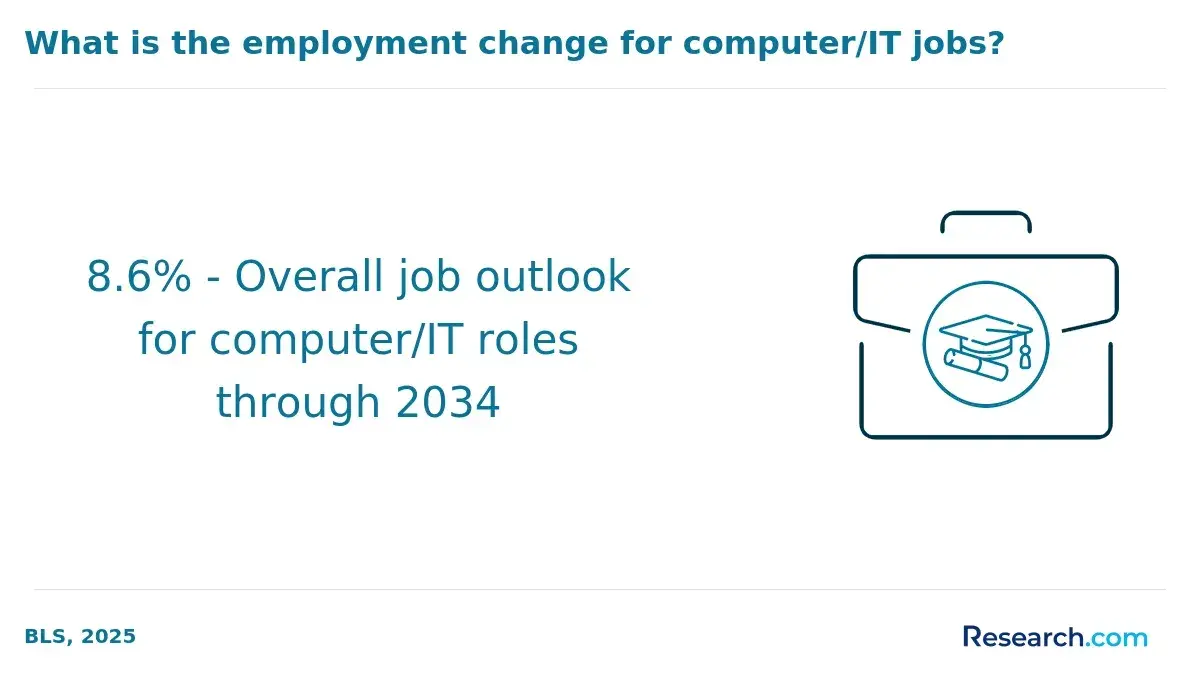
The broader outlook for computer and information technology occupations is stronger. Employment in these occupations is projected to grow much faster than the average for all occupations over the same period, with about 317,700 job openings expected each year, on average. This distinction matters: traditional programming roles may shrink, but technology work overall continues to create opportunities for people with adaptable, current skills.
| What the outlook means | Practical takeaway |
| Traditional computer programmer roles face projected decline. | Do not rely only on basic coding skills or narrow job titles. |
| Broader computer and IT occupations show strong opening projections. | Consider adjacent roles in software engineering, cybersecurity, cloud, data, systems, and support. |
| Many openings come from replacement needs. | Entry points may still exist, but applicants need clear evidence of current skills. |
| Technology tools change quickly. | Continuous learning is not optional; it is part of career maintenance. |
What Unique Cybersecurity Skills Can Enhance a Computer Programmer’s Career?
Cybersecurity knowledge can make programmers more valuable because insecure code can create costly risks. Programmers who understand secure coding, authentication, authorization, encryption basics, vulnerability assessment, and threat mitigation are better prepared to build systems that protect users and organizations.
Security-focused programmers should learn how common vulnerabilities occur, how to review code for risk, and how to design safer systems from the beginning instead of adding security at the end. Advanced academic pathways and certifications can reinforce these skills. For professionals who want deeper training while pursuing higher credentials, the cheapest online PhD in cyber security resource can help compare options that connect programming and cybersecurity expertise.
Highest-Paying Computer Science Jobs and Career Advancement Opportunities
Programming can lead to higher-paying computer science careers, but those roles usually require more than entry-level coding. Professionals often need advanced technical depth, architecture experience, domain knowledge, leadership ability, and a track record of delivering complex projects. While the entry-level salary for computer programmers is approximately $61,731 per year, many related roles can offer greater earning potential as skills and responsibilities increase.
Programming professionals may work toward roles such as:
- Software Engineering Manager: Leads development teams, oversees project delivery, manages technical priorities, and helps ensure that software is reliable, maintainable, and aligned with business goals.
- Data Scientist: Uses programming, statistics, analytics, and domain knowledge to extract insights from complex data and support better decisions.
- Artificial Intelligence (AI) Engineer: Develops systems that use data-driven models, automation, and machine learning methods to solve advanced problems.
- Full Stack Developer: Works across front-end and back-end development, making this role valuable for teams that need flexible contributors who understand complete application workflows.
- Cybersecurity Engineer: Designs and implements measures that protect systems, applications, networks, and data from threats.
- Blockchain Developer: Builds applications and systems using blockchain technology in fields such as finance and healthcare.
To compete for these roles, focus on advanced technical skills, leadership, portfolio depth, practical experience, and current industry knowledge. Further education, specialized certifications, and focused programs such as a 2-year computer science degree online may also support career movement when they align with your target role.
If you want to compare advanced options by role and earning potential, Research.com’s guide to the highest paying computer science jobs can help you identify career paths that match your interests and strengths.
What Are Some Lesser-Known Computer Programming Career Paths?
Many people associate programming with web development or general software development, but coding skills also apply in specialized fields that may be a better fit for certain interests.
- Game scripting and development: Game scripting focuses on the behaviors, interactions, events, and automation inside games. It often involves languages such as Lua or Python and suits people who enjoy both technical systems and interactive storytelling.
- Embedded systems programming: Embedded programmers write software for devices such as medical equipment, smart appliances, and automotive systems. This path often requires C, Assembly, hardware knowledge, and attention to reliability.
- Algorithm development: Algorithm specialists work on optimization, machine learning, financial modeling, analytics, and other mathematically demanding problems.
- Robotics programming: Robotics programmers write software that controls hardware, processes sensor data, and supports automation. Common tools may include C++, Python, and robotics frameworks such as ROS.
- Digital signal processing (DSP) engineering: DSP work involves audio, video, telecommunications, sensor data, biomedical engineering, and multimedia systems, often using MATLAB, Python, or C++.
Exploring less common paths can help you connect programming with a personal interest, such as gaming, healthcare, robotics, music technology, automotive systems, or scientific computing.
What Options Are Available for Online Education in Computer Programming?
Online education can be useful for working adults, parents, career changers, rural students, and learners who need flexibility. Options range from full degree programs to short technical certificates and language-specific courses.
An online software development degree can provide structured study in software engineering principles, programming languages, databases, systems design, and development methods. Shorter online courses and certifications may help learners add specific skills such as Python, Java, cloud tools, web frameworks, cybersecurity, or data analytics.
| Online option | Best for | What to check before enrolling |
| Online bachelor’s degree | Students who want a recognized credential and broad preparation | Accreditation, transfer credit policies, career services, tuition, and course delivery format |
| Online associate degree | Learners seeking a shorter academic route or transfer pathway | Transfer agreements, programming courses, general education requirements, and employer recognition |
| Bootcamp | Career changers seeking fast, practical training | Curriculum quality, instructor experience, completion outcomes, portfolio support, and job assistance |
| Certificate or single-course training | Working professionals who need targeted upskilling | Skill relevance, hands-on projects, assessment quality, and industry recognition |
How Can Interdisciplinary Expertise Enhance Computer Programming Career Opportunities?
Programming becomes more powerful when combined with subject-matter expertise. A programmer who understands biotechnology, engineering, finance, education, logistics, or analytics can often build more useful tools because they understand the real-world problems behind the code.
For example, professionals exploring technology-adjacent fields can compare opportunities and compensation considerations through resources such as the biotechnology masters salary guide. This type of cross-field awareness can help programmers identify industries where their technical skills may have strong practical value.
What Role Do Internships and Co-op Programs Play in Building a Computer Programming Career?
Internships and co-op programs give aspiring programmers experience with real teams, real deadlines, and real codebases. They help students apply classroom knowledge, understand workplace tools, and learn how software projects move from requirements to testing, deployment, and maintenance.
These experiences can strengthen a portfolio and build soft skills such as communication, collaboration, and task ownership. They can also lead to full-time opportunities when employers convert successful interns into permanent employees. Combining practical experience with academic study, such as a 2 year online computer science degree, can help students graduate with stronger evidence of job readiness.
How Can I Finance My Computer Programming Education Effectively?
Before committing to a program, compare the full cost, not just tuition. Include fees, software, equipment, books, exam costs, commuting, lost work time, and whether credits transfer. Financing options may include scholarships, grants, employer tuition assistance, payment plans, federal aid for eligible programs, and carefully evaluated income-share agreements.
Students considering advanced or adjacent technical fields should compare affordability with long-term value. For example, researching the cheapest data science masters in USA can help learners understand how specialized graduate programs may support technical career goals while controlling cost.
Questions to ask before paying for a programming program
- Is the institution or program properly accredited where applicable?
- What is the total cost, including fees, materials, and required technology?
- Can I transfer credits in or out of the program?
- Does the curriculum include current tools, projects, and career-relevant assignments?
- Are internships, co-ops, career coaching, or employer connections available?
- What portfolio projects will I complete before graduation?
- How does the program support working students or part-time learners?
How Can Artificial Intelligence Innovations Reshape a Computer Programming Career?
Artificial intelligence is changing how programmers work. AI coding tools can help with code suggestions, documentation, debugging ideas, test generation, and repetitive tasks. At the same time, these tools make human judgment more important: programmers still need to understand requirements, evaluate output, protect security, test thoroughly, and design systems responsibly.
Programmers who understand AI concepts, data workflows, model limitations, and automation may be better prepared for emerging roles. Learners who want structured training can review the cheapest online artificial intelligence degree programs to compare academic options that build on traditional programming skills.
How Can You Future-Proof Your Computer Programming Skills?
Future-proofing does not mean chasing every new framework. It means building durable fundamentals while adding current tools that fit your career goals. The programmers most likely to adapt are those who understand computer science concepts, can learn new technologies quickly, and can explain why one technical solution is better than another.
- Strengthen fundamentals: Keep improving algorithms, data structures, databases, networking, operating systems, security, and software design.
- Learn AI-assisted development carefully: Use AI tools to improve productivity, but verify code, test outputs, and understand what the tool generated.
- Build domain knowledge: Pair programming with an industry such as healthcare, finance, education, cybersecurity, logistics, or biotechnology.
- Maintain a portfolio: Update projects so they reflect current tools, real problems, and clean engineering practices.
- Develop communication and leadership: Senior roles require more than code. They require technical judgment, collaboration, and the ability to guide decisions.
Students who want formal preparation in emerging technologies can explore AI degree programs while continuing to build core programming strength.
What Are the Educational Pathways to Become a Computer Programmer?
There is no single correct educational path into programming. The right choice depends on your budget, schedule, prior education, learning style, target role, and whether employers in your desired field expect a degree.
- Traditional four-year degree programs: A bachelor’s degree in computer science or a related field can provide broad preparation in programming, algorithms, systems, software engineering, mathematics, and specializations such as artificial intelligence or cybersecurity.
- Community colleges and associate degrees: Two-year programs can prepare students for entry-level roles or provide transferable credits toward a bachelor’s degree.
- Coding bootcamps: Bootcamps are short, intensive programs focused on practical development skills, portfolio work, and job preparation. They may fit career changers who need a faster route, but students should evaluate quality carefully.
- Online bachelor’s degrees: Flexible online programs can serve working adults, parents, and students who cannot attend campus full time. When comparing options, confirm whether the program is an accredited online bachelor degree and review course delivery, faculty support, and career services.
- Certifications: Certifications in languages, cloud platforms, security, or specific tools can strengthen a resume when paired with projects and experience.
- Continuous learning: Programming careers require ongoing study. Workshops, documentation, professional communities, and advanced courses help programmers stay current as technologies evolve.
Common Mistakes to Avoid When Planning a Programming Career
| Mistake | Why it hurts | Better approach |
| Choosing a program based only on tuition | A cheaper program may not offer strong instruction, projects, support, or transfer options. | Compare total cost, accreditation, curriculum quality, career support, and portfolio outcomes. |
| Learning too many languages at once | Jumping between tools can prevent deep understanding. | Master one primary language, then add others based on your target role. |
| Ignoring portfolios | Employers need proof that you can build, debug, and explain software. | Create polished projects with documentation, tests, and clear problem statements. |
| Assuming a degree guarantees a job | Credentials help, but hiring also depends on skills, projects, interviews, and market conditions. | Use school to build experience, network, and complete career-relevant projects. |
| Relying only on rankings | Rankings may not reflect your budget, schedule, learning needs, or career goals. | Use rankings as one input, then compare fit, outcomes, support, and curriculum. |
| Overlooking security | Insecure code can create major business and user risks. | Learn secure coding principles early and apply them in every project. |
Key Insights
- Computer programming remains a useful career foundation, but the strongest opportunities often sit in related areas such as software engineering, cybersecurity, cloud computing, AI, systems administration, data, and web development.
- The average annual salary for computer programmers is $61,731, but earnings vary by role, location, specialization, and experience. Salary averages should guide expectations, not promise outcomes.
- BLS projections show a 6 percent decline for computer programmers from 2024 to 2034, while broader computer and information technology occupations are projected to grow much faster than average. Build skills for the broader technology market, not just one job title.
- A degree can help, but it is not the only path. Employers may consider candidates with strong portfolios, certifications, internships, open-source work, bootcamp training, or self-taught experience.
- A programming portfolio is one of the most important assets for beginners and career changers because it shows practical ability, problem-solving, code quality, and initiative.
- AI tools are changing programming work, but they do not replace the need for fundamentals. Programmers still need to understand systems, test code, manage security, and make sound technical decisions.
- The best education path depends on your target role, budget, schedule, and need for structure. Compare accreditation, curriculum, career services, transfer policies, and total cost before enrolling.
References:
- BLS. (2025). Computer and Information Technology Occupations: Occupational Outlook Handbook. BLS
- BLS. (2025). Computer Programmers: Occupational Outlook Handbook. BLS
- McKinsey. Defining the skills citizens will need in the future world of work. McKinsey
- Indeed. (2025). How to get a computer programming job without a degree. Indeed
- Indeed. (2026). Computer programmer salary in the United States. Indeed
- Indeed. (2026). Computer scientist salary in the United States. Indeed
- Indeed. (2026). Digital designer salary in the United States. Indeed
- Indeed. (2026). Hardware engineer salary in the United States. Indeed
- Indeed. (2026). Information security analyst salary in the United States. Indeed
- Indeed. (2026). Information systems manager salary in the United States. Indeed
- Indeed. (2026). Network administrator salary in the United States. Indeed
- Indeed. (2026). Network architect salary in the United States. Indeed
- Indeed. (2026). Systems analyst salary in the United States. Indeed
- Indeed. (2026). Technical support specialist salary in the United States. Indeed
Other Things You Should Know About Computer Programming Careers
Computer programming programs in 2027 stay current by frequently updating their curriculum, collaborating with tech companies, and integrating the latest technologies like AI and machine learning. They emphasize continuous learning, exposure to current industry tools, and collaboration on real-world projects to prepare students for the evolving digital landscape.
Choosing computer programming as a career in 2027 is advantageous due to the continued growth in technology sectors, leading to high demand for skilled programmers. Salaries are competitive, and diverse career paths are available, ranging from web development to artificial intelligence. Continuous learning and adaptability ensure sustained career relevance.
In a computer programming program in the US, students can expect to participate in a variety of hands-on coding experiences and projects, including:
- Capstone Projects: Many programs culminate in a capstone project where students design, develop, and deploy a full-scale software application. This project integrates the skills and knowledge acquired throughout the program and often involves teamwork.
- Internships: Programs often include internships with tech companies, startups, or research labs. These internships provide real-world experience, allowing students to apply their coding skills in professional environments and gain insights into industry practices.
- Hackathons: Students may participate in hackathons, which are intensive coding events where they work in teams to create innovative solutions to given problems within a limited timeframe. Hackathons foster creativity, collaboration, and rapid problem-solving skills.
- Collaborative Projects: Throughout the program, students work on group projects that simulate real-world software development scenarios. These projects often involve version control systems like Git, project management tools, and collaborative coding environments.
- Course-Specific Assignments: Each course typically includes hands-on assignments and projects. For example, a course on web development might involve creating a fully functional website, while a course on algorithms might require implementing and optimizing various algorithms.
- Open Source Contributions: Some programs encourage or require students to contribute to open source projects. This experience helps students build a portfolio of work, engage with the global coding community, and understand collaborative development processes.
- Laboratory Work: Lab sessions are integral parts of many courses, where students get hands-on experience with coding, debugging, and testing software. Labs may focus on specific areas like operating systems, databases, or networking.
- Research Projects: Advanced programs may offer opportunities to participate in research projects under the guidance of faculty members. These projects often involve cutting-edge technologies and methodologies, providing a deeper understanding of specific areas within computer programming.
- Coding Bootcamps: Some programs include short, intensive coding bootcamps that focus on specific skills or technologies. These bootcamps are designed to quickly bring students up to speed with industry-relevant tools and practices.
Industry Partnerships: Programs may partner with tech companies to provide real-world project opportunities, guest lectures, and mentorship. These partnerships help bridge the gap between academic learning and industry demands.





