2027 BS in Business Administration Transfer Planning: Credit for an Apprenticeship with Business Coursework
Audited and Verified:
Our Editorial and Data Verification Process
Research.com uses government datasets, official education statistics and primary institutional information to support its career and degree guides. Our review process checks factual accuracy, occupational definitions, source dates and the requirements associated with the credentials discussed.
How This Article Was Fact-Checked
Our editorial team verifies salary estimates, employment projections, education requirements and program information against original data providers and official organizations. Salary figures are checked against the relevant occupational definitions and reporting periods. Information about licensure, accreditation and required in-person training is reviewed separately.
Fact-checked and verified on:

Co-Founder and Chief Data Scientist
An apprenticeship may have taught you to manage schedules, inventory, customers, or staff - and it may include college-level business classes. But those experiences do not automatically shorten a BS in Business Administration. For apprentices and returning students, the consequential question is where each approved credit will fit: a required course, general education, or an elective. This guide explains how to document your learning, request an evaluation, compare degree plans, and avoid paying for courses that do not move you toward graduation.
Key Things You Should Know
- Apprenticeship training can earn degree credit when a college accepts documented college coursework or evaluates other learning under its own policy; work hours alone do not guarantee credit.
- Ask for a written degree audit showing whether each award satisfies general education, the business core, a concentration, or electives. Accepted credits and credits that reduce required coursework are not the same thing.
- Compare remaining required courses and their cost, not just the total credits advertised as transferable; prerequisites, residency rules, and course availability can determine your actual finish date.
What Is a BS in Business Administration Transfer Plan for Apprenticeship Credit?
A transfer plan matches your apprenticeship-related learning and previous college work against one college's BS in Business Administration requirements. It identifies what the college has accepted, what each credit fulfills, what remains, and when you can take the remaining courses. The receiving college - not the apprenticeship sponsor - decides how learning applies to its degree.
Keep three categories separate: transcripted college courses taken during an apprenticeship, training that a college may evaluate for credit, and job experience that may support a separate prior-learning assessment. Admission to a college or its business major is another decision entirely. Compare your transcript with the school's college coursework required for business administration entry, then ask which requirements your prior classes actually satisfy.
Can Apprenticeship Training Count for Business Administration Degree Credit?
Yes, potentially. The strongest transfer case is a course already recorded on an official college transcript. Other related instruction may qualify through a receiving college's established evaluation process, while work-based learning may require a portfolio, examination, or faculty assessment. An apprenticeship completion certificate establishes completion; by itself, it does not establish college credit or a business-course equivalency.
The distinction matters most when training resembles a business subject but does not cover the full course outcomes. This comparison shows what to ask the receiving college to evaluate.
| Learning record | Possible evaluation | Key limitation |
| Transcripted accounting or management course | Course-to-course transfer review | Level, content, grade, and credit rules still apply |
| Documented apprenticeship classroom training | Evaluation under the college's apprenticeship or prior-learning policy | May receive elective credit rather than a core-course equivalent |
| Supervised workplace responsibilities | Portfolio or other prior-learning assessment, if offered | Hours worked alone do not demonstrate every course outcome |
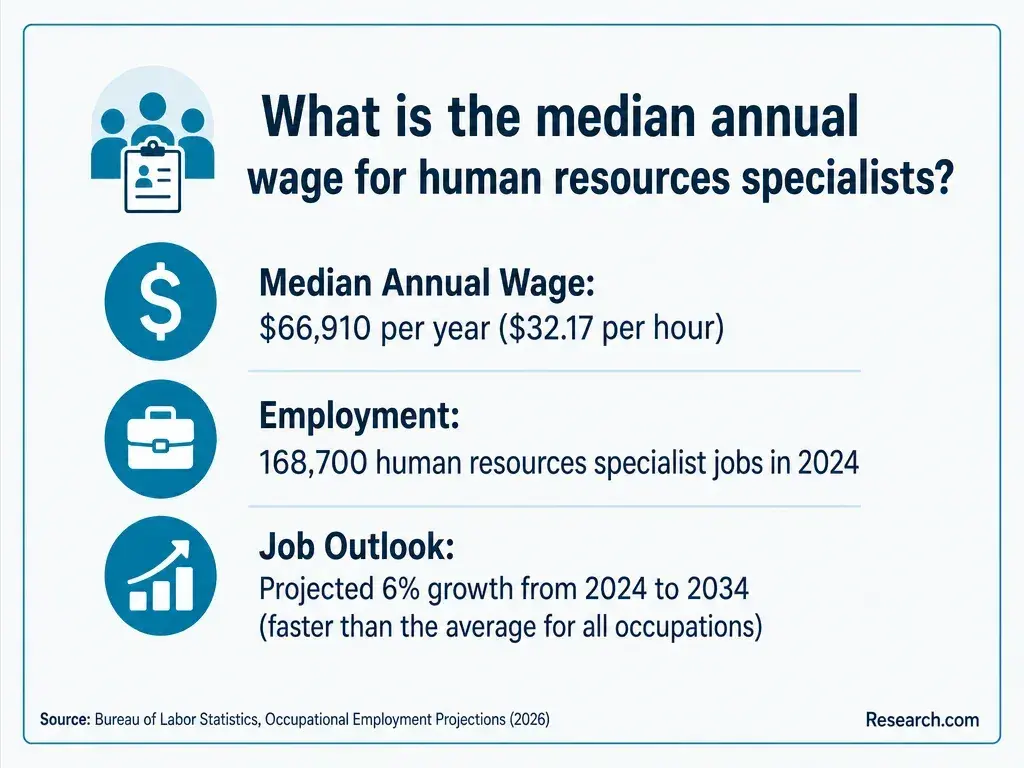
For example, an HR apprenticeship may provide valuable experience without satisfying an entire organizational behavior course. If HR is your intended field, compare credit acceptance at online HR schools as well as in general business programs; the more specialized curriculum may classify the same learning differently.
How Do You Transfer Apprenticeship Credits Into a BSBA Program?
Start before enrolling in courses that might duplicate your training. The sequence below separates an informal estimate from the decisions you need for a workable graduation plan.
- Choose a specific BSBA program and catalog term; obtain its degree requirements and transfer-credit policy.
- Send official college transcripts and ask the transfer office how it reviews apprenticeship instruction and prior learning.
- Submit supporting training records through the college's designated process; ask whether evaluation fees or deadlines apply.
- Request a degree audit identifying accepted credits, their requirement categories, and any denied or unassigned learning.
- Review missing prerequisites, concentration rules, residency credits, and course scheduling with a business adviser; use the appeal or substitution process if the evidence supports it.
Before paying several application charges to obtain evaluations, check whether prospective online universities with no application charge will review your records. Confirm what each school can assess before admission and whether its estimate becomes official only after enrollment.
Ask the receiving college for its exact submission requirements. A complete packet makes it easier to distinguish college coursework from apprenticeship training and to assess what you learned, rather than relying on a job title.
- Official transcripts from every college that recorded related instruction, including course titles, grades, and credits.
- Apprenticeship completion and training records identifying the sponsor, dates, instructional hours, and completed components.
- Syllabi, training outlines, assessments, and learning outcomes for instruction you want matched to a business course.
- Supervisor-verified descriptions of relevant responsibilities and permitted work samples if the college offers a prior-learning assessment.
Request records from the original issuer where possible; a résumé is not a substitute for an official transcript. Redact customer, employee, and proprietary information from work samples unless the college provides a secure, authorized process. Keep copies of the resulting evaluation for cost comparisons: when considering cheaper business administration study with FAFSA-based aid, the useful figure is the price of your remaining applicable coursework, not the published price of a full degree.
Choose remaining classes by the gaps in your degree audit and target role, not by how familiar a course title sounds. An apprentice who has coordinated purchasing may bring practical supplier knowledge but still need accounting, statistics, and finance to interpret costs and make defensible recommendations. Someone with customer-service experience may benefit from marketing research and data analysis rather than another broad introduction to service.
Check the sequence: a quantitative prerequisite can delay a later analytics or finance course even when you have substantial workplace experience. If a logistics apprenticeship points toward a specialized supply chain role, compare BSBA electives with supply chain undergraduate programs with shorter terms. A specialized program is worthwhile only if its requirements fit your transfer record and develop the function you intend to pursue; shorter terms alone do not mean fewer required courses.
Some do, but accreditation does not require a college to award apprenticeship credit. Check that the institution holds recognized institutional accreditation, then examine its own policies for transcripted transfer courses, apprenticeship training, and prior-learning assessment. AACSB, ACBSP, or IACBE accreditation, where applicable, has a different scope from institutional accreditation; verify whether it covers the business program you are considering rather than treating the label as a transfer-credit promise.
Ask whether credit awarded for training appears on the transcript, whether it fulfills BSBA requirements, and whether a prior-learning award has fees or limits. Program-level cost comparisons, including lower-cost supply chain completion routes, are useful only after you check how each institution applies your credits. A lower published tuition rate can lose its advantage if substantially more coursework remains.
Delivery format does not determine whether apprenticeship learning earns credit; the institution's evaluation and degree policies do. An online and campus version of the same BSBA may follow the same academic requirements, but confirm that the policy applies to your specific program and enrollment term.
Scheduling can still change the value of a credit award. If a required accounting course is offered infrequently, elective credit will not remove that bottleneck. Check live-session times, group projects, proctored assessments, campus visits, and the availability of upper-level business courses. Use accelerated bachelor's program comparisons to identify formats worth investigating, then verify their actual calendars and obligations; accelerated does not mean self-paced.
There is no reliable completion estimate until a college maps your learning to its requirements. Two schools can accept the same apprenticeship-related credits but leave you with different amounts of required coursework. A degree audit, course rotation, and realistic work schedule are better planning tools than an advertised "credits accepted" figure.
Compare offers using the same cost components. This table shows what can change your total even if tuition rates appear similar.
| Cost or timing factor | What to compare |
| Remaining coursework | Required courses after transfer, including prerequisites and residency credits |
| Direct charges | Tuition, mandatory fees, assessment charges, books, software, and travel |
| Calendar and cash flow | Course availability, enrollment pace, aid eligibility, and employer reimbursement timing |
Ask the financial-aid office how awarded credit and your planned enrollment affect eligibility; do not assume prior-learning assessment fees are aid-covered. If you are comparing the BSBA with a more specialized project management degree, review financial aid for online project management bachelor's degrees under the same remaining-course and out-of-pocket assumptions.
Apprenticeship experience and a BSBA can complement each other in operations, procurement, customer support, project coordination, or other business functions. Your next role depends on the tasks you have actually performed, the skills you can demonstrate, and employer requirements - not the degree title alone. Supervisory or specialist positions may require additional function-specific experience.
For context, the U.S. Bureau of Labor Statistics reports a May 2025 median annual wage of $82,320 for logisticians, an occupation that may interest someone with supply chain apprenticeship experience. That is an occupation-wide median, not a starting salary or an expected outcome for BSBA graduates. If logistics is your goal, compare the curriculum and transfer fit of a general BSBA with supply chain undergraduate programs with shorter terms before choosing on degree speed alone.
How Should You Choose a Reputable BSBA Program for Apprenticeship Credit?
Request comparable, written evaluations from your strongest options. Prioritize a program that applies documented learning to requirements you would otherwise have to take, offers the remaining courses when you can attend, and provides a credible total-cost estimate. A large elective-credit award is less useful if accounting, statistics, upper-level business courses, and residency requirements remain untouched.
Before committing, ask the transfer office which decisions are final, the business adviser to confirm the course-by-course graduation path, and the financial-aid office to assess your proposed enrollment. If an equivalency looks wrong, ask what evidence an appeal needs and who has authority to approve a substitution. You can use online business bachelor's degrees with shorter timelines as a shortlist, but select from it only after checking your own audit. The best completion plan is the one you can document, afford, and schedule - not the one with the broadest transfer-credit claim.
Other Things You Should Know About Business Administration
Possibly, if your chosen college evaluates documented apprenticeship instruction or offers prior-learning assessment. Ask which records it requires and whether the resulting credit can satisfy a degree requirement.
No. Registration and college credit are separate matters. The receiving college decides whether to award credit and how any award applies to its BSBA.
You may request evaluations from multiple colleges, but each makes its own decision. One school's credit award does not obligate another to accept it.
Only if the BSBA program expressly approves it under that requirement's rules. Credit for prior learning, an approved internship, and a faculty-assessed capstone are distinct academic decisions.
- Credit for Prior Learning | Transfer Credit Ohio https://transfercredit.ohio.gov/students/student-programs/Prior-Learning-Assessments
- Can previous work or classroom experience be used towards completion of an apprenticeship program? https://www.apprenticeship.gov/help/can-previous-work-or-classroom-experience-be-used-towards-completion-apprenticeship-program
- Credit for Prior Learning - The City University of New York https://www.cuny.edu/academics/academic-policy/credit-prior-learning/
- College Credit for Students and Learners | acenet.edu https://www.acenet.edu/Programs-Services/Pages/Credit-Transcripts/Students.aspx
- Transfer Credit and Credit for Prior Learning | gtcc.edu https://www.gtcc.edu/student-life/records-and-transcripts/transfer-credit-and-credit-for-prior-learning.php
- College Credit for Your Apprenticeship | Macomb Community College https://www.macomb.edu/admissions-aid/credit-for-prior-learning/apprenticeship.html
- Credit for Prior Learning - Wayne State College Nebraska https://www.wsc.edu/records-registration/credit-prior-learning
- Academic Information | herzing.edu https://catalog.herzing.edu/content.php
- Transferring Credits - Cuyahoga Community College Catalog https://catalog.tri-c.edu/transfer-information/transferring-credits/
- Credit For Prior Learning | Blackhawk Technical College https://www.blackhawk.edu/Admissions/Credit-For-Prior-Learning