2027 Online BS in Business Administration vs. a BS in Nonprofit Management: Which Route Fits Your Career Plan?
Audited and Verified:
Our Editorial and Data Verification Process
Research.com uses government datasets, official education statistics and primary institutional information to support its career and degree guides. Our review process checks factual accuracy, occupational definitions, source dates and the requirements associated with the credentials discussed.
How This Article Was Fact-Checked
Our editorial team verifies salary estimates, employment projections, education requirements and program information against original data providers and official organizations. Salary figures are checked against the relevant occupational definitions and reporting periods. Information about licensure, accreditation and required in-person training is reviewed separately.
Fact-checked and verified on:

Co-Founder and Chief Data Scientist
If you want to lead programs at a nonprofit, a specialized degree may seem like the obvious choice. But a broad business degree could give you more room to change sectors - and nonprofit employers need budgeting, operations, and marketing skills, too. This comparison is for prospective and returning students weighing an online BS in Business Administration against a BS in Nonprofit Management. It explains what each degree teaches, where graduates can realistically start, and which program details to check before committing tuition and time.
Key Things You Should Know
- Choose business administration for broader movement across sectors; choose nonprofit management when fundraising, mission-focused governance, and nonprofit operations are central to your plan.
- Compare specific courses and applied work, not degree titles alone: neither bachelor's degree guarantees a management job, and transferable experience can matter as much as the major.
- For perspective, the U.S. Bureau of Labor Statistics projects 7% employment growth for market research analysts from 2025 to 2035; that occupation-wide outlook is not a placement forecast for either degree.
What is the difference between a BS in Business Administration and Nonprofit Management?
A BS in Business Administration generally develops skills used across private companies, nonprofits, and government-adjacent organizations: accounting, marketing, operations, and organizational decision-making.
A BS in Nonprofit Management applies management concepts to organizations whose missions, funding sources, boards, and measures of success differ from those of many commercial firms. Neither title defines an identical curriculum at every school.
The comparison below focuses on the difference most likely to affect your choice: how directly the degree prepares you for nonprofit work versus how easily its coursework may translate to other sectors.
| Decision factor | Business administration | Nonprofit management |
| Primary emphasis | Managing business functions across industries | Managing resources and programs in mission-driven organizations |
| Likely sector-specific study | Varies by electives or concentration | May include fundraising, nonprofit governance, and program evaluation |
| Best initial fit | Students keeping several sectors or functions open | Students seeking sustained work in nonprofits or philanthropy |
| Main limitation to check | May offer little nonprofit-specific practice | May offer fewer options for advanced study in a commercial business function |
A business degree with a formal nonprofit concentration could bridge the two, but a few electives do not necessarily constitute a concentration. Compare the actual catalog requirements and projects. You can start with leading US colleges for online business study, then check whether each named program offers the nonprofit coursework you want.
Which degree offers better career opportunities and earning potential?
Business administration usually offers broader occupational flexibility; nonprofit management offers clearer sector-specific preparation. Neither degree has a single reliable salary figure. Earnings depend on the occupation, employer, location, responsibilities, and experience - not just the name on the diploma. A nonprofit employer may also value knowledge of its funding model and beneficiaries more than a candidate's major.
For one cross-sector example, the Bureau of Labor Statistics reports a May 2025 median annual wage of $75,940 for human resources specialists. That is the median for people working in the occupation, including experienced employees; it is not a starting salary or a degree-specific outcome.
Use occupation data to assess a target job, not to estimate an automatic return on either degree. A business administration education length and salary outlook guide can help frame that cost-versus-career comparison.
If you already work in a nonprofit, a specialized degree may support a move into grants, development, or program administration. If you are undecided about sector or want to retain access to corporate functions, business administration may be the safer academic default. In either case, relevant work, supervised projects, and relationships with employers will influence your options.
What do you learn in each bachelor's degree program?
Business administration programs commonly cover financial and managerial accounting, economics, marketing, management, operations, statistics, and business communication.
A nonprofit management curriculum may teach several of those foundations while putting more emphasis on fundraising, grant administration, board relationships, volunteer coordination, ethics, and measuring program results. Course names and depth vary, so inspect required courses rather than relying on a program summary.
Look especially for applied assignments tied to your intended work. A prospective nonprofit program coordinator might benefit from a budget and evaluation plan that distinguishes activities from outcomes.
A prospective business operations coordinator might benefit more from spreadsheet analysis, process mapping, and a project with a real operational constraint. Confirm whether a school offers an approved internship or capstone; current employment or volunteering does not automatically meet that requirement.
If your real goal is a specialized commercial function, neither general degree may be the strongest match. For example, compare the required operations courses in online supply chain programs balancing cost and completion time before choosing a broad business curriculum for a supply-chain career.
An online degree can remove a commute, but it does not necessarily remove scheduled obligations. Business courses may require team presentations, timed exams, or simulation meetings. Nonprofit courses may add community-based projects or an internship with a local organization. Campus programs can make in-person networking and site-based work easier, while online programs may make it more practical to keep a job or care for family.
Ask for a sample course schedule and assessment policy before treating either format as flexible. Check live-session requirements, time zones, group-work expectations, exam proctoring, accessibility support, local placement rules, and any campus visits.
An accelerated calendar changes deadlines and workload; it does not make the material easier. If pace is your deciding factor, compare fast-paced online business degrees against the hours you can consistently study each week.
Requirements depend on the institution and whether you apply as a first-year, transfer, returning, or second-degree student. Schools commonly request prior academic transcripts; some have separate entry rules for the business major or an online degree-completion track. Do not assume that either major requires nonprofit experience or that a non-business academic background rules you out.
If you have college credit, request a written evaluation showing where each accepted course applies: general education, introductory requirements, the major, electives, or residency. A course accepted for transfer may still leave you needing accounting, statistics, or a required nonprofit course.
Ask admissions about entry requirements, the registrar or transfer office about equivalencies, and an academic adviser about the remaining course sequence. Programs with frequent starts can be useful, but online bachelor's programs with short sessions still warrant a check of application deadlines and required-course availability.
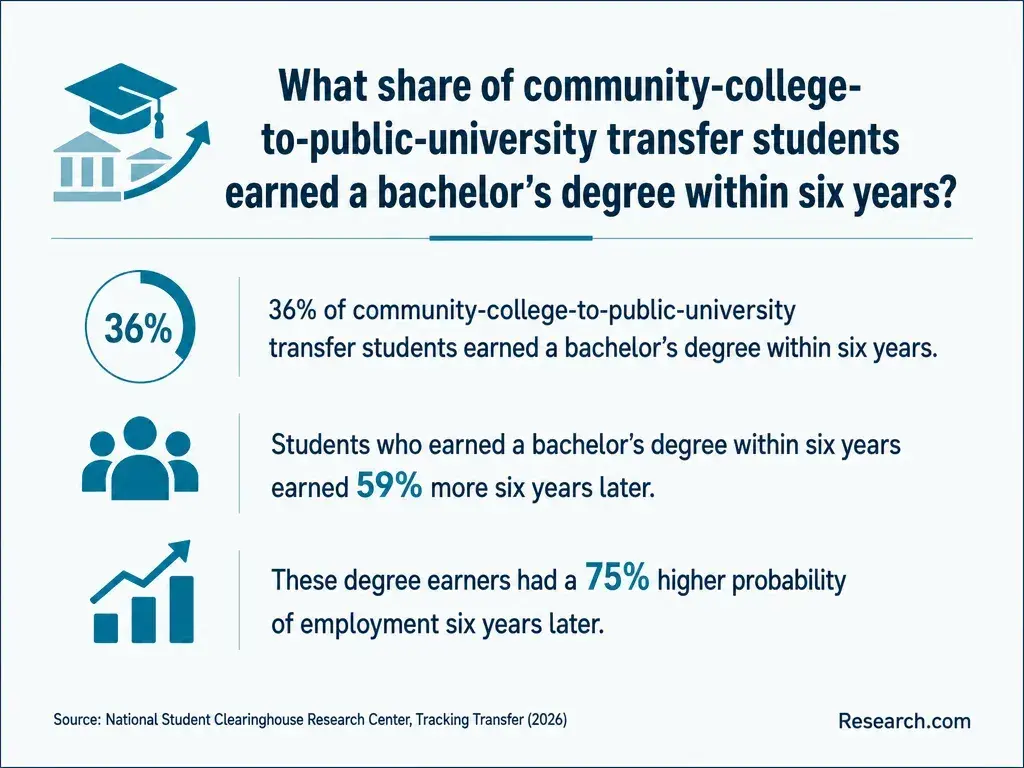
A bachelor's degree often takes about four years of full-time study from the beginning; transfer credit and part-time enrollment can change the calendar substantially. The more useful question for a returning student is how many applicable credits remain and when the school will offer each required course. A specialized nonprofit major may take longer than a business option if a required course is offered infrequently - or the reverse may be true at another institution.
Compare costs using a written degree plan and the school's current charges. Include tuition, mandatory fees, books and software, proctoring or travel, internship-related expenses, and any income you would give up to study.
Distinguish aid eligibility from aid actually awarded, and check whether employer reimbursement arrives only after you complete a course. To build a shortlist, you can find inexpensive online business administration colleges; then request a personalized estimate rather than treating an advertised tuition rate as your total cost.
Depending on prior experience, graduates may pursue work such as operations coordinator, marketing coordinator, HR assistant, sales operations associate, or project coordinator. These roles involve different tasks: tracking processes and budgets, supporting campaigns, maintaining personnel records, or coordinating schedules and stakeholders.
A bachelor's degree can help meet an employer's education preference, but it does not make a new graduate a department manager.
Match your coursework and work samples to the function you want. Someone targeting marketing could show a responsibly sourced market analysis; someone targeting operations could document a process-improvement proposal without disclosing an employer's confidential data.
For a student specifically interested in project coordination, project management schools with competitive tuition offer a more focused comparison with a general business degree. Check job postings before paying for specialization: employers may prioritize relevant coordination experience over a particular major.
Potential starting points include program coordinator, development assistant, grants assistant, volunteer coordinator, and operations associate. Program staff help deliver and document services; development staff support donor communications and fundraising; grants staff track applications, budgets, and reporting deadlines.
A graduate who already has substantial sector experience may qualify for broader responsibility, but overseeing major budgets, staff, or organizational strategy usually requires a demonstrated record beyond coursework.
Study the organizations where you want to work. A small charity may need someone who can handle several functions, while a larger organization may hire for a narrower specialty.
If your goal is nonprofit operations rather than fundraising or grants, an affordable general business program paired with relevant nonprofit work may also make sense. Online business programs for cost-conscious students provide a comparison point before you pay more for a specialized major.
Most general business coordination and nonprofit administration roles do not have a universal license tied to either bachelor's degree. Particular duties can be different: regulated accounting or financial-services work may require separate qualifications, and fundraising activities can be subject to state-specific organizational rules.
Employers may also request voluntary credentials or particular software skills. Check the exact job and jurisdiction rather than assuming the degree confers professional authority. Certification is a separate decision from choosing a major. A project management course, for example, does not itself award a professional certification or establish eligibility for one.
If you are a transfer student whose primary goal is project work, compare the degree requirements in online project management bachelor's programs accepting transfer credits, then check any desired certifying body's current rules independently.
How can you choose an accredited online degree program?
First, verify that the institution holds recognized institutional accreditation and that the exact online bachelor's program is offered under that institution. Then check whether any advertised AACSB, ACBSP, or IACBE business accreditation actually covers the school or program you are considering. Institutional accreditation and business-specific accreditation are different; neither establishes that a program has strong nonprofit placements or guarantees a job.
Request the current catalog, a program-specific degree audit, a sample term schedule, and written answers about internships or capstones. Compare the remaining courses, total likely charges, aid options, faculty access, career support, and opportunities to work with relevant organizations.
If federal aid matters, use affordable accredited business administration programs accepting FAFSA as a starting list, then confirm the school's current eligibility and your own award with its financial-aid office. The best choice is the program whose verified curriculum and completion plan fit your target role - not simply the one with the more appealing degree title.
Other Things You Should Know About Business Administration
No. Nonprofit management focuses on mission-driven, nongovernmental organizations; public administration focuses on government and public institutions. Their budgeting and leadership skills can overlap, but governance and hiring contexts differ.
It can strengthen an application or résumé when you can describe specific responsibilities and results. Employers decide how they value it; a college decides separately whether it qualifies for academic credit.
Not automatically. Compare the remaining coursework and cost with a targeted certificate, relevant work experience, or a graduate program whose prerequisites you meet. Ask each school about its second-degree rules.
No particular bachelor's major is a universal requirement for founding one. You will still need to address the applicable formation, tax, governance, fundraising, and reporting rules, often with qualified professional guidance.
- Accreditation in the U.S. | ed.gov http://www.ed.gov/laws-and-policy/higher-education-laws-and-policy/college-accreditation/accreditation-in-the-us
- Compare Fields of Study | College Scorecard https://collegescorecard.ed.gov/compare/
- Cost of Attendance (Budget) | 2025-2026 Federal Student Aid Handbook https://fsapartners.ed.gov/knowledge-center/fsa-handbook/2025-2026/vol3/ch2-cost-attendance-budget
- Choosing a School | Federal Student Aid https://studentaid.gov/resources/prepare-for-college/students/choosing-schools
- Programmatic Accrediting Agencies | congress.gov https://www.congress.gov/crs_external_products/R/HTML/R43826.web.html
- Post-Secondary Employment Outcomes Tool Shows What You Might Earn Depending on the College You Attend | Census.gov https://www.census.gov/library/stories/2022/06/job-and-earnings-prospects-by-college-and-degree.html
- Bachelor of Business Administration: Nonprofit Management Emphasis | University of Missouri-Kansas City Academic Catalog https://catalog.umkc.edu/colleges-schools/henry-w-bloch-management/undergraduate-programs/bachelor-of-business-administration/nonprofit/
- What's the Difference Between Asynchronous and Synchronous Learning? | Ohio State Online https://online.osu.edu/content-hub/blogs/whats-the-difference-between-asynchronous-and-synchronous-learning/
- Why Is Accreditation Important? | ACE Blog https://ace.edu/blog/why-is-accreditation-important/
- How do I choose a course delivery format? | New Mexico State University - BE BOLD. Shape the Future. https://teaching.nmsu.edu/dearaggie/2022/10/course-delivery-format.html