2027 Should You Keep a Broad BS in Business Administration for Cross-Industry Work or Specialize in Supply Chain Management and Logistics?
Audited and Verified:
Our Editorial and Data Verification Process
Research.com uses government datasets, official education statistics and primary institutional information to support its career and degree guides. Our review process checks factual accuracy, occupational definitions, source dates and the requirements associated with the credentials discussed.
How This Article Was Fact-Checked
Our editorial team verifies salary estimates, employment projections, education requirements and program information against original data providers and official organizations. Salary figures are checked against the relevant occupational definitions and reporting periods. Information about licensure, accreditation and required in-person training is reviewed separately.
Fact-checked and verified on:

Co-Founder and Chief Data Scientist
A broad business degree can keep several career paths open, while supply chain specialization can make your preparation more relevant to purchasing, inventory, transportation, and operations. The choice matters if you want to work across industries but do not yet know whether you want to stay in one business function. This guide compares the skills, career routes, costs, and credentials behind each option. It is especially useful if you are choosing a major, changing careers, or finishing a bachelor's degree with credits already earned.
Key Things You Should Know
- Keep a broad BS in Business Administration if you want to test several functions; specialize if you can identify supply chain work you want to do and can access relevant projects or experience.
- Supply chain skills travel across industries, but they do not offer the same functional flexibility as a general business curriculum.
- U.S. logisticians had a May 2025 median annual wage of $82,320, and employment is projected to grow 18% from 2025 to 2035; neither figure predicts an individual graduate's pay or prospects.
Should you choose a broad BS in Business Administration or specialize in supply chain management?
Choose based on the work you want to do, not just the industries you might enter. A manufacturer, hospital, retailer, and government agency may all need purchasing and logistics staff. Supply chain specialization can therefore support cross-industry mobility within a function. A broad BS in Business Administration offers more room to move between functions such as marketing, finance support, human resources, and general operations.
The options are not always separate degrees. A school may offer a BS in Business Administration with a formal supply chain concentration, a specialized supply chain bachelor's degree, or only a few related electives. Their titles and required courses are not interchangeable. This comparison shows what each route is best positioned to offer.
| Path | Strongest fit | Main trade-off |
| Broad business administration BS | You are exploring functions or expect to change the kind of business work you do. | You may need targeted projects or experience to compete for supply chain roles. |
| Business BS with a supply chain concentration | You want a general business foundation and a documented supply chain focus. | Depth depends on the concentration's actual required courses. |
| Specialized supply chain bachelor's | You have a clear interest in procurement, planning, logistics, or operations. | More required specialist courses can leave less room for unrelated electives. |
If your goal is supervising people rather than managing the flow of goods and services, compare the actual curriculum with undergraduate leadership programs with shorter timelines. A shorter advertised route is useful only if your credits apply and its courses match the job you want. For a career changer, an adjacent move from scheduling or customer service into operations coordination may be more feasible than expecting either degree to lead directly to a supply chain manager position.
What careers can you pursue with business administration versus supply chain management?
Business administration graduates can pursue entry-level work such as operations coordinator, sales support specialist, recruiting coordinator, or administrative specialist. The strongest application connects coursework to evidence: a spreadsheet model, a supervised process-improvement project, customer-facing work, or an internship. A general degree does not by itself qualify someone to manage staff or budgets.
Supply chain study aligns more directly with purchasing assistant, inventory analyst, logistics coordinator, transportation coordinator, and production-planning support roles. Tasks differ: procurement compares suppliers and purchasing terms; inventory work monitors stock and demand; logistics coordinates movement and delivery. Employers may seek industry knowledge, software skills, and experience in addition to a degree.
If you want to work across industries and business functions, compare the requirements in actual job postings before choosing a concentration. For example, someone drawn to employee relations rather than purchasing may find what to expect from an HR degree more relevant than a supply chain curriculum. Keep the distinction between an accessible first role and a manager title that generally calls for demonstrated responsibility.
Which degree offers stronger salary potential and job growth?
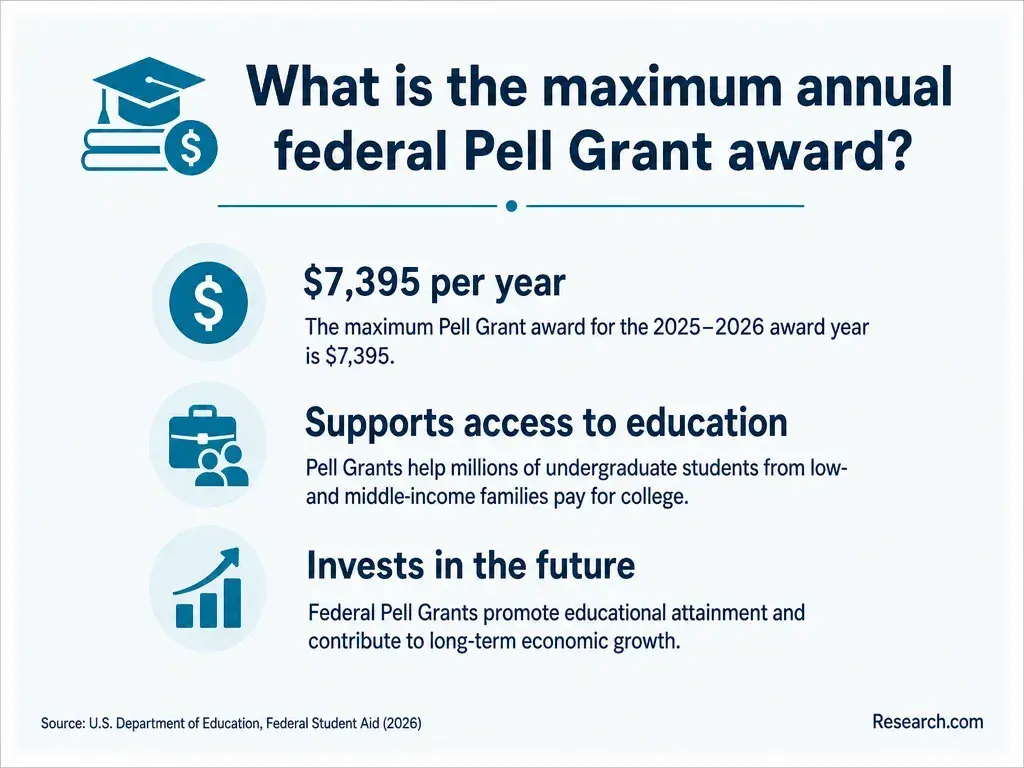
Neither degree has a single salary or growth rate. The U.S. Bureau of Labor Statistics reports figures for occupations, not for everyone holding a particular major. Its May 2025 median annual wage for logisticians was $82,320, with 18% projected employment growth from 2025 to 2035. That outlook makes the occupation worth investigating if its day-to-day work appeals to you; the median includes experienced workers and is not a starting-salary estimate.
A broad business degree can lead toward many occupations with different pay and experience requirements, so comparing it with one supply chain occupation cannot establish which degree pays more. For instance, project management specialists coordinate schedules, budgets, and stakeholders, but access to those roles depends on demonstrated project skills, not simply a business degree. Compare target occupations, local openings, and education costs together. Guides to economical business administration degrees with quicker study routes can help you investigate the cost side, but advertised speed or earning potential is not an individual return-on-investment forecast.
A broad BS typically combines accounting, economics, marketing, management, finance, statistics, and operations. That breadth helps you understand how a purchasing decision affects cash flow, customers, and staffing. A supply chain pathway builds on business fundamentals with more focused study of procurement, inventory, demand planning, transportation, supplier relationships, and process analysis. Course names alone do not reveal how much hands-on work a student completes.
For supply chain readiness, look for assignments that require you to interpret imperfect demand data, explain a stockout or delivery trade-off, and recommend a decision with clear assumptions. A spreadsheet or simulation can demonstrate reasoning, but it is not equivalent to operating a company's systems. Ask whether the program offers supervised projects or internships and what permissions are required before using workplace data.
If you have prior college study, compare course requirements before switching majors. Quantitative or operations credits accepted by a school might count only as electives rather than satisfy a specialized requirement. The same distinction matters when reviewing guidance on how to use prior college credits in a project management bachelor's: acceptance of a credit is not the same as its application to the degree you choose.
Either format can teach business fundamentals, but access to applied work may differ. Campus programs may make it easier to attend employer events or work with local organizations; online programs can reduce commuting and may offer more scheduling options. Neither format guarantees an internship or meaningful employer contact.
Check the timetable rather than relying on the word "flexible." Online supply chain courses may still require live group meetings, timed exams, software access, or an internship with set hours. Campus courses may offer evening sections but limited availability of specialist electives. If speed matters, compare accelerated online pathways for business students against your actual weekly capacity and the term in which each required course runs. A faster calendar does not mean fewer assignments or automatically lower total cost.
Start by confirming that the institution holds recognized institutional accreditation and that the status applies to the school awarding the degree. Then check whether the business school or specific program has applicable AACSB, ACBSP, or IACBE accreditation. These are different forms of review: a claim that a university is accredited does not establish that its supply chain program has business-program accreditation.
Check the accreditor's directory and the school's description of the credential's scope, especially when a concentration is offered within a broader business degree. Accreditation can inform your assessment, but it cannot prove that graduates obtain particular jobs. The distinction also matters in adjacent comparisons: an accredited online project management tuition guide may identify affordable options, while you must still verify the accreditation and exact degree for each school you consider.
Requirements vary by institution. First-year applicants commonly submit secondary-school records; transfer applicants typically submit official transcripts from previous colleges. A school may admit you to the institution before you qualify for its business major or a capacity-limited concentration. Mathematics, accounting, economics, or statistics courses may be prerequisites for upper-level supply chain work even when they are not prerequisites for initial admission.
For a transfer or returning student, request a written evaluation showing which credits satisfy general education, the business core, and specialization requirements. Ask the department about course sequencing before assuming an online college with accelerated supply chain bachelor's study can deliver the advertised timeline for your record. The institution - not a preliminary comparison tool - decides equivalencies and remaining graduation requirements.
A bachelor's degree is commonly planned as a four-year full-time course of study, but your remaining time depends on applicable transfer credits, prerequisites, course availability, and enrollment pace. Specialization can add time if required courses are offered infrequently or previously earned credits apply only as electives. It may add no extra credits when the concentration fits within existing degree requirements.
Compare schools using the total cost to finish: remaining required credits multiplied by the applicable tuition rate, plus mandatory fees, books, software, travel, and financing costs. Also consider earnings you may forgo if a schedule reduces work hours. Request a degree audit and an itemized cost estimate for each pathway; a business administration degree tuition savings guide can help identify possible lower-cost options, but only a school-specific evaluation can show what you would pay to complete.
Certifications are most useful when they match a target role and you can meet the issuing organization's eligibility rules. ASCM's CPIM focuses on planning and inventory, while CSCP addresses the broader end-to-end supply chain. ISM's CPSM is oriented toward supply management and procurement. Check each organization's current experience, exam, fee, and renewal requirements before budgeting for a credential. A university concentration does not automatically award one.
If you are still exploring the field, a relevant course, entry-level role, or employer-supported training may be a better first investment than an exam. Project management credentials address a different skill set; if that is your main goal, compare the cost of targeted training with a full degree and review options for paying for project management bachelor's study with grants. Do not assume that financial aid for a degree will cover a stand-alone certification.
How can you choose a reputable business or supply chain degree program?
Begin with job postings for roles you would realistically pursue next. Note the recurring tasks and tools, then ask each school to show where its required courses and applied assignments develop those abilities. This prevents a persuasive program title from substituting for useful preparation.
Before enrolling, use the following checks to compare programs on the same terms:
- Confirm the exact degree and whether supply chain is a major, formal concentration, or elective cluster.
- Obtain the current curriculum, course schedule, and written transfer-credit evaluation.
- Verify institutional accreditation and any claimed business-program accreditation.
- Ask how internships, employer projects, career services, and graduate outcomes are documented.
- Calculate your remaining time and total cost under a realistic work and study schedule.
Include low-cost online business degree programs in the comparison if price is important, but do not let a low advertised tuition rate outweigh a poor credit fit or missing required courses. The strongest choice is the pathway you can finish that supplies evidence of the work you want to do next.
Other Things You Should Know About Business Administration
Yes. Apply for relevant entry-level roles and demonstrate operations, spreadsheet, purchasing, or inventory skills through work or projects. Some employers will prefer more specialized preparation.
Yes, especially into adjacent operations or project roles. A move into a less-related function may require additional training or direct experience; your degree title alone will not determine it.
No. Many roles do not require an MBA. Consider graduate study only after identifying a specific position or advancement goal for which it offers value beyond experience and targeted training.
No. Organizations in many industries buy goods, manage suppliers, plan inventory, or coordinate delivery. The relevant question is whether you enjoy those functions, regardless of the employer's industry.
- Workforce and supply chain disruption as a digital and... - PMC https://pmc.ncbi.nlm.nih.gov/articles/PMC8993411/
- Supply Chain Management Degree Jobs Worth Considering | The University of Scranton https://gradadmissions.scranton.edu/blog/articles/business/supply-chain-management-jobs.shtml
- What Is a Supply Chain Management Degree? | American Public University https://www.apu.apus.edu/area-of-study/business-and-management/resources/what-is-a-supply-chain-management-degree/
- Department of Supply Chain Management | msu.edu https://broad.msu.edu/supply-chain-management/
- Careers in Supply Chain Management: Is One Right for You? | Purdue Global https://www.purdueglobal.edu/blog/business/supply-chain-management-careers/
- What Is Supply Chain Management? A Guide to Careers, Salaries & Certifications | UW-Stout Polytechnic https://www.uwstout.edu/programs/bs-supply-chain-management/what-is-supply-chain-management-guide
- Jobs and Career Paths in Supply Chain Management and Logistics - Global Supply Chain Institute https://haslam.utk.edu/gsci/news/supply-chain-management-career-path/
- Is a Business Degree Worth It? Key Facts and Statistics | bestcolleges.com https://www.bestcolleges.com/business/is-a-business-degree-worth-it/
- Supply Chain Management Careers | ASCM https://www.ascm.org/membership-community/career-resources/supply-chain-management-careers/