2027 BS in Business Administration: Choosing a Degree Before a Possible Industry Change
Audited and Verified:
Our Editorial and Data Verification Process
Research.com uses government datasets, official education statistics and primary institutional information to support its career and degree guides. Our review process checks factual accuracy, occupational definitions, source dates and the requirements associated with the credentials discussed.
How This Article Was Fact-Checked
Our editorial team verifies salary estimates, employment projections, education requirements and program information against original data providers and official organizations. Salary figures are checked against the relevant occupational definitions and reporting periods. Information about licensure, accreditation and required in-person training is reviewed separately.
Fact-checked and verified on:

Co-Founder and Chief Data Scientist
If you may change industries, choosing a narrowly specialized degree can feel risky - but choosing a broad one without a career plan has risks too. A BS in Business Administration can prepare you for work across sectors, especially if you build on experience you already have. It cannot replace every employer's industry knowledge or job-specific requirements.
This guide helps career changers assess that trade-off, identify useful courses and projects, and compare the degree with more direct ways to reach a target role.
Key Things You Should Know
- A BS in Business Administration is most useful for an industry change when your target role uses transferable business skills, such as budgeting, operations, customer analysis, or project coordination.
- Changing industries while keeping a similar function is usually a smaller leap than changing both industry and function; the degree alone does not supply the experience required for many specialist or management jobs.
- Compare the remaining degree cost and time with the specific skill gap you need to close. The Bureau of Labor Statistics projects 10% employment growth for management analysts from 2025 to 2035, but that occupation-wide forecast is not a hiring forecast for new graduates.
What Is a BS in Business Administration?
A Bachelor of Science in Business Administration is an undergraduate degree built around several business functions rather than one industry. Programs commonly combine accounting, finance, marketing, management, operations, and quantitative coursework with general education and electives. The exact balance depends on the school; "BS" does not guarantee more analytics than a Bachelor of Business Administration (BBA) or another business bachelor's degree.
That breadth can help if your destination is uncertain. A retail operations employee, for example, might apply process and budgeting skills in healthcare administration or a nonprofit. The degree provides a vocabulary and methods for that move; the employee must still learn the new sector's customers, rules, and workflows. Even when you compare American fast-paced business bachelor's degrees, examine the required courses and applied work rather than assuming a shorter calendar means equivalent preparation for your target role.
Is a BS in Business Administration Worth It?
It may be worth completing if employers in your target roles commonly ask for a bachelor's degree, you can apply substantial prior credits, and you need several business foundations - not just one new tool. It is less compelling if you already hold a bachelor's degree, your intended move requires a narrowly technical qualification, or a shorter course plus relevant work experience would address the actual gap.
Separate an industry change from a function change. Moving from customer operations in hospitality to customer operations in healthcare preserves more of your experience than moving from hospitality customer service into healthcare financial analysis. In the second case, test whether your accounting, spreadsheet, and analytical preparation meets actual job requirements before paying for a general degree. If your goal is primarily to supervise an existing team, you might also compare accelerated organizational leadership degrees against business administration curricula; neither degree substitutes for demonstrated supervisory responsibility.
Make the decision against specific job postings: note degree requirements, recurring skills, preferred industry experience, and whether your current work already supplies credible examples. If the degree closes a hiring requirement and lets you build evidence of the missing skills, its breadth has a purpose. If it merely postpones a move you could make through an adjacent role, it may not be the best investment.
What Jobs Can You Get With a BS in Business Administration?
For an industry changer, the strongest first target is often a familiar function at an unfamiliar employer. An operations coordinator may track schedules, vendors, and process problems; a marketing coordinator may organize campaigns and report results; a project coordinator may maintain timelines and communicate with stakeholders. The degree can support applications for these roles, but hiring also depends on relevant work samples, software skills, and employer requirements.
The distinction below helps identify how much of a transition your experience can support. These are examples of role fit, not promises that a degree qualifies you for a particular opening.
| Transition | Experience that may carry over | Likely gap to investigate |
| Same function, new industry | Scheduling, reporting, customer communication, or vendor coordination | Sector terminology, regulations, and operating practices |
| Related function, new industry | Teamwork, spreadsheets, process documentation, and stakeholder contact | Function-specific methods and examples of completed work |
| New specialist function and industry | General communication and business foundations | Technical prerequisites, supervised experience, and possibly a specialized credential |
Project coordination is one possible bridge for people who already organize work across teams. If that is your defined destination, compare a general business curriculum with online project management degrees for transfer applicants; neither route automatically qualifies you to manage major projects.
Requirements vary, but most programs include a business core, general education, upper-level electives, and often a capstone. For industry mobility, look beyond course titles: accounting and finance can support budget conversations, statistics can improve interpretation of performance measures, and operations or marketing assignments can show how you approach unfamiliar business problems.
Choose electives around a portable function plus a destination-specific gap. Someone with purchasing experience who may move from manufacturing into another sector could pair operations coursework with supply chain electives, then investigate the target sector's procurement rules. If supply chain is already the settled career goal, accelerated degree planning for supply chain undergraduates may reveal whether a more focused program serves you better.
Check prerequisite sequences and whether desired electives run often enough to fit your graduation plan. A listed elective is not necessarily an official concentration. For a capstone or portfolio, seek an approved assignment that demonstrates a transferable method, such as a process map or budget analysis, without disclosing confidential employer information.
Choose the format that lets you complete the degree and build connections in the industry you may enter. Online study may preserve your income and location flexibility; campus study may make local recruiting, faculty contact, and group work easier to access. Neither format guarantees those advantages.
Before enrolling online, ask about live sessions, group-project meeting times, exam proctoring, internship rules, and required campus visits. Before choosing a campus program, check whether its course schedule permits the employment that funds your studies. If staying employed is essential, compare options to earn a business administration degree while keeping your job, then confirm the actual obligations for the courses you would take.
Schools commonly request evidence of secondary education or previous college study, but admission to the institution, entry to the business major, and application of transfer credit can involve separate decisions. Some programs require particular grades or preparatory courses in mathematics, accounting, economics, or communication; others allow students to complete them after admission.
If you have studied or worked outside business, request a transfer evaluation and a degree audit before treating prior credits as time saved. Ask which courses satisfy the business core rather than general electives, and whether quantitative prerequisites must be completed before upper-level work. Review the program's published policies alongside entry conditions for prospective business administration students. The institution - not a general guide - decides your admission and credit applicability.
A traditional full-time bachelor's path is often planned around four academic years, but your remaining time depends on accepted and applicable credits, course sequencing, enrollment pace, and residency rules. A career changer with prior college work should price the courses still required, not assume that every transferred credit reduces the degree equally.
Compare schools using the same cost categories: remaining tuition and mandatory fees, books and technology, travel or proctoring, financing costs, and income you might forgo. Check aid eligibility and employer reimbursement timing separately from the advertised price. Lists of cheaper business administration study with FAFSA-based aid can help you find candidates, but only an individual aid offer and degree audit can establish your likely net cost and completion plan.
First verify the institution's recognized accreditation and confirm that it covers the institution where you will enroll. Then check whether any claimed AACSB, ACBSP, or IACBE business accreditation covers the relevant school or program; business accreditation has a different scope from institution-level accreditation. Neither designation alone establishes that graduates enter your preferred industry.
For an industry-change decision, compare the published curriculum, elective access, employer-facing projects, career services, transfer policies, and outcomes information. Ask career services which employers recruit through the program and what support is available to students changing sectors, without treating a list of employer names as a placement guarantee. Ranked US college pathways in online business can help you assemble a shortlist; verify each current program feature directly before applying.
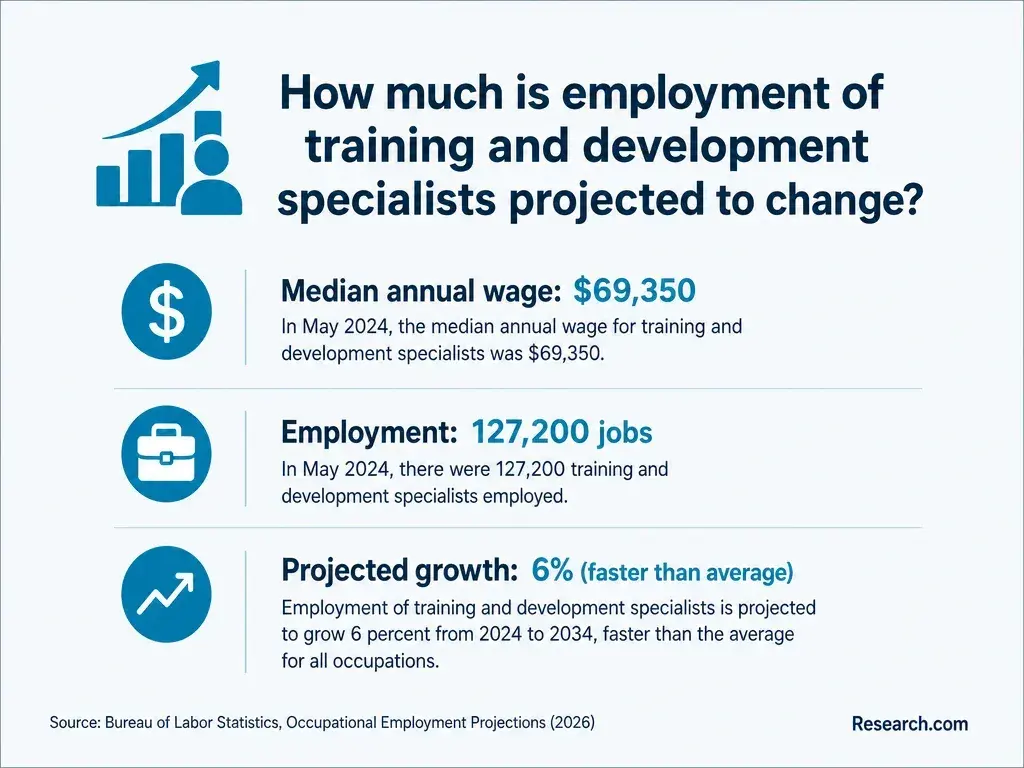
There is no single salary for this degree. Pay follows the occupation, location, employer, and responsibilities you secure - not the degree title alone. The Bureau of Labor Statistics reports a May 2025 median annual wage of $75,940 for human resources specialists. That figure covers workers across experience levels and is not a starting salary or an estimate for all business administration graduates.
For a possible industry switch, compare offers against the roles you could obtain without another degree, including any initial step down in responsibility. Weigh that difference against your remaining education costs rather than using a manager's occupation-wide wage as a projected return. If affordability is decisive, research online business colleges with competitive costs and request a program-specific cost estimate before calculating a personal break-even point.
What Certifications or Licenses Complement a Business Administration Degree?
A targeted credential can help demonstrate a missing functional skill, but eligibility and employer recognition vary. HR, project management, accounting, and financial-services credentials serve different purposes; some require specific coursework, experience, examinations, or state approval. A BS in Business Administration does not itself grant a professional license or establish eligibility for one.
Choose a credential only after examining the roles you want. If HR is the settled target, compare certification eligibility and practical HR experience with human resources degree options for college transfers. If your industry destination is still open, a narrowly targeted certification may be more useful later, once you know which gap employers actually expect you to fill.
Other Things You Should Know About Business Administration
Often, if you can show comparable responsibilities and results. Translate your experience into the target role's tasks while being candid about sector knowledge you still need to learn.
Not necessarily. An adjacent role may preserve much of your functional experience; a move into an unfamiliar specialist function may require a more junior entry point.
Yes, if an employer accepts your existing qualifications. Relevant work during school can also help you test the new sector before committing to a concentration or further credential.
Lead with responsibilities and work samples that match the posting, then give a concise reason for the move. Do not present coursework as professional experience or claim sector expertise you have not gained.
- Cost of Attendance (Budget) | 2026-2027 Federal Student Aid Handbook https://fsapartners.ed.gov/knowledge-center/fsa-handbook/2026-2027/vol3/ch2-cost-attendance-budget
- TEN_25-19_Attachment_1.pdf | dol.gov https://www.dol.gov/node/161266
- Your financial path to graduation | consumerfinance.gov https://www.consumerfinance.gov/paying-for-college/your-financial-path-to-graduation/
- BA vs BS in Business Administration: What's the Difference? | CSP Global Concordia University, ST. Paul https://online.csp.edu/resources/article/ba-vs-bs-in-business/
- What is the difference between a B.A. and B.S. in business administration? | Concordia University, Nebraska https://www.cune.edu/news/what-difference-between-b-and-bs-business-administration
- Student internships and employment opportunities after graduation: A field experiment - ScienceDirect https://www.sciencedirect.com/science/article/pii/S0272775721000601
- 11 Types of Business Degrees and Career Pathways | National University https://www.nu.edu/blog/types-of-business-degrees/
- Transferable Skills in Business Administration Across Industries | The College of Westchester https://www.cw.edu/blog/how-business-administration-courses-build-transferable-skills-across-multiple-industries/
- What Can I Do with a Business Administration Degree? | CTU https://www.coloradotech.edu/degrees/studies/business-and-management/articles/what-can-i-do-with-a-business-administration-degree
- Institutional Accreditation vs. Program Accreditation | GCU Blog https://www.gcu.edu/blog/gcu-experience/institutional-accreditation-vs-program-accreditation