2027 Choosing a BS in Business Administration: How to Check an HR Track Alongside Professional HR Credentials
Audited and Verified:
Our Editorial and Data Verification Process
Research.com uses government datasets, official education statistics and primary institutional information to support its career and degree guides. Our review process checks factual accuracy, occupational definitions, source dates and the requirements associated with the credentials discussed.
How This Article Was Fact-Checked
Our editorial team verifies salary estimates, employment projections, education requirements and program information against original data providers and official organizations. Salary figures are checked against the relevant occupational definitions and reporting periods. Information about licensure, accreditation and required in-person training is reviewed separately.
Fact-checked and verified on:

Co-Founder and Chief Data Scientist
A business administration degree with a human resources track can build useful HR knowledge, but the track's name does not tell you how much HR coursework it includes, or whether it helps you qualify for a professional credential. That distinction matters if you are choosing a degree to enter HR, finish a bachelor's, or advance from an existing role.
This guide shows you how to inspect the curriculum, compare a dedicated HR degree, evaluate career preparation, and check SHRM and HRCI requirements before committing your time and money.
Key Things You Should Know
- Choose an HR track for its required courses and applied experience, not its label; a concentration is part of a degree, not a SHRM or HRCI certification.
- Check credential eligibility with the certifying organization separately. Neither an HR track nor a dedicated HR degree automatically qualifies you for every exam.
- The U.S. median annual wage for human resources specialists was $75,940 in May 2025, according to the Bureau of Labor Statistics; that occupation-wide figure is not a starting salary for graduates.
What Is a BS in Business Administration With an HR Track?
It is a bachelor's degree combining a general business core with a defined group of human resources courses. The core may cover accounting, economics, management, statistics, and business law; the HR track may add staffing, compensation, employee relations, and related subjects.
Schools use track, concentration, and emphasis differently, so confirm the official designation in the catalog and whether it appears on the transcript.
The distinction matters when comparing programs: a few HR electives do not necessarily constitute a formal concentration, and neither arrangement awards a separate professional certification. For a closer look at specialized programs and potential roles, see HR degree requirements and job opportunities.
Is an HR Track the Right Degree Path for Human Resources Careers?
An HR track is a strong candidate if you want a business foundation alongside preparation for work such as recruiting coordination, onboarding, benefits administration, or HR operations. It can be particularly useful when you are still deciding whether to specialize: finance, operations, and management courses help you understand the organizations whose employees you would support.
Start with your target role and current experience. A student seeking an initial HR position should look for supervised HR work, recruiting or employee-services projects, and opportunities to practice confidential communication.
An experienced employee moving into HR should identify functional gaps, perhaps employment law or compensation, rather than assume another broad management course will fill them. If your goal is general supervision rather than HR practice, compare the curriculum with faster bachelor's routes in organizational leadership; verify what either option would actually add to your existing experience.
A degree can help you meet a job posting's education requirement, but it does not replace HR experience or make a new graduate ready to manage an HR department.
What Accreditation Should a Business Administration HR Program Have?
First, verify the institution's recognized accreditation and confirm that it covers the school offering the degree. Then check whether the business program has additional accreditation from AACSB, ACBSP, or IACBE.
These organizations have different scopes; do not assume an institution's accreditation or a business school's claim covers the particular degree, location, or delivery format you plan to use.
Accreditation is one screening factor, not evidence that graduates obtain HR jobs or certifications. Compare the published curriculum and support services as well. Price deserves a separate check: lower-priced college options for business majors may be worth considering, but confirm accreditation and HR-track availability before comparing costs.
The better choice depends on whether you need breadth across business functions or more required study in HR. Degree titles alone cannot establish the difference; compare each school's required courses, electives, and applied opportunities:
| Path | Likely advantage | Potential limitation to check |
| BS in Business Administration with an HR track | Combines HR study with a broad business core; may preserve flexibility for adjacent business roles. | The track may contain relatively few advanced HR courses. |
| Dedicated HR bachelor's degree | May require more HR-specific study and allow deeper practice in areas such as staffing or employee relations. | May offer less room for other business electives; depth still varies by school. |
If you are committed to HR, compare required HR courses rather than counting every HR elective in a catalog. If you are transferring, request degree audits for both paths: accepted credits can apply differently to their majors and electives.
And if your real interest is coordinating projects rather than working with employee matters, online project management degrees for transfer applicants provide a more relevant comparison than an HR-major label.
Look beyond course titles to the work students complete. A useful HR sequence connects organizational behavior and business fundamentals to staffing, compensation and benefits, employment law, training, and employee relations.
Statistics or analytics coursework can help students interpret workforce measures, but introductory analysis does not establish expertise in people analytics.
Ask for syllabi or sample assignments. A staffing exercise should require a defensible selection process; a compensation exercise should address pay structure and constraints; an employee-relations case should show ethical judgment and awareness of confidentiality.
Check when required courses are offered and whether prerequisites delay entry into the track. If you still need foundational business or quantitative courses, a business administration admissions preparation guide can help you identify questions for the program adviser.
Either format can teach HR concepts; the meaningful difference is access to practice and a schedule you can sustain. An online program may still require live discussions, fixed exam times, group presentations, or an approved internship.
A campus program may make it easier to meet local employers but impose travel and daytime attendance.
Request a recent course schedule and ask how online students complete HR projects, receive faculty feedback, and find supervised experience. Compare those obligations with work or caregiving commitments before choosing an accelerated term.
Guides to accelerated study schedules for business majors can identify formats to investigate, but a shorter calendar does not mean fewer assignments or guaranteed access to every HR course.
Admission to the university and entry into the business major or HR track may be separate decisions. Schools commonly review prior academic records, but minimum grades, prerequisite courses, and the point at which students declare a track vary.
A transfer applicant should ask not just which credits are accepted, but which satisfy the business core and HR requirements.
Before applying, obtain the current catalog and ask admissions and the business adviser whether the track has its own eligibility rules, when missing prerequisites must be completed, and who issues the final transfer evaluation.
If application charges affect where you apply, schools with zero-cost college applications offer options to examine, without treating a waived fee as evidence of program fit.
Your completion time depends on credits that apply to the degree, remaining HR-course prerequisites, course availability, and whether you study part time or full time.
A prior associate degree or substantial transfer work may shorten the route, but only an approved degree audit can show what remains. An HR track may fit within the degree's existing electives, or it may require courses that extend your schedule.
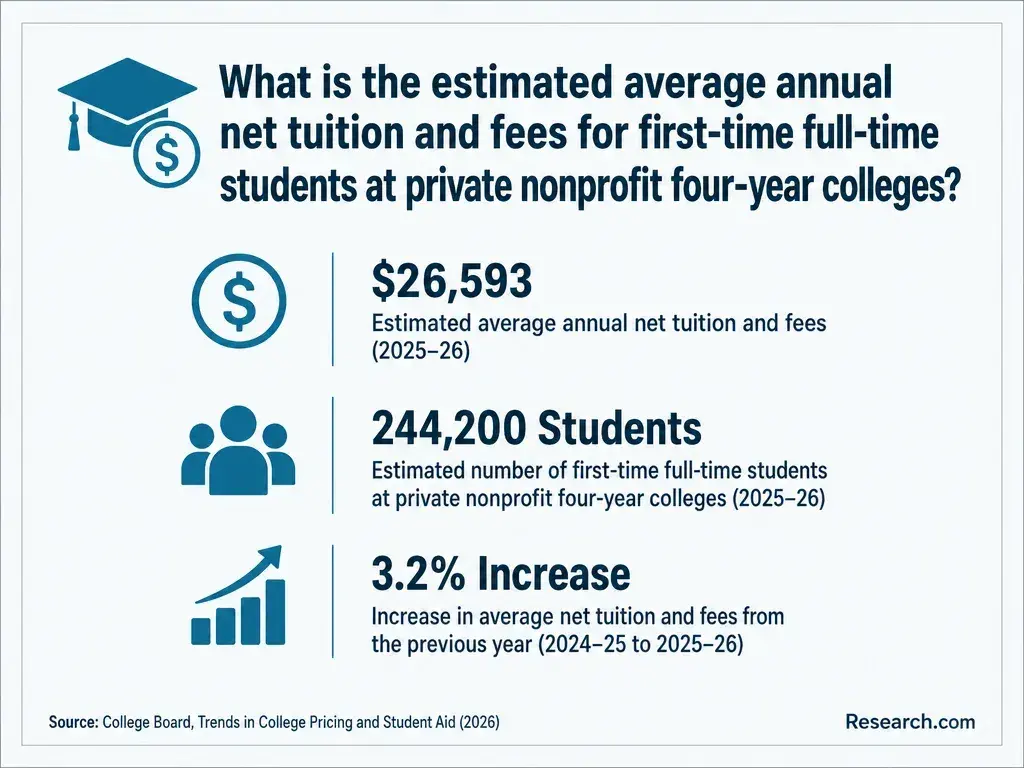
Build a budget from the remaining required courses, tuition and fees, books or software, and any travel or internship expenses. Then account for work hours you may need to reduce and the timing of any employer reimbursement.
For online options, check FAFSA eligibility at online business administration schools, and confirm aid eligibility and your own award with the school's financial-aid office. An advertised program price is not your personal completion cost.
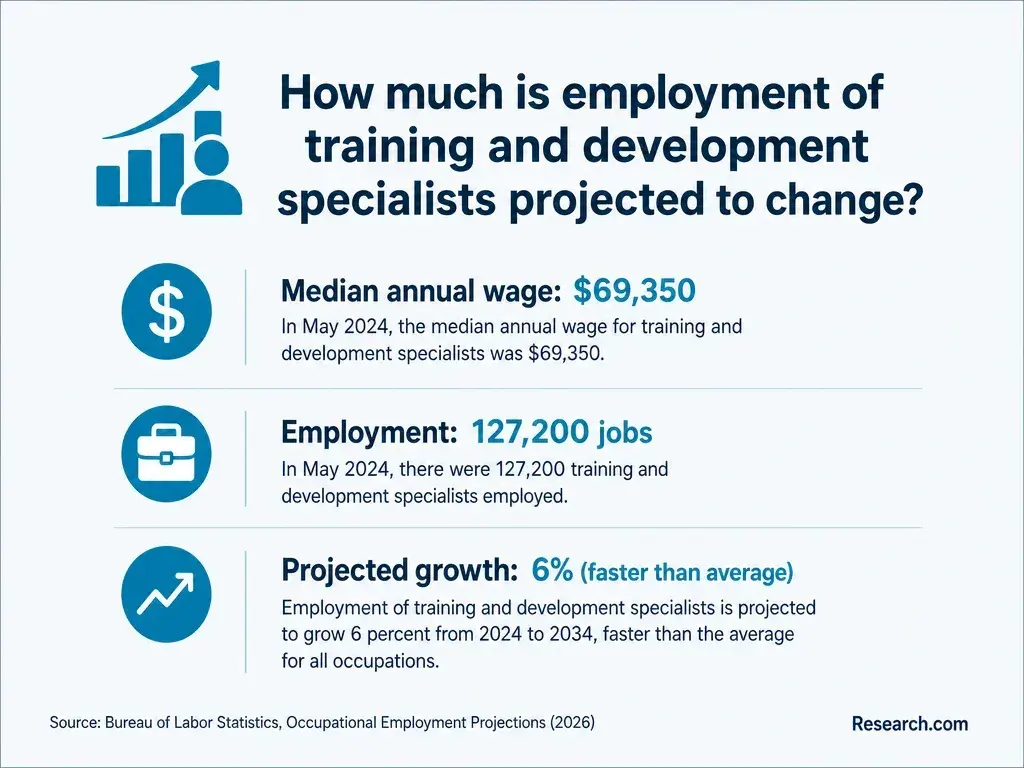
Graduates may pursue HR assistant or coordinator work and, with suitable skills and opportunities, human resources specialist positions involving recruiting, employee records, benefits, or other HR functions. HR management is a later, experience-dependent path, not an automatic first job after graduation.
The Bureau of Labor Statistics figures below describe U.S. occupations, not outcomes for people with this particular degree. They help put possible paths in context, while individual offers depend on role, experience, employer, and location:
| Occupation | Median annual wage, May 2025 | Projected U.S. employment growth, 2025-2035 |
| Human resources specialist | $75,940 | 6% |
| Human resources manager | $149,280 | 6% |
Use postings for the roles you want to identify required systems, employment-law knowledge, and experience. If the tasks that appeal to you are mainly schedules, budgets, and cross-functional delivery rather than employee services, compare the work and tuition budgeting for an accredited project management degree before choosing an HR pathway.
How Can an HR Track Prepare You for SHRM and HRCI Credentials?
Coursework can help you learn concepts tested by SHRM and HRCI, but academic preparation and certification eligibility are separate. SHRM administers the SHRM-CP and SHRM-SCP; HRCI offers credentials including the aPHR and PHR.
They are not interchangeable, and eligibility can depend on the credential, your education, and the type and length of your HR experience. Some also emphasize particular areas of practice, such as U.S. employment law.
Before enrolling, or paying an exam fee, read the certifying organization's current handbook for the exact credential you want. Check its eligibility rules, exam content, fees, and renewal obligations; then map those topics against the program's required courses and your actual work experience.
A school's claim that courses align with an exam does not mean the school awards certification or that every student qualifies to sit for it.
If you already have substantial HR experience but need a bachelor's to meet an employer requirement, compare a full HR track with shorter online business administration degrees with cost details. The most efficient degree-completion choice may differ from the best preparation for your next professional exam.
Other Things You Should Know About Business Administration
Possibly, if the school approves the role, learning objectives, supervision, and assessment. Employment alone does not award internship credit; ask the internship coordinator before relying on it in your graduation plan.
No. It can help you recognize workplace issues and know when to involve counsel, but it does not authorize legal practice. Escalate legal questions through the employer's appropriate channels.
Yes, it is particularly relevant. Check whether the program offers labor relations or collective-bargaining coursework and whether you can gain supervised exposure to that setting; general HR courses may cover it only briefly.
It may meet a posting's degree requirement, but government employers can specify particular coursework, experience, examinations, or civil-service procedures. Compare your transcript and qualifications with the actual posting before applying.
- Programmatic Accrediting Agencies | congress.gov https://www.congress.gov/crs_external_products/R/HTML/R43826.web.html
- Accreditation in the U.S. | ed.gov http://www.ed.gov/laws-and-policy/higher-education-laws-and-policy/college-accreditation/accreditation-in-the-us
- What Is Human Resource Certification, and Do I Need It? | Walden University https://www.waldenu.edu/online-masters-programs/ms-in-human-resource-management/resource/what-is-human-resource-certification-and-do-i-need-it
- Which HR Certification Is Best? PHR, SHRM & More Compared (2026) | Bryan University Online© https://bryanuniversity.edu/faq/hr-certifications-how-to-choose-the-best-ones/
- Which HR Certification to Pursue? | University of Phoenix https://www.phoenix.edu/articles/hr/which-hr-certification-should-you-pursue.html
- HRCI vs. SHRM Certification - What's the Difference? | UTSA PaCE https://www.utsa.edu/pace/news/hrci-vs-shrm-certification-what-is-the-difference.html
- What Can You Do With a Human Resources Degree? | northcentralcollege.edu https://www.northcentralcollege.edu/news/2023/03/03/what-can-you-do-human-resources-degree
- Major in Business Administration - Human Resource Management https://catalog.towson.edu/undergraduate/business-economics/business-administration/human-resources-management-bs/
- Business Administration with HR Management (BS) - SPS https://discover.trinitydc.edu/catalog-22-23/human-resource-management/
- Marketing vs. Human Resources vs. General Business Degree | NMSU Global Campus https://global.nmsu.edu/blog/business-and-marketing/marketing-vs-hr-vs-general-business-degree/