2027 BS in Business Administration: A Statistics Software Requirement
Audited and Verified:
Our Editorial and Data Verification Process
Research.com uses government datasets, official education statistics and primary institutional information to support its career and degree guides. Our review process checks factual accuracy, occupational definitions, source dates and the requirements associated with the credentials discussed.
How This Article Was Fact-Checked
Our editorial team verifies salary estimates, employment projections, education requirements and program information against original data providers and official organizations. Salary figures are checked against the relevant occupational definitions and reporting periods. Information about licensure, accreditation and required in-person training is reviewed separately.
Fact-checked and verified on:

Co-Founder and Chief Data Scientist
A BS in Business Administration may require you to analyze data with software, not just complete a statistics class. That distinction matters when you are choosing a program, transferring credit, or checking whether your computer can run required tools.
This guide explains what the requirement can involve, how common software options differ, and what to verify before enrolling. It also shows how to judge whether the training matches the business decisions and entry-level work you want to do.
Key Things You Should Know
- There is no universal statistics software requirement for a BS in Business Administration: the assigned tool and required work depend on the program and course.
- Spreadsheet skills are common, but a course may also require a dedicated statistics package, a programming language, or a school-provided analytics platform.
- Before enrolling, check the course syllabus, computer specifications, license access, transfer equivalencies, and whether assignments require you to interpret results—not merely produce them.
What Is a Statistics Software Requirement in a BS in Business Administration?
A statistics software requirement means that a course expects students to use a specified digital tool to organize data, calculate statistics, create visualizations, or conduct analyses. It might be part of a required business statistics course, an analytics course, or a project in marketing, finance, or operations. A program may prescribe one application, allow a choice of tools, or provide access through a virtual lab.
Separate three questions: Does the degree require a statistics course? Does that course require software? Must you use a particular product? The catalog may answer the first question but not the others; ask for a recent syllabus or written guidance from the department. If you are transferring, completing statistics elsewhere with different software does not automatically establish equivalency. Request an official evaluation of the course content and credit applicability. The distinction between accepted credit and credit applied to a major also matters when examining project management bachelor's residency and transfer requirements.
Which Statistics Software Do BS Business Administration Programs Require?
There is no single industry-standard package that every business administration student must learn. The useful comparison is between the tasks each tool supports and the depth of training your target role calls for. The table summarizes common possibilities; it does not imply that a particular school requires any of them:
| Tool or tool type | Typical undergraduate use | What to verify |
| Excel or another spreadsheet | Cleaning small datasets, formulas, charts, pivot tables, and basic analysis | Whether the course requires desktop features unavailable in a browser version |
| SPSS, Minitab, JMP, or similar package | Running statistical procedures through menus and interpreting output | License access, operating-system compatibility, and remote access |
| R or Python | Reproducible analysis using code, often in more advanced electives | Whether programming is taught or assumed as a prerequisite |
| Business intelligence platform | Building dashboards and communicating trends | Whether assignments teach statistical reasoning or primarily visualization |
Knowing one package does not automatically make you proficient in another. Look for assignments that require you to choose an appropriate method and explain its output. When comparing the cheapest online business administration degrees, include any required license, technology fee, or computer upgrade in the comparison rather than judging tuition alone.

Why Do Business Administration Students Need Statistics Software Skills?
Statistics software helps business students turn observations into decisions. A marketing student might compare customer survey responses; an operations student might examine variation in delivery times. In either case, the business question should come first: which measure matters, over what period, and to whom?
Software can calculate an average or produce a chart quickly, but it cannot establish that the underlying data is complete, representative, or collected ethically. A change in sales after a campaign, for example, does not by itself prove that the campaign caused the change. Strong coursework asks students to explain uncertainty and distinguish a forecast from an observed result.
The right depth depends on your goal. Someone interested in workforce reporting may benefit from statistics alongside employment practices and HR systems; compare human resources degree pathways if that function, rather than general business analysis, is your priority. A single software course is useful preparation, not proof of specialist competence.
A BS in Business Administration commonly includes quantitative coursework, but the course titles and sequence vary. You may encounter introductory statistics, quantitative methods, business analytics, management information systems, or analytics assignments within marketing and operations. An official analytics concentration usually adds more focused coursework; an elective or dashboard project alone does not create a concentration.
Read the catalog as a sequence, not a list. Algebra or another mathematics course may precede statistics; statistics may precede an analytics elective or capstone. Ask which courses are offered each term, whether the required software is taught in class, and whether transferred statistics credit satisfies a later course's prerequisite. If a longer analytics sequence could delay graduation, compare actual course availability rather than assuming that shorter study timelines for leadership bachelor's students apply to your business administration plan.
Online and campus courses can teach the same statistical concepts, but access and support may differ. A campus section may use scheduled computer labs and in-person help. An online section may supply a downloadable license, a browser-based platform, or remote access to a campus computer. None of those arrangements guarantees that the course is self-paced.
Before choosing a format, check the syllabus for live demonstrations, timed exams, group analysis, weekly deadlines, and technical-help hours. Confirm that your operating system and internet connection support the required setup, especially if you cannot install software on a work-owned computer.
For a compressed course, ask how many assignments build on earlier analyses: faster pacing can leave less time to resolve installation or data-cleaning problems. Compare those obligations when considering bachelor's degrees with compressed schedules.
Admission to a university, admission to its business major, and permission to enroll in a statistics course can be separate decisions. Depending on the school, applicants may need secondary school or previous college transcripts, a minimum academic standing, and prerequisite mathematics coursework. Some programs admit students before they finish lower-division business requirements; others require those courses before entry to the major.
If quantitative coursework is a concern, identify the exact mathematics prerequisite and any placement or transfer-credit policy before applying. Previous experience with spreadsheets can help you prepare, but it does not necessarily replace a required course. The school has final authority over admission, waivers, and equivalencies. Use its published rules alongside guidance on academic preparation for business administration applicants, then ask an adviser what applies to your record.
Completion time and cost depend on the credits that apply to your degree, enrollment pace, course availability, and tuition structure. A required statistics course can affect the plan if it has a prerequisite or is offered infrequently. Online delivery may remove commuting costs but introduce software, technology, or proctoring charges.
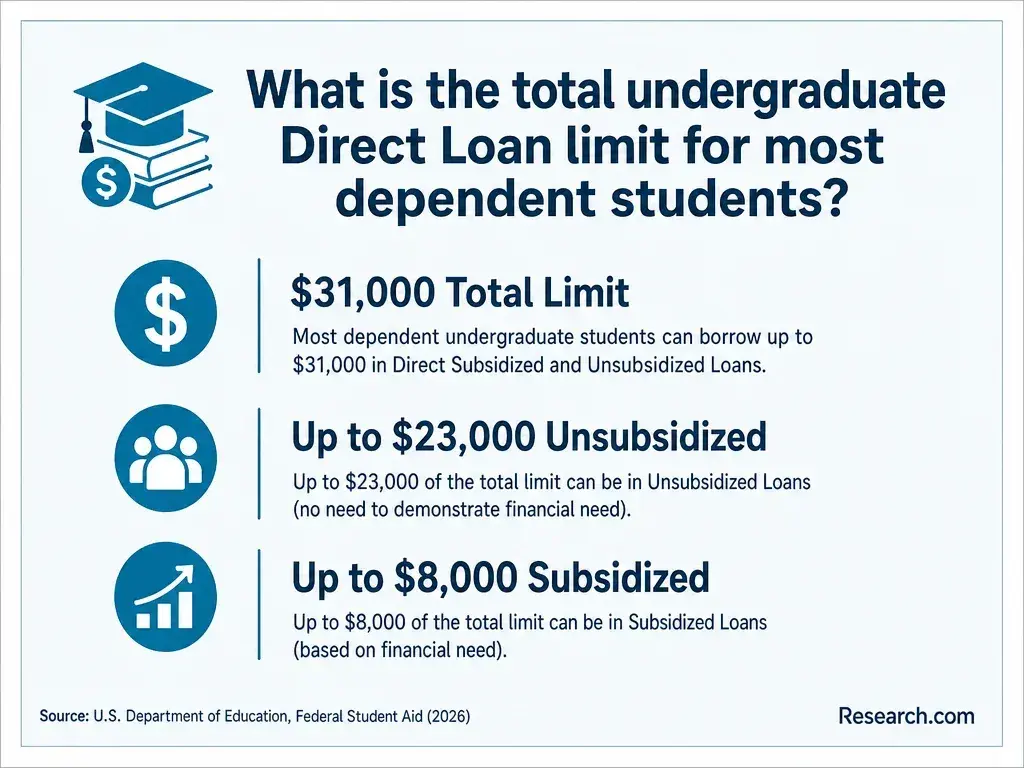
Request an official degree audit and an itemized estimate for your remaining courses. Include required licenses and equipment, not just tuition; distinguish charges you must pay upfront from aid that may arrive later. For an eligible US student, federal aid can change the financing plan but does not make an added course free. Guidance on business administration tuition budgets using federal student aid can help frame the questions to take to the financial aid office. Verify your own eligibility and the school's charges before committing.
Statistics software training can support applications for marketing coordinator, operations coordinator, research assistant, or reporting-focused administrative roles. Its value is strongest when paired with evidence of a relevant task: cleaning a dataset, explaining a chart to a stakeholder, or documenting the limits of a forecast. Employers may also expect communication skills, business knowledge, and experience with their systems.
Match the work sample to the job. A prospective marketing research applicant could show how they evaluated survey quality; an operations applicant could explain a process measure and its limitations. Use public, simulated, or properly authorized data—never disclose customer or employer records without permission. If project coordination is your main goal, compare its broader scheduling and stakeholder duties with your interest in analytics; also compare the cost of a specialized route, including funding sources for a bachelor's in project management. Software training alone does not qualify someone to manage projects or staff.
Salary figures describe occupations, not what a new BS in Business Administration graduate will earn. For example, the US Bureau of Labor Statistics reports a $78,760 median annual wage for market research analysts in May 2025 and projects 7% employment growth from 2025 to 2035. The median includes workers at different career stages; a statistics course does not make every graduate qualified for that occupation or its median wage.
Use a target job's duties and entry requirements—not its title alone—to judge whether your coursework, work samples, and experience fit. Local employers, industry, and prior experience can change your prospects. When weighing the investment, consider business administration tuition time commitment and career value against the specific role you intend to pursue, rather than assuming a salary increase from the degree.
How Can You Choose an Accredited Program With Strong Software Training?
Start by confirming recognized institutional accreditation. If a school also advertises AACSB, ACBSP, or IACBE accreditation, verify the accreditor's scope and whether the specific business program is covered; neither label, by itself, establishes the quality of its statistics assignments or employment outcomes.
Then request a current course map and recent syllabi. Look for a required software-based assignment, instruction in interpreting results, access to the assigned tools, technical support, and an applied project that can be completed with permitted data. Ask who teaches the software, how online students get help, and whether the courses you need are reliably available. Lists of ranked US college pathways in online business can help you identify programs to investigate, but the syllabus, degree audit, and written answers to your software questions should control this decision.
Other Things You Should Know About Business Administration
Only if the instructor permits it. A calculator may handle computations but not assignments requiring a saved dataset, chart, or reproducible analysis.
Not unless the course explicitly includes a separate certification and you meet its requirements. Course credit and vendor certification are different credentials.
Follow the course's academic-integrity policy. If permitted, check any generated code and interpretation yourself, and do not enter confidential data into an unapproved service.
Keep work you are authorized to retain, along with notes on methods and limitations. Remove restricted data and check course and employer rules before using any project in a portfolio.
- Business Administration Major | Stillman College https://catalog.stillman.edu/business/business-administration-major
- Software and Discounts: SLU https://www.slu.edu/life-at-slu/student-tech-services/software-discounts.php
- Minimum & Recommended Computer Hardware/Software Requirements | Florida Institute of Technology https://help.fit.edu/TDClient/39/Portal/KB/Article/3653/Minimum-Recommended-Computer-Hardware-Software-Requirements
- Business Administration Major | The University of Arizona https://www.arizona.edu/degree-search/majors/business-administration-bsba
- What Can I Do With a Degree in Data Science? Career Paths & Skills | Harvard SEAS https://seas.harvard.edu/news/what-can-i-do-degree-data-science-career-paths-skills
- Stats 506: Other Statistical Software | umich.edu https://dept.stat.lsa.umich.edu/~jerrick/courses/stat506_f25/11-other-software.html
- Online vs Traditional Business Admin Degrees: What's Best? | UAGC https://www.uagc.edu/blog/online-vs-traditional-business-administration-degrees-whats-best-you
- Descriptions of MBA Level Courses - Wharton Statistics https://statistics.wharton.upenn.edu/programs/mba/course-descriptions/
- Online Computer Courses - Requirements | University of Phoenix https://www.phoenix.edu/student-resources/computer-requirements.html