2027 Paying for an Online BS in Business Administration: A Scholarship That Is Lost After a Leave of Absence
Audited and Verified:
Our Editorial and Data Verification Process
Research.com uses government datasets, official education statistics and primary institutional information to support its career and degree guides. Our review process checks factual accuracy, occupational definitions, source dates and the requirements associated with the credentials discussed.
How This Article Was Fact-Checked
Our editorial team verifies salary estimates, employment projections, education requirements and program information against original data providers and official organizations. Salary figures are checked against the relevant occupational definitions and reporting periods. Information about licensure, accreditation and required in-person training is reviewed separately.
Fact-checked and verified on:

Co-Founder and Chief Data Scientist
A leave of absence can solve an immediate work, health, or family problem while creating a new one: the scholarship that made an online business degree affordable may not be available when you return. If you are considering leave or have already lost an award, the deciding documents are your scholarship terms, the school's leave policy, and your financial-aid record.
This guide explains what to ask before leaving, how to request reinstatement, and how to compare the cost of returning with or without the scholarship.
Key Things You Should Know
- An approved leave of absence does not necessarily preserve a scholarship. Renewal may require continuous enrollment, a minimum course load, or a return by a specified term.
- Ask the scholarship administrator for a written decision on reinstatement before relying on an award in your return budget; a successful academic readmission does not restore funding automatically.
- If the award is gone, compare the remaining degree cost - not just one term's tuition - including replacement aid, required courses, fees, and any delay to graduation.
What Is an Online Bachelor's Degree in Business Administration?
An online BS in Business Administration is an undergraduate degree covering several business functions, commonly accounting, finance, marketing, management, operations, and quantitative decision-making. "Online" describes delivery, not necessarily self-paced study: courses may have fixed deadlines, live meetings, group work, or proctored assessments.
For someone returning after leave, the degree's value must be weighed against the remaining cost and time to finish. A working student seeking advancement may want to examine career advancement study options in business administration, but should first confirm whether changing programs would forfeit credits or additional aid.
Can You Lose a Scholarship After Taking a Leave of Absence?
A school can approve a leave for academic purposes while a scholarship ends under a separate funding agreement. Common conditions include continuous enrollment, minimum credits each term, satisfactory grades, a limited number of funded terms, or a deadline for returning. Donor-funded, departmental, transfer, and institutional awards can have different rules.
Find out whether the award was paused, canceled, or not renewed. Those decisions have different remedies: a paused award may resume if you return on time; a canceled award may require an appeal; a nonrenewed award may require a new application. Request the specific policy provision and the effective term in writing. If you withdrew after a term began, ask the financial-aid office separately whether your withdrawal changed aid already disbursed or created a balance. Losing a future scholarship does not, by itself, mean repaying every past award.
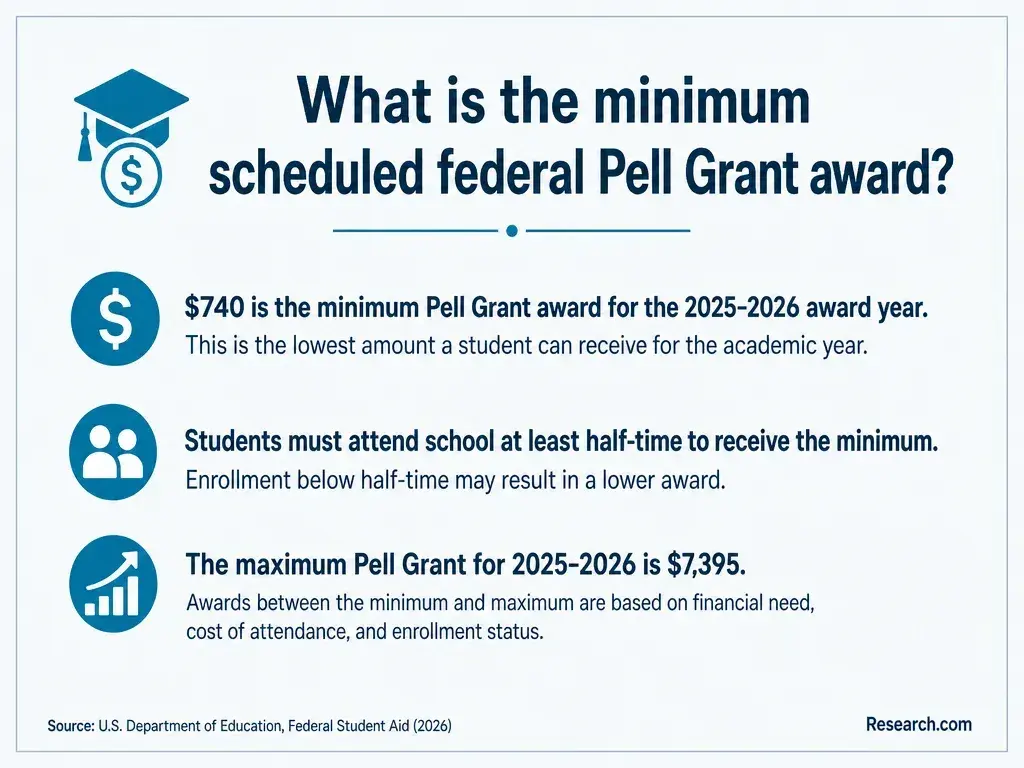
Federal aid and a school scholarship are also separate decisions. General guidance on project management bachelor's aid application planning can help explain the difference between FAFSA-based aid and scholarships, but your business program's award agreement controls its own renewal rules.
How Can You Protect Your Scholarship Before Taking Leave?
Do not assume an adviser's approval to stop taking classes also approves a funding exception. Get answers from the office that administers the award, as well as academic advising and financial aid, before your withdrawal deadline when possible.
Use this sequence to create a written record and preserve your options:
- Save the scholarship agreement, award notice, current degree audit, leave policy, and any messages about your circumstances.
- Ask whether reduced enrollment, a later start date, or an approved leave would meet the award's terms; confirm the exact return term and any documentation deadline.
- Request a written exception or reinstatement decision, including the appeal process, decision-maker, and whether funds remain available when you return.
- Ask financial aid to model your charges and aid for leaving now versus finishing the term, and check how either choice affects satisfactory academic progress.
- Before re-enrolling, obtain a new term-by-term aid offer and degree plan. If the scholarship is unavailable, compare the cost of staying with the cost of transferring.
Transferring is not automatically cheaper: a new school may classify accepted credits as electives rather than business requirements. If you do apply elsewhere, compare no-fee college applications, but prioritize a formal credit evaluation and a credible completion budget over an application-fee saving.
Check that the institution holds recognized institutional accreditation; this is the first accreditation question when evaluating eligibility for federal student aid and future transfer or graduate study. Then check whether the business school or program has separate accreditation from AACSB, ACBSP, or IACBE. Those accreditors do not necessarily cover every program at an institution, so verify the scope rather than relying on a logo.
Accreditation does not protect an individual scholarship or guarantee that another school will accept your credits. If a lost award prompts a school search, compare ranked online business schools in America alongside each school's accreditation record, written transfer evaluation, aid offer, and leave policy.
There is no dependable single price for an online BS in Business Administration. Schools charge by credit, course, or term, and the relevant figure for a returning student is the cost of requirements still needed for graduation after applicable credits and confirmed aid. A lost scholarship can increase that figure without changing the published tuition rate.
This comparison separates costs that are often mistakenly combined. Request the amounts for your own program and expected return term rather than treating an advertised tuition figure as your final bill.
| Cost or funding item | What to verify for your return |
| Tuition and mandatory fees | Charges for remaining required credits or terms, including online and technology fees |
| Scholarship | Whether any award is reinstated, reduced, replaced, or limited to certain terms |
| Other aid | Current grant and loan eligibility, enrollment requirements, and any employer reimbursement timing |
| Completion expenses | Books, software, proctoring, travel if required, and courses added after a new degree audit |
| Delay and cash flow | Extra terms, payment deadlines, borrowing needs, and work hours affected by study |
If the lost award makes another field financially attractive, find project management programs with lower total costs only if that curriculum also fits your goal. Compare remaining degree requirements and confirmed net costs, not unrelated programs' headline prices.
Requirements usually combine general education, a business core, electives or a formal concentration, and sometimes a capstone. The business core may include accounting, economics, finance, marketing, management, statistics, and business law. The actual catalog and degree audit - not a generic course list - determine what a returning student still owes.
A leave can complicate sequencing if a required course is offered only in certain terms or the curriculum changed while you were away. Ask your adviser which catalog applies on return and whether completed courses still satisfy current requirements. If you are considering an HR-focused alternative, online human resources programs for associate degree holders offer a different curriculum to compare; do not assume business electives will satisfy an HR major.
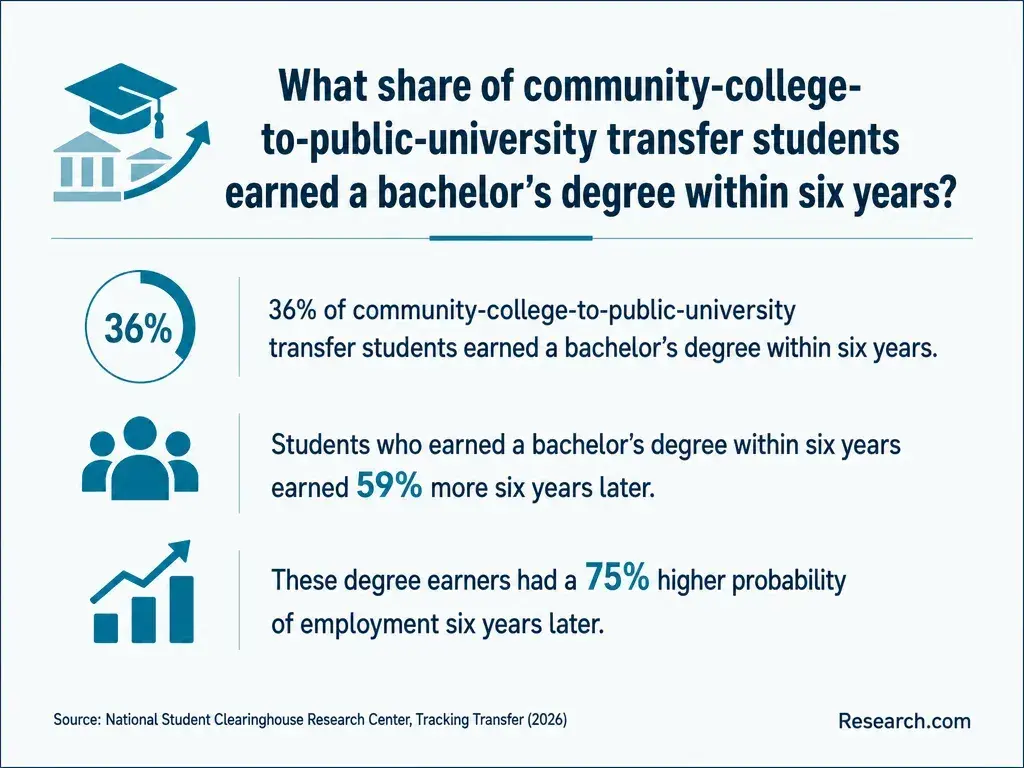
Initial applicants commonly submit prior academic transcripts and must meet the institution's admission standards. Returning students face a different question: whether they remain eligible to register, need formal readmission, or must reapply to the business major. Academic standing, outstanding balances, and time away may affect that process; readmission and scholarship reinstatement are separate approvals.
If you consider another school after losing funding, ask for its official admission decision, transfer-credit evaluation, and aid offer before leaving your current program. Online project management programs for smaller budgets may be worth considering if project-focused study matches your goal, but their admission and transfer rules must be checked independently of a business administration program's.
Your completion time depends on remaining requirements, course availability, enrollment pace, and whether a prerequisite must be repeated or taken before another course. An approved leave extends calendar time even if it does not add credits. It can also change total cost if the delay means additional term-based fees or a scholarship expires before the final courses.
Ask for a term-by-term plan that identifies when every required course is offered and whether its proposed pace meets aid conditions. Fastest bachelor's-level business study options are useful comparisons only if the school confirms your applicable credits and the schedule is manageable alongside work or caregiving.
The degree can support applications for roles such as operations coordinator, administrative specialist, sales operations associate, HR assistant, or marketing coordinator. Relevant experience and demonstrated skills matter: a student who has handled scheduling, customer issues, purchasing, or spreadsheets at work may be able to show more job-ready evidence than a transcript alone provides. The degree does not automatically qualify a new graduate to manage employees or budgets.
If losing the scholarship changes whether finishing is feasible, consider the job you actually want and whether it requires the completed bachelor's degree now. Relevant work experience or targeted training may be a more affordable near-term step; fast-track business degree options are worth comparing only if a faster schedule reduces your remaining cost without creating an unmanageable workload.
What Salary and Job Outlook Can Business Administration Graduates Expect?
There is no single salary or growth rate for business administration graduates; labor statistics describe occupations, not the outcomes of everyone with this degree. For context, the U.S. Bureau of Labor Statistics reports a May 2025 median annual wage of $75,940 for human resources specialists and projects 6% employment growth for that occupation from 2025 to 2035. That occupation-wide median includes experienced workers and should not be used as a new graduate's expected pay.
For a scholarship-loss decision, compare realistic job requirements and local openings with the amount you would need to borrow or pay to finish. Business administration program length and salary context can inform the comparison, but neither a short program nor an occupation's median wage establishes a personal return on investment.
Other Things You Should Know About Business Administration
Possibly. Ask whether your employer covers your school and program, pays upfront or reimburses you, and requires a minimum grade or continued employment. Reimbursement may not solve an immediate tuition bill.
Not automatically. Check the award terms and your account statement. A midterm withdrawal may change charges or aid already disbursed, which is different from losing eligibility for future scholarship payments.
Usually not if it is funded by your current institution. An external scholarship may be portable, but its provider must confirm eligibility and payment arrangements with the new school.
Complete the required FAFSA for the academic year in which you plan to return. If the application no longer reflects your financial circumstances, contact the school's financial-aid office about a possible review; any adjustment is school-specific and not guaranteed.
- Regaining Eligibility | Federal Student Aid https://studentaid.gov/understand-aid/eligibility/regain
- School-Determined Requirements - FSA Partner Connect https://fsapartners.ed.gov/knowledge-center/fsa-handbook/2026-2027/vol1/ch1-school-determined-requirements
- Scholarship Renewal Requirements and Appeals | The University of Iowa https://financialaid.uiowa.edu/types-aid/scholarships/scholarship-renewal-requirements-and-appeals
- Scholarship Requests and Appeals | Student Financial Aid https://www.sfa.msstate.edu/scholarship-requests-and-appeals
- Federal Financial Aid Verification | SUNY Downstate https://www.downstate.edu/education-training/student-services/financial-aid/policies/leaveofabsence.html
- Leave of Absence FAQs - Financial Aid https://psdocs.syr.edu/sudocs/loa-faq/LOA_fin_aid.html
- Leave of Absence | Columbia Financial Aid and Educational Financing https://cc-seas.financialaid.columbia.edu/content/withdrawals
- Financial Education for Leave of Absence Students | nyu.edu https://www.nyu.edu/students/student-success/resources-for-student-success/support-for-students-on-a-leave-of-absence/financial-education-tips-for-leave-of-absence-students.html
- Financial Aid Implications of Withdrawal/Leave of Absence | sandiego.edu https://usdkb.sandiego.edu/s/article/Withdrawal-Leave-of-Absence-Policy
- Terms & Conditions | Financial Aid | University of Michigan https://finaid.umich.edu/managing-your-aid/understanding-your-offer/terms-conditions