2027 BS in Business Administration Decision Guide: A General Degree First or a Professional Certificate First
Audited and Verified:
Our Editorial and Data Verification Process
Research.com uses government datasets, official education statistics and primary institutional information to support its career and degree guides. Our review process checks factual accuracy, occupational definitions, source dates and the requirements associated with the credentials discussed.
How This Article Was Fact-Checked
Our editorial team verifies salary estimates, employment projections, education requirements and program information against original data providers and official organizations. Salary figures are checked against the relevant occupational definitions and reporting periods. Information about licensure, accreditation and required in-person training is reviewed separately.
Fact-checked and verified on:

Co-Founder and Chief Data Scientist
A general business degree and a professional certificate solve different problems. The BS in Business Administration builds broad, lasting preparation; a certificate can address a narrower skill gap sooner. Choosing the wrong order may mean paying for training that does not move you toward your target job - or postponing a degree an employer requires.
This guide is for students and employees weighing both paths. It explains when to start with each credential, what to verify before enrolling, and how to turn either choice into evidence of job-ready skills.
Key Things You Should Know
- Choose the BS first when your target jobs require a bachelor's degree or you need a broad foundation across business functions; a typical bachelor's program requires about 120 credits.
- Choose a certificate first when you already meet the job's degree requirements - or do not need a degree - and can name a specific skill you need to demonstrate.
- Check the credential's actual value before paying. Confirm employer recognition, total cost, completion time, and whether certificate coursework will apply to a later BS. Credit is not automatic.
What Is a BS in Business Administration, and Who Is It For?
A BS in Business Administration is an undergraduate degree that typically combines general education with accounting, finance, marketing, management, operations, and quantitative coursework. Its breadth suits someone who wants several possible business entry routes or needs a bachelor's credential for advancement. It is less direct than specialized study if the goal is a particular technical function.
"BS" does not guarantee more quantitative coursework than a BBA or BA in Business. Compare required courses, not degree initials. Likewise, a concentration is a defined part of a degree, not a separate certification. If your goal is specifically HR, human resources college study options can help you compare broad business preparation with a more focused academic route.
The BS is often a strong first step for an early-career student without a bachelor's degree, especially when target postings consistently require one. An employee who already has a bachelor's degree and needs one operational skill may gain more from targeted training, supervised work, or a certificate than from another undergraduate degree.
Should You Earn a Business Degree or Professional Certificate First?
Start with the qualification your target role actually requires. A professional certificate usually documents completion of a course or training program; a professional certification is generally awarded by a separate organization after its eligibility and assessment requirements are met. Neither should be treated as a substitute for a bachelor's degree unless the employer accepts it as one.
The comparison below focuses on what each path adds to your existing education and experience - not which credential sounds more impressive.
| Path | Best fit | Main limitation |
| BS first | You lack a bachelor's degree, target jobs require one, or you need broad business preparation. | More coursework and a longer commitment before completion. |
| Certificate first | You need a defined skill soon and have a realistic way to apply it at work or in a project. | Scope and employer recognition vary; coursework may not earn degree credit. |
| Degree plus a targeted certificate | You need the degree threshold and can add a relevant skill without delaying graduation or taking on excessive cost. | Two credentials are worthwhile only if each fills a distinct gap. |
Before deciding, review several postings for your intended role. Separate required qualifications from preferred ones, then compare them with your transcript and actual work responsibilities. If you are moving into project coordination, for example, first establish whether employers expect a bachelor's degree, scheduling experience, or particular software skills.
A certificate may address the last gap, but a specialized degree could be another option; lower-tuition online programs for project management provide a comparison point when the goal warrants sustained study. Choose the certificate first only if you can explain what you will be able to do afterward and how you will show it. A short course without a work sample, relevant experience, or employer recognition may do little to change your prospects.
What Careers Can You Pursue With a BS in Business Administration?
A general business BS can support applications for operations coordinator, administrative specialist, marketing coordinator, HR assistant, sales operations, procurement support, and project coordinator roles. The right entry point depends on previous work, internships, and demonstrated skills. For example, a customer-service employee might use knowledge of reporting and process improvement to seek an operations role; the degree alone does not establish readiness to supervise staff.
Match your target job's tasks to evidence you can provide: a budget you helped monitor, a spreadsheet you built, a campaign you supported, or a process you documented. If HR is the goal, compare job requirements with your coursework and experience before choosing between general business and specialized study. Transfer students considering that route can also compare credit acceptance at online HR schools; accepted credits still need to satisfy the relevant degree requirements.
Manager, financial analyst, and other specialist titles can require substantial functional experience, additional coursework, or credentials. Treat them as possible later directions, not automatic outcomes of graduation.
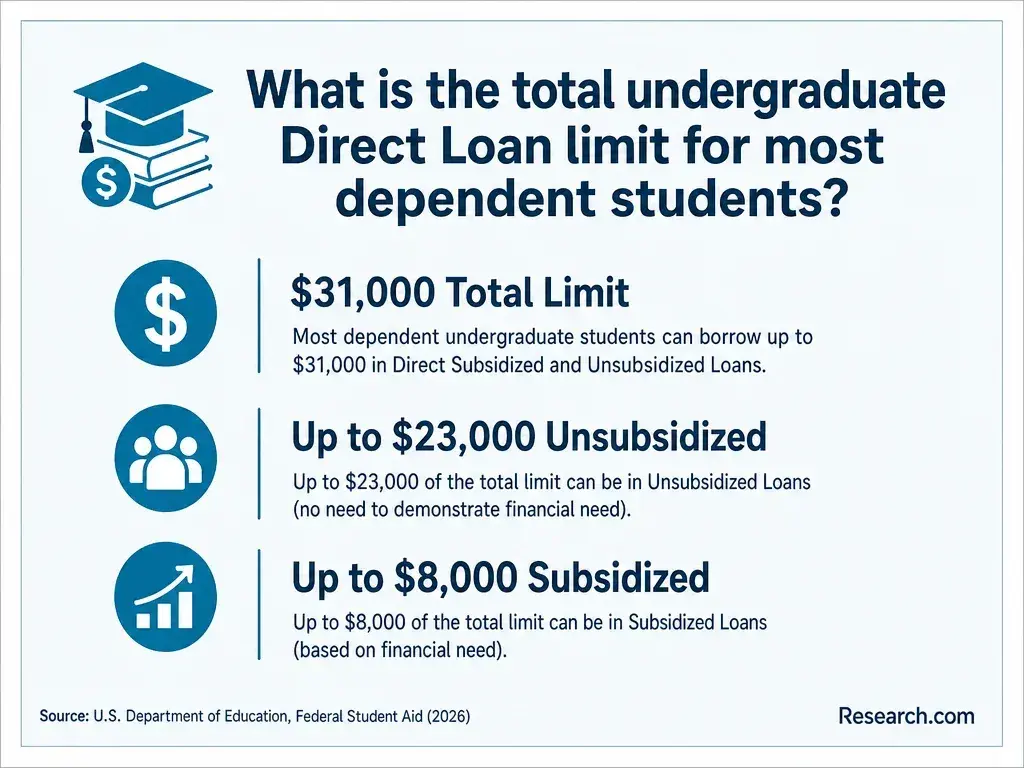
First verify that the institution holds recognized accreditation and that the status applies to the school awarding your degree. This matters when evaluating federal student aid eligibility and how another school or employer may assess the credential. For a starting point on cost-conscious choices, see accredited business administration programs and federal student aid; confirm aid eligibility directly with each school before applying.
Next, check whether the business school or the specific program is covered by AACSB, ACBSP, or IACBE accreditation, if that distinction matters to you. These organizations have different accreditation scopes. Do not infer that a named BS is covered merely because a university advertises business accreditation elsewhere.
Accreditation is a screening factor, not proof of strong teaching, transferable credits, or employment outcomes. Ask the school to identify the degree's accrediting status and then examine its curriculum, course availability, student support, and any outcomes it reports.
Most programs introduce financial statements, managerial decision-making, marketing, organizational behavior, operations, statistics, and business communication. The depth varies. A course in analytics may teach spreadsheet interpretation without preparing you for a data analyst position; an operations course may introduce supply chains without providing industry experience.
For the degree-versus-certificate decision, identify the incremental learning each option offers. If you have never studied accounting or statistics, a BS core may fill foundational gaps a narrowly focused certificate leaves open. If you already use those skills and need one new tool, a certificate may avoid repeating familiar material. Students drawn to supply chain work should inspect prerequisite order and course availability; accelerated degree planning for supply chain undergraduates illustrates why a stated program length must be checked against the required course sequence.
Look for assignments that produce usable evidence, such as a documented process map or a clearly labeled analysis using permitted data. An internship, capstone, or workplace project counts toward a degree only when the institution approves it under its academic rules.
Neither format is inherently stronger. An online BS may make a degree feasible without relocation, while campus study may offer easier access to in-person recruiting, faculty, and peers. The deciding factor is whether you can complete the actual coursework and applied requirements alongside your other commitments.
Online does not necessarily mean self-paced. Ask about live sessions, group meetings, exam proctoring, presentation times, campus visits, and internship rules. If speed matters, explore accelerated online degree programs, then check whether their course sequence is workable with your schedule. A faster calendar can mean a heavier weekly workload.
If you choose a certificate first because a degree schedule is currently infeasible, set a date to revisit the BS decision. Otherwise, a temporary scheduling constraint can quietly become an unexamined career plan.
Requirements depend on whether you are entering college, transferring, or seeking admission to a business major after enrolling. Schools commonly review prior academic records and may specify mathematics, statistics, accounting, or other preparation. Admission to the university does not necessarily mean admission to the major, and acceptance of transfer credit does not mean it fulfills a business requirement.
Gather transcripts and request a written degree audit before comparing a BS with a certificate. Ask which prior courses satisfy general education, the business core, electives, and any residency requirement. Business administration degree prerequisite planning can help frame those questions, but the receiving institution makes the credit decision.
If you already hold a bachelor's degree, ask about second-degree rules before applying. Depending on your target job, a specialized course, certificate, or graduate pathway may be more direct than repeating undergraduate requirements.
A typical bachelor's degree is designed around roughly four years of full-time study and about 120 credits, but your remaining time depends on credits that apply to the degree, prerequisite sequencing, enrollment pace, and course availability. A certificate may be shorter, yet the meaningful comparison is how long each path takes you to meet the qualification your target role requires.
Calculate degree cost from the approved remaining courses - not the school's advertised program price alone. Include tuition, mandatory fees, books or software, travel or proctoring, and any earnings affected by your schedule. For a certificate, check its full price, assessment fees, possible renewal costs, and refund terms. Neither option is automatically cheaper per useful skill gained.
When comparing accelerated programs, use the same transfer-credit assumptions for each school. A national comparison of accelerated business bachelor's schools can help identify options to investigate, but only an institution's evaluation can establish your remaining courses and likely completion timeline.
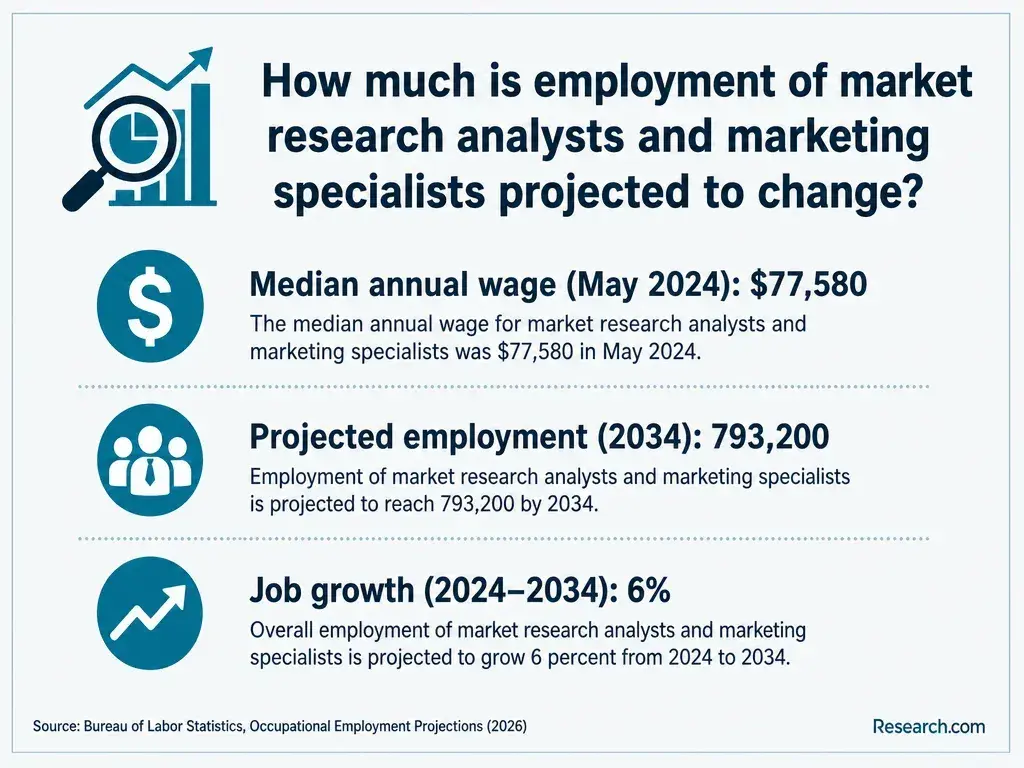
There is no reliable single salary for "business administration graduates." Pay follows the occupation, location, industry, and experience - not the degree title alone. The following US Bureau of Labor Statistics figures describe entire occupations, including experienced workers, and should not be read as entry-level offers.
| Occupation | Median annual pay, May 2025 | Projected US employment change, 2025-2035 |
| Human resources specialist | $75,940 | +6% |
| Market research analyst | $78,760 | +7% |
| Project management specialist | $102,320 | +7% |
These figures show why a target role matters more than a general claim about "business salaries." The specialist positions may require relevant skills and experience beyond a general BS. For a realistic financial decision, compare local entry-level postings with your current earnings, the cost of the education you still need, and the experience you can gain while studying. Economical business administration degrees with quicker study routes may help you identify programs to examine, but no program name or occupational median establishes your personal return.
Which Certifications Complement a Business Administration Degree?
Choose a certification only after identifying the function you intend to enter. Project management, HR, accounting, and financial services use different credentials, eligibility rules, and, in some cases, licensing requirements. A business BS does not itself confer any of them. An introductory course or a professional certificate also does not necessarily meet a certification body's experience or examination requirements.
For project work, compare a credential's published eligibility rules with your documented responsibilities before paying for preparation. If you still need the bachelor's degree, examine the costs separately; project management undergraduate scholarship comparisons address degree financing, not automatic funding for a certification exam.
A useful order is to establish the education threshold for the job, gain relevant supervised experience, and add a recognized credential when it addresses a remaining qualification gap. If the job does not require a bachelor's degree and your existing experience is strong, targeted training may be the better first investment.
Other Things You Should Know About Business Administration
Possibly, but do not assume it will. Ask the degree-granting school whether the specific coursework carries transferable academic credit and where that credit would apply in your degree audit.
Label it "in progress" and give an expected completion date only if you have one. Do not list it as awarded or imply you hold a related professional certification.
It depends on the issuer. A course-completion certificate may have no renewal process, while a professional certification may require continuing education or periodic renewal. Check the issuer's rules.
Some schools assess prior learning or approve work-based academic projects. Your job title alone does not award credit; ask the school what documentation, supervision, and approval it requires.
- Accreditation in the U.S. | ed.gov http://www.ed.gov/laws-and-policy/higher-education-laws-and-policy/college-accreditation/accreditation-in-the-us
- Types of Financial Aid: Grants, Work-Study, and Loans | studentaid.gov https://studentaid.gov/understand-aid/types
- Online Bachelor's Degree in Business Administration | Purdue Global https://www.purdueglobal.edu/degree-programs/business/bachelor-business-administration/
- Certificate vs. Degree: Pros, Cons, and Career Outcomes | National University https://www.nu.edu/blog/certificate-vs-degree/
- Business Administration vs. Management Degrees | CMU https://www.calmu.edu/news/business-administration-vs-management
- How to choose between degrees vs. certificates | University of Phoenix https://www.phoenix.edu/blog/how-to-choose-between-degrees-vs-certificates.html
- Business Administration Bachelor's Degree Online | The Pennsylvania Institute of Technology https://www.pit.edu/programs/b-s-business-administration/
- Certificate vs. Degree: Which Is Right for You? | UC San Diego Division of Extended Studies https://extendedstudies.ucsd.edu/news-events/extended-studies-blog/certificate-vs-degree-making-the-right-education-decision
- What About Certificates? Evidence on the Labor Market Returns to Non-Degree Community College Awards in Two States https://ccrc.tc.columbia.edu/publications/what-about-certificates.html
- Certificate or degree: 4 questions to help you make your choice | upenn.edu https://lpsonline.sas.upenn.edu/features/certificate-or-degree-4-questions-help-you-make-your-choice