2027 Should You Choose a BS in Business Administration or Enrolled Agent Status for Your Next Career Step?
Audited and Verified:
Our Editorial and Data Verification Process
Research.com uses government datasets, official education statistics and primary institutional information to support its career and degree guides. Our review process checks factual accuracy, occupational definitions, source dates and the requirements associated with the credentials discussed.
How This Article Was Fact-Checked
Our editorial team verifies salary estimates, employment projections, education requirements and program information against original data providers and official organizations. Salary figures are checked against the relevant occupational definitions and reporting periods. Information about licensure, accreditation and required in-person training is reviewed separately.
Fact-checked and verified on:

Co-Founder and Chief Data Scientist
A business administration degree and enrolled agent status can both support a career involving money, clients, and organizations - but they lead to different work. If you are deciding where to invest your next stretch of study, the key is whether you want broad business options or a defined federal tax specialty.
This guide compares the qualifications, practical requirements, costs, and career evidence so you can choose a path that fits your experience and target role.
Key Things You Should Know
- Choose enrolled agent status if your goal is federal tax preparation and representing taxpayers before the IRS; it is a federal credential, not a college degree.
- Choose a BS in Business Administration if you need a bachelor's degree or want preparation across business functions. A typical full-time bachelor's path takes about four academic years before accounting for transfer credit.
- Do not compare the paths using an "EA salary." The Bureau of Labor Statistics reports a May 2025 median of $83,680 for accountants and auditors, but that occupation-wide figure is not a wage figure for enrolled agents or new business graduates.
What Is the Difference Between a Business Administration Degree and Enrolled Agent Status?
A BS in Business Administration is an undergraduate academic degree covering several business functions. Enrolled agent (EA) status is a credential granted by the IRS to people authorized to represent taxpayers before it. An EA's federal representation rights are broad, but the credential does not confer a bachelor's degree, CPA license, or authority to practice law.
The distinction matters most when a job has a specific requirement. This comparison shows what each path supplies - and what it does not.
| Decision factor | BS in Business Administration | Enrolled agent status |
| Primary purpose | Broad undergraduate business preparation | Federal tax expertise and IRS representation |
| Credentialing authority | Degree-awarding college or university | IRS |
| Best fit | Roles requiring or preferring a bachelor's degree across business functions | Tax preparation, tax compliance, and taxpayer representation work |
| Key limitation | Does not itself grant a tax practice credential | Does not satisfy an employer's bachelor's-degree requirement |
If you already have relevant work experience and a bachelor's-degree requirement is blocking advancement, the degree may address that barrier; compare career advancement study options in business administration against the roles you actually want. If you already meet education requirements and want to move specifically into federal tax work, EA status may be the more direct next step. Some tax professionals eventually benefit from both, but neither substitutes for the other.
What Are the Requirements to Become an Enrolled Agent?
The IRS offers two principal routes: pass all parts of the Special Enrollment Examination (SEE), or qualify through specified former IRS employment. Applicants must also submit an enrollment application and pass an IRS suitability check, which includes review of tax compliance and criminal history. A college degree is not required for the examination route.
The SEE covers individuals, businesses, and representation, practices, and procedures. After enrollment, EAs must meet IRS continuing-education and renewal rules to keep the credential. Check the IRS's current instructions before paying for exams or planning a start date: testing windows, fees, deadlines, and procedural requirements can change.
These are not admissions requirements for a business degree. If you are weighing the two routes, compare the IRS process with the prerequisites for a business administration degree; an existing non-business background does not automatically rule out either option.
What Careers Can You Pursue With a Business Administration Degree?
Business graduates may seek entry-level work in operations, sales support, marketing, human resources, procurement, or project coordination. The degree can help establish business fundamentals, but employers also assess spreadsheets, communication, industry knowledge, and evidence of completed work. Manager and specialist titles often require experience or additional training.
Start with the function you want, not the degree title alone. Someone with customer-service experience might use a business degree and a documented process-improvement project to pursue operations coordination. Someone committed to HR should compare the business curriculum with a dedicated HR program; if previous study is relevant, options to finish an HR bachelor's using previous college credits may be worth examining. A prospective tax professional should instead check whether the job calls for EA status, accounting coursework, a bachelor's degree, or a combination.
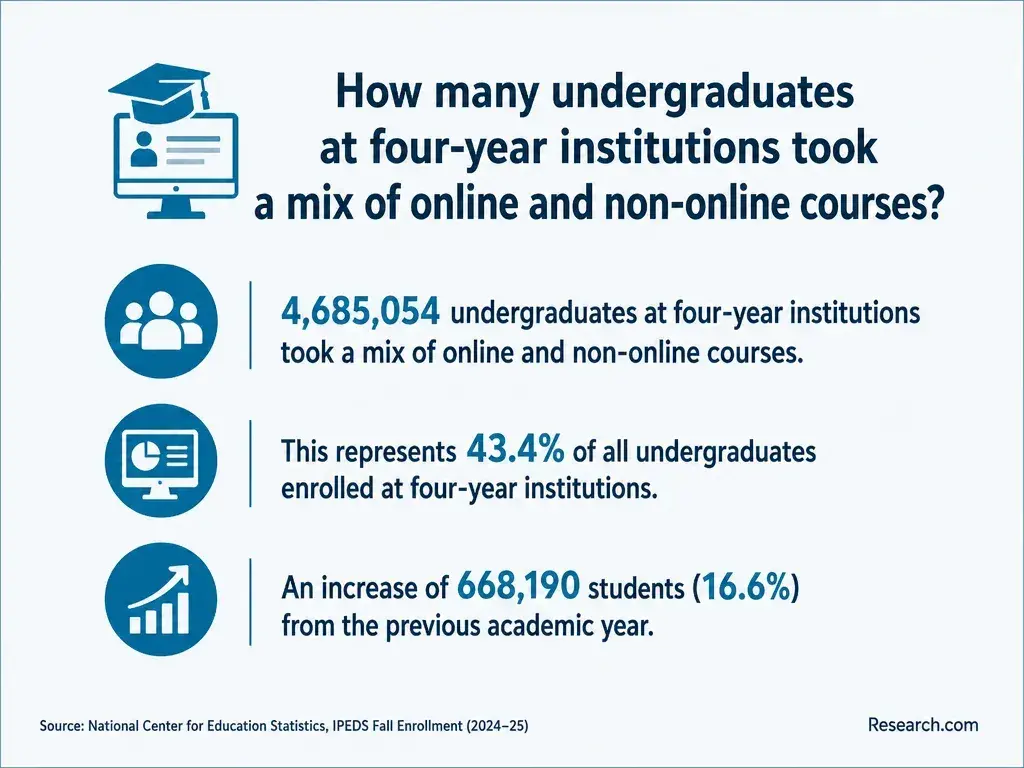
Online and campus programs can lead to the same type of degree, but delivery affects whether you can finish while working. Online does not necessarily mean self-paced: scheduled meetings, group presentations, proctored exams, and fixed deadlines may still apply. Campus study may offer easier in-person access to peers, faculty, and local employers, while imposing travel and set meeting times.
Ask for a sample term schedule, assessment rules, and any internship or campus-visit requirements before enrolling. If project coordination is your target, also compare business programs with specialized options and confirm how previous courses would apply; online undergraduate project management credit acceptance is a separate question from whether a school admits you. EA examination preparation may be easier to schedule around work, but its independent study format will not suit everyone.
Business administration typically combines accounting, finance, economics, marketing, management, operations, and quantitative coursework with general education. Some programs offer formal concentrations; others offer only electives. Review the actual course list rather than assuming a "business" degree includes substantial tax instruction. Introductory accounting and business law can be useful foundations, but they are not substitutes for the federal tax knowledge tested for EA status.
A concentration should serve your target function, not merely add a label to your transcript. For example, a student aiming at logistics should compare operations courses and applied projects with a specialized supply chain degree; accelerated supply chain management bachelor's schools are an alternative to assess, not proof that any student can finish on an advertised schedule. Confirm whether the courses you need are offered when you need them.
Schools set their own undergraduate admission standards, and entry to a university may be distinct from entry to its business major. Applicants may need secondary-school or previous-college transcripts; transfer applicants should ask whether earlier math, accounting, and general-education courses satisfy degree requirements or count only as electives. A school's approved evaluation - not an informal estimate - determines how accepted credit applies.
If speed matters, request a written degree audit and a term-by-term course plan before relying on shortest online business bachelor's program rankings. Ask admissions which documents establish eligibility, then ask the registrar or transfer office which credits apply. For an experienced applicant who already holds a bachelor's degree, check second-degree rules as well; EA status has no comparable college-admission step.
A full-time bachelor's degree commonly spans about four academic years; an approved transfer evaluation can shorten the remaining path, while part-time enrollment or course sequencing can lengthen it. EA timing depends on preparation, examination progress, and IRS enrollment processing. Neither route has a reliable universal completion date.
Compare total cost to reach your goal, not just an advertised tuition rate. For the degree, account for remaining required courses, tuition, fees, materials, possible travel, and income affected by study time. For EA status, budget for examination-related charges, preparation materials or courses if needed, enrollment costs, and ongoing continuing education. Published online business administration school cost comparisons can help you identify candidates, but request a personal cost estimate after your credits are evaluated. A lower price per term does not necessarily mean a lower completion cost.
Neither qualification has a single salary. Pay depends on the occupation, location, employer, responsibilities, and experience. The Bureau of Labor Statistics does not report a single wage for all business administration graduates or a distinct enrolled-agent wage in the occupational figures used here.
For context, the BLS reports a May 2025 median annual wage of $83,680 for accountants and auditors. That figure describes people across that occupation - not EAs as a group, new graduates, or everyone who prepares tax returns. Compare job postings for your intended role and location before treating any occupation median as a likely offer. If HR is your preferred alternative to tax work, explore the costs of an HR degree alongside local pay and hiring requirements rather than choosing a field by a national median alone.
There is no single job-growth rate for either business graduates or EAs. BLS projects 5% employment growth for accountants and auditors from 2025 to 2035; that is useful context for some tax-related career plans, but it is not an EA-specific projection. Demand for a business graduate likewise depends on the occupation pursued, not the degree's name.
For a meaningful comparison, identify jobs you would apply for after each path and check their tasks and hiring requirements. If project management appeals more than tax representation, consider the experience employers seek as well as project management degree tuition comparisons. Occupational growth alone cannot tell you which credential will make you competitive for a particular opening.
How Can You Choose an Accredited Business Program or Tax Credential Path?
For a degree, verify the institution's recognized accreditation and the exact degree awarded. AACSB, ACBSP, or IACBE accreditation, where applicable, has its own scope; do not assume every program at an accredited institution is covered. Then obtain the curriculum, transfer evaluation, schedule, and full cost estimate. Use low-cost shorter business administration programs as a starting point for questions, not as a substitute for checking your personal degree plan.
For EA status, use IRS requirements - not a course provider's marketing - to confirm eligibility, examination steps, enrollment, and continuing obligations. Make the final choice against a specific job goal: choose the degree when broad business preparation or a bachelor's requirement is central; choose EA status when federal tax practice is central; consider both only when the work you want justifies both investments. Before committing, review several relevant job postings and identify which qualifications they actually request.
Other Things You Should Know About Business Administration
Not necessarily. Paid federal tax return preparers generally need a valid preparer tax identification number (PTIN), but EA status is a separate credential that provides IRS representation rights. Check applicable state rules too.
EA status comes from the IRS and establishes federal representation rights. Authority in a state tax matter depends on that state's rules and the work involved.
Possibly. Ask whether education assistance covers undergraduate tuition, exam fees, preparation courses, or continuing education, and check reimbursement timing, grade requirements, and any repayment agreement.
Only if the combined workload is manageable and your target roles benefit from both. If one qualification addresses an immediate hiring requirement, completing that path first may make the next investment easier to evaluate.
- FAQs: Enrolled agent continuing education requirements | Internal Revenue Service https://www.irs.gov/tax-professionals/faqs-enrolled-agent-continuing-education-requirements
- Federal Register:: Enrolled Agent Special Enrollment Examination User Fee Update https://www.federalregister.gov/documents/2026/04/20/2026-07681/enrolled-agent-special-enrollment-examination-user-fee-update
- What Can You Do With a Business Administration Degree? | American Military University https://www.amu.apus.edu/area-of-study/business-administration-and-management/resources/what-can-you-do-with-a-business-administration-degree-exploring-options/
- Bachelor's Degree in Business: Administration or Accounting? | Bay Path University https://www.baypath.edu/news/bay-path-university-blogs/post/bachelor-s-degree-in-business-administration-or-accounting/
- Enrolled Agent Exam | National Association of Enrolled Agents https://www.naea.org/enrolled-agent-exam/
- Enrolled Agent (EA) Salary Guide | Surgent https://www.surgent.com/resources/ea-salary-guide/
- How to Become an Enrolled Agent | accounting.com https://www.accounting.com/certifications/enrolled-agent/
- How Much Does the EA Exam Cost in 2026? | VoraPrep https://voraprep.com/blog/ea-exam-cost-complete-breakdown
- Accounting Certifications You Can Earn Without a Degree | cpatrainingcenter.com https://www.cpatrainingcenter.com/blog/accounting-certifications-without-a-degree-biid1002416
- EA vs. CPA: What's the Difference? - TurboTax - Intuit https://turbotax.intuit.com/tax-tips/tax-pro/ea-vs-cpa-tax-professionals-whats-the-difference/L9KRVtXpV