2027 BS in Business Administration and Construction Management: How to Check Whether a Job Needs a Separate Credential
Audited and Verified:
Our Editorial and Data Verification Process
Research.com uses government datasets, official education statistics and primary institutional information to support its career and degree guides. Our review process checks factual accuracy, occupational definitions, source dates and the requirements associated with the credentials discussed.
How This Article Was Fact-Checked
Our editorial team verifies salary estimates, employment projections, education requirements and program information against original data providers and official organizations. Salary figures are checked against the relevant occupational definitions and reporting periods. Information about licensure, accreditation and required in-person training is reviewed separately.
Fact-checked and verified on:

Co-Founder and Chief Data Scientist
A construction management job posting may ask for a bachelor's degree, a contractor license, a safety card, or several of these. They are not interchangeable. If you are considering a BS in Business Administration with construction management coursework, the distinction affects which jobs you can pursue and whether further study is worth the cost.
This guide explains how the degree fits construction roles, who sets separate credential requirements, and how to check a particular job before you enroll or apply.
Key Things You Should Know
- A construction management degree does not itself grant a contractor, engineering, or architecture license; check the job's duties and the rules of the state where the work occurs.
- Many coordination and project-support jobs do not require an occupational license, but employers may request experience, safety training, or a voluntary certification.
- The BLS reports a $102,320 median annual wage for project management specialists in May 2025; that occupation-wide figure is not a starting salary for construction graduates.
What Is a BS in Business Administration and Construction Management?
This description can mean a BS in Business Administration with a formal construction management concentration, a business degree with related electives, or a separate construction management major. The transcript and catalog - not the shorthand used in an advertisement - establish which credential a school awards. A concentration is part of a degree, not an occupational license.
The business route can suit someone aiming to coordinate budgets, purchasing, contracts, and teams at a construction company. A specialized construction management degree may offer more depth in estimating, scheduling, construction methods, and field practice. Compare required courses and supervised experience against the job you want, rather than assuming the degree titles are equivalent. If a separate project management degree is under consideration, compare its full expense using tuition and aid questions for project management students; neither degree substitutes for a license when the work requires one.
Does Construction Management Require a Separate License or Credential?
Not universally. "Construction manager" is a job description, not a single nationwide license. Separate requirements arise from what a person or company actually does: contracting with an owner, performing regulated trade work, signing engineering documents, or practicing architecture can trigger different state rules. Public contracts and employers may add qualifications of their own.
The distinction below helps identify which authority to consult. A job title alone cannot settle the question.
| Activity or requirement | Who determines eligibility | Why the degree is not enough by itself |
| Managing schedules, costs, or subcontractor coordination for an employer | Employer; applicable state law for the actual duties | The employer may require experience or training, while regulated activities remain subject to law. |
| Offering or performing contracting or trade services | State or local contractor and trade licensing authorities | Business licenses, contractor licenses, qualifying individuals, exams, and insurance rules vary by jurisdiction and trade. |
| Practicing professional engineering or architecture | State engineering or architecture board | Professional practice and protected titles have separate education, experience, and examination rules. |
| Holding a safety card or voluntary management certification | Training provider, certifying organization, or employer | Completing a degree does not automatically issue the card or certification. |
To check a particular job, read its duties as well as its title. Identify the work location, whether you would contract directly with clients, and whether you would sign or approve regulated work. Then check the relevant state board or licensing agency and ask the employer which credential must be held before hire, which can be obtained later, and whether the company - not every employee - must hold it. If considering more education instead, distinguish occupational credential fees from degree financing; paying for project management bachelor's study with grants addresses educational funding, not license eligibility.
What Jobs Can You Get With This Combined Business Degree?
For a new graduate or career changer, project coordinator, construction operations assistant, purchasing coordinator, estimating assistant, and scheduling assistant are more realistic initial targets than sole responsibility for a major project. Prior trade, field, procurement, or operations experience can change the entry point. Employers commonly assess whether you can track costs, communicate changes, read project documents, and follow site procedures - not just whether your diploma mentions construction.
A construction manager or superintendent typically carries greater responsibility for field execution, subcontractors, schedules, and safety coordination. Experience and employer requirements matter substantially. If your preferred work is primarily materials flow rather than jobsite delivery, compare construction purchasing roles with fastest online supply chain bachelor's programs before choosing a construction-focused curriculum.
First verify the institution's recognized accreditation and its status for your expected enrollment period. Then check any claimed specialized accreditation against the accreditor's listing and the specific program covered. AACSB, ACBSP, and IACBE address business education within their respective scopes; a business school's accreditation does not automatically cover a separately housed construction management degree. Construction programs may also cite field-specific accreditation, which should be checked for the exact program and location or delivery format.
Accreditation supports program evaluation but does not award a contractor license or prove that graduates meet a state board's rules. Use national online business program rankings to assemble possibilities, then confirm accreditation scope, construction coursework, and any required field experience directly with each school.
A business administration core may cover accounting, finance, management, operations, business law, and quantitative analysis. Construction-focused courses may add estimating, scheduling, contracts, procurement, building methods, safety, and project controls. The useful test is depth: an introductory project management class is not the same preparation as repeated estimating assignments or a supervised construction project.
Request a degree map showing which construction courses are required, which are optional, and whether an internship or capstone involves approved field work. A business elective cluster should not be described as a formal concentration unless the school awards one. If your intended job is personnel administration rather than construction delivery, HR degree coursework and entry requirements provide a more relevant curriculum comparison.
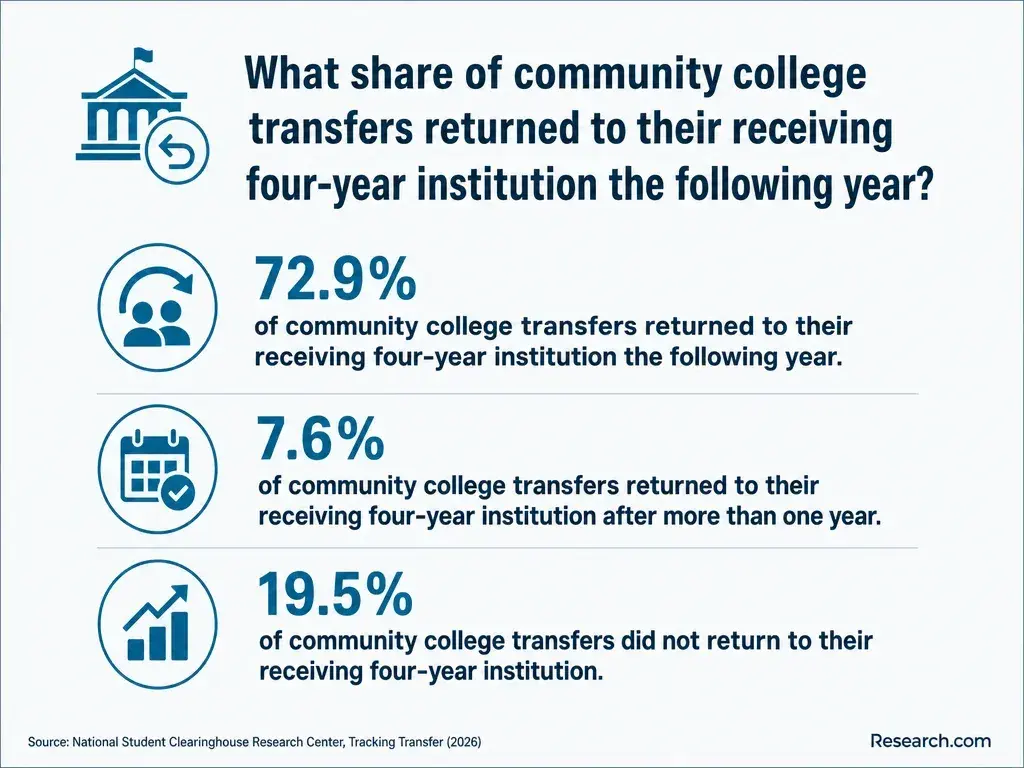
Schools set their own first-year and transfer admission rules. Expect to check secondary-school or prior-college records, any mathematics prerequisites, and whether entry to the construction concentration requires separate approval. Admission to the university does not necessarily mean admission to every major. For transfer students, accepted credits may count only as electives rather than satisfy accounting, quantitative, or construction requirements.
Ask for a written transfer evaluation and degree audit before estimating your remaining courses. Confirm application fees and deadlines at each institution; online universities with no application charge can be useful to compare, but a waived application fee says little about the full cost or the fit of a construction curriculum.
A bachelor's degree is commonly planned as four years of full-time study, but transfer applicability, course sequencing, enrollment pace, and required field work determine an individual completion date. Compare costs using the courses still required for your degree audit, not the number of credits a school initially accepts.
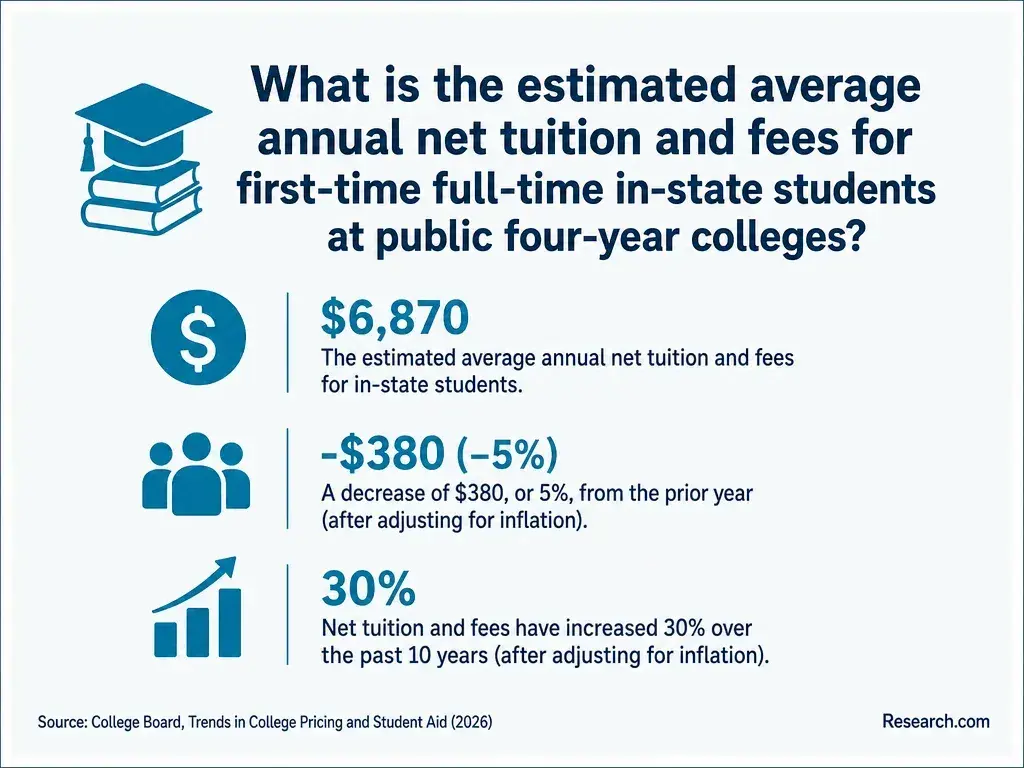
Request an itemized estimate covering tuition, mandatory fees, software and materials, travel to any site or campus activities, and the cost of a delayed required course. Financial aid and employer reimbursement depend on eligibility and policy. A business degree tuition comparison guide can help establish a baseline, but the lowest advertised tuition may not be the lowest cost of completing construction requirements.
Either format can teach business and project-control concepts. The consequential difference is access to construction practice: estimating exercises, plan reading, field observation, internships, and feedback from people who have delivered projects. Online delivery can work well for an employed student with relevant site access, but it does not automatically provide that access or make assessments self-paced.
Before choosing a format, check live-session times, group-work deadlines, required site visits, internship approval, software access, and whether local employers recruit from the program. Someone chiefly needing a flexible management curriculum rather than construction-specific practice may also compare online leadership bachelor's programs with compressed schedules; a shorter calendar does not remove construction experience or licensing requirements.
Choose a credential for the work it supports, not as a substitute for experience. Employers may value safety training for site access, construction-focused certifications for demonstrated industry knowledge, or project management certifications for broader coordination roles. The issuing organization sets eligibility, examinations, continuing requirements, and permitted use of its designation; some credentials require documented experience that a new graduate does not yet have.
Check target job postings for the exact credential name, then verify eligibility with its issuer. Distinguish a required employer safety course from a voluntary certification and from a state license. If you are weighing certification against another degree, investigate business administration college affordability and FAFSA participation separately: aid eligibility for college does not establish that a certification exam or license fee is covered.
What Are the Salary and Job Outlook for Construction Management Graduates?
Pay depends on the occupation and responsibilities actually obtained, not the degree label. As a related comparison, the U.S. Bureau of Labor Statistics reports a $102,320 median annual wage for project management specialists in May 2025 and projects 7% employment growth from 2025 to 2035. Those figures cover workers across industries and experience levels; they are not construction-specific graduate salaries or a forecast for an individual applicant.
For a construction manager target, use the BLS construction managers occupation profile and local postings to assess that distinct role. Compare entry-level requirements with the responsibilities behind any published median. If materials and logistics roles are also on your shortlist, online supply chain degrees with cost and outlook details offer a separate education comparison rather than evidence of construction management pay.
Other Things You Should Know About Business Administration
Yes. Document the projects, crews, purchasing, estimates, or schedules you worked on. An employer can assess that experience alongside your degree; a licensing authority decides separately whether any of it satisfies its rules.
Potentially. Public projects can impose contract-specific qualifications, safety rules, and procurement procedures. Check the position description and the project's requirements rather than assuming the degree either qualifies or excludes you.
Only if the relevant licensing authority accepts that type of documented work and supervision. Academic credit and licensing credit are separate decisions.
If you meet the essential duties and required qualifications, it may be worth applying. State your relevant experience accurately and ask whether the employer supports obtaining the preferred credential after hire.
- Step 1: Before Applying for the Examination - CSLB https://www.cslb.ca.gov/contractors/applicants/contractors_license/exam_application/before_applying_for_license.aspx
- Chapter 61. Texas Higher Education Coordinating Board https://statutes.capitol.texas.gov/Docs/ED/htm/ED.61.htm
- Occupational License - Labor Market Information - CA.gov https://labormarketinfo.edd.ca.gov/data/occupational-license.html
- How to Become a Construction Manager | Texas A&M University College of Architecture https://www.arch.tamu.edu/news/2024/11/13/how-to-become-a-construction-manager/
- Professional Licensure - State Authorization Network https://wcetsan.wiche.edu/resources/professional-licensure
- Construction Manager vs. Architects: What's the Difference? | The University of New Mexico https://civil.unm.edu/programs-and-degrees/undergraduate/construction-manager-vs.-architects.html
- How Do I Become a Construction Manager? - BSchools.org https://www.bschools.org/faq/how-to-become-a-construction-manager
- The Essential Guide to Construction Manager Education and Career Paths | ABC Southern California https://abcsocal.org/construction-manager-education/