2027 BS in Business Administration Curriculum: How to Evaluate Preparation in Customer Relationship Management Systems
Audited and Verified:
Our Editorial and Data Verification Process
Research.com uses government datasets, official education statistics and primary institutional information to support its career and degree guides. Our review process checks factual accuracy, occupational definitions, source dates and the requirements associated with the credentials discussed.
How This Article Was Fact-Checked
Our editorial team verifies salary estimates, employment projections, education requirements and program information against original data providers and official organizations. Salary figures are checked against the relevant occupational definitions and reporting periods. Information about licensure, accreditation and required in-person training is reviewed separately.
Fact-checked and verified on:

Co-Founder and Chief Data Scientist
A business administration degree may teach marketing and customer service without ever requiring students to use a customer relationship management (CRM) system. That distinction matters if you want to work in sales operations, customer success, or marketing operations.
This guide shows prospective and current BS students how to inspect courses, assignments, software access, and career support—not just course titles. It also explains when a different program or targeted training may be the more direct route.
Key Things You Should Know
- Look for a sequence that connects customer strategy, data quality, CRM workflows, reporting, and privacy—not a single software demonstration.
- Ask to see an assessed assignment: students should be able to configure a workflow or analyze a pipeline using permitted data and explain the business decision it supports.
- A BS commonly requires about 120 credits, but CRM depth varies by program; compare the credits and costs you would have left after an official degree audit.
What Is CRM Preparation in a Business Administration Degree?
CRM preparation combines customer relationship strategy with the ability to use systems that organize contacts, sales opportunities, service interactions, and campaign activity. In a BS in Business Administration, the foundation may come from marketing, management, statistics, and information systems. Stronger preparation connects those subjects in practical work: deciding what customer information to record, keeping it accurate, interpreting a report, and recommending an appropriate action.
CRM is not synonymous with sales, and knowing where to click in one product is not the same as understanding a customer process. Conversely, a general business degree does not necessarily teach system configuration. If your goal is primarily supervising staff rather than working with customer data and workflows, compare CRM-focused coursework with accelerated online organizational leadership school choices; the better fit depends on the responsibilities you want to develop.
What CRM Courses Should a Business Administration Curriculum Include?
Course names differ across schools. The useful question is whether required courses and available electives build from customer knowledge to system use and evidence-based decisions. This table shows what to look for in syllabi and assignment descriptions; it does not imply that every program offers a dedicated CRM course:
| Curriculum area | CRM-relevant learning | Evidence in coursework |
| Marketing and customer behavior | Segmentation, customer needs, and retention | A justified audience or customer-journey analysis |
| Sales or service operations | Lead stages, handoffs, follow-up, and service processes | A documented workflow with defined responsibilities |
| Information systems and analytics | Records, data quality, dashboards, and limitations | A usable report with an explanation of its measures |
| Business law or ethics | Responsible collection, access, and use of customer information | A discussion of privacy and permission constraints |
Sequence matters. An analytics assignment is more valuable after students understand what the fields and measures represent. If your interest is distribution rather than customer-facing work, consider whether shorter online supply chain degree pathways offer more relevant operations depth than CRM electives.
How Do You Evaluate CRM Training in a Business Administration Program?
Ask the program for recent syllabi, a degree map, and examples of assignments with confidential information removed. A convincing answer identifies what students actually do, how faculty assess it, and whether the relevant courses are offered when you expect to take them. For employees pursuing their studies, business administration programs for advancement while working are worth comparing on course scheduling as well as CRM content.
Use the following checks to distinguish substantive practice from a product name in a catalog description:
- Confirm whether CRM-related courses are required, electives, or part of an officially designated concentration, and ask which prerequisites control enrollment.
- Request an assignment brief showing whether students enter records, define pipeline stages, build a report, or assess a customer-service process.
- Ask whether practice uses a sandbox, synthetic data, a simulation, or an approved employer project; access to real customer records should never be assumed.
- Check who gives feedback on data accuracy, business interpretation, communication, and privacy—not merely whether the software task was completed.
- Verify whether internships or capstones can involve CRM work and what faculty approval, supervision, and data permissions they require.
Give particular weight to the assessed work you could describe in an interview. A course that produces a defensible, privacy-safe work sample may be more useful than one that only surveys several platforms.
Salesforce, HubSpot, and Microsoft Dynamics 365 are examples students may encounter, but no single platform is a universal requirement. Salesforce experience may be useful where employers use its sales or service products; HubSpot can illustrate how marketing and sales activity share customer records; Dynamics 365 may matter in organizations using Microsoft business applications. Ask local employers and internship sites which systems appear in their job descriptions before prioritizing one.
Transferable competence matters more than collecting product names. Practice importing or cleaning sample records, defining access appropriately, tracking a lead or service request, and explaining what a dashboard can and cannot show. A student interested mainly in inventory, purchasing, or distribution systems should distinguish CRM from enterprise resource planning and compare shorter online supply chain bachelor's pathways before choosing electives.
First, confirm that the college has recognized institutional accreditation. Then check whether its business school or the specific program is covered by business-focused accreditation, such as AACSB, ACBSP, or IACBE. Those reviews have different scopes; a university's accreditation does not mean every business program holds separate business accreditation.
Accreditation helps establish an academic quality framework, but it does not prove that students receive CRM software access or find CRM jobs. Compare the school's stated accreditation scope with its current catalog and the accreditor's directory, then examine the curriculum itself. When weighing price alongside these checks, value-focused online business college choices can be a starting point rather than a substitute for program verification.
Requirements vary by institution and by whether you apply as a first-year or transfer student. Schools may request secondary-school or college transcripts and may set separate conditions for entry to the business major. Mathematics, statistics, accounting, or economics can also be prerequisites for later courses even when they are not required for initial university admission.
If you have previous college work, request a formal evaluation showing which credits satisfy general education, the business core, and CRM-relevant electives. Accepted credits do not automatically replace major requirements. Consult the school's current policies alongside online overviews of business administration degree entry requirements, and ask an adviser which courses you must complete before the CRM-related sequence.
A bachelor's curriculum commonly totals about 120 semester credits and takes roughly four years at a conventional full-time pace. Your remaining time depends on applicable transfer credits, prerequisite sequencing, course availability, and enrollment intensity. A CRM elective may fit existing requirements—or add credits if it does not satisfy the degree plan.
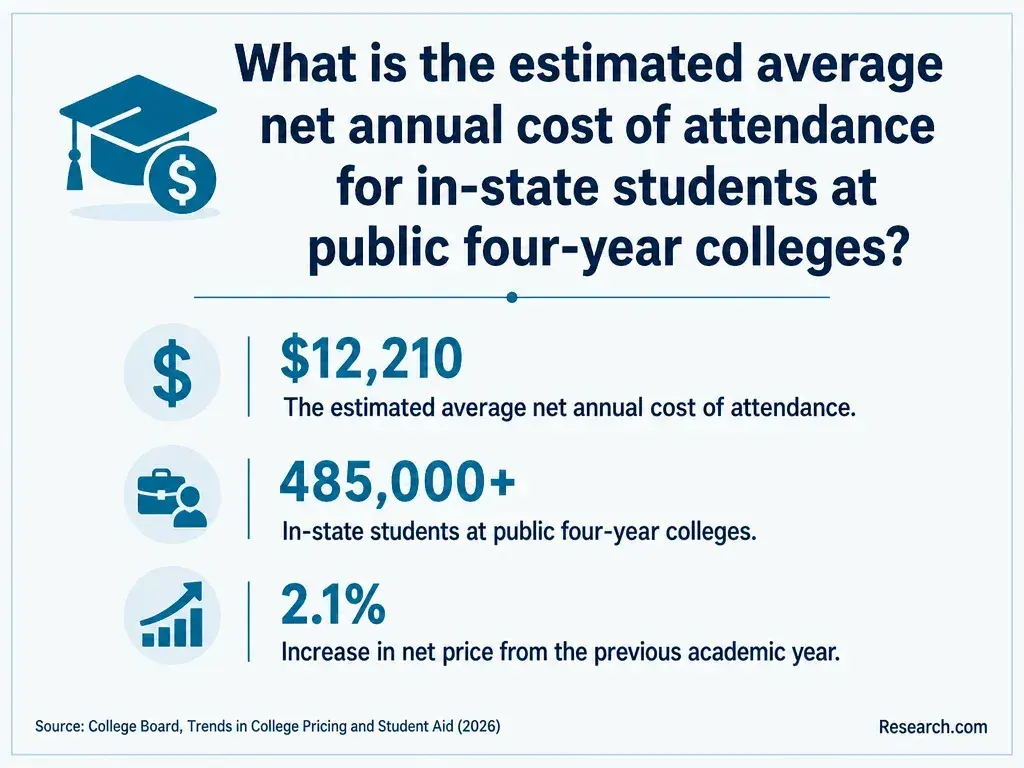
Compare schools using the cost of your remaining requirements: tuition, mandatory fees, books, software, and any travel or proctoring charges. Ask financial aid staff for an aid estimate and confirm whether employer assistance requires an upfront payment or a minimum grade. If you are comparing CRM study with a project management degree, examine funding sources for a bachelor's in project management under the same credit and enrollment assumptions; neither pathway is cheaper solely because its advertised timeline is shorter.
They can be effective when students get meaningful system practice, feedback, and opportunities to explain their work. An online course can support CRM simulations and remote collaboration, but "online" does not guarantee access to a training environment or an asynchronous schedule. Confirm live-session times, group-work expectations, software access, assessments, and any internship or campus requirement.
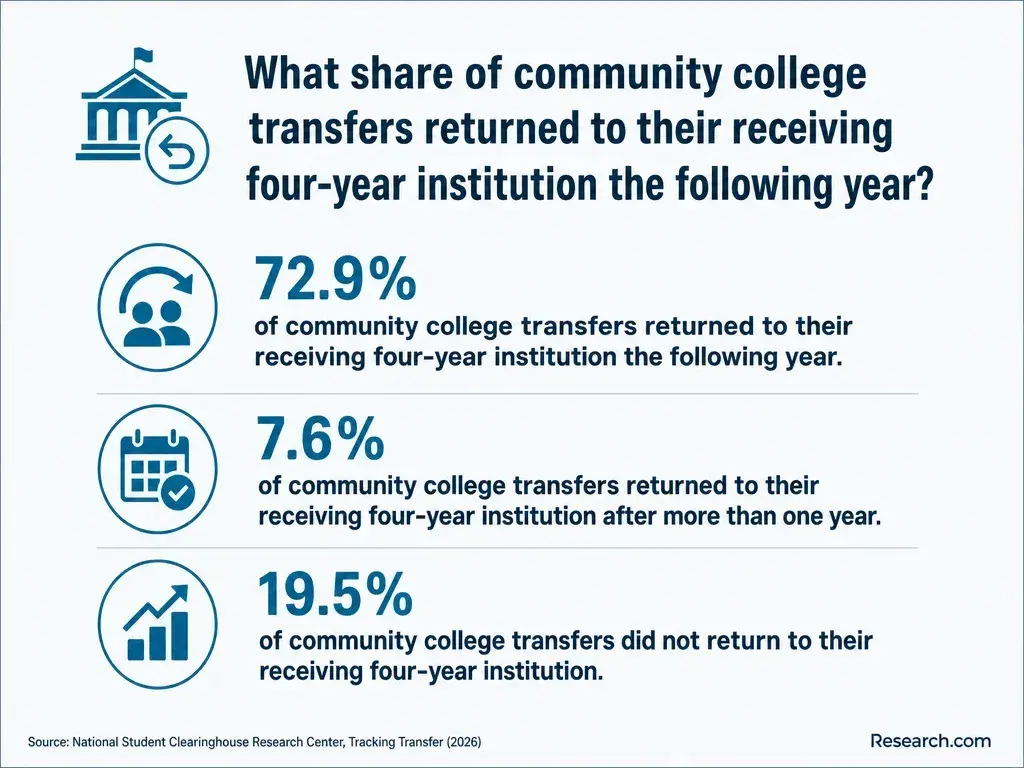
Working students should ask whether a missed course offering would delay the CRM sequence. If speed is important, compare shorter routes to an online bachelor's against the time available for applied assignments. A faster degree is not stronger CRM preparation if it leaves little opportunity to practice and receive feedback.
Possible starting points include sales operations coordinator, customer success associate, marketing coordinator, and CRM support or data-quality roles. These jobs differ: sales operations may emphasize pipeline records and reports, while customer success focuses on service history, communication, and retention. A degree can provide context, but employers may also expect product experience, spreadsheet skills, relevant work, or an internship.
For one related occupation, the U.S. Bureau of Labor Statistics reports a $78,760 median annual wage for market research analysts in May 2025. That is an occupation-wide figure, not an expected starting salary for a CRM-focused graduate; use specific job postings to judge entry-level pay and requirements in your area.
If your target is coordinating implementations rather than owning customer processes, compare CRM assignments with project-management preparation. Tuition and aid questions for project management students can help frame the cost side of that alternative, but job duties should drive the choice first.
Which CRM Certifications Improve Business Administration Career Prospects?
A vendor credential can help demonstrate knowledge of a platform an employer actually uses. Salesforce's administrator certification and relevant HubSpot Academy product training are examples to investigate; offerings, exam rules, and costs can change. Select a credential after checking target job descriptions, then verify its current requirements directly with the provider. Training completion, a certification exam, and supervised workplace experience are different forms of evidence.
If you already hold a bachelor's degree or have substantial customer-facing experience, a focused course, vendor training, and an authorized work sample may be more direct than another undergraduate degree. If you still need a bachelor's credential for your target jobs, check no-fee college applications only after confirming the program's CRM content and total completion cost; avoiding an application fee does not establish overall value.
Other Things You Should Know About Business Administration
Possibly, but obtain employer permission and faculty approval first. Remove personal and proprietary information, and confirm what the employer allows you to share publicly.
No. A concentration is an officially defined set of requirements recorded under the school's policies; an elective or informal cluster may not appear on your academic record as a concentration.
Usually not for business-facing coursework. Spreadsheet skills, accurate recordkeeping, and clear interpretation are useful starting points; technical administration roles may require additional configuration or integration skills.
Ask for learning outcomes, a recent syllabus, and a description of the software environment instead. If the school cannot explain what students practice and how that work is assessed, treat its CRM claims cautiously.
- Soft Skills: The Competitive Edge | dol.gov https://www.dol.gov/agencies/odep/publications/fact-sheets/soft-skills-the-competitive-edge
- Business Administration Online | ECU Online https://online.ecu.edu/businessadminonline/
- Customer Relationship Management, B.S. | Bethel University https://www.bethelu.edu/academics/degrees-and-programs/customer-relationship
- Bachelor's in Business Administration Concentrations | Purdue Global https://www.purdueglobal.edu/degree-programs/business/business-administration-concentrations/
- Data governance & quality management - Innovation and breakthroughs across different fields - ScienceDirect https://www.sciencedirect.com/science/article/pii/S2444569X24001379
- What Is a Customer Relationship Management System? | Excelsior University https://www.excelsior.edu/article/what-is-a-crm-system/
- Essential Data Management Skills for Modern Roles | Syracuse University https://ischool.syracuse.edu/data-management-skills/
- What is CRM (customer relationship management)? | microsoft.com https://www.microsoft.com/en-us/dynamics-365/resources/what-is-crm
- CRM Course: Free Online CRM Training | Salesforce https://www.salesforce.com/crm/crm-course/
- Higher Education CRM: The Complete Guide | EAB https://eab.com/higher-education-glossary/student-success/higher-education-crm-guide/