2027 From Benefits Administration to HR Management: When Does a BS in Business Administration Make Sense?
Audited and Verified:
Our Editorial and Data Verification Process
Research.com uses government datasets, official education statistics and primary institutional information to support its career and degree guides. Our review process checks factual accuracy, occupational definitions, source dates and the requirements associated with the credentials discussed.
How This Article Was Fact-Checked
Our editorial team verifies salary estimates, employment projections, education requirements and program information against original data providers and official organizations. Salary figures are checked against the relevant occupational definitions and reporting periods. Information about licensure, accreditation and required in-person training is reviewed separately.
Fact-checked and verified on:

Co-Founder and Chief Data Scientist
If you administer employee benefits, you already work with an important part of HR - but moving into HR management requires a broader set of responsibilities. A BS in Business Administration may help you build that breadth and meet a bachelor's-degree requirement, but it is not always the fastest or most direct route. This guide is for benefits professionals weighing a degree against HR-focused study and workplace experience. It explains which skills matter, what the degree can and cannot do, and how to judge whether the remaining time and cost fit your next role.
Key Things You Should Know
- A BS in Business Administration makes the most sense when your target HR roles call for a bachelor's degree and your experience is concentrated in benefits rather than broader people operations.
- HR management usually requires experience beyond a degree. The U.S. Bureau of Labor Statistics projects 6% employment growth for human resources managers from 2025 to 2035, but that occupation's figures do not describe entry-level opportunities.
- If you already have a bachelor's degree or your next step is a narrower HR specialist role, targeted HR coursework, an approved workplace project, or an applicable certification may offer a more direct path.
What Is a BS in Business Administration?
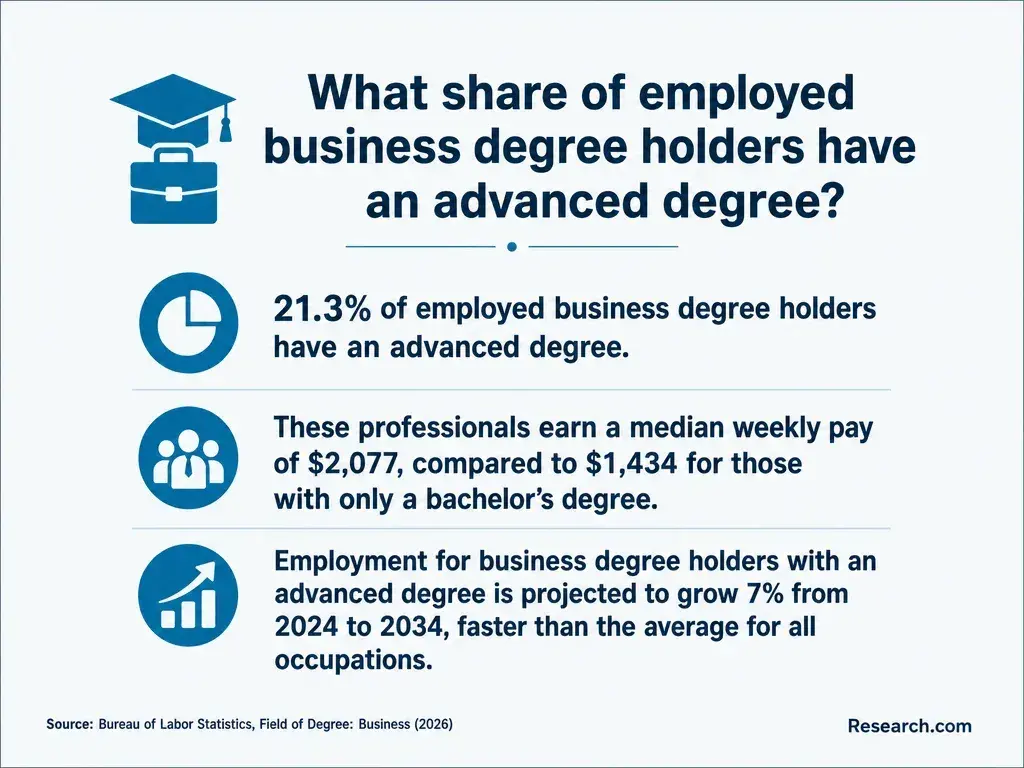
A Bachelor of Science in Business Administration is an undergraduate degree that typically combines general education with accounting, finance, operations, management, and other business subjects. Requirements vary by school. Compared with a dedicated HR degree, its strength is breadth: it can help a benefits administrator understand how staffing decisions, labor costs, budgets, and organizational goals connect.
That breadth is useful if you want options beyond HR, but it can leave gaps in employment law, recruiting, employee relations, or compensation. Compare the actual course requirements - not just degree titles - with the HR degree requirements and job opportunities relevant to your goal. A BS, BBA, or HR concentration is not interchangeable simply because each includes a management course.
When Does a BS in Business Administration Make Sense?
The degree is most compelling when two conditions coincide: jobs you realistically plan to pursue expect a bachelor's degree, and you need broader business preparation than your benefits work has provided. For example, someone who handles enrollment and vendor questions but wants responsibility for staffing plans, departmental budgets, and HR operations may benefit from combining a degree with expanded duties at work.
It makes less sense to start another full bachelor's degree without first checking your existing credentials and employer's requirements. If you already hold a bachelor's degree, an HR-focused certificate or relevant work assignment may address the gap more directly. If your goal is general team leadership rather than HR, compare the coursework and remaining credits in accelerated online organizational leadership school choices; faster advertised timelines still depend on your transfer evaluation.
Before applying, collect several postings for your intended next role. Separate requirements for a degree from requirements for employee-relations judgment, supervision, HR systems, or years of HR experience. A degree can address the first requirement; you will need a separate plan for the others.
What Careers Can You Pursue With a Business Administration Degree?
A benefits administrator may be able to pursue HR assistant, HR operations coordinator, benefits specialist, or broader HR specialist work, depending on prior duties and employer requirements. Moving into an HR generalist role often means adding recruiting, onboarding, policy administration, and employee-relations experience. HR manager positions generally add responsibility for staff, strategy, budgets, and difficult personnel decisions; graduation alone does not establish readiness for them.
For context, the Bureau of Labor Statistics reports a May 2025 median annual wage of $75,940 for human resources specialists. That is an occupation-wide median, not an expected starting salary for a business graduate or a benefits administrator changing roles. Use local job postings to identify the tasks and qualifications attached to the positions you could pursue next.
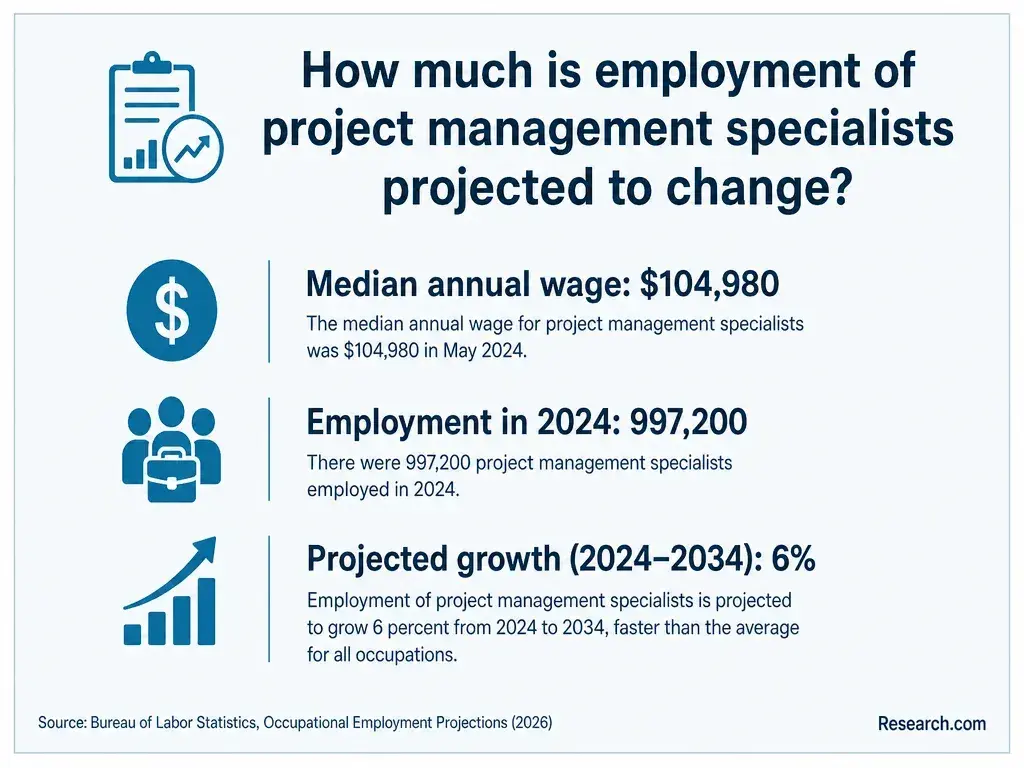
If your interests are shifting away from HR toward coordinating cross-functional work, compare role requirements before choosing a degree. For example, affordable college choices for aspiring project managers may be more relevant to a project-focused goal than HR electives within a general business program.
Business courses can strengthen skills an HR manager uses to make and explain decisions. Accounting and finance help you assess benefit costs against budgets; statistics helps you interpret turnover or enrollment patterns; management courses address organizational behavior and planning. Your benefits experience adds practical knowledge of employee questions, vendors, deadlines, and confidential information that a classroom cannot replace.
The main gap is usually scope of responsibility. Ask your manager whether you can contribute to an approved onboarding review, benefits communication plan, or HR process improvement project while maintaining appropriate access controls. Document the problem, your role, and the decision you supported without exposing employee information. If you need to study while keeping your job, compare online business administration programs with work-compatible schedules against the actual meeting and assignment demands of your workplace.
Most programs combine a business core with general education and some choice of electives, but the course mix and depth vary. For a benefits-to-HR transition, prioritize organizational behavior, human resource management, business law, accounting, statistics, and business communication. Check whether an HR course covers employee relations and employment practices or only introduces HR functions.
Look beyond course names to assignments. A compensation analysis using permitted, nonconfidential data or a clearly hypothetical staffing budget can demonstrate reasoning; an introductory HR course alone does not demonstrate management experience. If you also want to lead implementation projects, compare available project-management coursework with a specialized degree's requirements. Project management bachelor's residency and transfer requirements can matter if changing majors would delay completion. Confirm with an adviser whether an elective, concentration, or proposed project will actually satisfy your degree requirements.
Schools set their own admission rules. Applicants commonly need proof of secondary-school completion or prior college study, while some business majors have separate entry or course prerequisites. If you have completed college credits, admission to the institution does not mean every accepted credit will satisfy the business core.
Request an official evaluation of your transcripts and ask which accounting, economics, mathematics, statistics, and general education requirements remain. Prior HR or benefits work may support a prior-learning application where a school offers one, but it does not automatically award credit. Use the program's current catalog to check prerequisites before applying to business administration programs, then obtain a degree audit before planning a graduation date.
A traditional bachelor's path is often planned around four years of full-time study. Your actual timeline depends on credits that apply to the degree, course sequencing, enrollment pace, and when required classes are offered. For a working benefits administrator, the most useful cost comparison is the cost to finish, not a school's advertised tuition rate.
Ask each school for an evaluation showing remaining credits, required courses, tuition and mandatory fees, and a feasible term-by-term schedule. Include books, technology or proctoring charges, and any reduced work hours. Compare those totals with online business administration school cost comparisons, but rely on your school-specific estimate for the decision. Check financial-aid eligibility and any employer reimbursement rules separately; an advertised benefit may arrive only after you complete and pay for a course.
Choose the format that lets you complete the required work consistently, not the one with the most appealing flexibility claim. Online courses may still require live sessions, group meetings, timed exams, or fixed weekly deadlines. Campus courses may provide easier access to classmates and local recruiting but add travel and scheduling constraints.
Benefits administration has seasonal workload peaks, especially around enrollment. Ask when major assignments fall, whether HR electives are offered online every term, and what happens if work prevents you from taking a required course on schedule. If speed matters, examine fastest bachelor's-level business study options alongside those scheduling details; an accelerated calendar does not reduce the coursework you must complete.
First, verify the institution's current accreditation through its accreditor and the U.S. Department of Education's recognized-accreditation information. Then check whether any advertised AACSB, ACBSP, or IACBE recognition covers the business school or specific program you would enter. Institutional accreditation and business-program accreditation are different claims.
Confirm the exact degree name, campus or online offering, and any concentration with the school before enrolling. This is especially important when reviewing financial aid planning for low-cost business administration degrees: a low price or an accreditation badge alone does not establish that the particular program meets your academic needs or that you qualify for aid.
What Certifications and Credentials Support Business Administration Careers?
HR certifications can help experienced professionals demonstrate knowledge, but eligibility rules differ by credential and can change. Check requirements directly with the certifying organization before assuming that a business degree, an HR elective, or benefits experience qualifies you. Employer training in an HR information system or benefits platform may also be useful, though platform familiarity is not the same as an independent professional credential.
Choose a credential based on the gap in your target job postings. If those jobs require a bachelor's degree you do not have, a short certificate may not replace it. If you already meet the degree requirement, compare targeted training and experience with lower-cost business degree options before committing to another undergraduate program.
Other Things You Should Know About Business Administration
Only with appropriate employer permission and a plan that protects employee privacy and confidential business information. If permission is unavailable, use public data or a clearly labeled hypothetical example.
No. Explain plan information within your role, follow your employer's procedures, and refer legal or complex compliance questions to authorized specialists.
Yes. Describe the tasks you performed - such as maintaining records or supporting enrollment - rather than claiming expertise in every function of the system.
Identify who owns HR decisions and ask whether you can assist with a defined task under their supervision. Keep responsibility, access to employee data, and approval authority clear.
- What is the career outlook for jobs in human resources? | FIU College of Business https://business.fiu.edu/academics/graduate/insights/posts/what-is-the-career-outlook-for-jobs-in-human-resources.html
- UNC Charlotte Academic Policy: Credit for Prior Learning and Graduate Transfer Credit - Office of the Provost https://provost.charlotte.edu/unc-charlotte-academic-policy-credit-for-prior-learning-graduate-transfer-credit/
- How Transfer Credits Work | Lackawanna College https://www.lackawanna.edu/college-transfer-credits-guide/
- How to prepare for a career in human resources | Capella University https://www.capella.edu/blog/business/career-in-human-resources/
- Business Administration, Human Resources Management Concentration Bachelor of Arts Program | CSU Fullerton https://programmapper.fullerton.edu/program/business-administration-human-resources-management-concentration/
- HRCI vs. SHRM Certification - What's the Difference? | UTSA PaCE https://www.utsa.edu/pace/news/hrci-vs-shrm-certification-what-is-the-difference.html
- Benefits Administration vs. HR Management: Key Differences | inovapayroll.com https://inovapayroll.com/articles/benefits-administration-vs-hr-management-key-differences/
- My Comparison of HR Generalist and HR Administrator Roles https://hr.university/career/hr-generalist-vs-hr-administrator/
- What Can I Do With a Human Resource Management Degree | Indeed.com https://www.indeed.com/career-advice/finding-a-job/what-can-i-do-with-a-human-resource-management-degree