2027 Choosing a BS in Business Administration: How to Check a Program That Uses Third-Party Learning Providers
Audited and Verified:
Our Editorial and Data Verification Process
Research.com uses government datasets, official education statistics and primary institutional information to support its career and degree guides. Our review process checks factual accuracy, occupational definitions, source dates and the requirements associated with the credentials discussed.
How This Article Was Fact-Checked
Our editorial team verifies salary estimates, employment projections, education requirements and program information against original data providers and official organizations. Salary figures are checked against the relevant occupational definitions and reporting periods. Information about licensure, accreditation and required in-person training is reviewed separately.
Fact-checked and verified on:

Co-Founder and Chief Data Scientist
A college may award the BS in Business Administration while another company supplies courses, instructors, technology, or student services. That arrangement can expand access, but it also makes it harder to tell who controls academic quality, resolves problems, and keeps your degree on track.
This guide is for prospective and transfer students comparing such programs. It explains what to verify with the degree-granting institution, what to ask about the provider, and how to judge the arrangement against a program run more directly by the college.
Key Things You Should Know
- Verify the degree-granting institution's recognized accreditation, then separately check whether any claimed AACSB, ACBSP, or IACBE accreditation covers the business program you would enter.
- Get written answers about who teaches, grades, awards credit, maintains records, handles complaints, and provides required courses if the provider relationship ends.
- A conventional bachelor's path is planned around four years of full-time study, but a provider's accelerated schedule or acceptance of transfer credits does not establish your individual completion time or total cost.
What is a business administration degree from a program using third-party learning providers?
It is a degree awarded by a college or university that contracts with another organization for some part of the student experience. A provider might supply an online learning platform, develop lessons, recruit students, offer tutoring, or deliver instruction. These are different arrangements: using outside course materials is not the same as having an outside organization teach and assess credit-bearing courses.
The first question is who awards and controls the degree. Confirm the institution's exact degree title, whether you will be enrolled at that institution throughout the program, and whose transcript will record each course. Ask the college to identify every provider responsible for required courses or services, rather than relying on a provider's description of the partnership. A national guide to ranked online business colleges can help you identify options, but each college must confirm its own current arrangements.
How can you verify a business administration program's accreditation?
Start with the degree-granting institution, not the provider's logo. Check the institution and its accreditor in the U.S. Department of Education's accreditation database or the Council for Higher Education Accreditation directory. Match the institution's legal name and campus or online operation to the school named in your enrollment documents. Ask the school whether any applicable approval or accreditation conditions affect your program or enrollment location.
Next, verify a separate claim of business accreditation in the relevant AACSB, ACBSP, or IACBE directory. Confirm the accredited academic unit or programs, degree level, and whether the BS you intend to enter falls within that scope. Institutional accreditation and business accreditation answer different questions; neither establishes that an outside provider is independently accredited or that graduates secure jobs.
If federal aid matters, ask the financial-aid office to confirm that your enrollment in this specific program is eligible. An institution's accreditation alone does not answer every aid-eligibility question. Comparisons of cheaper business administration study with FAFSA-based aid are a starting point, not a substitute for that confirmation.
What should you investigate about a third-party learning provider?
Ask the college for a written explanation of the provider's duties for the courses you must take. The important distinction is between a company that supplies tools and one that participates in instruction or decisions affecting academic credit. The following comparison shows why the same phrase, "third-party provider," can describe materially different student experiences.
| Provider activity | What it may mean for your program |
| Learning platform or course materials | The college may still employ instructors and control grading; access, accessibility, and continuity of materials remain important. |
| Instruction or assessment support | Instructor qualifications, faculty oversight, grading authority, and routes for appealing a grade become central questions. |
| Recruitment or student support | Advice about admissions, costs, transfer credit, and degree progress must agree with the college's official policies. |
Request the names or roles of the people who teach and grade, the official syllabus, the college's complaint and grade-appeal procedures, and its plan for maintaining courses and records if the contract changes. Ask who owns student work and how the provider protects personal or employer data used in business projects. A provider's sales representative should not be your final authority on credit or graduation requirements.
Require an itemized estimate for any provider-related technology, materials, or assessment charges. The same caution applies if you compare a specialist pathway: project management fees books and aid considerations illustrate why the advertised tuition figure may not represent the full cost of study.
Compare the requirements you would actually experience, not just the delivery labels. An online program may use provider-run technology while the college retains academic oversight; a campus program may also rely on outside materials or services. Either format can include team projects, presentations, exams, and a capstone.
For online courses, obtain sample schedules showing live sessions, weekly deadlines, proctoring, group meetings, and any campus visits. For campus courses, check commuting time, required attendance, and whether essential upper-level classes are offered when you can attend. Working students should also ask whether a required course is available part time and what happens after a leave of absence. Online delivery is useful when it removes a real scheduling barrier, not merely when it avoids a commute.
If budget drives the format decision, compare the remaining required credits and all mandatory charges rather than assuming online study costs less. A guide to online business education on a smaller budget can help develop a shortlist for school-specific cost checks.
A BS in Business Administration generally combines general education with business foundations such as accounting, economics, finance, marketing, management, operations, statistics, and business communication. The exact quantitative requirements, electives, and capstone vary. Review the official degree map to see which courses the college requires and which, if any, the provider teaches.
For a proposed concentration, check that it is formally listed in the catalog, which courses establish its depth, and whether those courses are offered reliably. An HR elective does not necessarily create an HR concentration. If HR is your primary goal, compare the business curriculum with education options for future HR professionals and look for relevant experience opportunities as well as coursework.
Ask for examples of how students receive feedback on applied work. A business simulation, internship, and employer-approved capstone develop different kinds of evidence; none should be assumed to substitute for another graduation requirement.
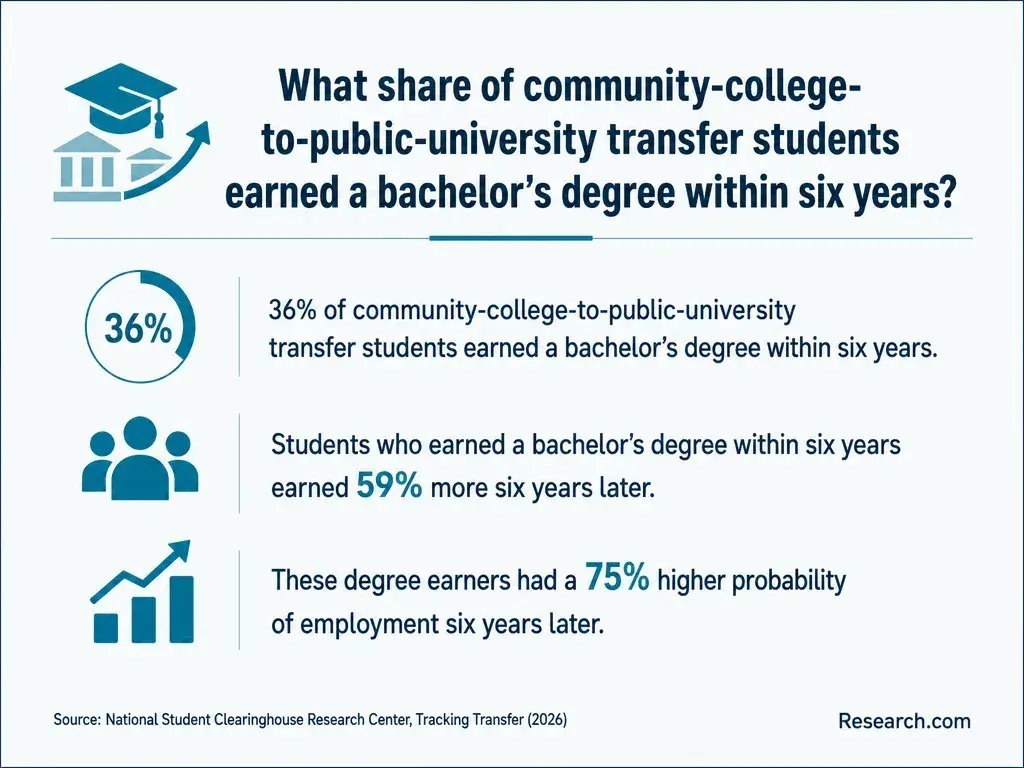
The degree-granting institution sets admission rules. Depending on the school, applicants may need secondary-school records or previous college transcripts, and entry to the business major may have requirements separate from admission to the college. Ask whether mathematics, statistics, accounting, or economics must be completed before particular upper-level courses.
Transfer students need two distinct answers: which credits the college accepts and which requirements those credits satisfy. Obtain an official evaluation and degree audit showing general education, business core, concentration, electives, and remaining institutional coursework. An outside provider's preliminary credit estimate is not the college's final decision. This distinction matters even when comparing related options such as programs that use prior college credits in a project management bachelor's.
A conventional full-time bachelor's schedule is commonly planned over four years. Your actual timeline depends on applied transfer credits, enrollment pace, prerequisite sequencing, and how often required courses run. A provider's accelerated calendar does not ensure that every course you need will be available in sequence.
Request a term-by-term plan and a cost estimate from the college after its credit evaluation. Include tuition, mandatory fees, course materials, software, proctoring, travel or visits, and any extra terms caused by unavailable courses. Confirm how the school charges - by credit, course, or term - and ask its financial-aid office how your planned enrollment affects aid. Use explore cheaper business administration college programs as a comparison point, then judge offers by your remaining path to graduation, not the advertised starting price.
The degree can support applications for roles in operations, sales support, HR, marketing, procurement, and project coordination. Which roles are realistic depends on your prior experience and evidence of relevant skills. For example, a student interested in project coordination should look for opportunities to build schedules, track budgets, communicate with stakeholders, and document completed work - not assume that a management course qualifies them to lead major projects.
When comparing a broad BS with a more focused degree, check the target job's postings and the experience they request. A project-focused alternative may be worth examining alongside the cost of a general business degree; an online project management undergraduate funding guide can inform that financial comparison. Neither path guarantees a job or an immediate management position.
There is no single salary or growth rate for a BS in Business Administration: employers hire for occupations, not one degree title. As a reference point, the U.S. Bureau of Labor Statistics reports a May 2025 median annual wage of $75,940 for human resources specialists and projects 6% employment growth from 2025 to 2035. That is an occupation-wide median, not a starting salary for new business graduates; HR roles can also require function-specific preparation.
Judge a program's career claims against the roles you want and the school's own evidence. Ask for the graduating cohort, measurement period, response rate, and definitions behind any placement or earnings figure. Claims about economical business administration degrees with quicker study routes should not replace a realistic comparison of cost, completion risk, and your likely entry route.
Which certifications and professional standards matter in business administration?
There is no single professional certification required of all business administration graduates. A credential may matter for a specific function, such as HR or project management, but its awarding organization sets eligibility and examination rules. A business course, concentration, or provider-issued completion badge is not automatically equivalent to that credential. Likewise, a general business degree does not establish eligibility for regulated accounting or financial-services work.
For program selection, focus first on the college's academic standards: qualified instruction, documented learning outcomes, fair assessment and appeals, and responsible handling of business data. If speed is a priority, compare fast-track business degree options against those same standards and the time you can give to coursework. An accelerated degree and a short professional certificate serve different purposes.
Other Things You Should Know About Business Administration
It can. Ask the college how it would provide remaining required courses, preserve your records, and communicate changes if its contract ends.
Confirm the wording with the college. The diploma and official transcript should be checked against the degree-granting institution identified in your enrollment documents.
Use the college's published complaint or academic-appeal process. Keep records of the issue and ask how the college coordinates responses with its provider.
Not without appropriate permission. Check employer rules, the course requirements, and data-handling procedures; an anonymized or public-data project may be safer.
- Cost of Attendance (Budget) | 2025-2026 Federal Student Aid Handbook https://fsapartners.ed.gov/knowledge-center/fsa-handbook/2025-2026/vol3/ch2-cost-attendance-budget
- An Overview of Accreditation of Higher Education in the United States | Congress.gov | Library of Congress https://www.congress.gov/crs-product/R43826
- Accreditation in the U.S. | ed.gov http://www.ed.gov/laws-and-policy/higher-education-laws-and-policy/college-accreditation/accreditation-in-the-us
- Has Your School Closed? Here's What to Do. | studentaid.gov https://studentaid.gov/announcements-events/closed-school
- Recognition of Accrediting Agencies | Texas Higher Education Coordinating Board https://www.highered.texas.gov/recognition-of-accrediting-agencies/
- Frequently Asked Questions (FAQs) - Transfer Credit Ohio https://transfercredit.ohio.gov/help-center/faqs/faqs
- FERPA | Protecting Student Privacy - Department of Education https://studentprivacy.ed.gov/ferpa
- Ohio State Transfer Credit Frequently Asked Questions | The Ohio State University https://registrar.osu.edu/student-hub/transfer-credit/transfer-credit-policies/ohio-state-transfer-credit-frequently-asked-questions/
- Third-Party Provider Policy | Mercy University https://www.mercy.edu/media/third-party-provider-policy
- Managing Compliance and Risk in Third-Party Partnerships for Online Learning - UPCEA https://upcea.edu/news/government-affairs/managing-compliance-and-risk-in-third-party-partnerships-for-online-learning/